
 Pasta Carbonara is a delicious meal, but is often overlooked by vegetarians since it generally contains pancetta or bacon. Also, it contains raw eggs, which can cause salmonella fear.
Not to worry! Simply replace the meat with mushrooms, and use pasteurized eggs to avoid any salmonella. Pasteurized eggs can be difficult to find, but it’s quite easy to pasteurize eggs yourself. Instructions follow Mushroom Carbonara recipe.
NOTE: As Queen of Freeze, I would be remiss in my duties if I failed to remind you (some might say, ‘nag’) to freeze the unused egg whites for future use.
MUSHROOM CARBONARA – makes about 11 cups
- 1 lb orecchiette pasta (or whatever pasta you prefer)
- 3 T olive oil
- 1½ lbs common white mushrooms, chopped into quarters
- 1/2 lb fresh shiitake mushrooms, chopped into quarters
- 2/3 cup chopped shallots (about 2 large)
- 1 T pressed garlic (about 10 cloves, depending on size)
- 1 tsp kosher salt
- 5 yolks, pasteurized
- 1 whole egg, pasteurized
- 1 – 1½ tsp ground black pepper, depending on preference
- 4 oz Pecorino-Romano, grated
- 2/3 cup Italian parsley, chopped
In a Dutch oven, bring 4 quarts of water and 2 T kosher salt to a full boil. Cook the pasta until it’s almost done – about 2 minutes less than package calls for (it will continue to soften). Place a bowl under a sieve and drain pasta, making sure to capture 2 cups of pasta water. (Pasta water is a great thickener.) Set this water aside – you’ll need it later.
Into the now empty Dutch oven place the olive oil and mushrooms. Over medium heat, briefly stir the mushrooms to cover with the oil. Then continue to cook, uncovered, WITHOUT further stirring for 5 minutes in order to draw out the liquid.  After 5 minutes, begin stirring now and then until liquid has evaporated and mushrooms have browned – about 5 minutes.
 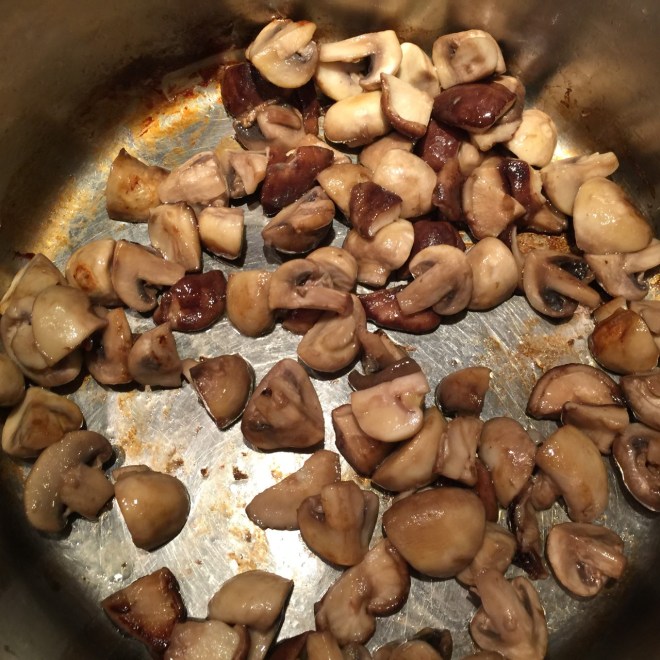 Add in shallots and garlic, cooking another few minutes – just before shallots begin to brown.
  Stir in the 1 tsp kosher salt, cooked pasta, and 1 cup of the reserved pasta water. Remove pot from heat source and let cool about 5 minutes.
 Separate the yolks from 5 of the eggs and beat these yolks together with the whole egg. As you’re beating the eggs, slowly drizzle in 1/2 cup of the pasta water, stirring constantly – this will temper the eggs.
  Then slowly pour the eggs into the pasta mixture, stirring constantly.
 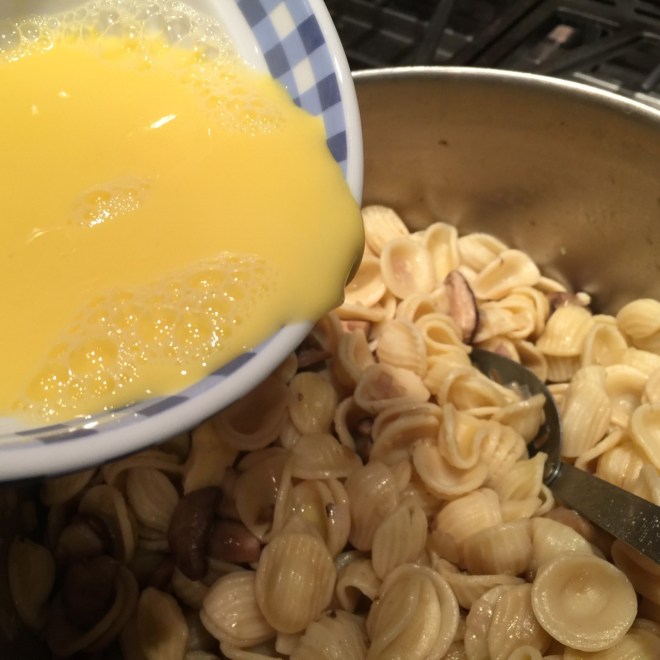 Stir in the pepper, Pecorino-Romano, and the parsley.
 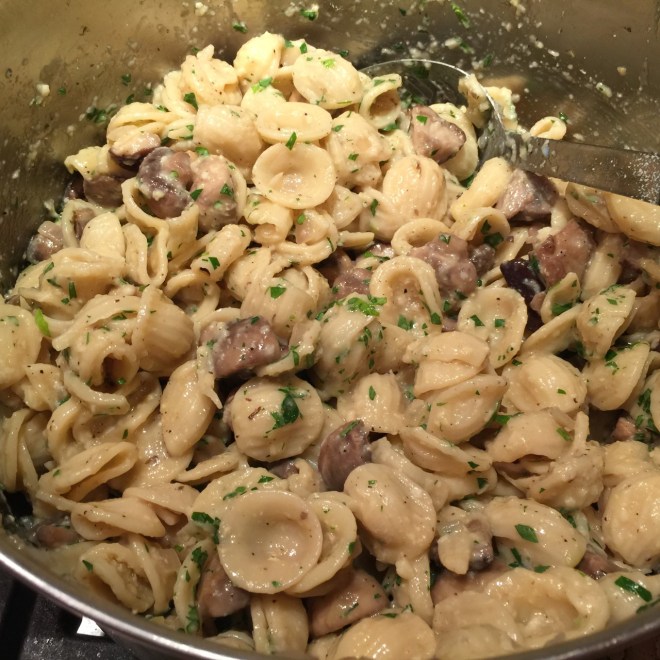 Turn burner to very low and continue to stir in order to heat pasta for serving, taking care not to scramble the eggs. If mixture is too thick for your liking, loosen it up with remaining pasta water.
Buon appetito!!!
PASTEURIZING EGGS
Note: I’ve watched many videos and read many sites about pasteurizing eggs. Plus, I’ve done it myself with no ill effects. HOWEVER, you should do your own research, just to be sure.
About 20 minutes before beginning, remove eggs from refrigerator to bring them to room temperature.
Have a bowl of ice water ready.
Place room temperature eggs (still in their shells) in a saucepan and cover with about 1″ of water. Heat saucepan until water reaches 140º Fahrenheit. Maintain 140º for 3 minutes for large eggs and 5 minutes for extra large eggs. (You’ll probably have to turn off burner all-together to maintain the temperature.)
  Remove pan from heat source and immediately remove eggs to the ice bath for about 5 minutes. This will stop the cooking process.
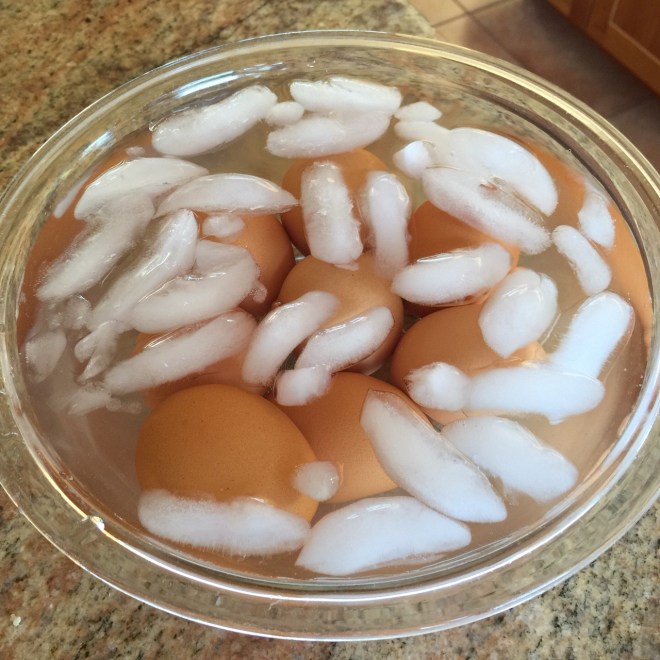 Remove eggs from ice water and refrigerate until needed. Make sure you mark them somehow so they don’t get confused with unpasteurized eggs.
You may notice the whites have become slightly cloudy – this is fine. Also, beating the whites into a meringue may take longer, although I haven’t had any problem with this.
 It’s summer party time and that, of course, means food – particularly finger foods to snack on. Yes, we all love our onion dip, guacamole, salsa, and bean dip. But isn’t there room for something new?
 Pulse until blended, but not pureed – you want some chunkiness to the dip. Scrap down sides of bowl, as needed when you pulse.
 You can serve dip as it, or heat it in the microwave for a total of 2 minutes, stopping every 30 seconds to stir. Serve with a substantial chip such as bagel or tortilla chips.
 My mother used to love to buy lady’s club cookbooks. You know the ones – they’re made up of the members favorite recipes. Once I left home, she would buy them for me, too. This was years before the internet. Back then, we had to rely on cookbooks, magazines, and recipes passed on from friends and family.
 Using a pastry brush, paint flour/butter thoroughly on bundt pan – getting into all the crevices.
 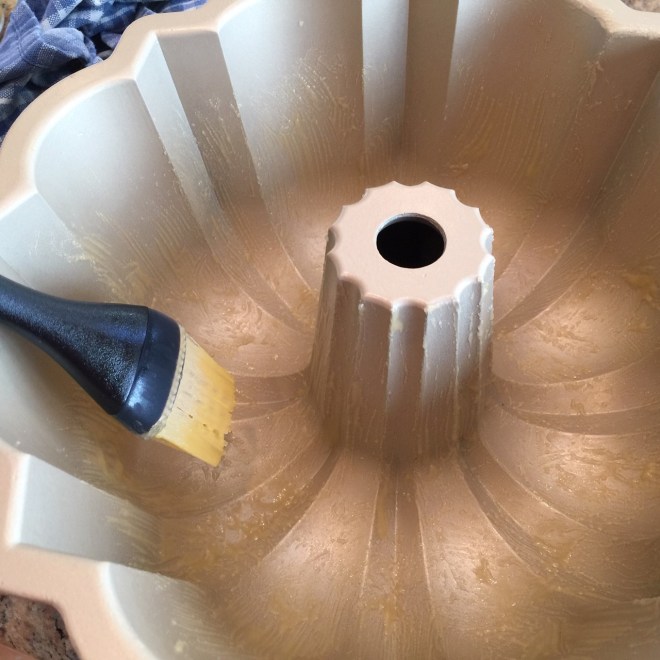 In an electric mixer, cream together 1/2 cup butter and granulated sugar for 3 minutes (don’t cut this time short).
 Beat in eggs and vanilla.
  In a separate bowl, combine the 2 cups of flour, baking soda, baking powder, and salt.
 On low speed of mixer, beat in 1/2 of sour cream (don’t worry about being exact).
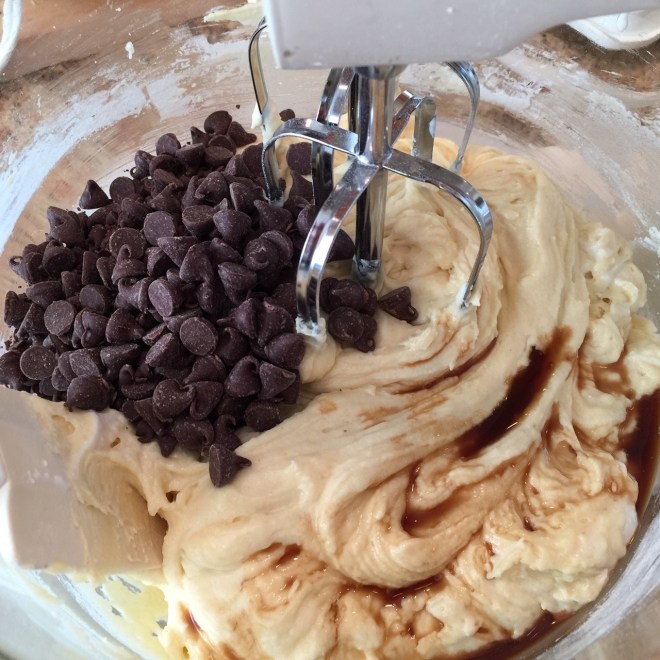
  Beat in 1/2 of flour mixture, then beat in remaining sour cream, followed by remaining flour. Stir in chocolate chips. (The picture below shows vanilla being added now – I forgot to add it earlier with the eggs.)
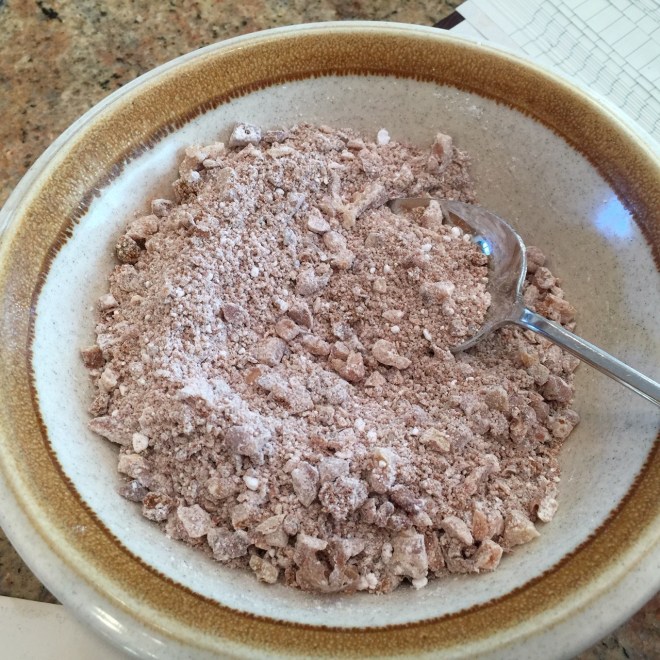
 In a separate bowl, combine brown sugar, powdered sugar, walnuts, and cinnamon.
  Spoon half of batter on bottom of bundt pan, gently spreading it out evenly. I find it easiest to scoop the batter into the bundt pan using a 3 T ice cream scoop, then gently spread the batter evenly around.
 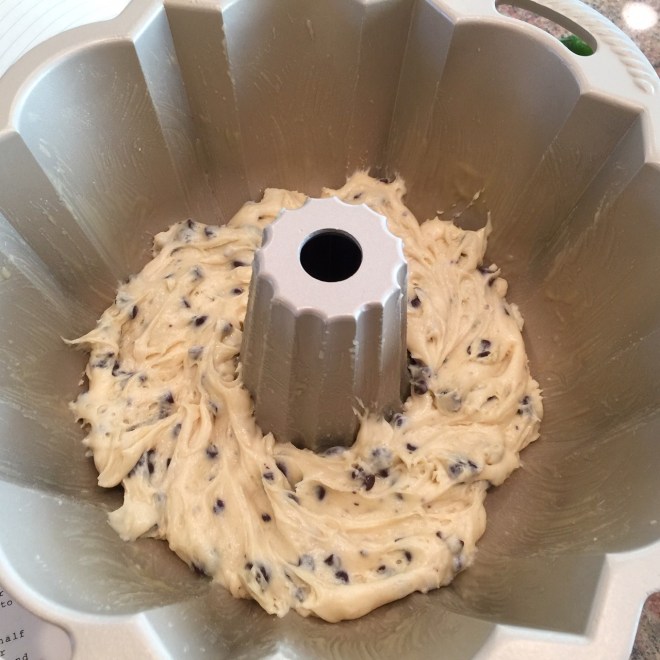 Sprinkle on half of brown sugar mixture, then spoon on remaining batter, spreading it evenly. Finally, sprinkle on remaining brown sugar mixture.
  Bake at 350º F for 45-60 minutes, until toothpick comes out clean (it’s okay for there to be chocolate from the chips).
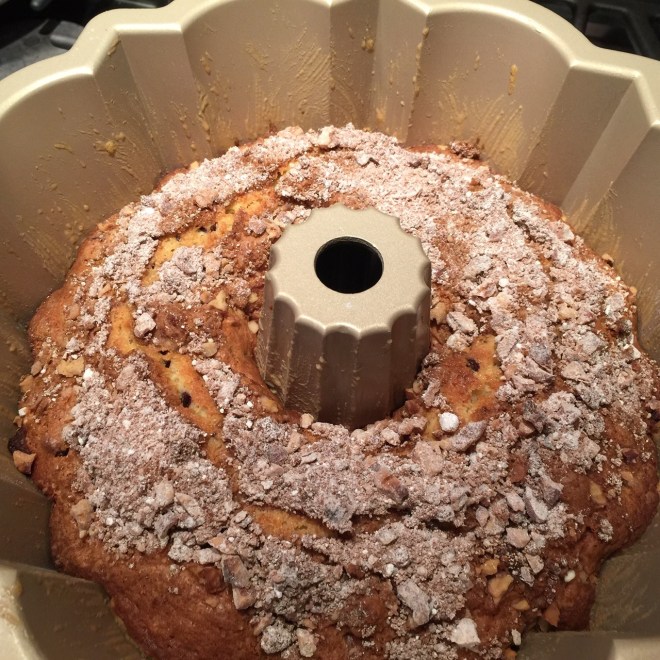 When done, remove from oven and let cake sit in pan for 20 minutes before removing to a wire rack to completely cool.
 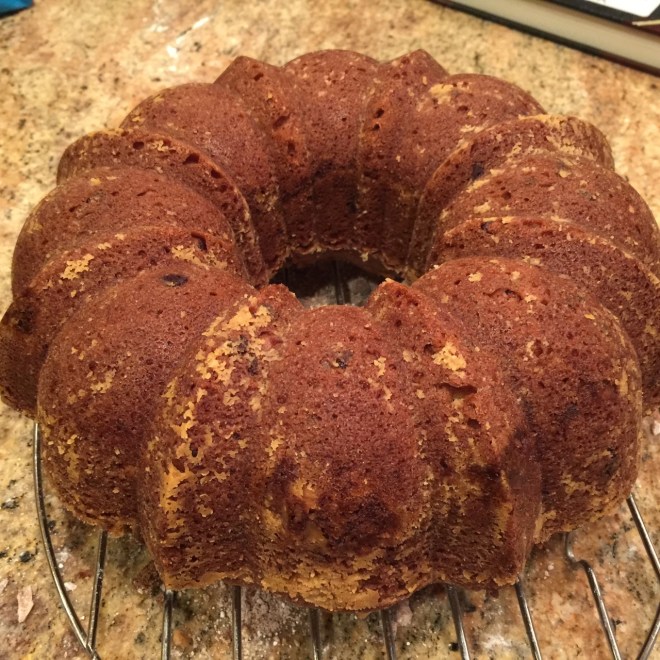 Sprinkle on powdered sugar, if desired.
 Bring to boil, then reduce heat to simmer. Cover and cook over low heat for a total of 30 minutes. At first, stir now and then – until it’s been cooking for about 20 minutes. At this point most of the liquid will have been absorbed into the rice. Stir more often now to prevent burning. If all the liquid has been incorporated before the 30 minutes is up, turn off the heat and let the covered pot sit on the hot burner. This is to make sure the rice is completely cooked.
  Eat as is, or do something crazy (like I do) and serve as an open faced sandwich on a homemade
 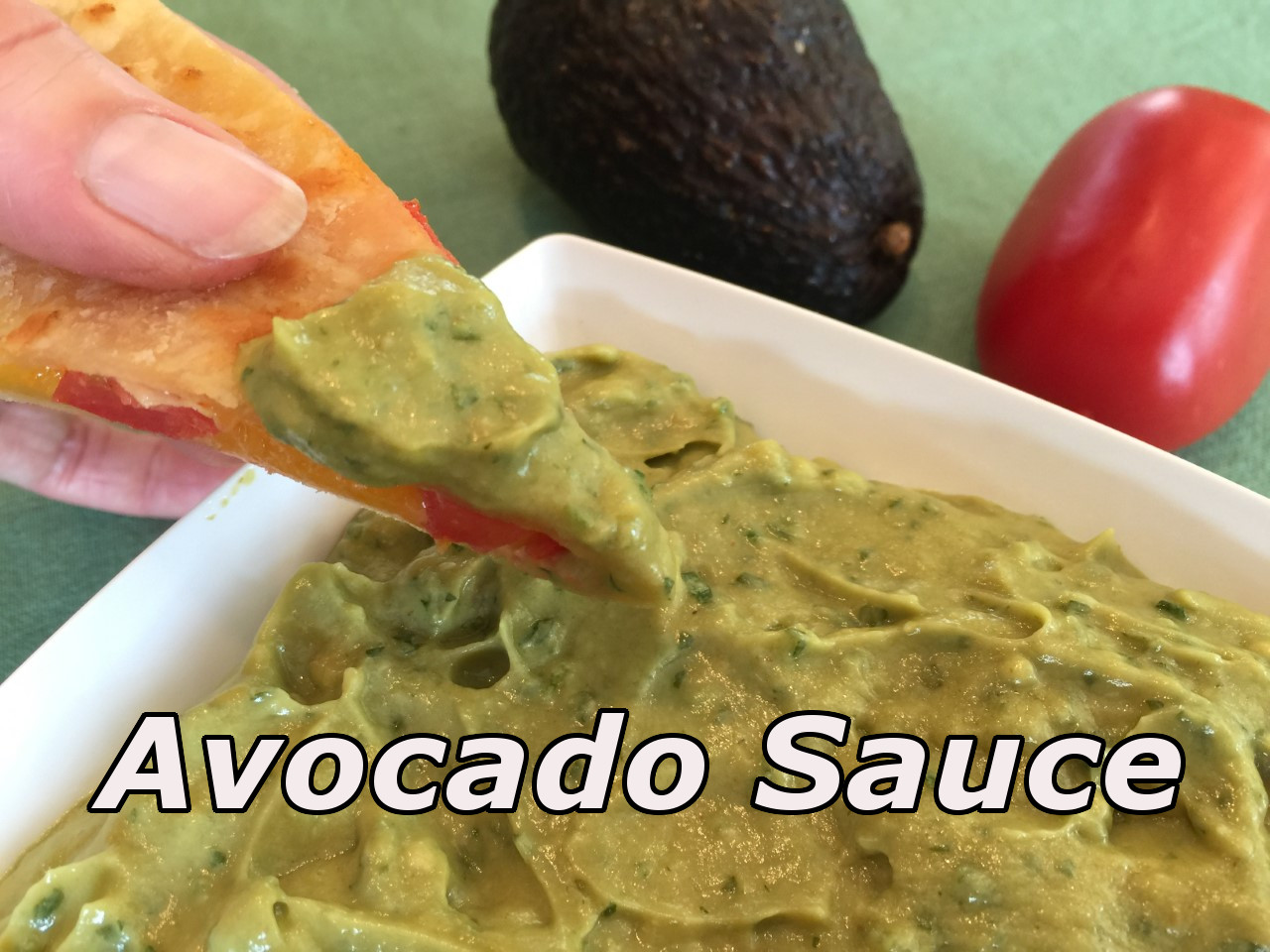 Avocado Sauce is a quick and easy topping for tacos, salads, quesadillas, or anything else you want. As opposed to guacamole, which is usually chunkier, it’s meant to pour – thus covering more territory.
 Pulse until creamy – scraping down sides as needed.
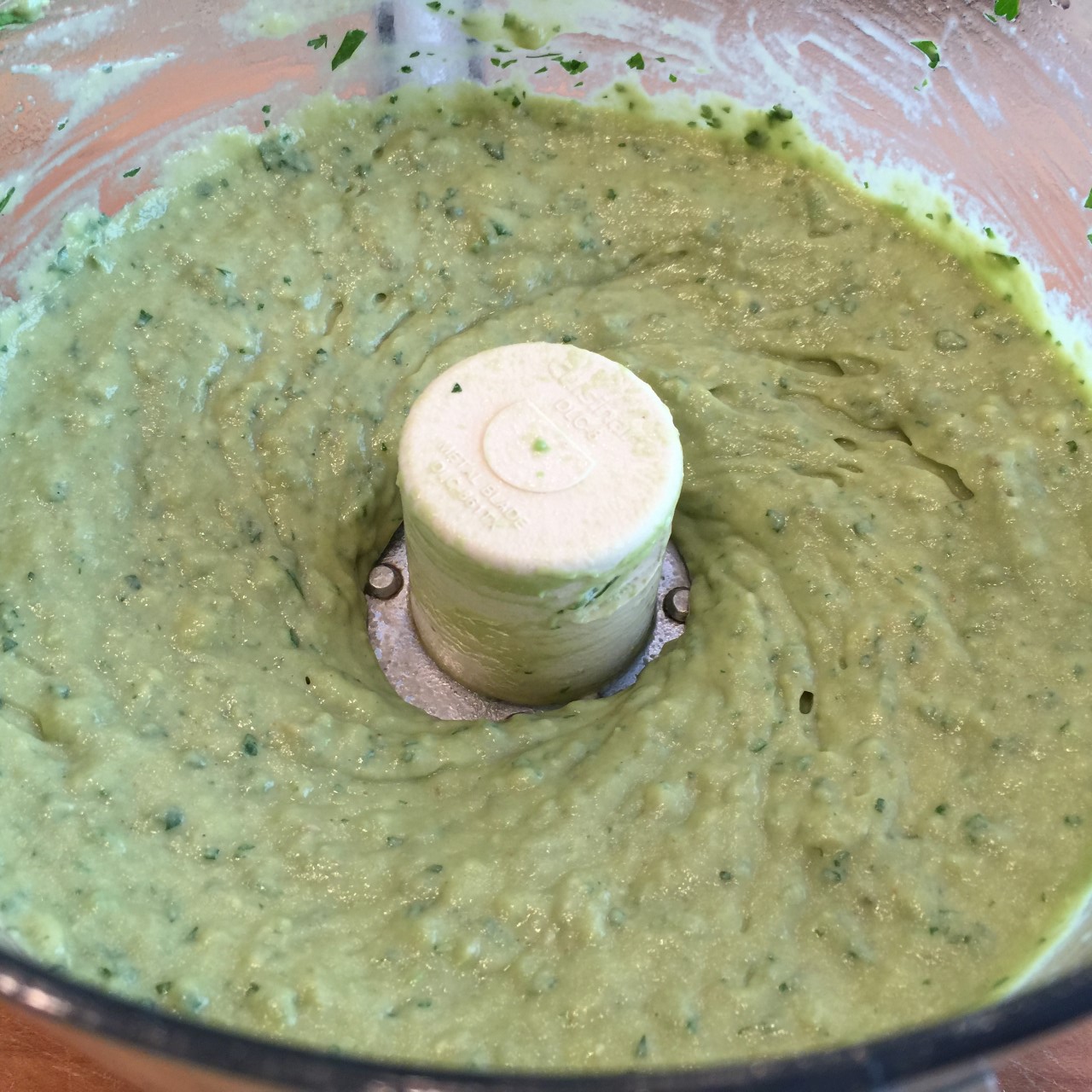 Adjust seasoning to your preference.
 One, generally, associates ‘gazpacho’ with the red, tomato based chilled soup. But there are other types, including ajoblanco – an almond based gazpacho.
 While the bread is soaking, grind 1¼ cups almonds in a blender until they become a fine powder – about 30 seconds.
  Gently squeeze water out of bread back into the bowl (you’re going to use this water).
  Place the bread into the blender with the almonds. Set aside 1½ cups of the bread water for later. Into the blender, add the remaining water in bowl (NOT the 1½ cups you set aside), the vinegar, garlic, salt, and cayenne. Blend for 30 seconds.
  With blender running, slowly drizzle in the olive oil.
 Pour in the 1½ cups bread water and run blender to mix.
 Strain soup into a serving bowl.
  Into a small bowl combine 1 T of the strained soup with the almond extract. Then pour 1/2 tsp of this mixture into the soup (it enhances the almond flavor) and discard the rest (a little goes a long way).
 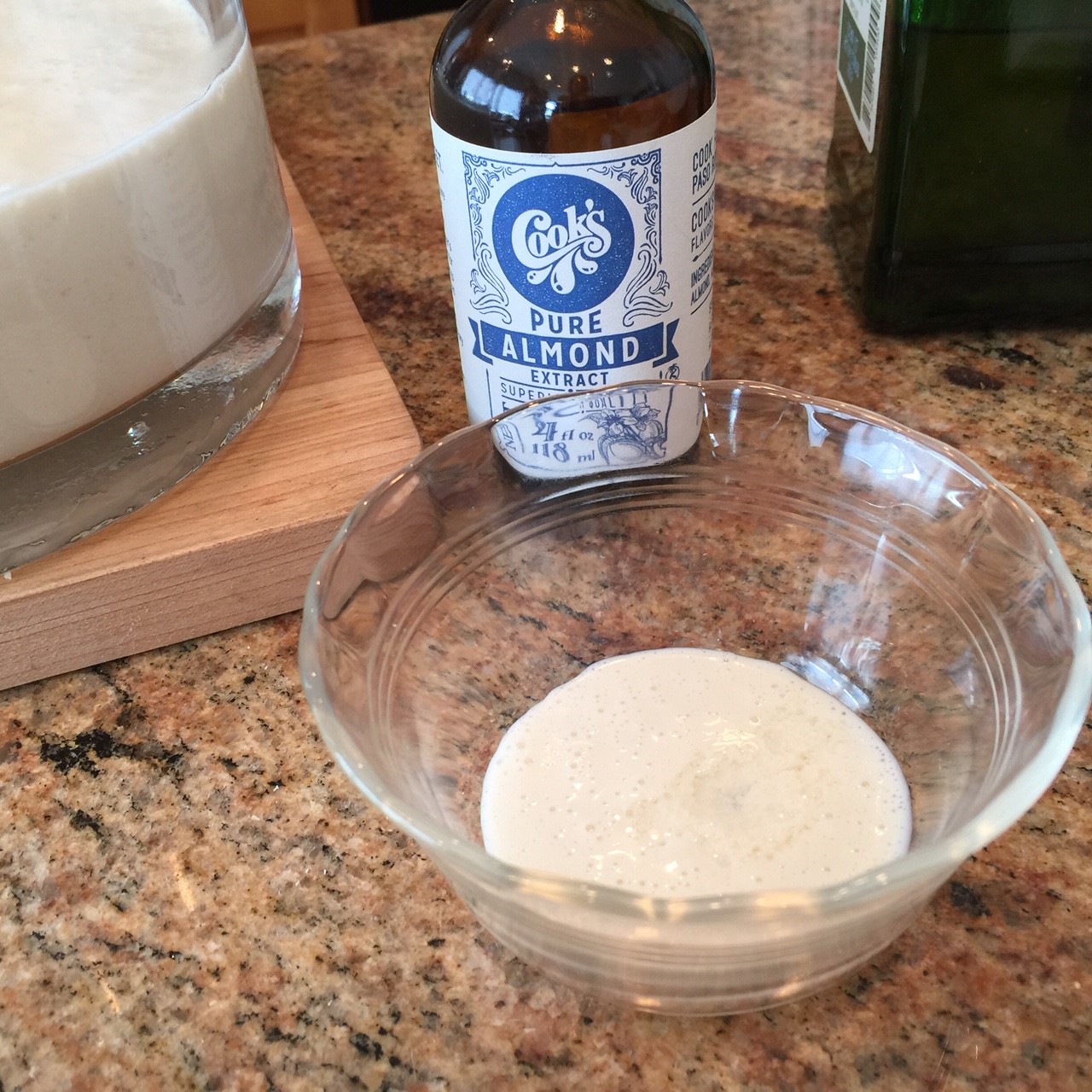 Correct for seasoning, if needed (I usually need more salt). Chill, at least, 3 hours – more is better. Toast remaining 3 T almonds in a dry skillet or toaster-oven.
 One of my favorite flavor combinations is lemon and garlic, so it’s no surprise that Greek Potatoes are a go-to side dish in our house. Not only is it delicious, but it’s super fast and easy to prepare. (It does take about 40 minutes to bake, but that’s hands-off.)
 Place in 475º F oven
 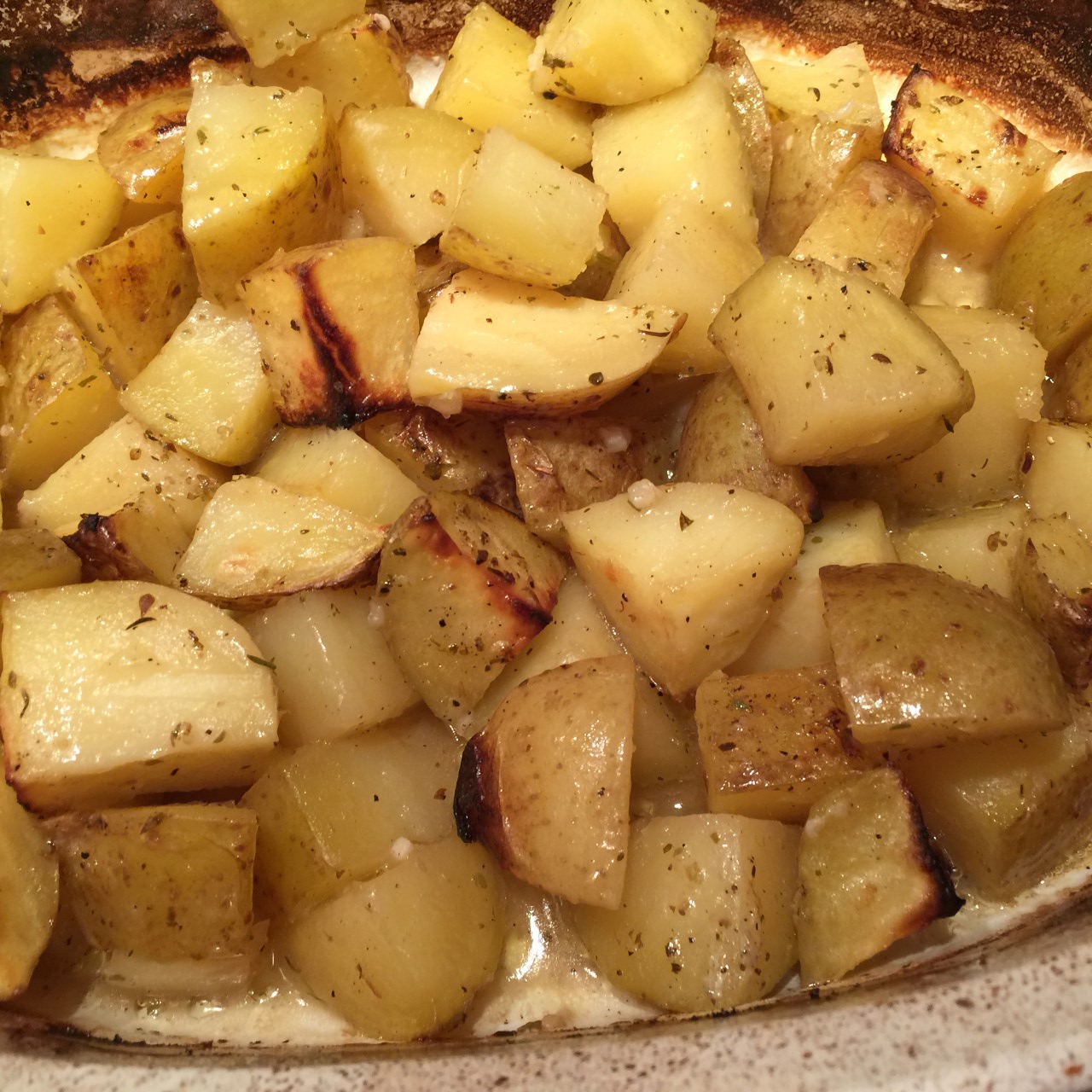 Remove from oven and sprinkle on parsley. Serve while hot.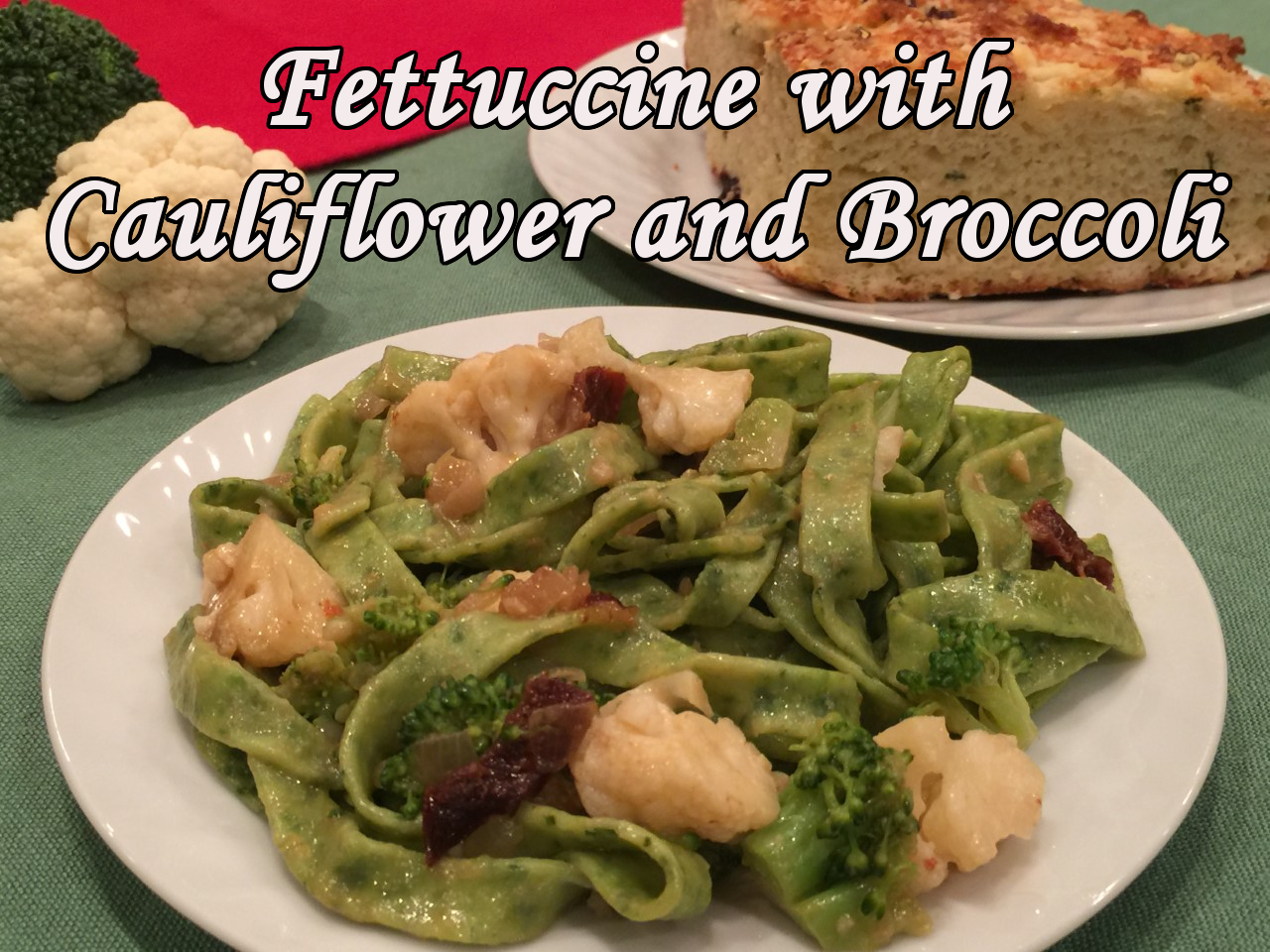
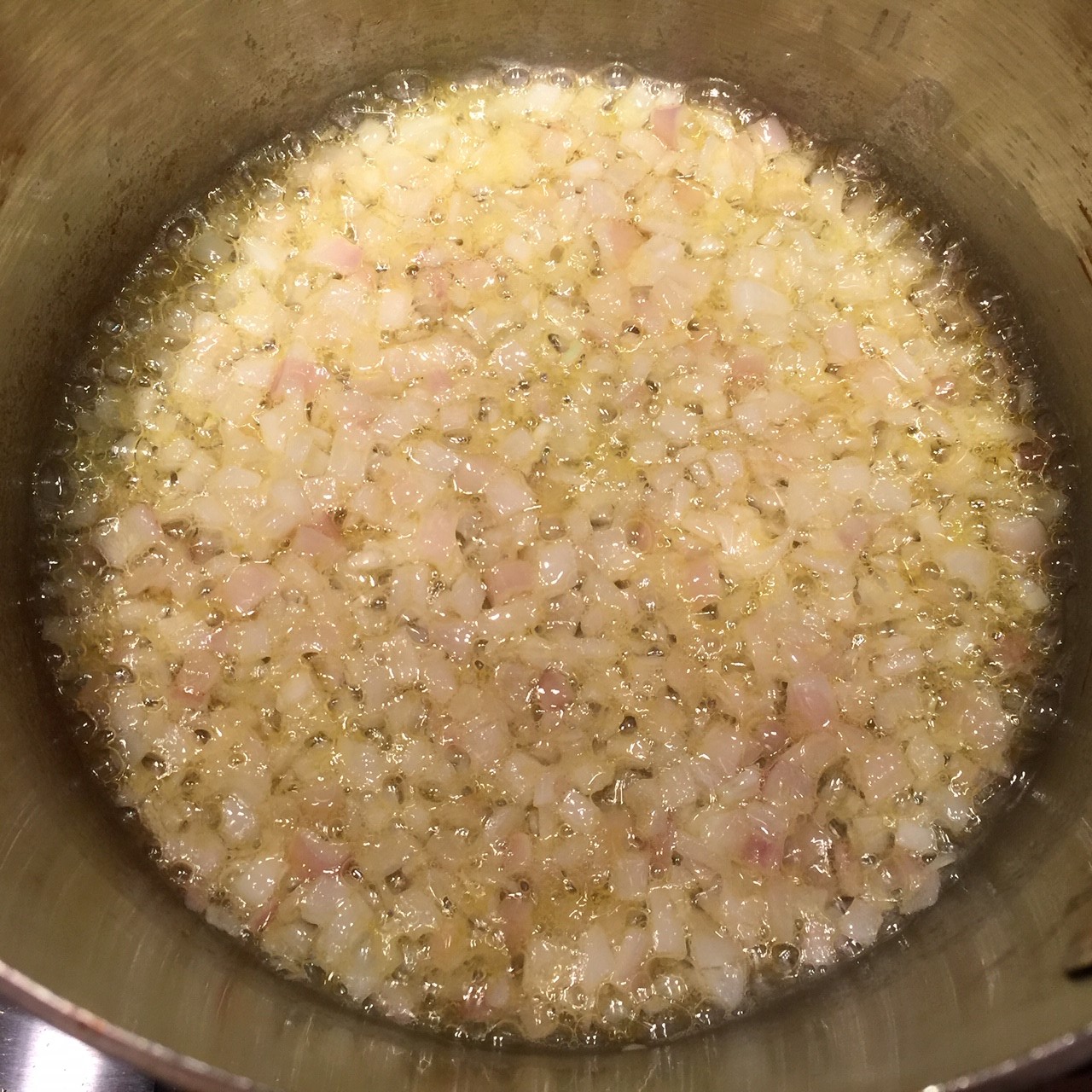 Remove from heat and stir in vinegar, mustard, and dried tomatoes.
 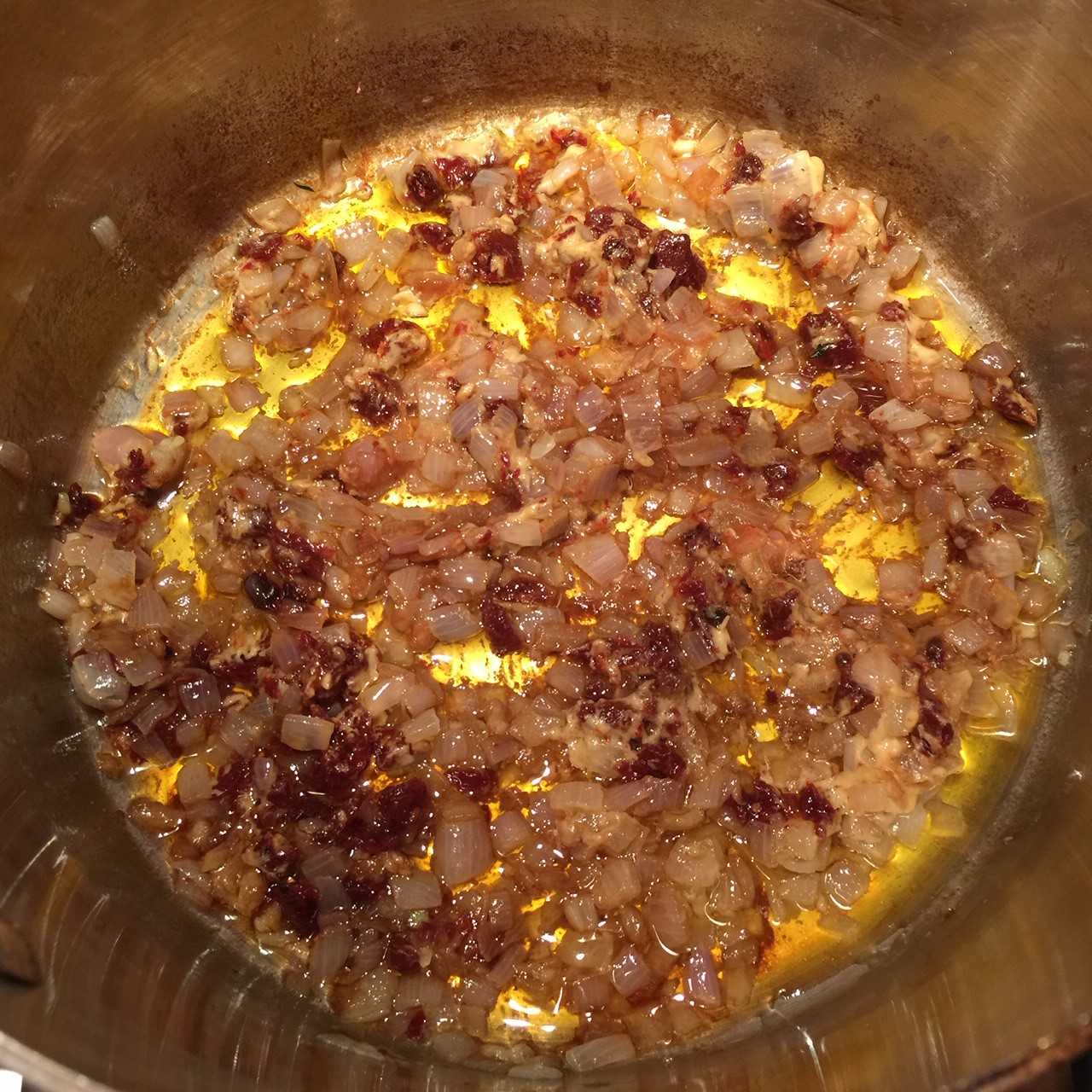 In a Dutch oven, bring 2 quarts of water and 1 T salt to a boil. Remove 1/2 cup of this water and stir into shallot mixture.
 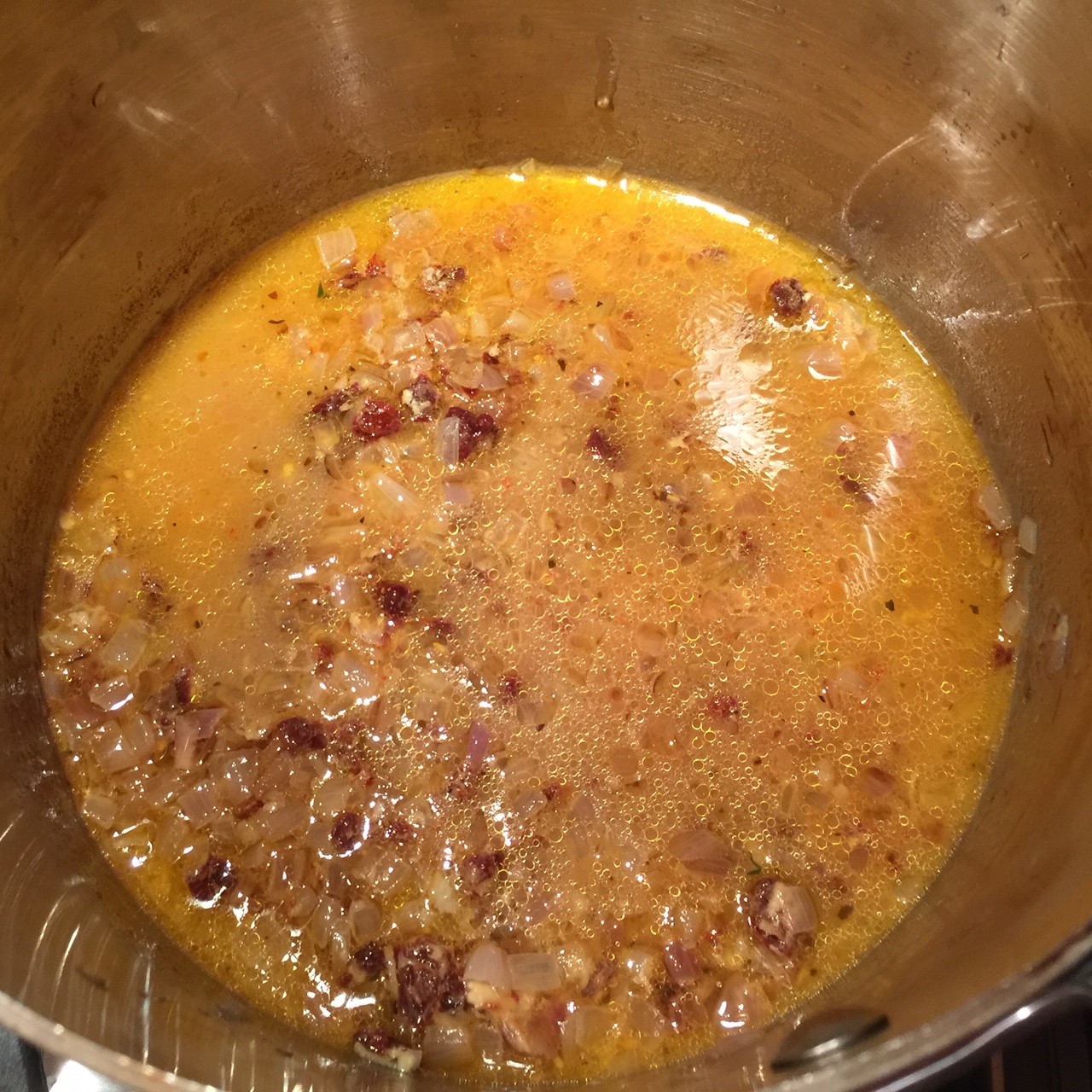 To the pot of boiling water add the broccoli and cauliflower.
 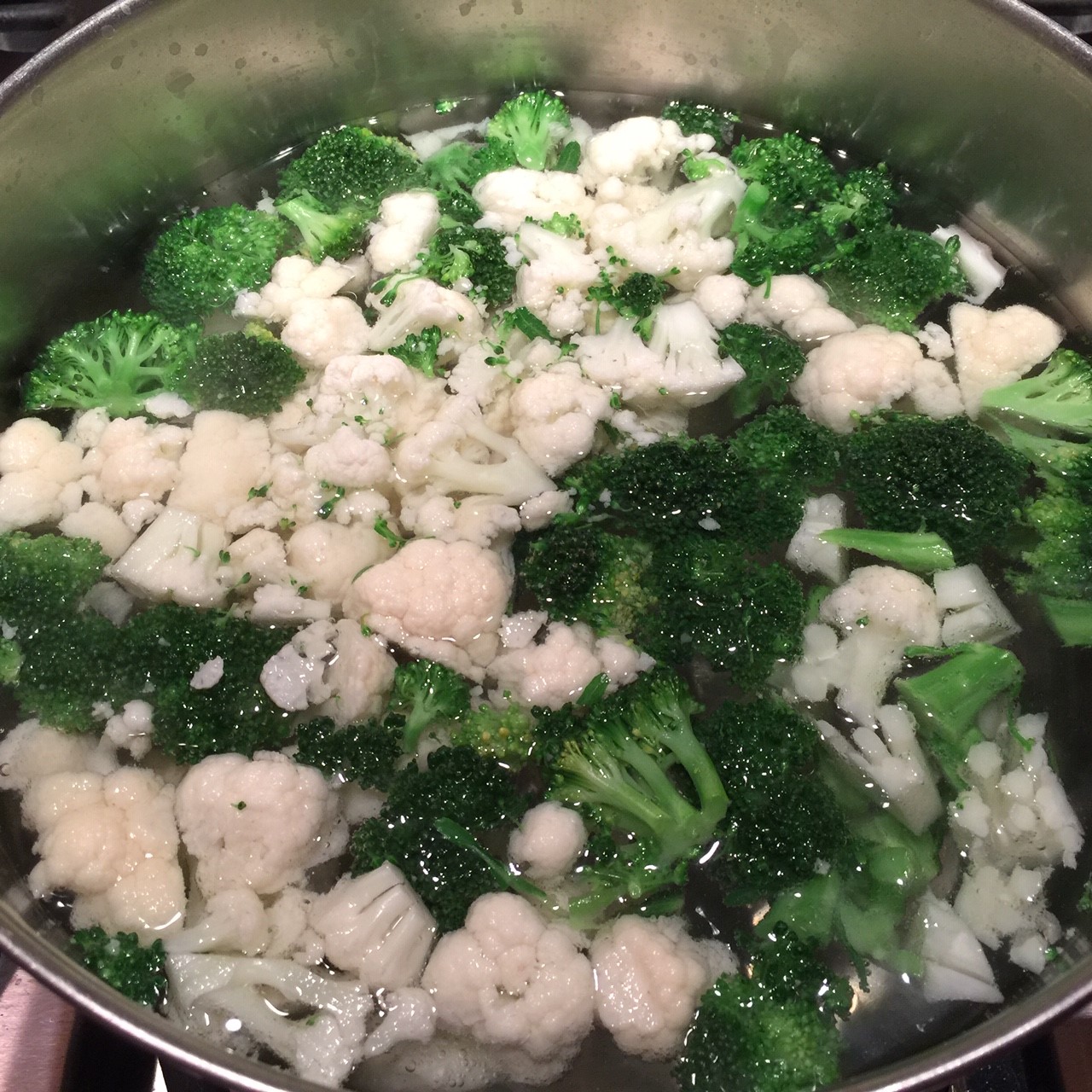 When the water resumes boiling, cook veggies 1 minute only, just to blanch them, then scoop them out and add to the shallot mixture (which is still off-heat).
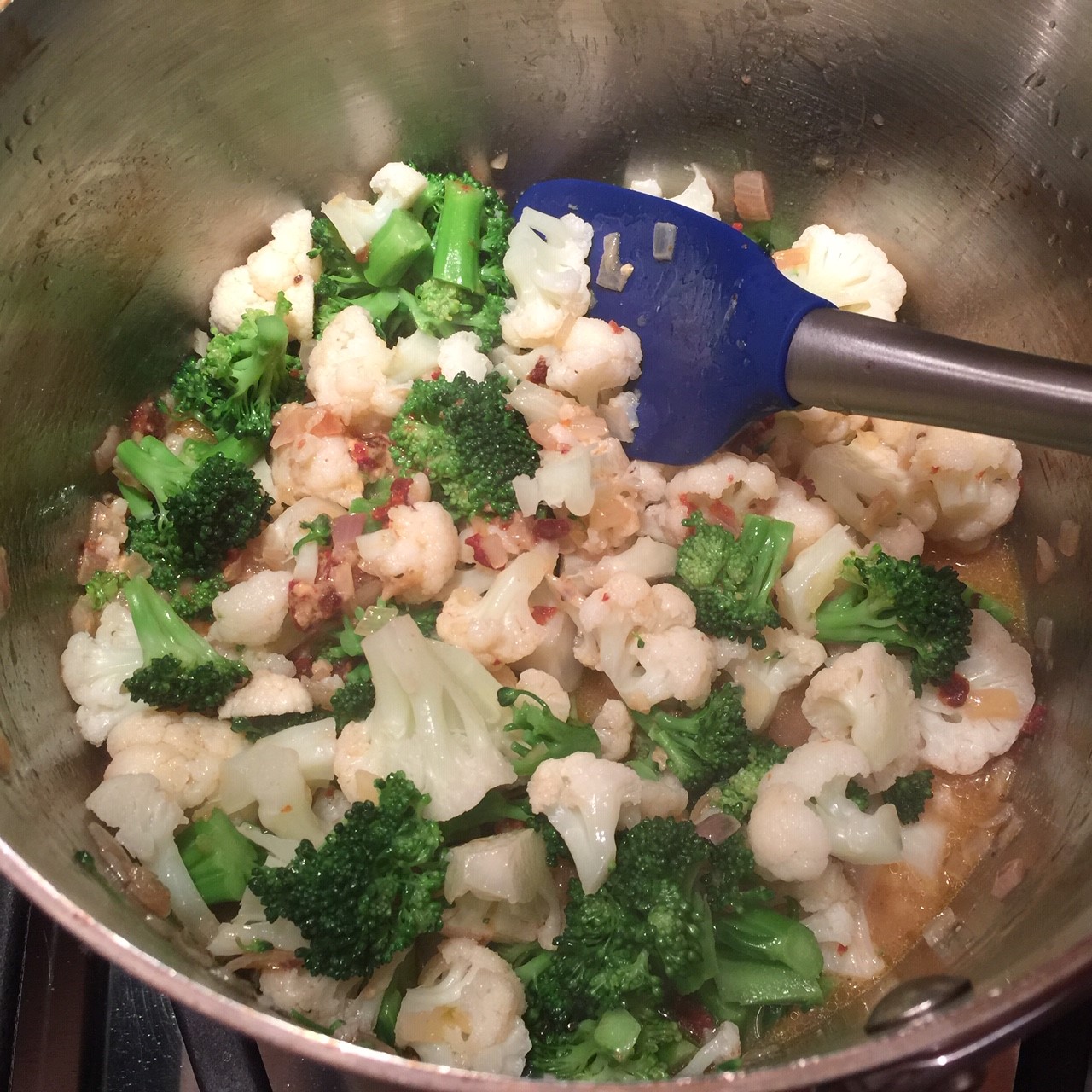 Add the pasta and lemon zest to the boiling water, cooking until the pasta is done.
 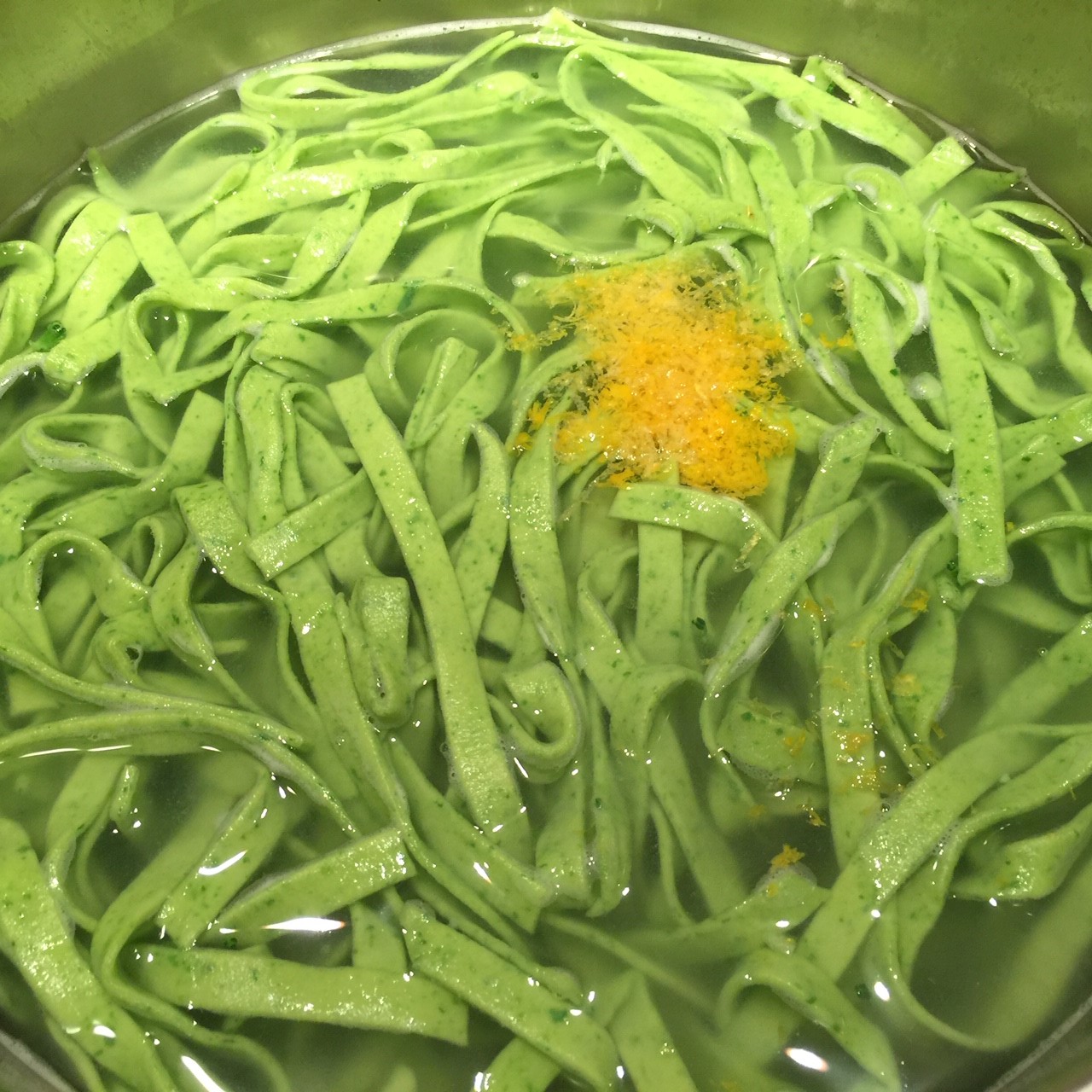 Save a cup of the pasta water in case you need it, then drain pasta. Into the empty Dutch oven combine the shallot mixture and pasta.
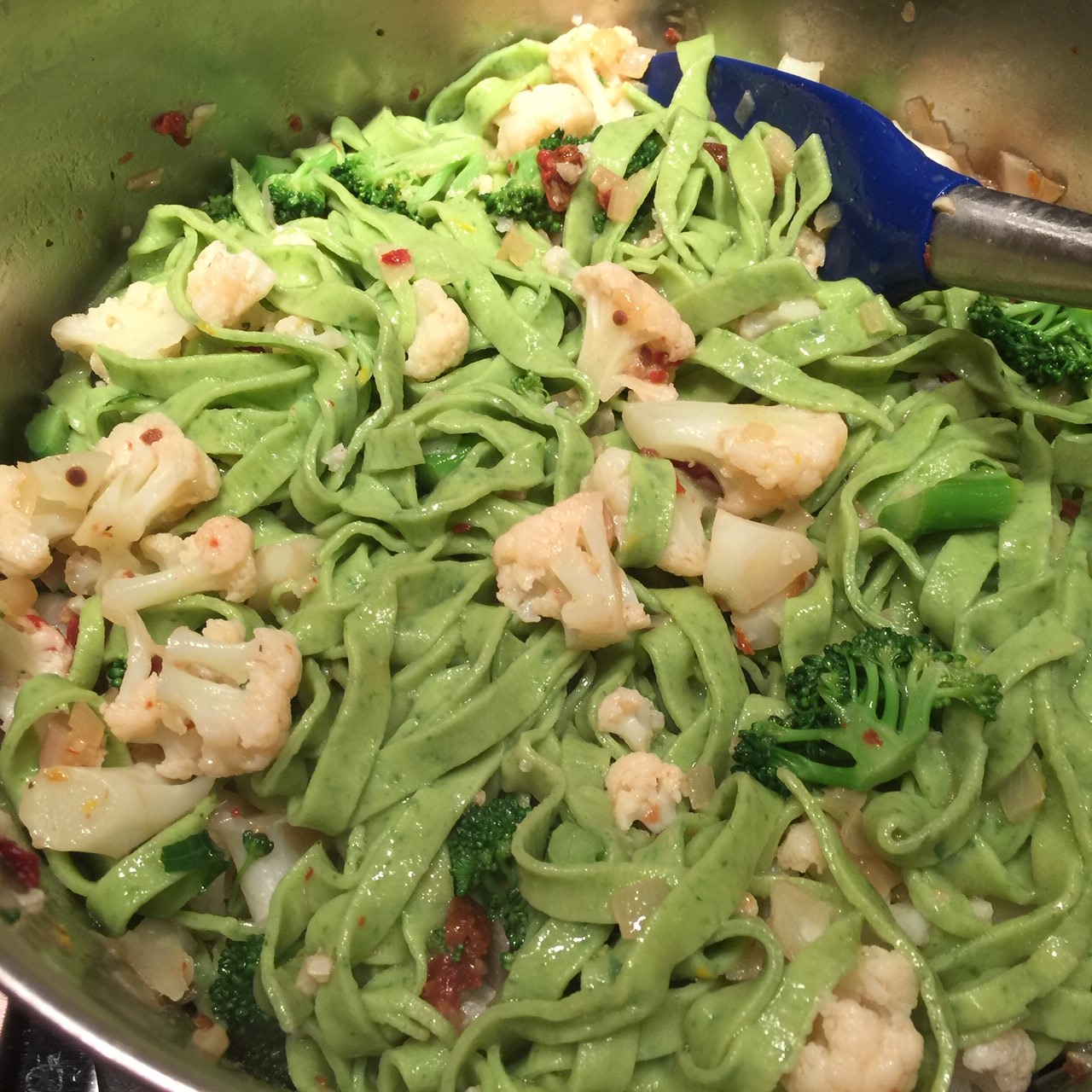 Adjust seasoning, if needed. Add saved pasta water if you feel it needs to be looser.
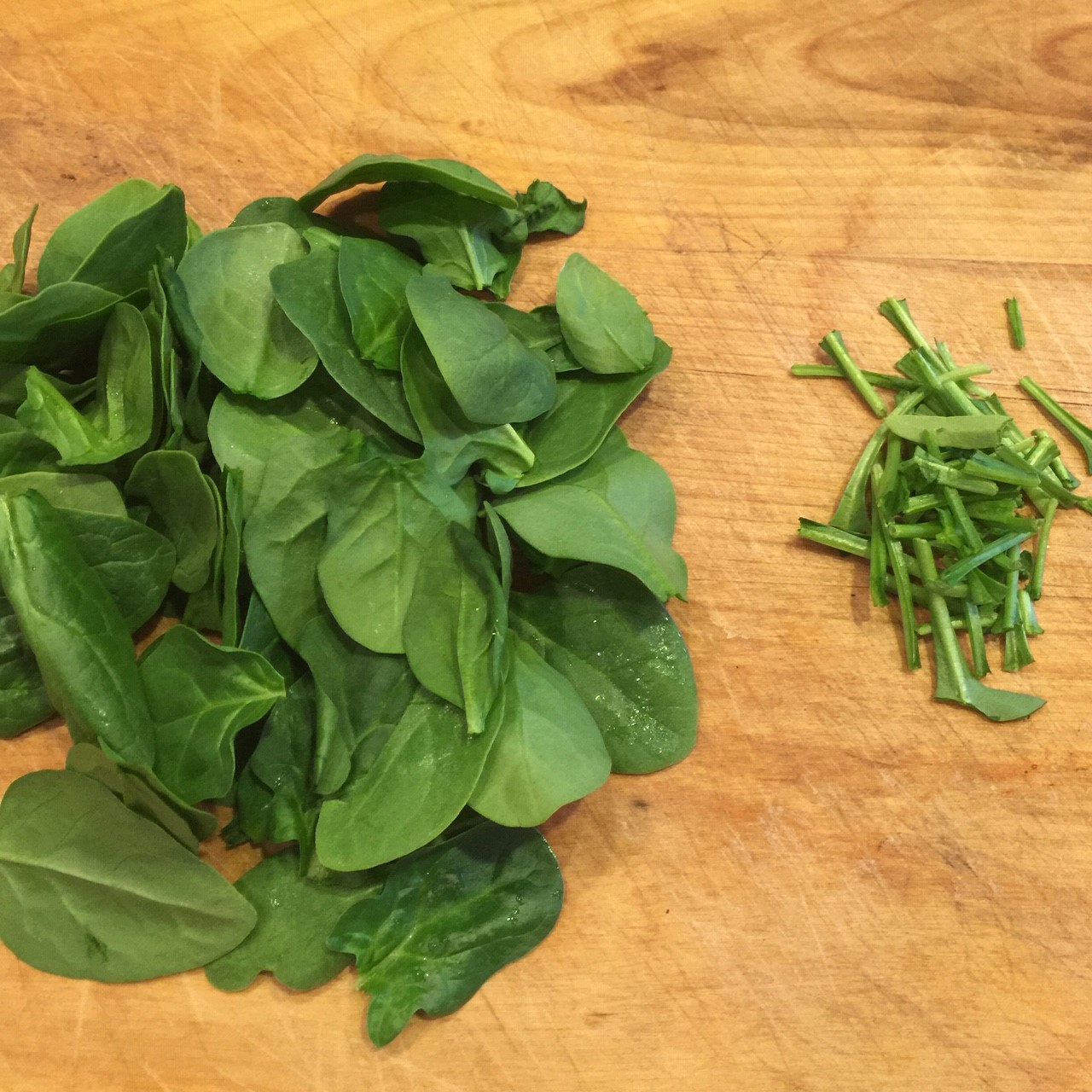 Chop leaves with knife, then place in food processor and pulse until leaves are very finely chopped.
 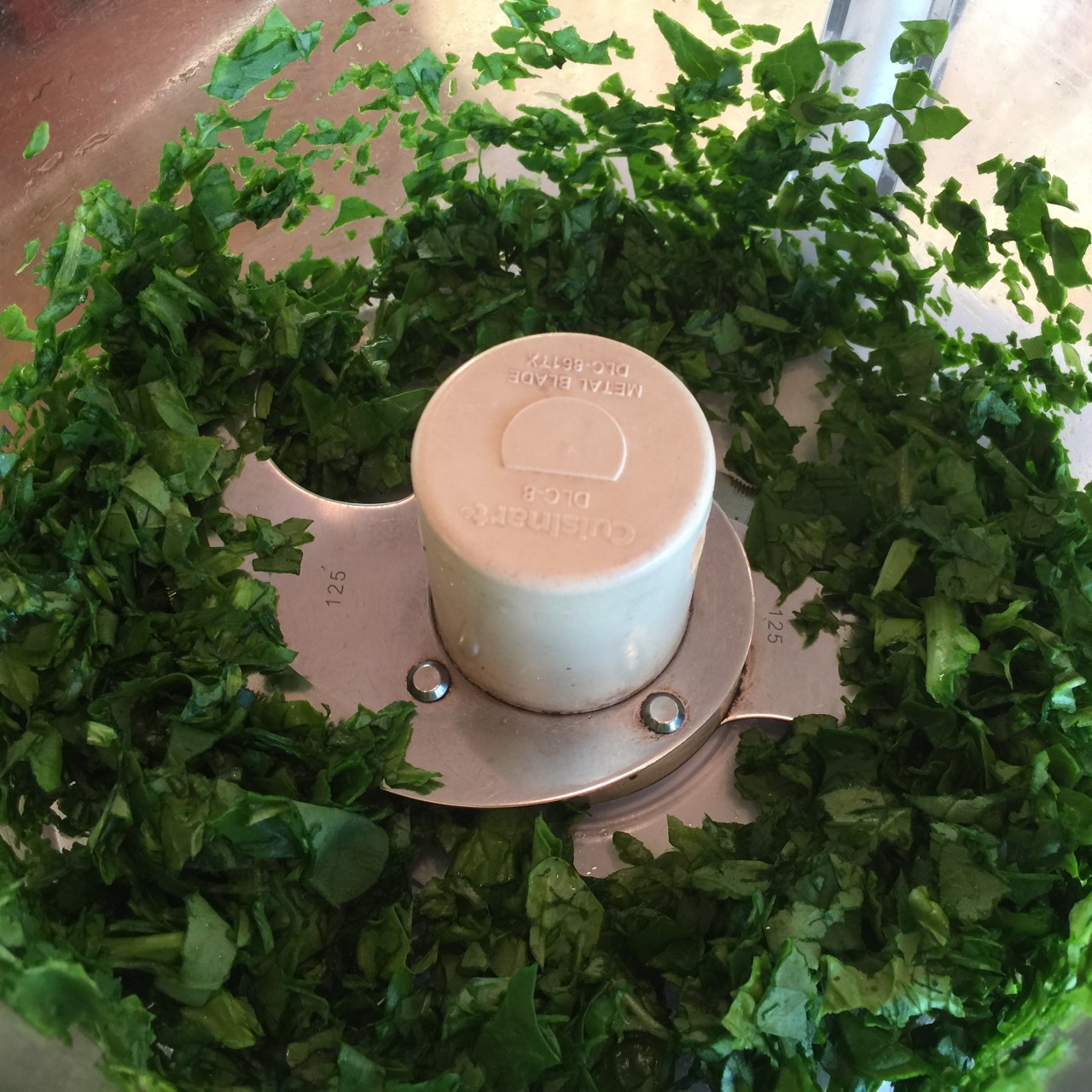 Add egg and oil, and pulse a few times to blend.
 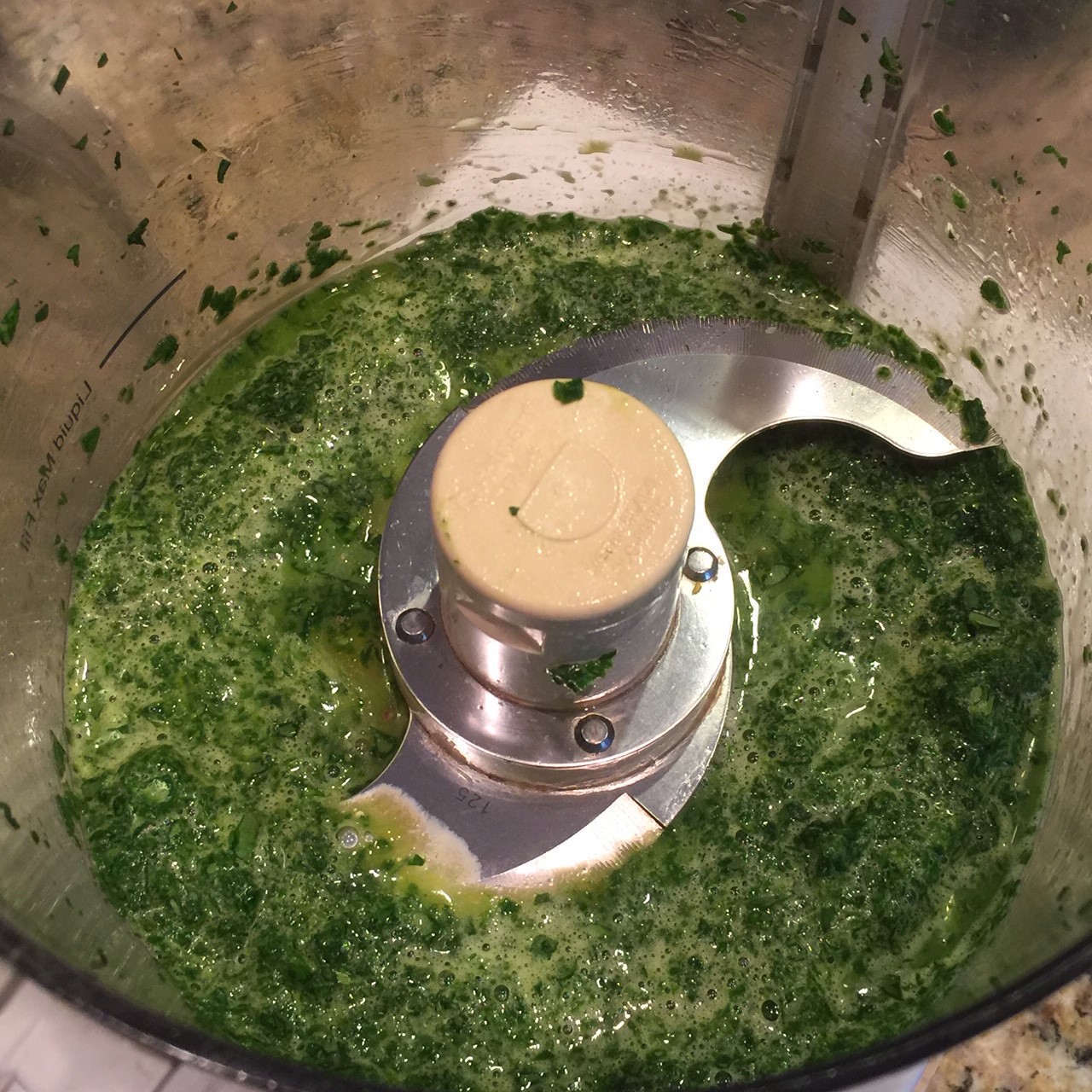 Pasta making is all about having the right ratio of liquid to dry ingredients. The spinach, egg, and oil are the wet, and the flour is the dry. You’ll have to go by feel since the water in the spinach and the size of the egg are variable. Don’t worry, there’s wiggle room!
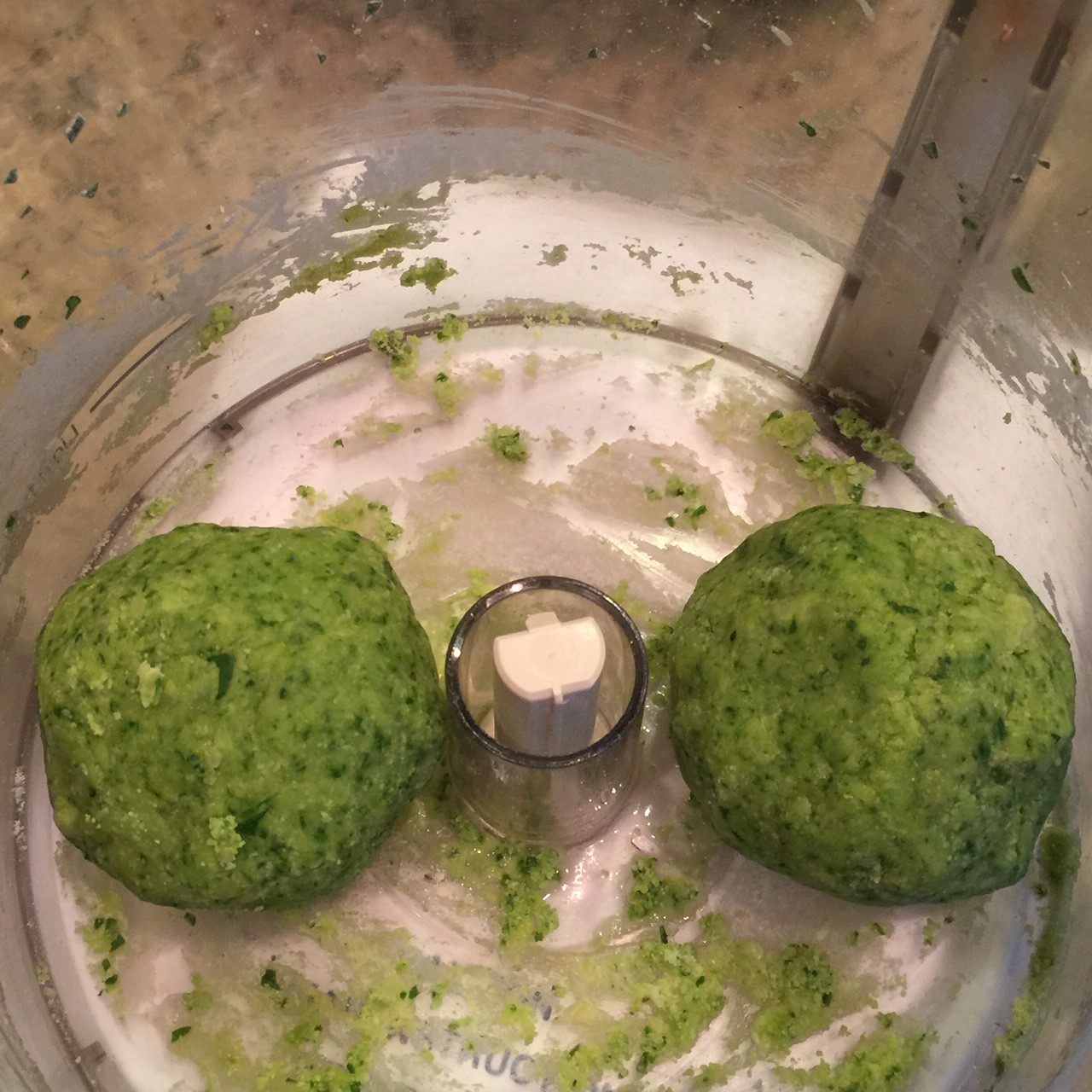
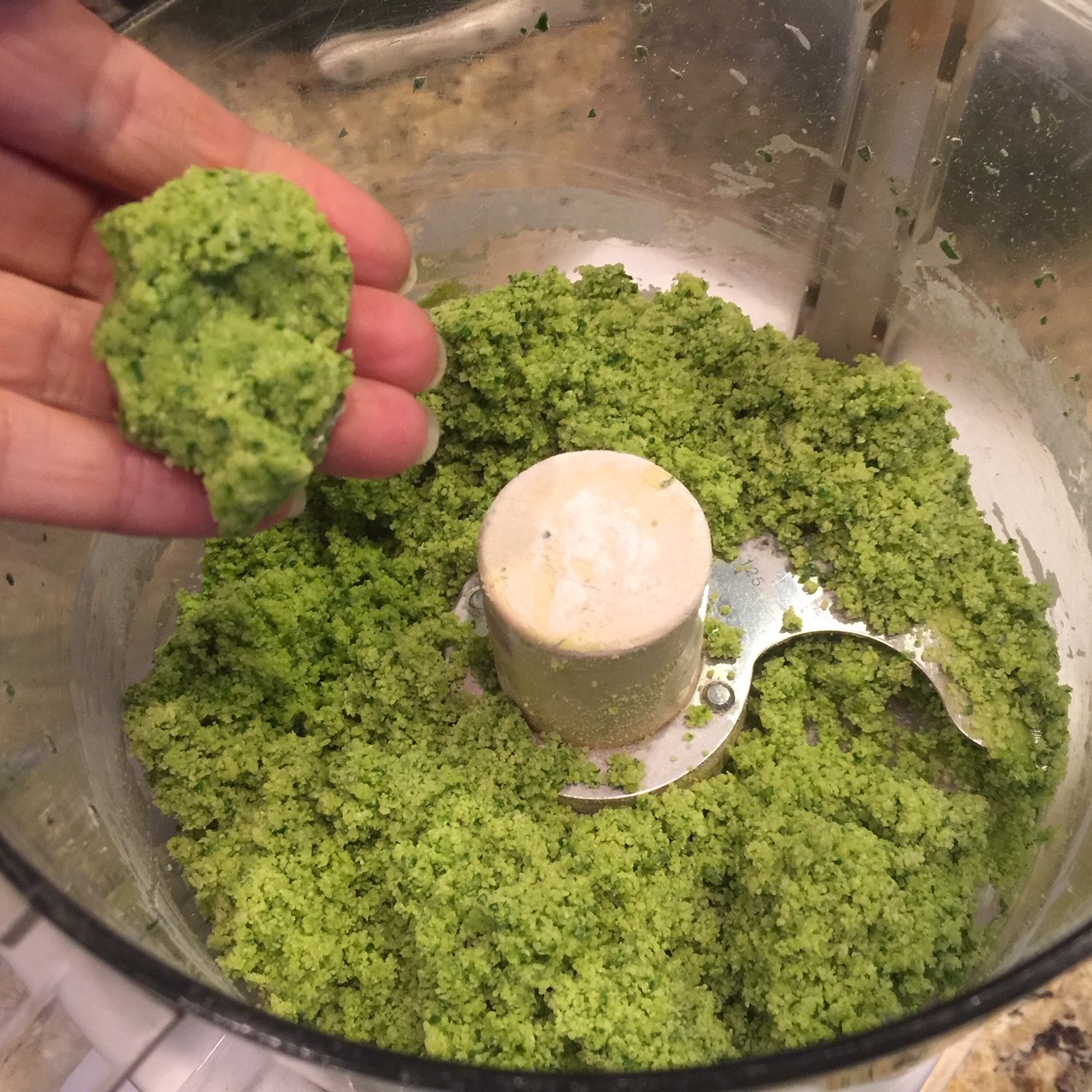 When dough reaches the proper consistency, form 2 balls and place them back in food processor with lid to rest for about 1/2 hour or so.
  Attach pasta machine to a table or countertop with plenty of room to lay out dough. You’ll also need something to hang the dry pasta over, such as a dowel. Pour about 1/4 cup of flour on the work surface. Work as quickly as you can so the dough doesn’t dry out.
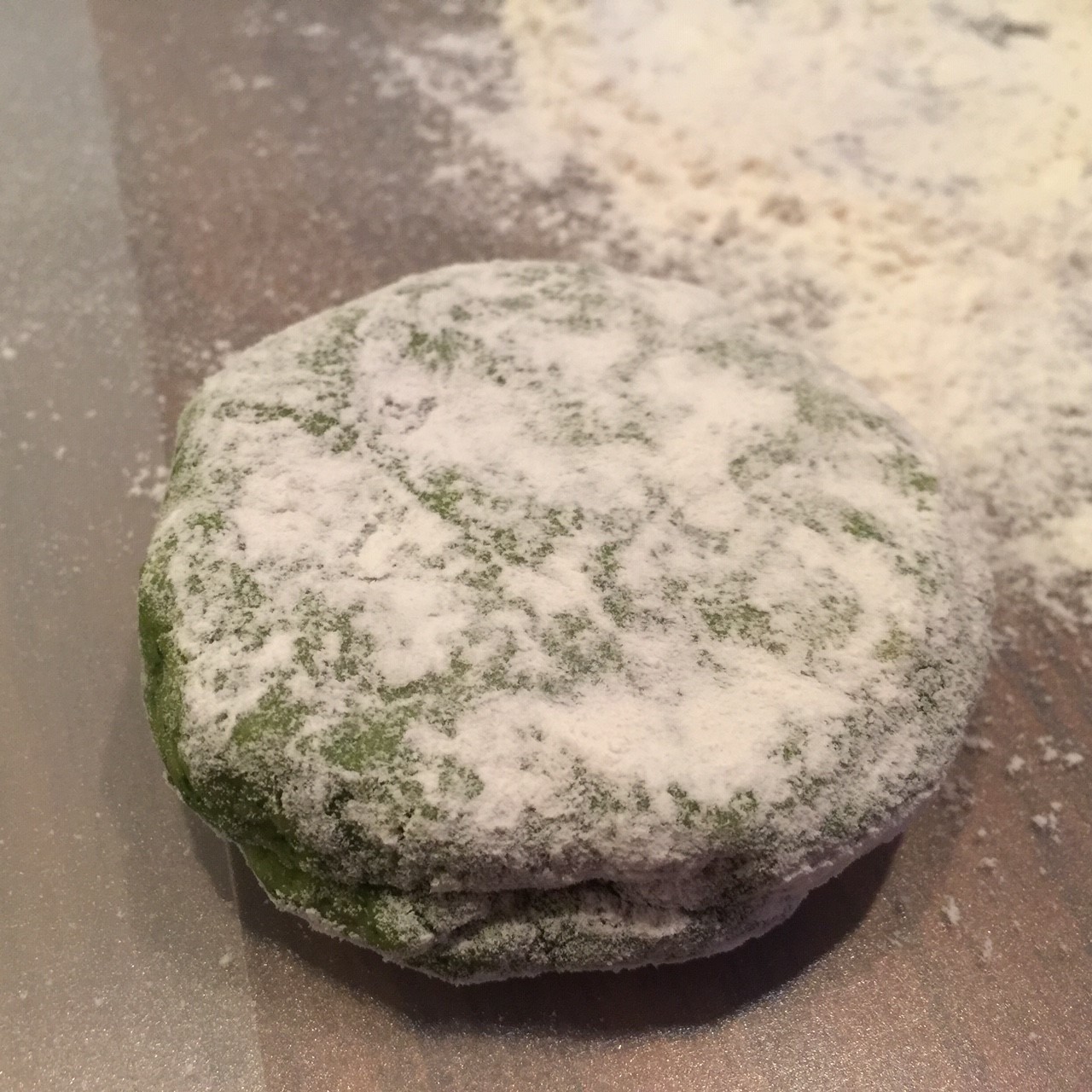 Brush off extra flour the run dough through machine at the lowest number setting (this will be either ‘0’ or ‘1’). Fold dough like an envelope and run it through again.
 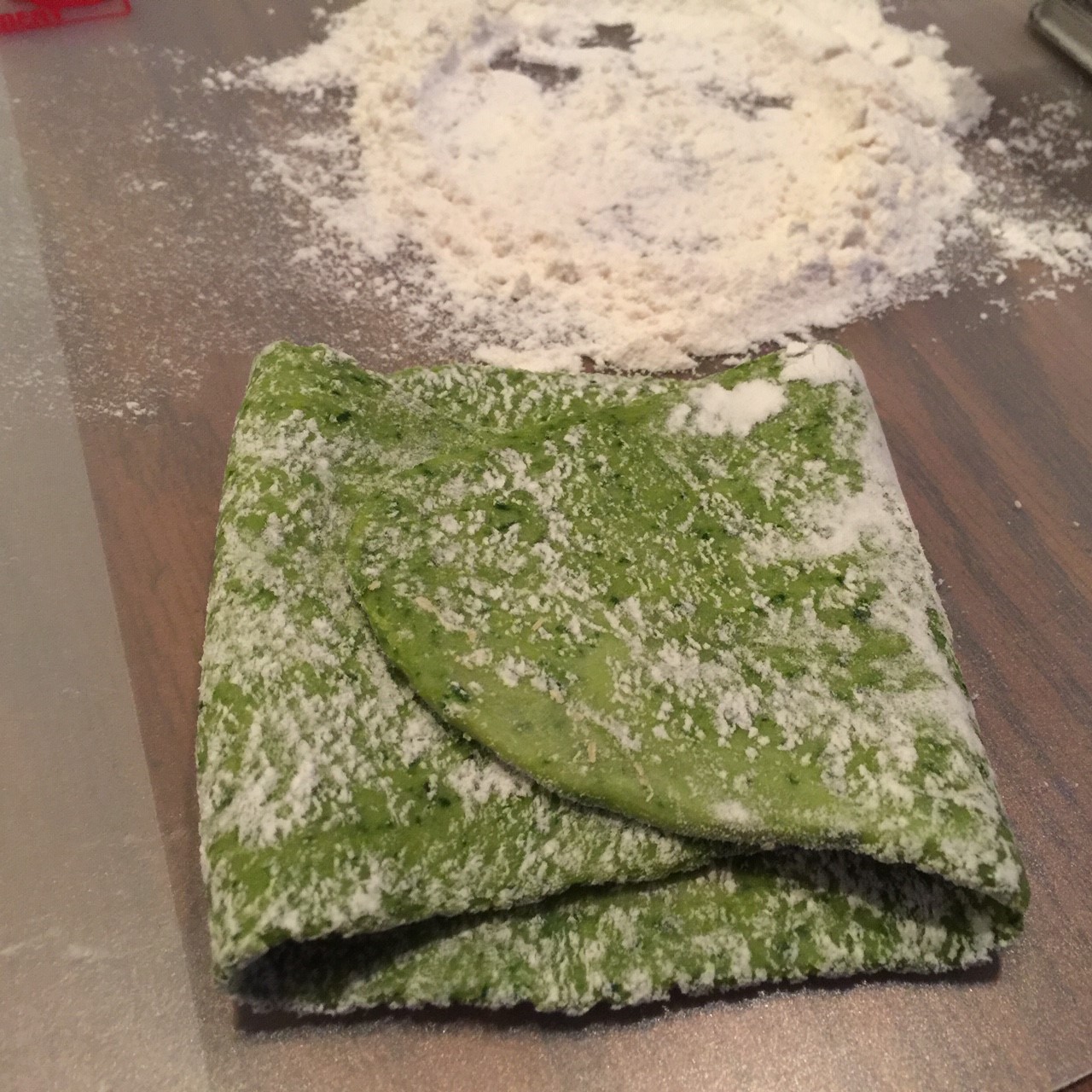 Lay dough flat and rub a little flour over both sides of dough.
 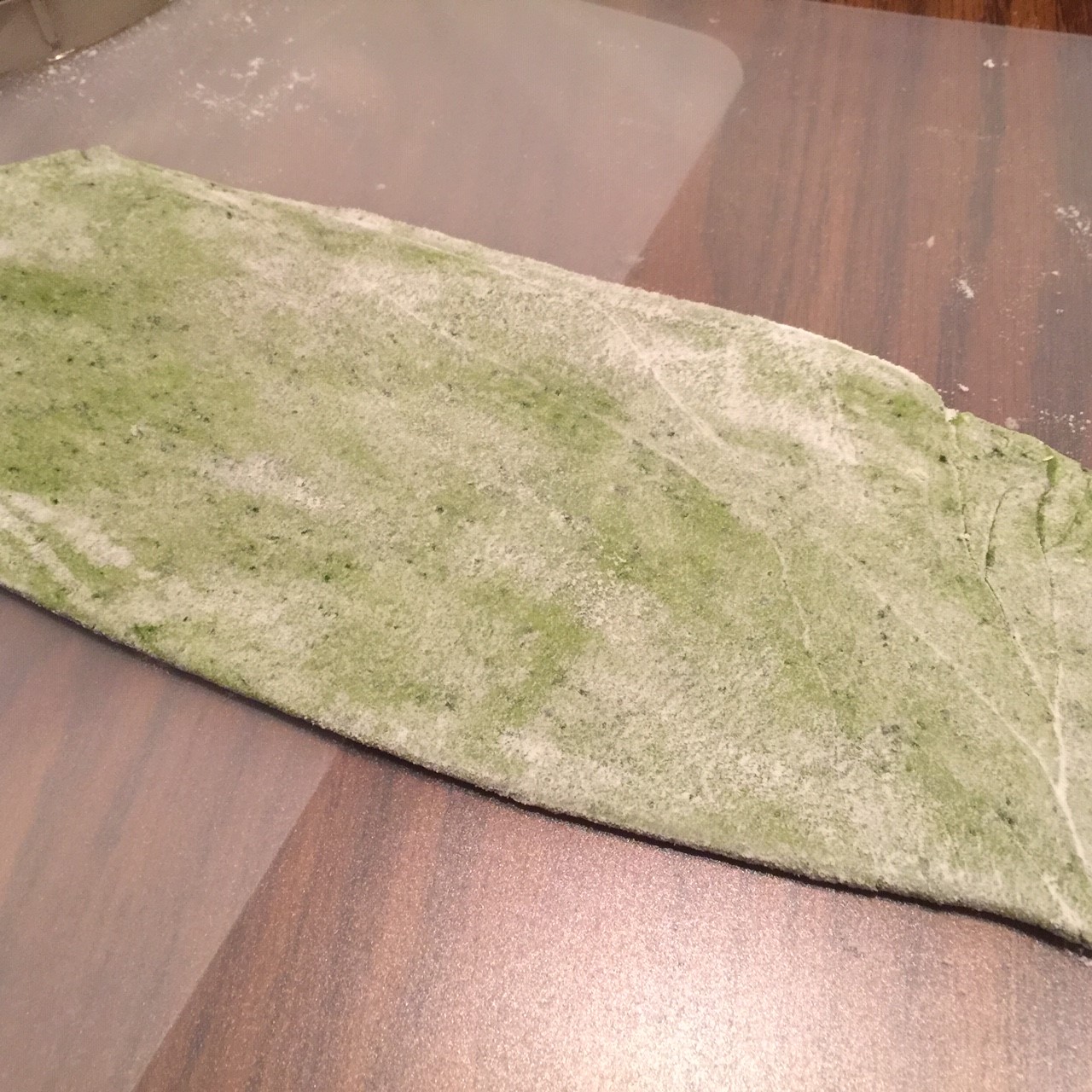 Fold in half and run it through machine at same setting. Repeat this last step 3 more times. You will have run the dough 6 times through the machine on the lowest setting. Repeat with second dough ball.
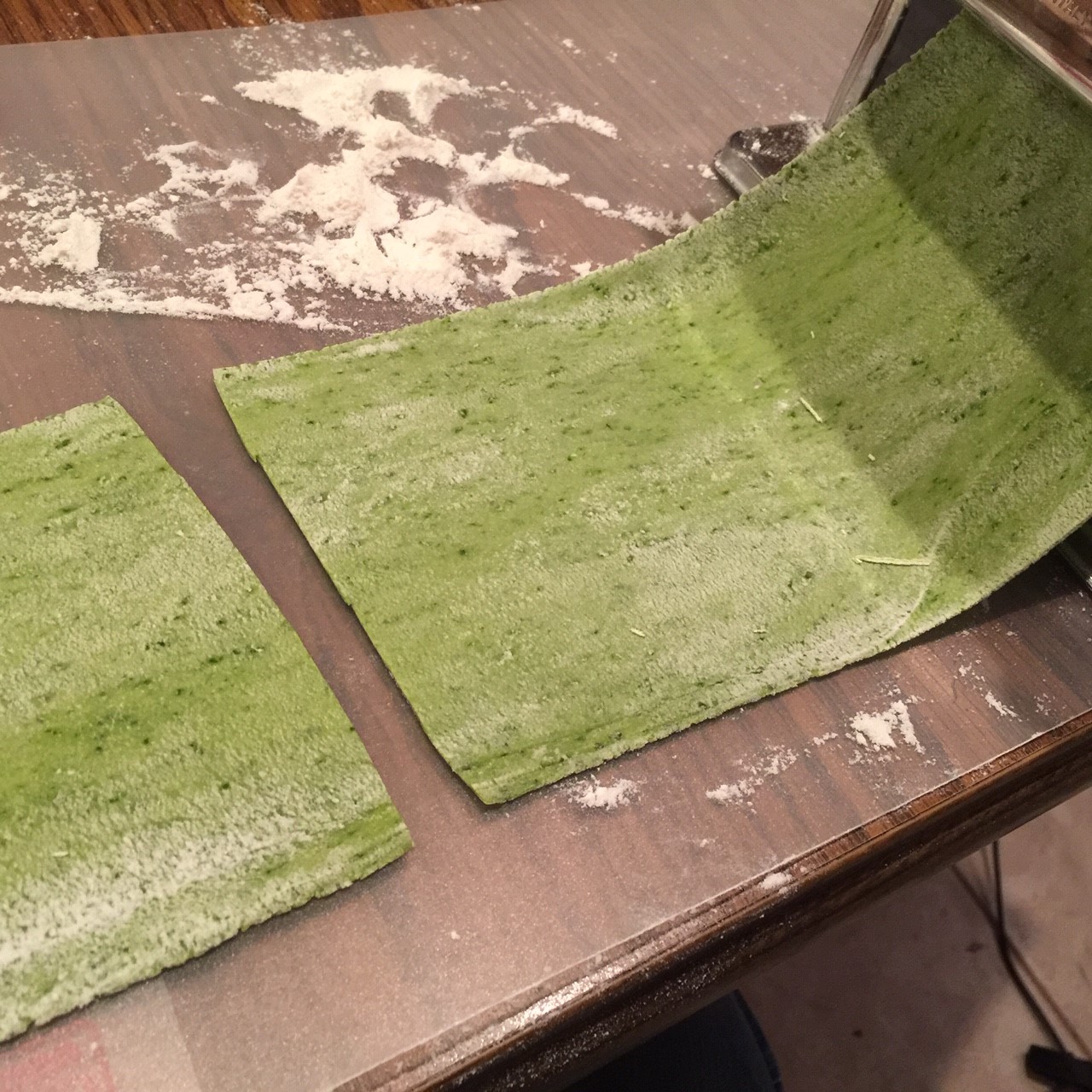 Run these pieces through the cutter before doing the other strip, so the cut edges don’t dry out.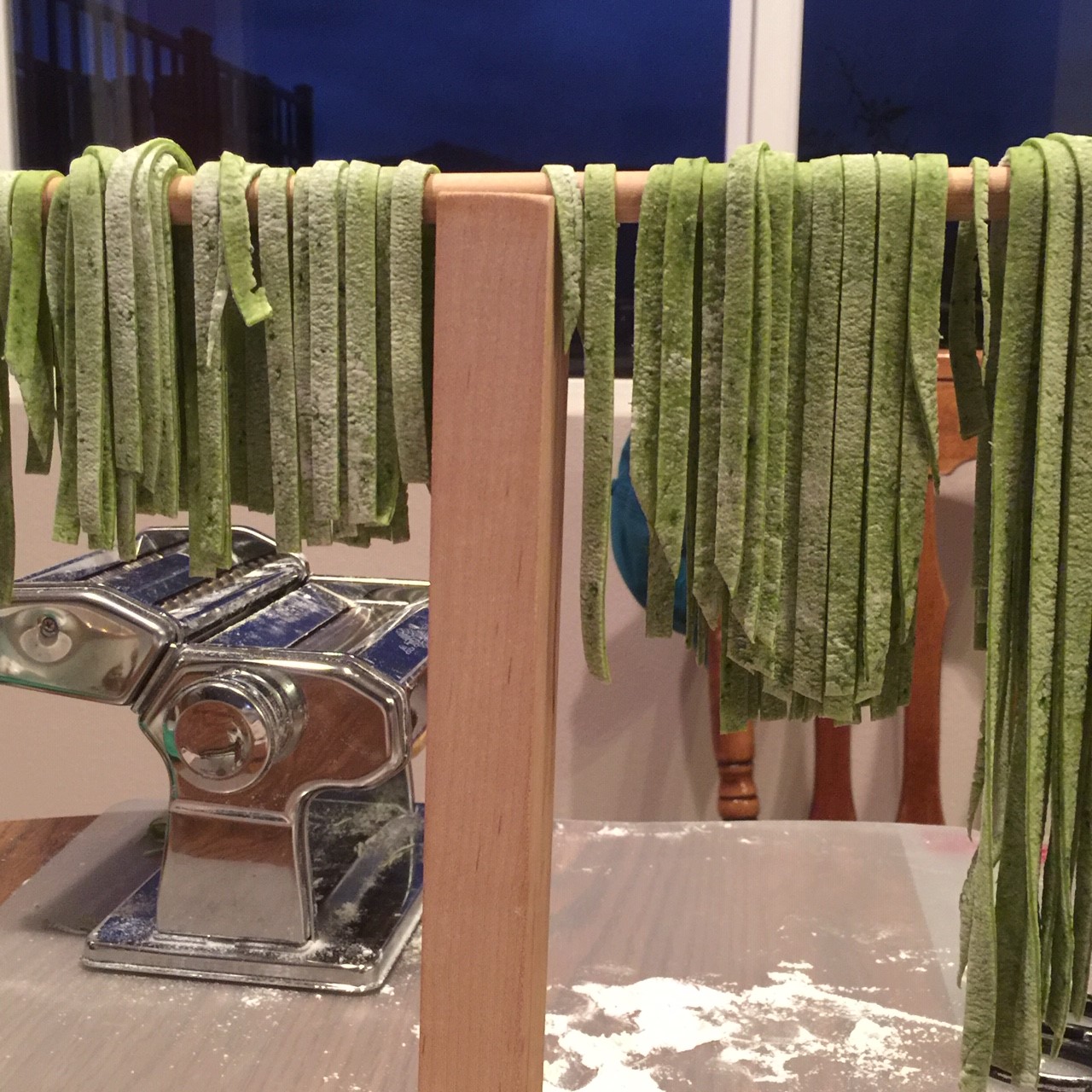
 Who doesn’t love a warm loaf of Italian bread? Well, now you can make one just as good as any bakery….for pennies!
 Cover bowl with a plate or tea towel and let the dough rest on the counter 18 – 24 hours (the longer, the better flavor). You’ll notice a significant change to the dough – it will become wetter and bubbly:
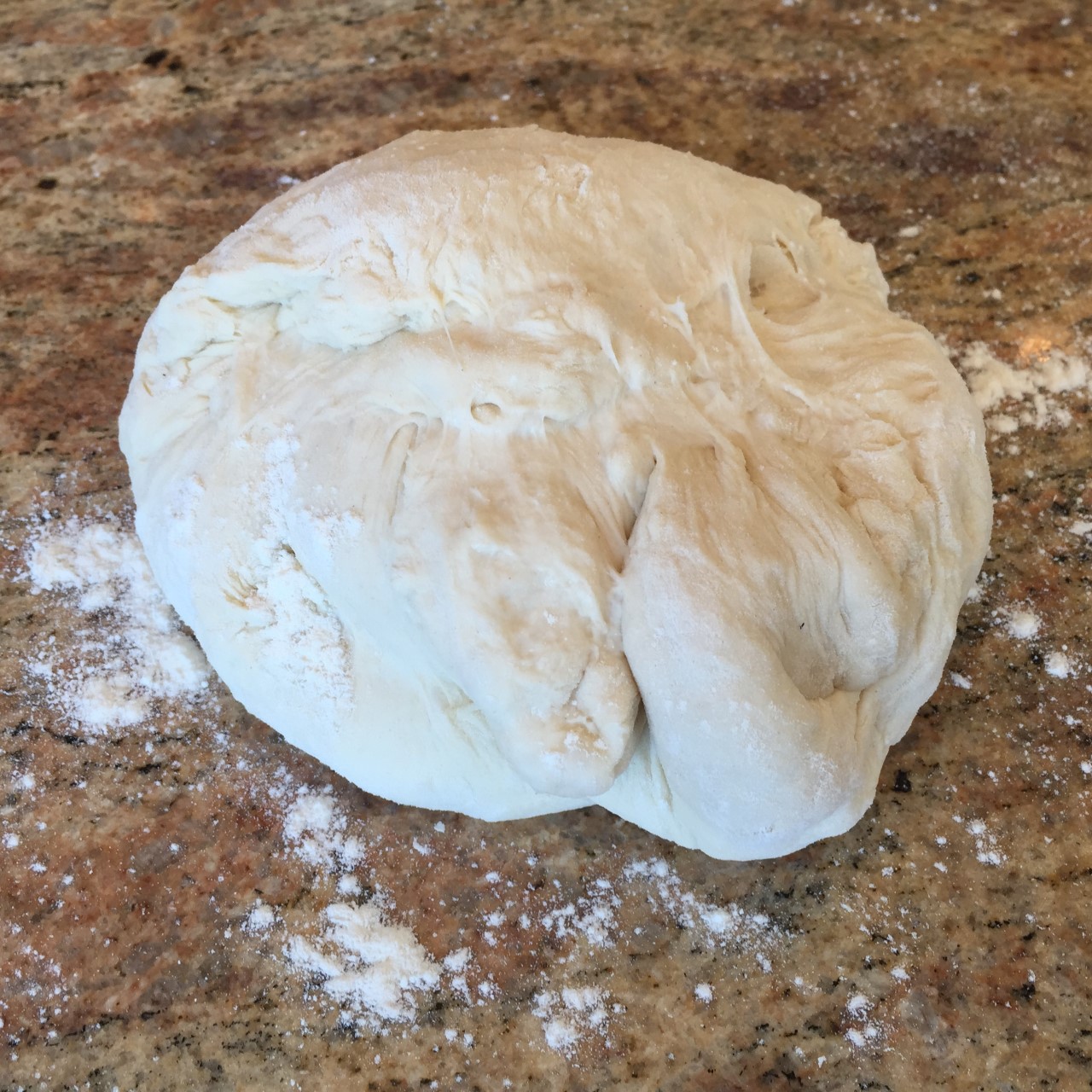 Cut a piece of parchment paper big enough to line a 3-4 quart saucepan with corner ‘ears’ sticking up. Rub paper with a light coating of vegetable oil and lightly sprinkle bottom with flour. Place dough in center of paper then lift the dough into the saucepan by the 4 corners of the parchment. Cover with lid and let rise on the counter for 4 hours.
 Cover with lid and place in cold oven. Immediately turn oven on to 450°F. (As the oven slowly heats, the dough will yield more oven rise.) Set timer for 1/2 hour.
  After 1/2 an hour, remove lid and continue baking without the lid until the temperature of the interior of the loaf reaches 209°F.
 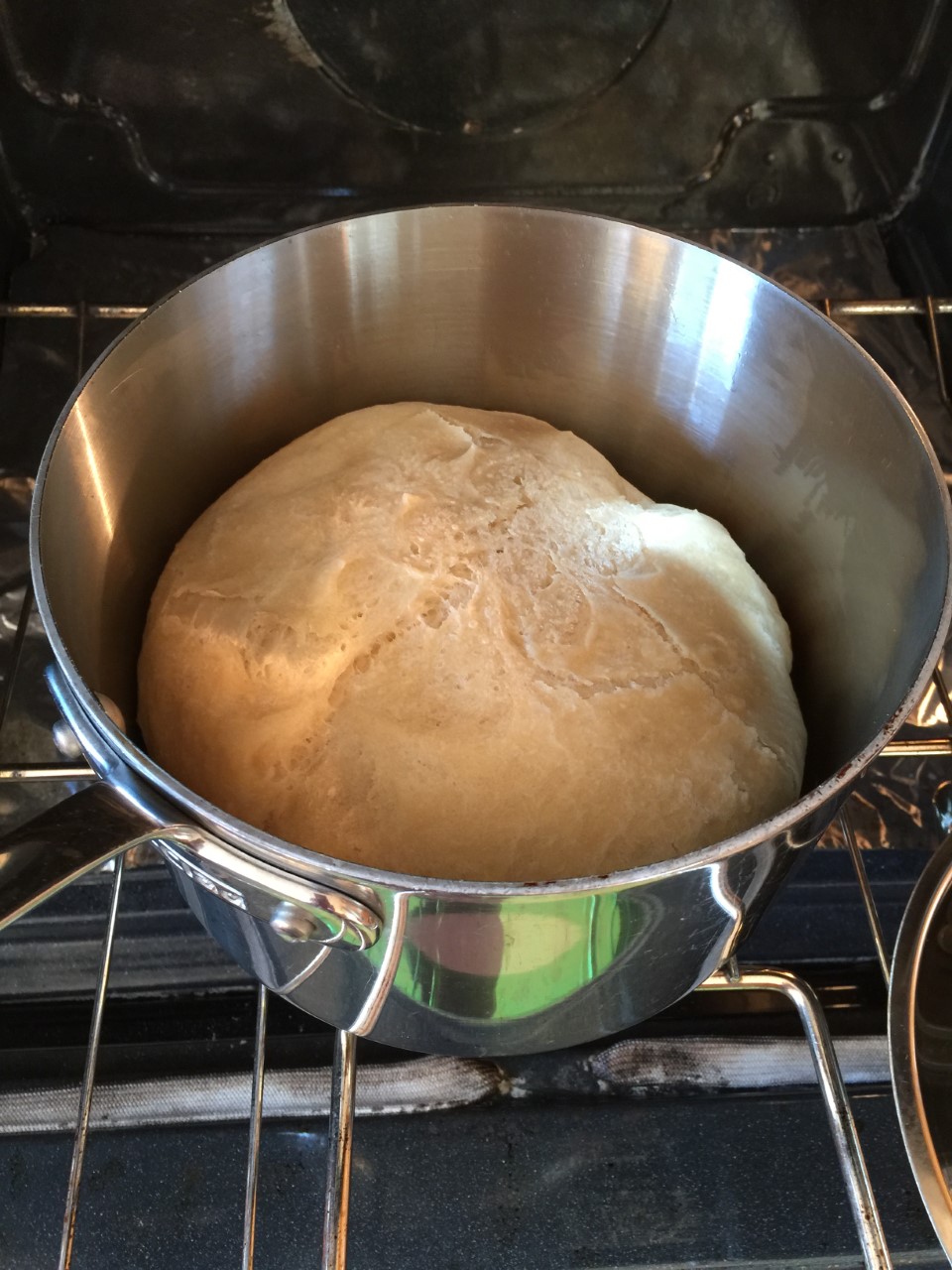 If you don’t have a thermometer, do a visual check – the top should be well browned. Remove the loaf and the bottom should be browned, too.
 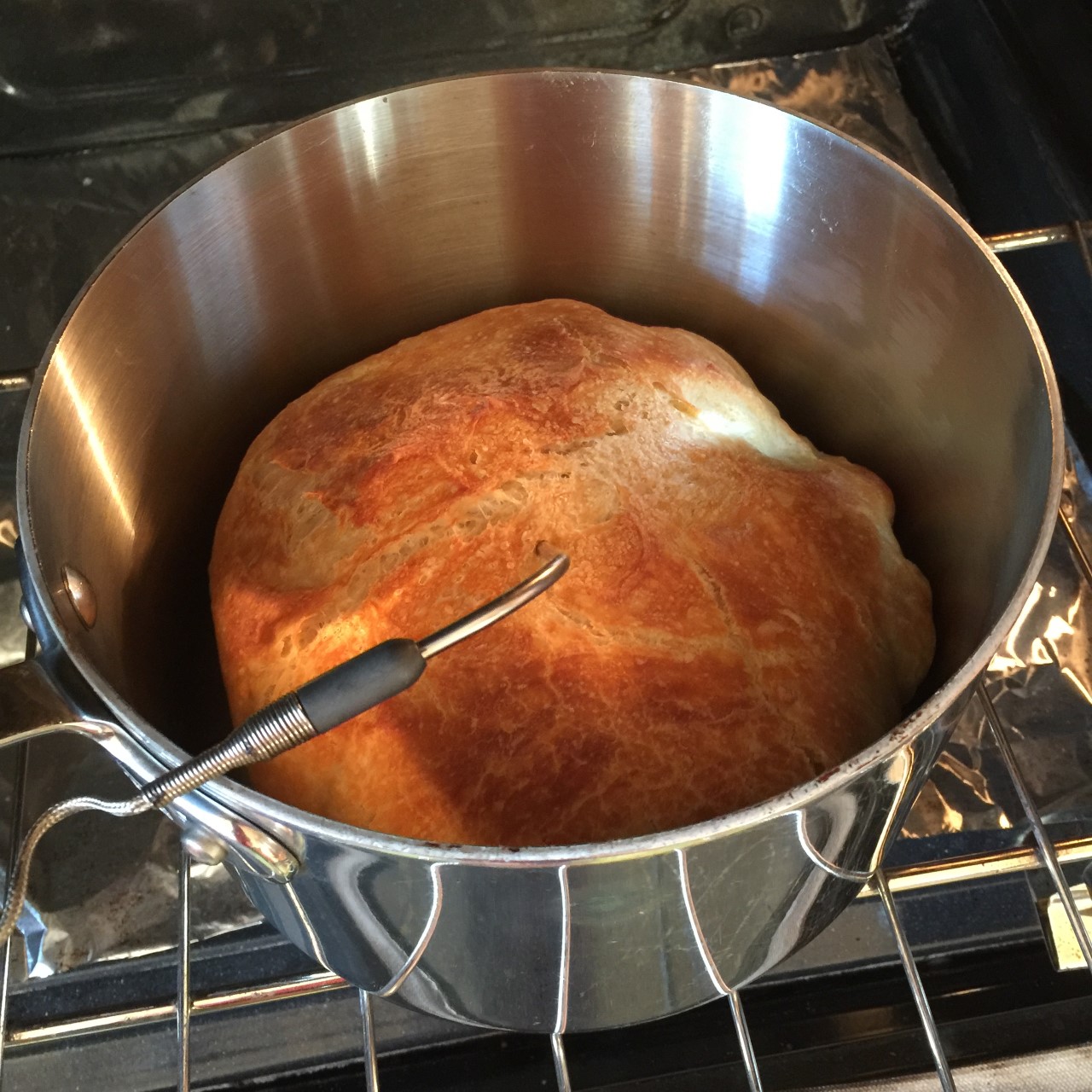 Remove loaf from pan to a wire rack to cool. Let loaf cool at least 20 minutes (this takes some will-power) before slicing in order to get a cleaner slice.
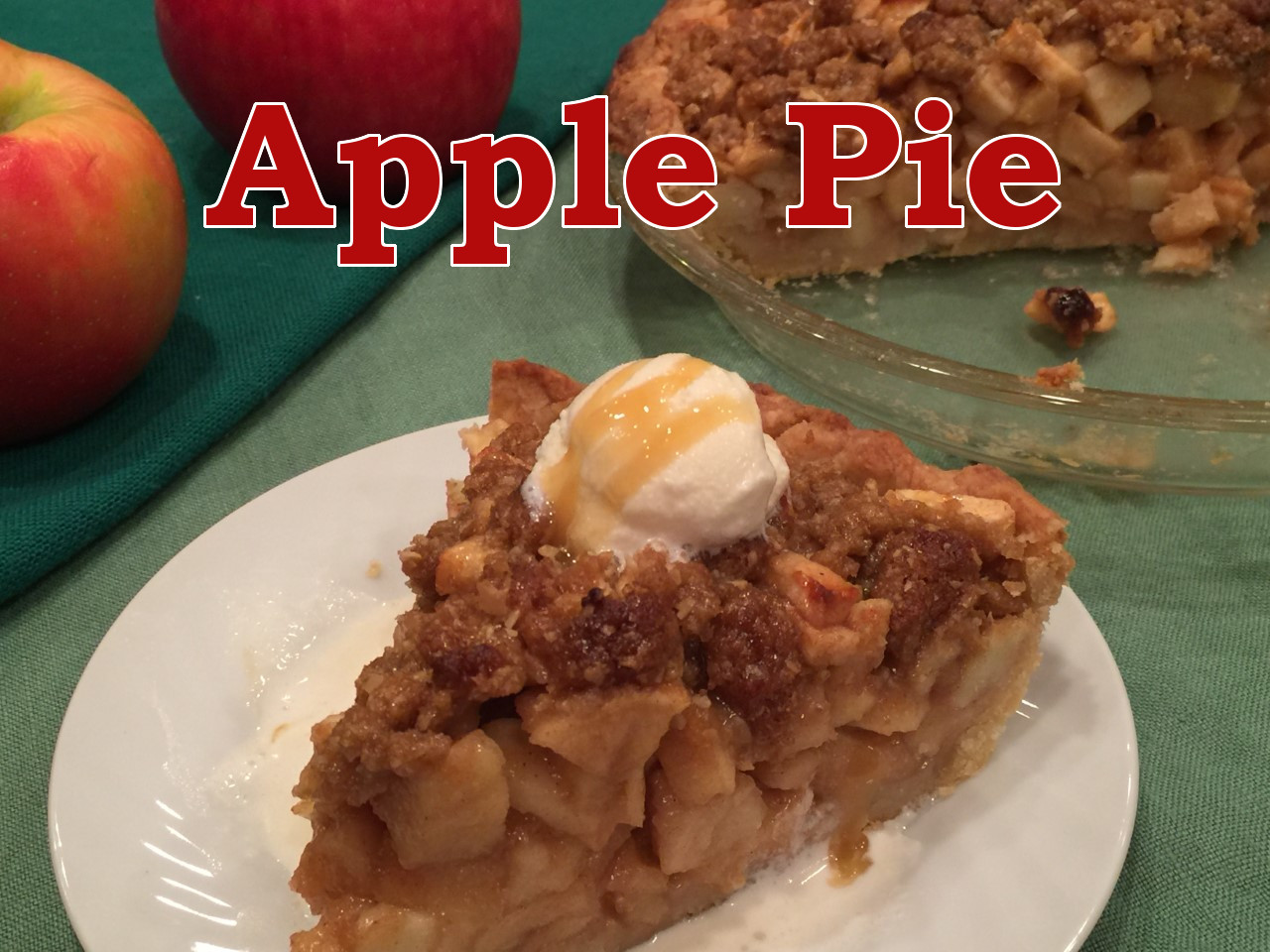 There is a reason people say, “easy as pie”. Making a pie IS easy. Of course, making a great pie is as easy as making a bad one, so it’s important to have a great recipe.
 Working quickly, peel and core the apples. Cut 3 of the apples into 1/8″ thick slices, and the other 3 a little thicker. Make sure they’re bite-sized for ease of eating – you don’t want long strips of apple.
  Add apples into the flour mixture and blend well.
  Pour into the cooled pie crust – there’s a lot of filling, so you’ll have to pile it high towards the middle. Make sure none of the apple pieces sit on the crust edge.
 To prevent over-browning, cover the pie edge with foil or purchased pie edge protectors (see photo of what I use).
 Bake at 375º for 25 minutes.
 When the pie has cooked for 25 minutes, remove from oven. Evenly sprinkle on streusel and remove the edge protectors. Return pie to 375º F oven and bake another 20-25 minutes. Don’t let the top get too brown or it will make slicing difficult to cut through.
  Place pie on a rack or stovetop and drizzle on the caramel topping. Let set at least 1 hour, preferably longer, or you’ll have a lava flow when you slice it.
 Vegetarian Cooking For Carnivores BLOG