While looking through my manilla file folder of recipes (yes, I still have one from days of yore), I came across a magazine clipping for lemon quick bread. Through the years I’d been tempted to try it but, as a fierce chocoholic, I’d always set it aside in favor of….well, chocolate.
Now that we live in a house with a lemon tree, I decided the time had come and made the Lemon Quick Bread. Like most quick breads, it’s fast and easy to prepare. But, more than that, it was absolutely delicious. So tender, yet firm!
NOTE: The recipe called for brushing a syrup made with a lemon juice and sugar onto the baked bread. But, for those who prefer a more powerful lemony punch, I’m adding an alternate choice of a pucker-inducing lemon icing that can be either piped or smoothed on top of the syrup.
ADDITIONAL NOTE: You can use either a glass or metal loaf pan. I’ve found the metal pan cooks the loaf faster and produces less of a crack on top.
LEMON QUICK BREAD – makes 1 standard loaf
195g (1.5 cups) plain or all-purpose flour
1 tsp baking powder
3/4 tsp salt
99g (1/2 cup) vegetable oil
212g (1 cup) granulated sugar
2 eggs
3g (1 tbsp, packed) lemon zest
125g (1/2 cup) milk (any kind – I use 2%)
45g (1/2 cup) walnuts, chopped and lightly toasted
36g (3 tbsp) lemon juice
25g (2 tbsp) granulated sugar
Optional lemon icing:
125g (1 cup) icing or powdered super – no need to sift
22g (1.5 tbsp) lemon juice
Preheat oven to 180°C / 350°F
Grease sides and bottom of a standard loaf pan. Line the bottom with baking paper – this will make removal of the loaf easier. If you don’t have baking paper, make sure to grease the bottom well.
In a small bowl, mix together the flour, baking powder, and salt. Set aside.
In the bowl of an electric mixer, beat the vegetable oil and 212g (1 cup) sugar on high for 2 minutes.
Add in the eggs and lemon zest. Beat on medium speed to blend well – about a minutes or so.
Add in the flour mix and beat on low until flour is almost all incorporated. Then add in milk on low speed until milk is just incorporated – you don’t want to overmix, Finally, stir in nuts.
Pour into prepared loaf pan.
Bake at 180°C / 350°F for about 50-60 minutes. The crack along the top, which always forms on my loaves, should NOT be liquidy – bake until it firms up (54 minutes in my oven).
Prepare the syrup while loaf is baking: in a small pot, add the 36g (3 tbsp) lemon juice and 25g (2 tbsp) sugar. Over medium heat, bring to boil to melt the sugar. Remove from heat and set aside.
When loaf is done, remove from oven. Remember to touch the crack – if it’s still wet, cook a bit longer.
While still in the tin, poke the top all over with a skewer, going down about halfway. Brush on (or drizzle) the lemon syrup – use it all. Let set 10 minutes.
Run a rounded tipped (so as not to scratch your tin) knife around the edges, then flip to remove from tin. Remove the baking paper.
Set right-side up on a wire rack to cool completely.
OPTIONAL LEMON ICING
When ready to ice loaf, prepare the icing.
Into a small bowl combine the 125g (1 cup) icing (powdered) sugar and 22g (1.5 tbsp) lemon juice. Smash all the lumps from the sugar.
You can either ice the top entirely or pipe. If too thick to pipe easily, add a tiny more lemon juice, if too thin, add more sugar.
They’re coming – home gardeners who planted more zucchini than they need, arms laden with these beauties who just yesterday were 7″, today the size of props in a sci-fi film. Never one to turn down free food, I thank them and start planning. Of course, there’s zucchini bread, zucchini stir-fry, and spiralizing zucchini.
Then it hit me:
ZUCCHINI SOUP!
It can be a meal in itself or as a starter. Bonus: it freezes well!!!
ZUCCHINI SOUP
Note: Don’t worry about the chopped veggie sizes – everything will be blended
82g / 1/2 cup uncooked couscous (not the Israeli pearl couscous)
OPTIONAL: greens, such as Swiss chard or spinach pieces
OPTIONAL: small pieces of bread, such as pita
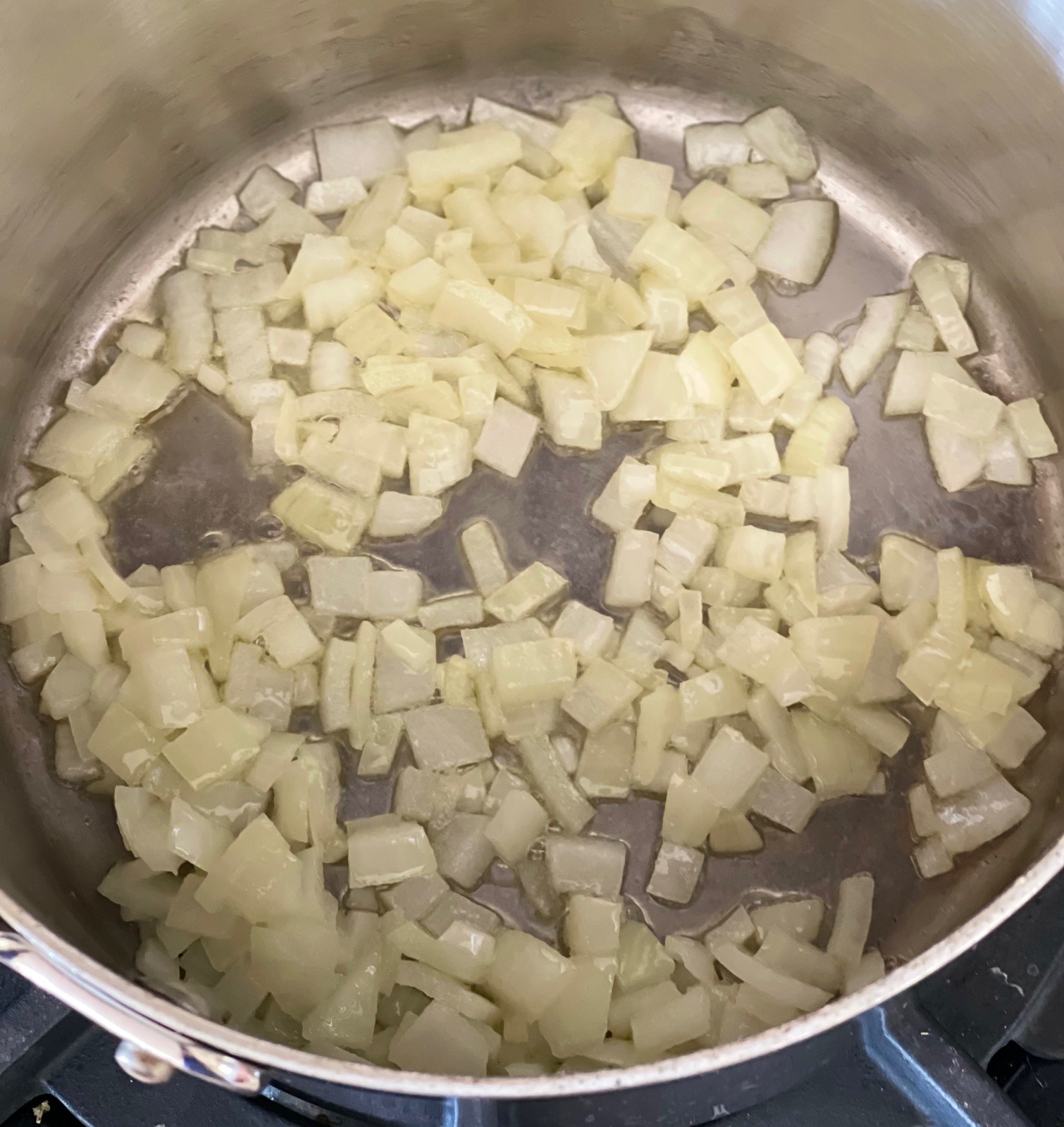
In a large saucepan (2 litres / 8 cups), melt the butter. Add onions and, over medium-high heat, saute for 5 minutes. Stir often.
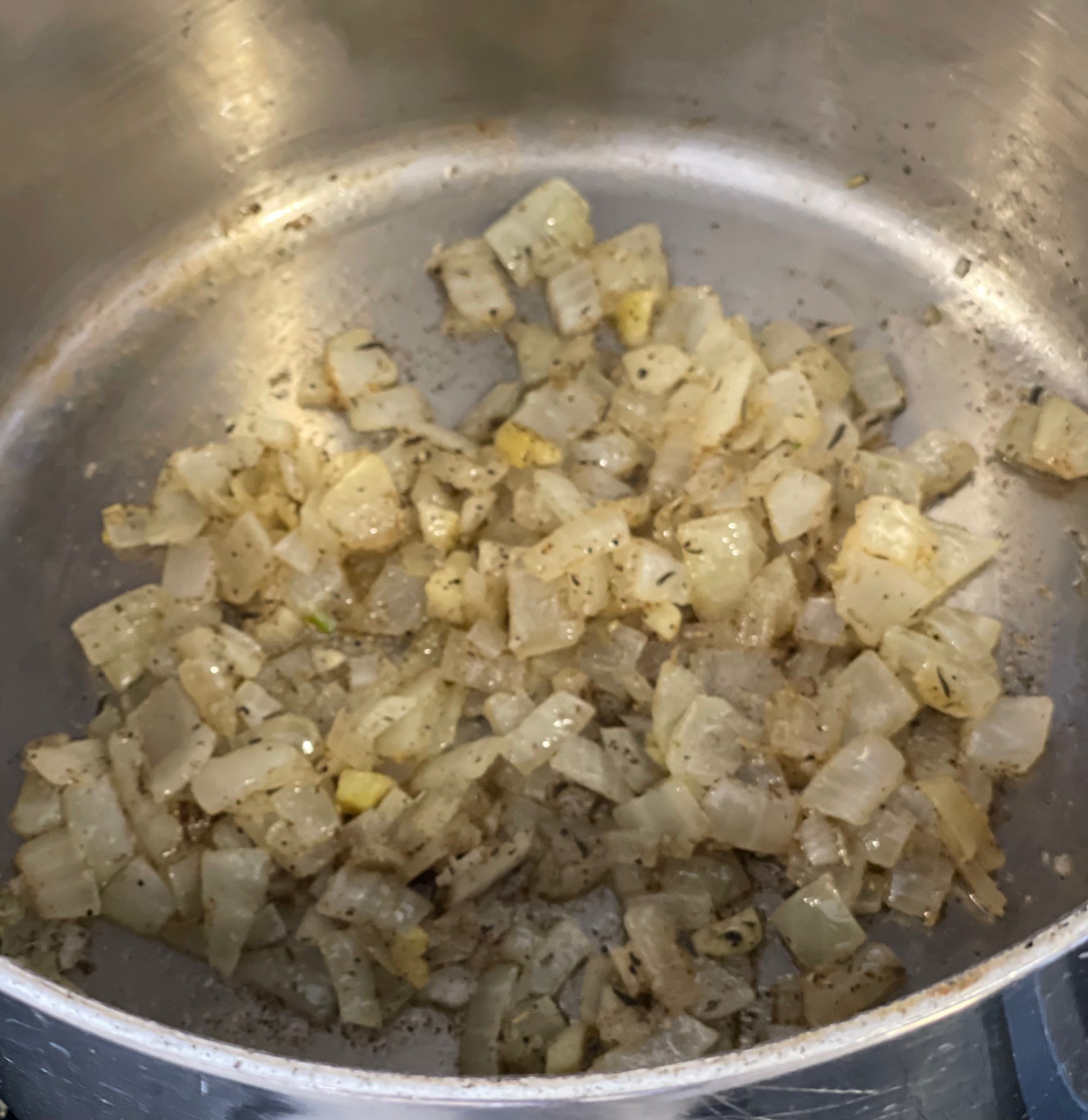
Add in garlic, rosemary, thyme, celery salt, Kosher salt, and black pepper. Over medium heat, saute about 1 minute to bloom the herbs, stirring constantly.
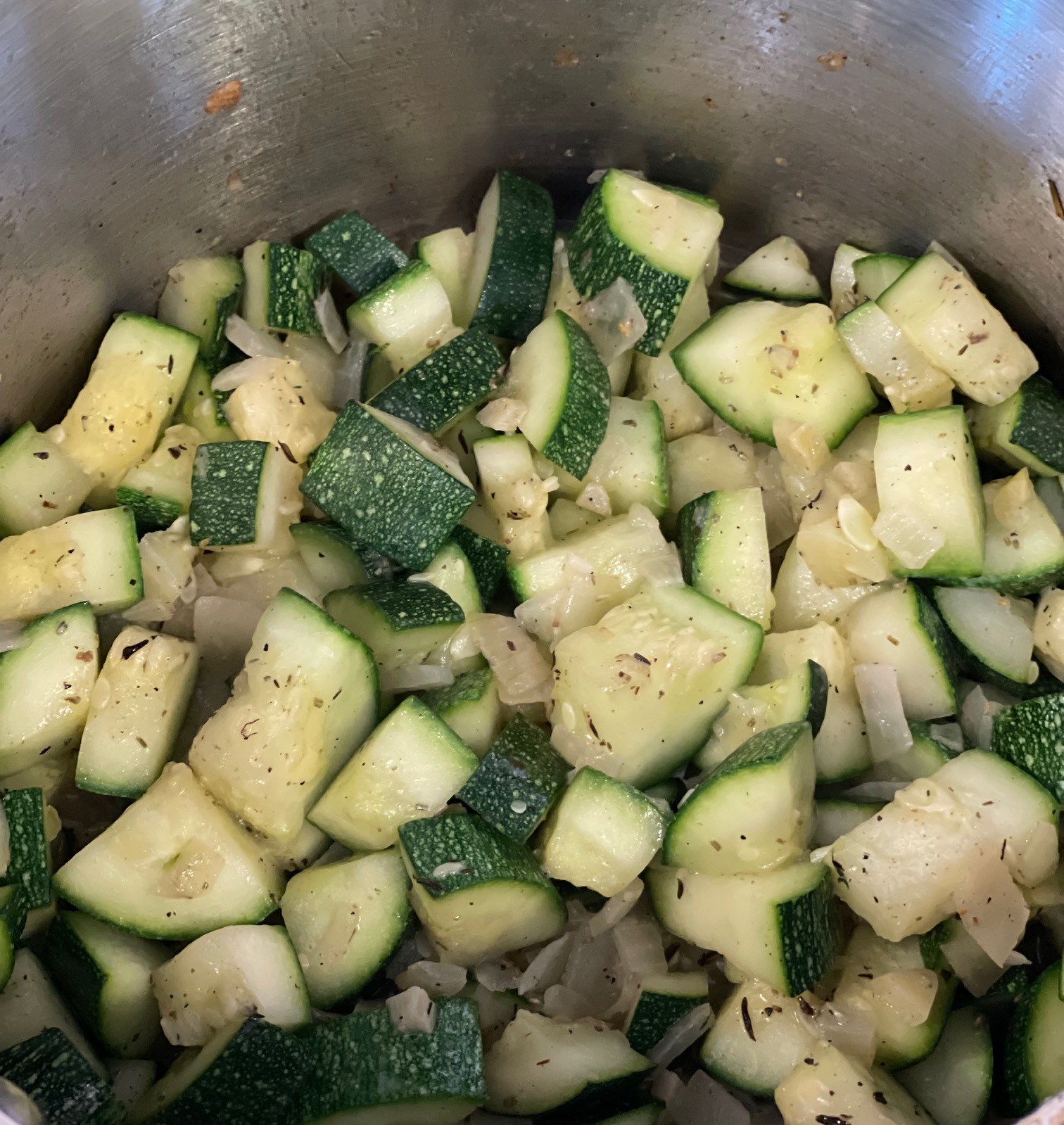
Add in zucchini and, over medium-high heat, saute 5 minutes, stirring often.
Add the potatoes, vegetable broth, soy sauce, and couscous to the pot. Bring to a boil, then decrease flame to maintain a simmer.
Cover the pot, leaving the lid slightly askew to prevent the liquid boiling over. Simmer for about 20 minutes, testing the potatoes are easily pierceable with a knife.
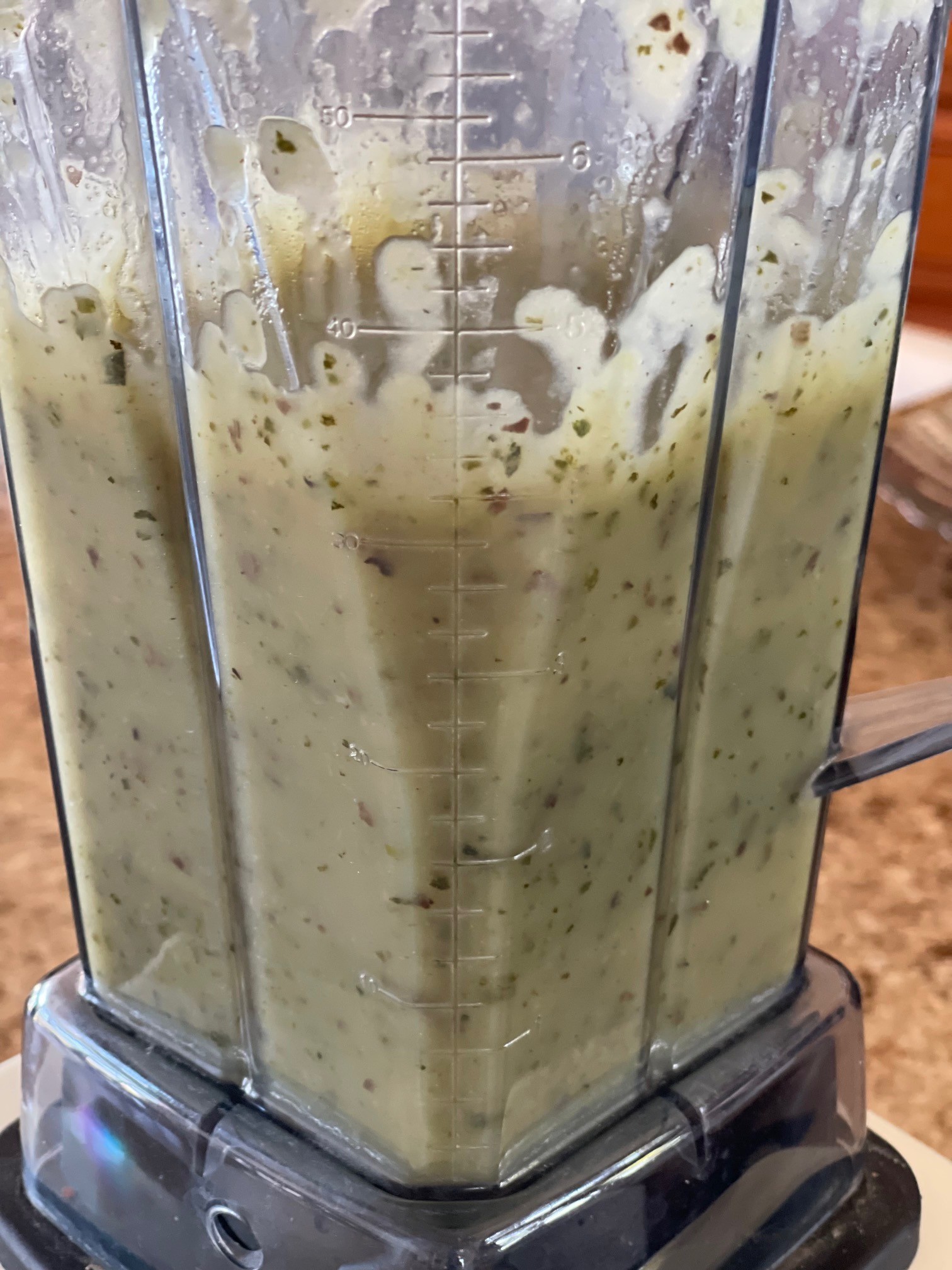
Remove lid and let soup cool about 20 minutes before blending. Then, pour cooled liquid into a blender (you may need to do this in batches) and blend until smooth.
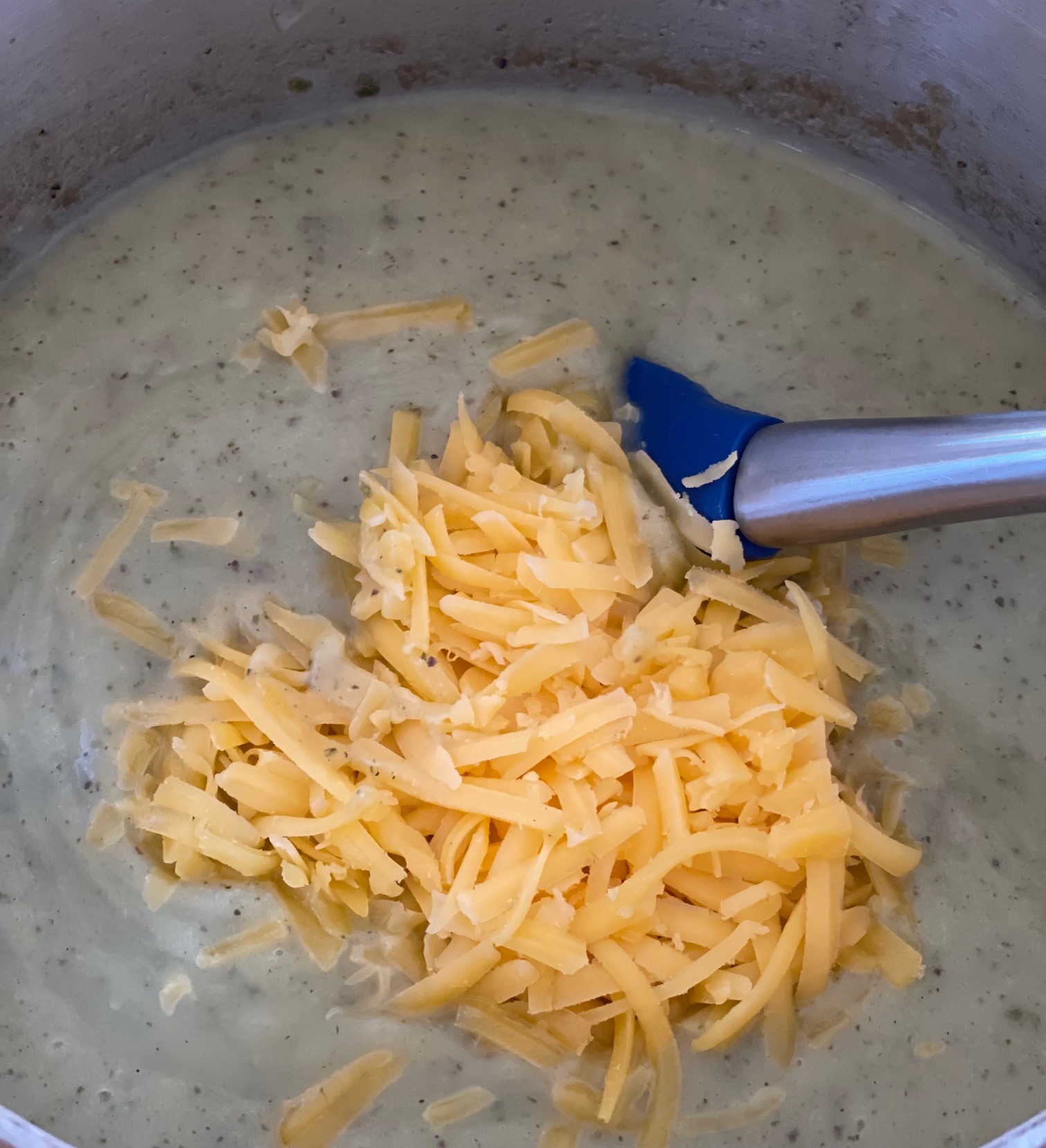
Return soup to saucepot and stir in cheese, optional greens, and optional bread pieces. Heat to melt cheese. Taste for seasoning, correcting if needed.
This recipe is not only delicious, but cooks in 5 minutes! You just toss all ingredients in a pot and boil for 5 minutes. Done! (Don’t be daunted by the number of ingredients – half of them are spices.)
Before making a larger batch of this barbecue sauce, I recommend trying it first to be sure you like it. Then, if it pleases you, you can increase the amount. Since I don’t use barbecue sauce all that often, I quadruple the recipe and freeze it in portions.
BARBECUE SAUCE – makes about 250mls / 1 cup
188g (1/2 cup + 2T) ketchup
89g (1/2 cup, packed) dark brown sugar
30g (2T) molasses – I use Grandma’s, unsulphured
25g (2T) pineapple juice
25g (2T) water
8g (1/2T) vegetarian Worchestershire sauce
1.25 tsp ground mustard
1 tsp smoked paprika
1/4 tsp garlic powder
1/8 tsp cayenne powder
3/4 tsp Kosher salt (or, 1/4 tsp table salt)
1/4 tsp white pepper
Into a saucepan, put all the above ingredients.
Bring to a boil. Maintain a low boil, stirring often, for 5 minutes. That’s it!
I’d never heard of Orzo Watermelon Salad until it was mentioned often in a novel I was reading recently. It sounded interesting, so I Googled it. Lo and behold, it was a real thing! I got the gist of what goes in it, then honed the recipe to my liking – the tangy dressing with a slight kick of red pepper flakes was the key.
This salad is very fast and easy to make but, as with most salads, they’re best mixed close to serving time. That being said, it’s still tasty the next day.
ORZO WATERMELON SALAD – makes about 5-6 cups
18g / 2 T Balsamic vinegar
10g / 1 T granulated sugar
68g / about 2 shallots, sliced thinly
18g / 2 T extra virgin olive oil
27g / 3 T lime juice
4g / 3/4 tsp Dijon mustard
1/4 tsp red pepper flakes
1/4 tsp salt
120g / 3/4 cup / 4 oz uncooked orzo
about 250g / 8 oz seedless watermelon, cubed bite-sized
114g / 4 oz Feta cheese, crumbled into bite-sized pieces
50g / 1/2 cup cooked green peas (I use frozen)
about 65g / 1/2 cup Pistachio nuts
Slice the shallots thinly.
Into a small saucepan combine the Balsamic vinegar, sugar, and shallots. Bring to a boil, turn off burner, then cover pan. Let set, at least, 30 minutes. This can be done ahead of time.
Into a small bowl, combine the olive oil, lime juice, Dijon, red pepper flakes, and salt. Set aside until serving time. This can be done ahead of time.
In a saucepan, bring about 3 cups of water to a full boil. Add in the orzo and a tsp of salt. Stir often and cook for 8 minutes. SET THE TIMER! Drain using a sieve, then pour into a mixing bowl to cool.
As orzo is cooling, chop watermelon into bite-sized cubes. Make sure to remove any seeds – they’re not very tasty.
Into the bowl with the cooked orzo, put the cubed watermelon, Feta, and peas. Gently mix and set aside until serving time.
At serving time, stir the dressing well and pour that into the orzo. Add the shallots WITH the liquid into the bowl along with the pistachios. Mix gently. Serve.
I’m a big fan of the savory pie. While I do love a good hand pie (such as the pasty), the single pie is not only faster to prepare, but offers more filling to crust ratio.
Butternut-Spinach Pie is a lovely blend of honey roasted butternut squash, a kicky bleu cheese (such as Gorgonzola), a bit of crunch from the pecans, and sweetness plus color from the dried cranberries. The spinach, of course, adds a vegetable to the mix, which is great for veggie-phobic kids.
TIP: As self-proclaimed Queen Of Freeze, I would be remiss in my duties if I didn’t suggest (nag) you to freeze the leftover egg wash for future use. One egg wash can be used several times, thus sparing the cost of an egg each time. Just remember to thaw it out before prep-time.
NOTE: My pie crust recipe is delicious, but if you have a preferred double-crust pie dough recipe, you can use that. OR, you can purchase pre-made, if you’d rather.
NOTE: This is certainly not mandatory, but there’s a device called a ‘first-slice wedge’ that can be placed under the bottom crust to aid in lifting out that notoriously difficult first pie piece. At my family’s constant nagging, I now keep mine IN the pie plate at all times so I don’t forget to use it. I guess they got tired of hearing, “Oh, no! I forgot to use the pie wedge…again!!!”
BUTTERNUT-SPINACH PIE
Crust:
323g (2.5 cups) all-purpose flour, DIVIDED
1/2 tsp salt
144g (10 T) butter, cold
95g (1/2 cup) shortening (I use Crisco), chilled
34g (4 T) vodka, cold
34g (4 T) water, cold
eggwash: 1 egg plus 1 T water, beaten together
Filling:
1 butternut squash (about 900g / 2 lbs)
36g (4 T) olive oil
3/4 tsp dried cumin
3/4 tsp dried crushed rosemary
30g (2 T) honey
341g (12 oz) raw spinach, leaves only, cleaned thoroughly!
218g (8 oz) Gorgonzola (or any bleu cheese you prefer)
3 T sour cream (or plain yogurt or creme fraiche)
1/2 tsp ground black pepper
60g (2/3 cup) pecans, coarsely chopped and lightly toasted
50g (1/2 cup) raisins
——————————————————————————————————————-
Make the crust first since the dough should be chilled before rolling it out. You can make it well ahead of time, if you like.
Preheat oven to 218°C (425°F).
Measure out the shortening onto a plate small bowl or bowl, and place it in the freezer to chill. Combine the vodka and 34g (4 T) water in a small bowl and place in the fridge. Let these ingredients chill for about 20 minutes.
Into the workbowl of your food processor, place 202g (1.5 cups) of the flour and the salt. Pulse a couple of times to mix.
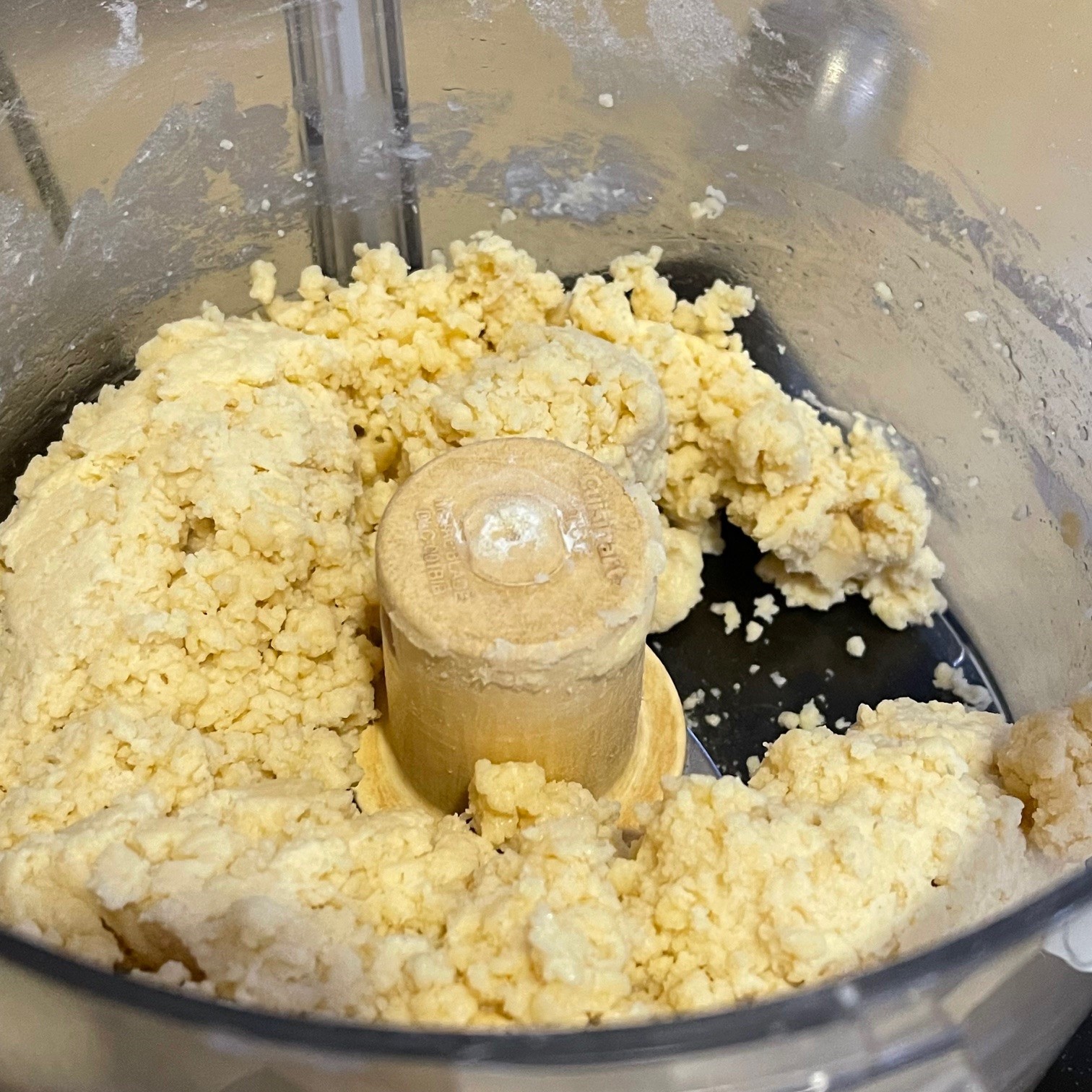
Cut the cold butter into small pieces and add to the processor along with the cold shortening. Process (NOT pulse) for 15 seconds – at about 15 seconds, the dough comes together.
Add the remaining 130g (1 cup) flour to the processor and pulse (NOT process) 6 times.
Pour the vodka/water mix into the processor and pulse 3 or 4 times, just to mix. The dough will be tacky.
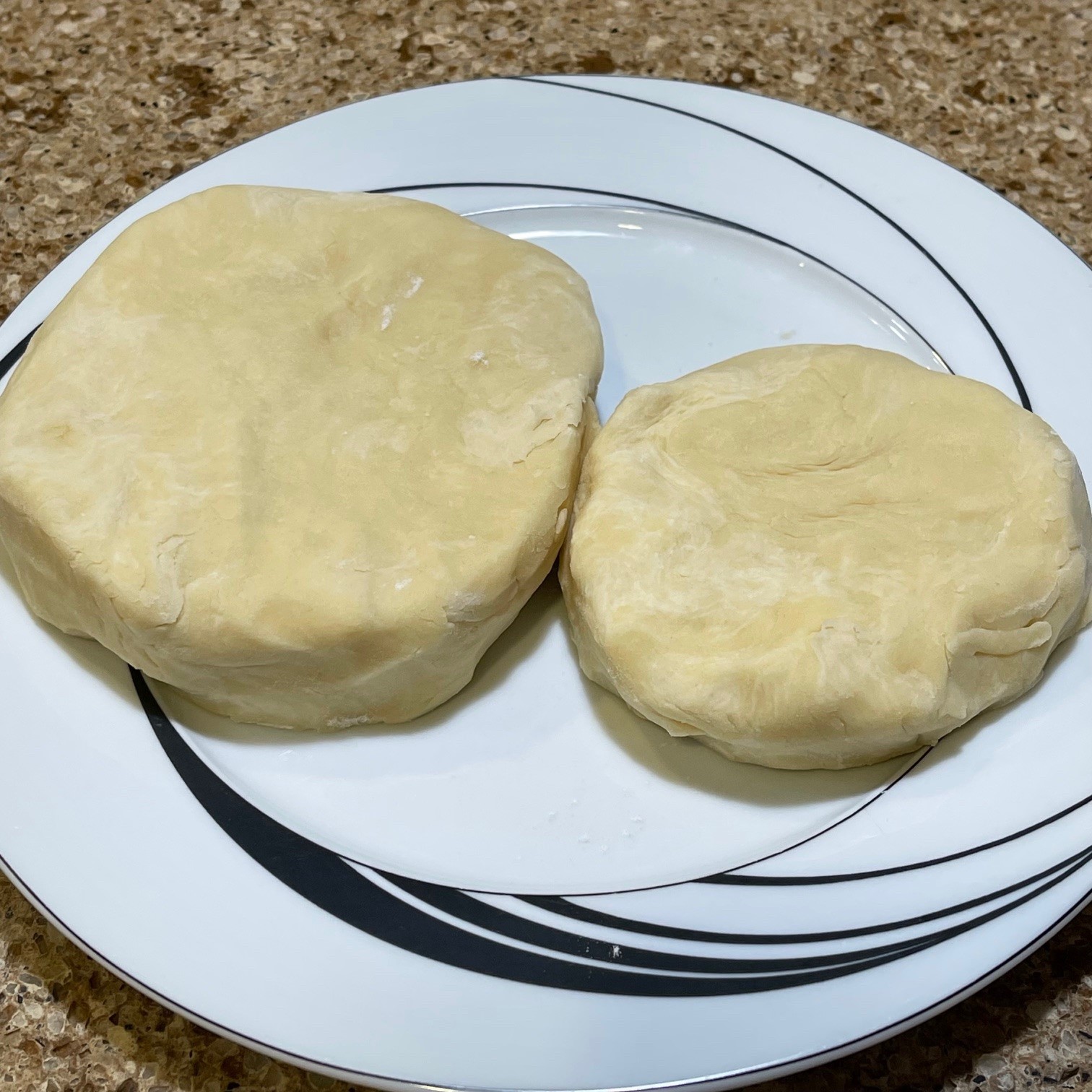
Empty dough onto a well floured surface and knead dough 5 or 6 times using a bench scraper to bring dough together. With floured hands pat the dough together. Cut off 1/3 of dough and form a disc. With the remaining dough, form another disc. Cover so the dough doesn’t dry out, then place in fridge to chill while you prepare the filling.
Preheat oven to 218°C (425°F).
Wash the butternut squash before slicing so you don’t drag dirt and germs onto the flesh. In order to make the squash soft enough to cut, put it in the microwave for 3 minutes. (Don’t worry, it won’t explode for this short period of time!) Flip it, then zap it again for 30 more seconds. It’s now soft enough to cut. Slice off both ends and discard. Cut off the head (yikes!) and stand both halves on end. Using a sharp knife, slice off and discard the outer layer. Slice into 3cm (1/2″) circles. Cut these circles into 2cm (3/4″) pieces, discarding the strings and seeds.
Place cubed squash on a rimmed baking sheet. Add the olive oil, cumin, crushed rosemary, and honey. Gently mix together using a spatula. Place in preheated 218°C (425°F) oven.
Stir with spatula every 10-ish minutes, and bake until squash is golden-browned – 25-30 minutes. Remove from oven and let cool. Leave the oven on at 218°C (425°F) – you’ll be par-baking the crust soon.
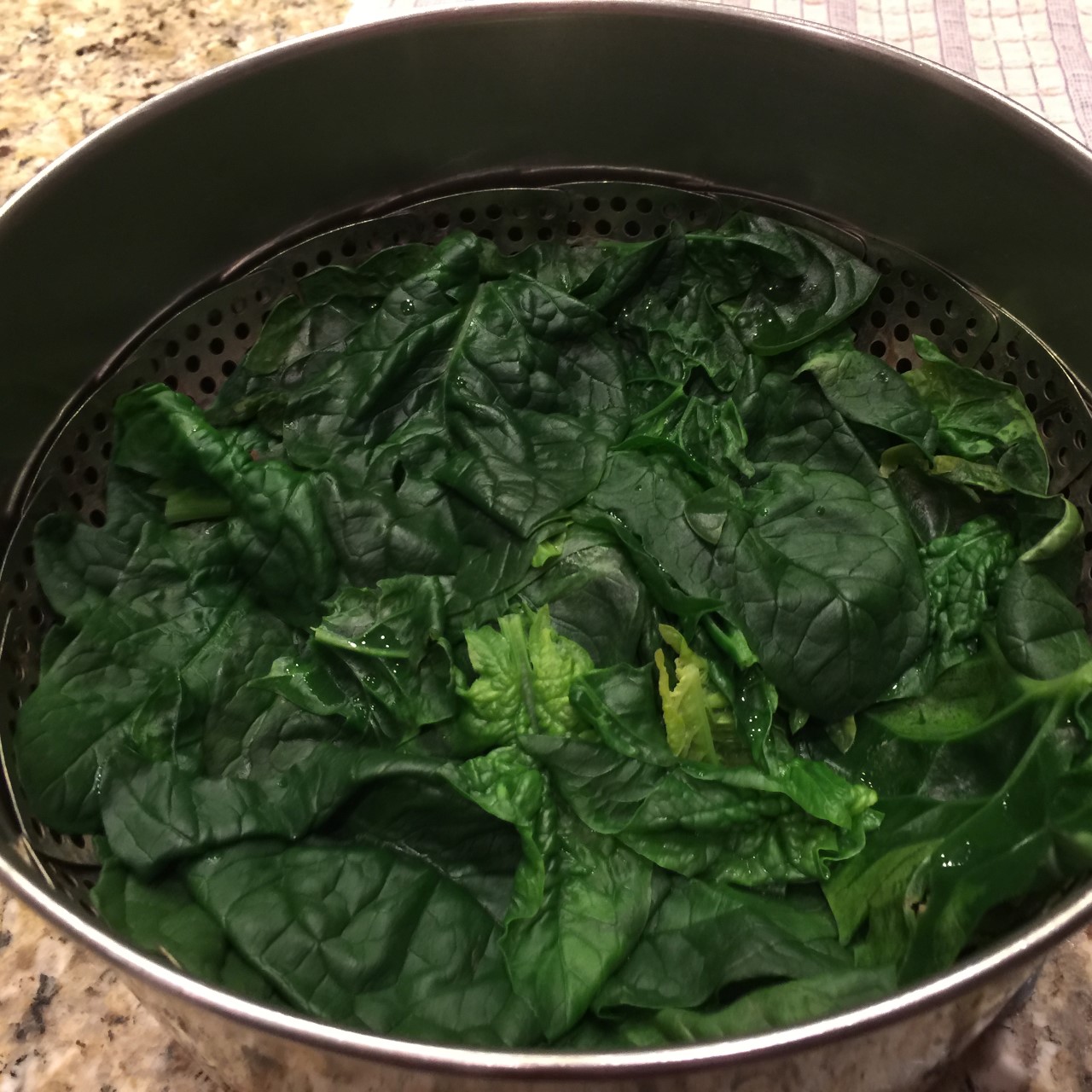
While squash is baking, steam the spinach to wilt – it only takes about 5 minutes.
Place wilted spinach in a tea towel to sop up excess water.
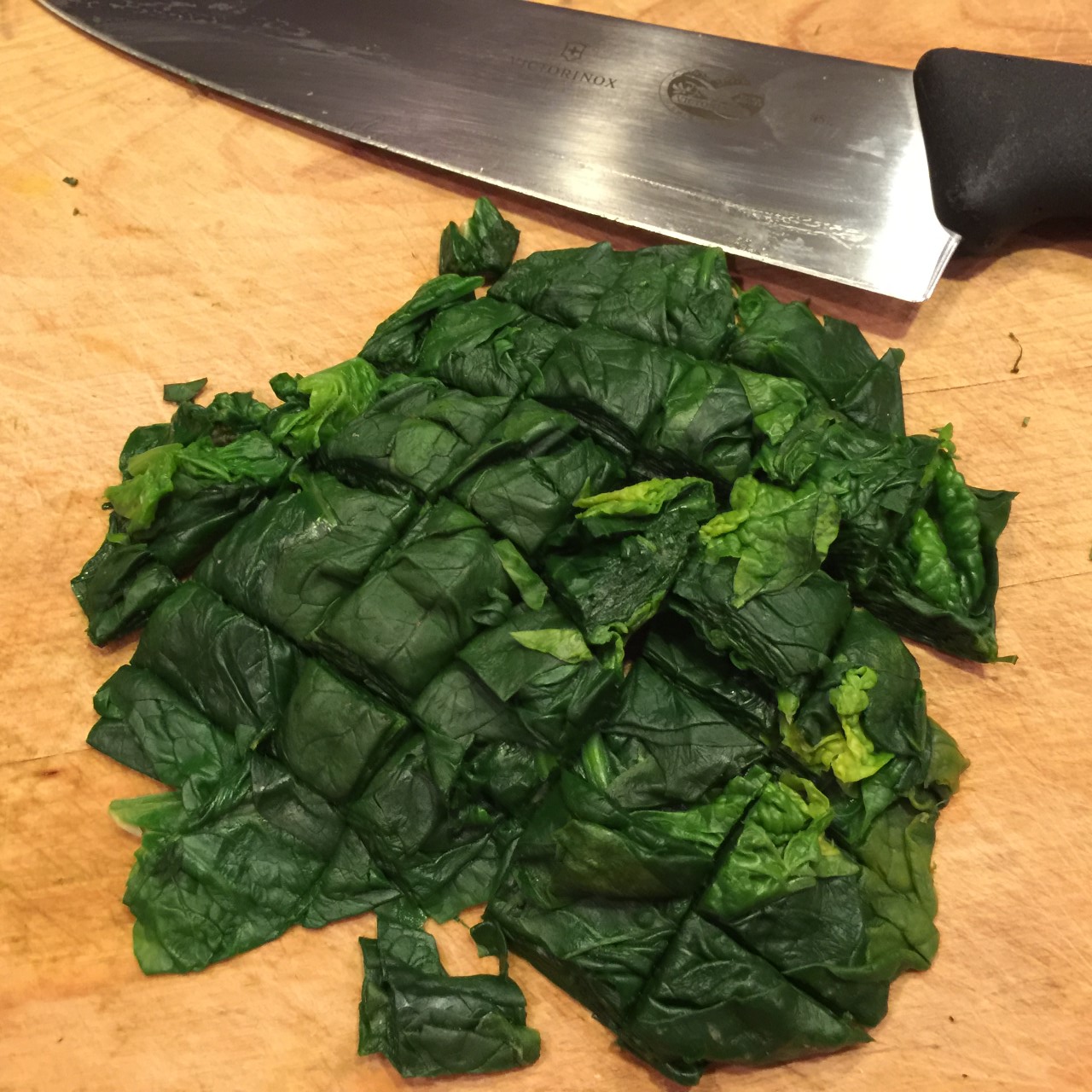
Chop into approximate 3cm (1″) segments.
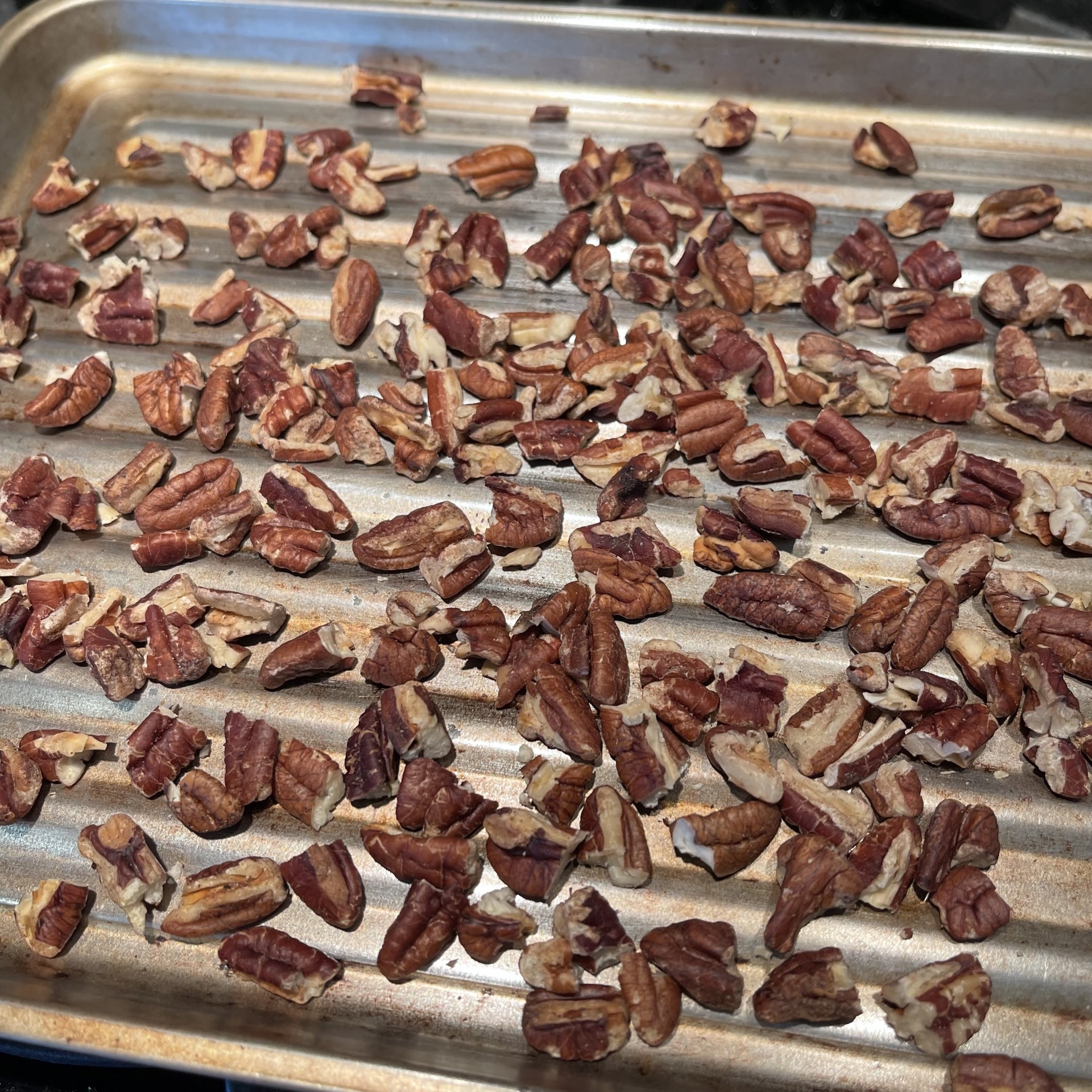
While spinach is steaming, lightly toast the pecans. I prefer to do this in a toaster oven – SET A TIMER!. You can also use a dry skillet. (Just make sure you keep stirring the nuts so they don’t burn.)
Into a large bowl, very gently combine the cooled squash with all the juices, the cooled spinach, Gorgonzola, sour cream, black pepper, pecans, and dried cranberries.
Preheat the oven to 218°C (425°F), in case you turned off the oven earlier from baking the butternut squash.
Time to roll out the crusts. A bench scraper is extremely helpful with this dough since it’s kind of tacky.
Remove the larger dough disc from fridge and place on a well floured surface. Pat a little flour on top so the rolling pin doesn’t stick. Starting at the mid-point, roll the disc away from you two times, then from the mid-point towards you two times. (If the dough is too hard from chilling to roll, pound it a few times with you rolling pin.)
Using the bench scraper, loosen and turn the dough 90° (a quarter turn) and repeat the rolling process. It’s important to keep turning the dough after each upwards/downwards pair so the dough doesn’t stick. When the edges become raggedy, push them in to smooth them a bit. Keep going until the circle is large enough to cover the bottom and sides with about 2cm (1/2″) of overhang.
Using bench scraper to help loosen the dough from the surface, fold dough towards you in half.
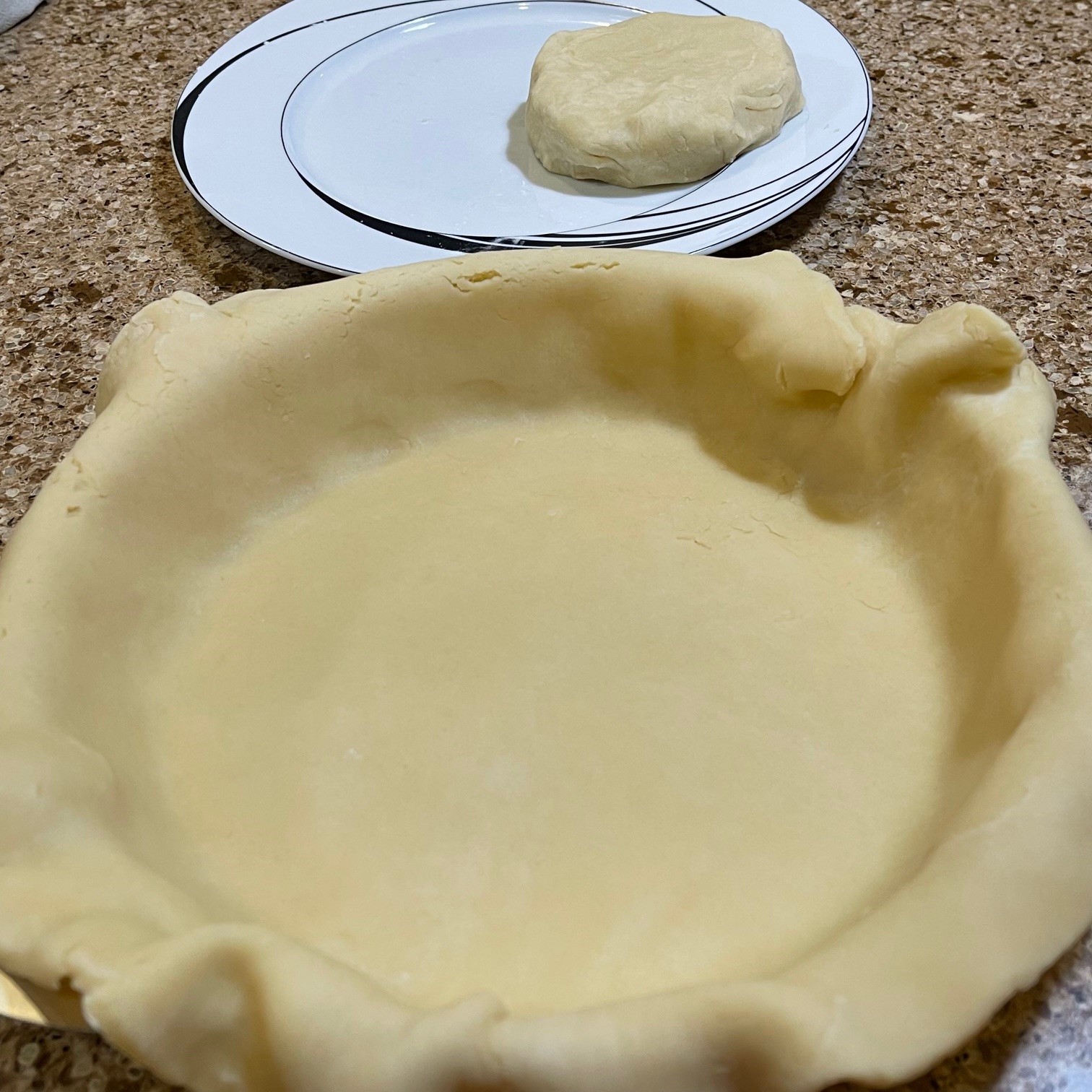
Carefully place a hand under each side of the dough and place in the pie dish, folded side along the pie plates middle. Unfold, adjusting so dough is fitted into corners.
Trim dough so there’s no over-hang. With fingers, work edges so they stand upright rather than crimping them. (The edges will be covered by the top crust later.) Freeze crust about15-20 minutes so it doesn’t shrink while baking.
Line chilled pie crust with waxed paper or baking paper, then fill with pie weights (I use beans). Bake in preheated 218°C (425°F) oven for 10 minutes. (SET TIMER!)
Gather up the 4 corners of the baking paper and very gently rock and lift out the pie weights.
Remove the crust from the oven (so you don’t lose heat) and lightly baste the crust bottom with egg wash. (This prevents that dreaded soggy bottom!).
Put the crust back in the oven and bake an additional 5 minutes. (SET TIMER!!!). Remove and cool.
Decrease oven temperature to 190°C (375°F).
Into the cooled pie crust, pour the filling. Mound it high in the middle, sloping down towards the crust. Keep the filling away from the top of the bottom crust since you’ll be wrapping the top crust around it.
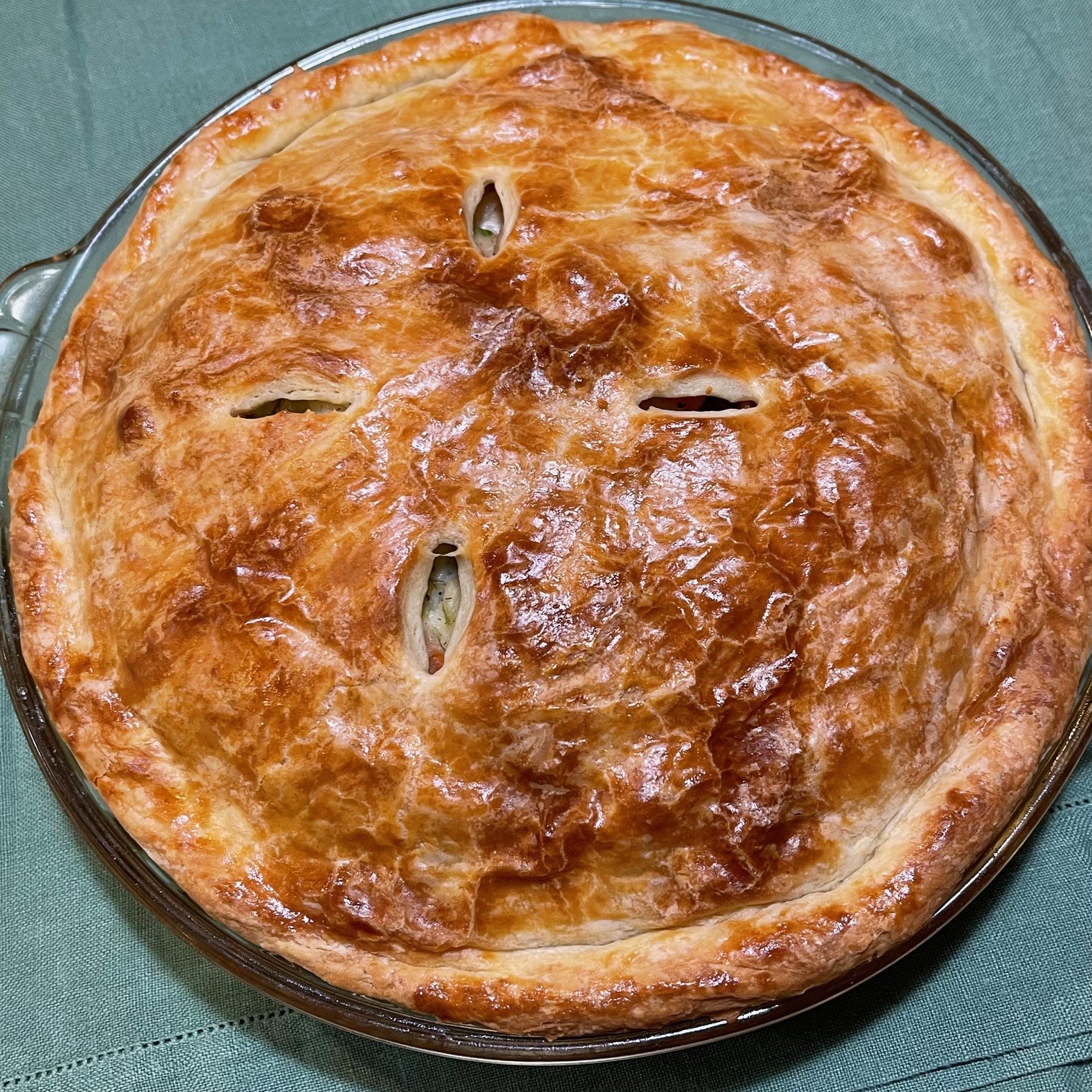
Remove the top crust disc from fridge and place on well floured surface. Roll out dough as before to the diameter from the edge to edge of the pie dish. Crimp the top crust around the bottom crust. Paint on egg wash and make 4 slashes through top.
Bake in preheated 190°C (375°F) oven for about 30 minutes, until top is golden browned.
Remove from oven and cool on wire rack about 20 minutes to set.
My first face-to-face encounter with Millionaire Shortbread was a big disappointment. I’d heard about it on America’s Test Kitchen and thought it sounded amazing. Shortbread, caramel, and chocolate: what’s not to love? So, as a committed food blogger (what I won’t do for my readers!), I used ATK’s recipe and made a batch. With great anticipation, I took my first bite. The chocolate topping was too hard, causing the too soft caramel to ooze out. The cookie ended up kind of falling apart, although it tasted okay. I couldn’t figure out the big fuss over Millionaire Shortbread. UNTIL…..
The Great British Bake-Off had a Millionaire Shortbread challenge. Some of the bakes looked amazing and without the problems I encountered with the chocolate topping and the caramel. So, I went on another food quest to perfect the recipe. (For some reason, my quests are nearly always desserts.)
My goals for the perfect (in my opinion) Millionaire Shortbread:
Shortbread: I wanted the shortbread base to be the thickest layer and sturdy enough to hold together while eating the cookie.
Caramel: It should be a little over half the thickness of the shortbread so you can really taste it. It should be soft enough that you can easily bite through it, but not so soft it oozes.
Chocolate topping: The chocolate should be bittersweet to offset the sweetness of the caramel. But the higher the cacao percentage, the harder the chocolate, making the layer crack as you bite through it. So I ended up blending the chocolate bars. This layer should be about 1/3 of the caramel layer.
NOTE #1: I prefer to use a 19cm x 19cm (7.5″ x 7.5″) pan, measured at the inside base, NOT the top. This gives the Millionaire Shortbread the proper (IMO) overall height of the cookie as a whole. You can, also, use a rectangular pan which has close to the same total area: 361cm (56.25″). If you’ve forgotten your geometry, just multiply the length of one short side by the length of one long side to get the area.
NOTE #2: Millionaire Shortbread needs to be made the day before serving so it has plenty of time to set. It keeps for days on the counter and freezes well!
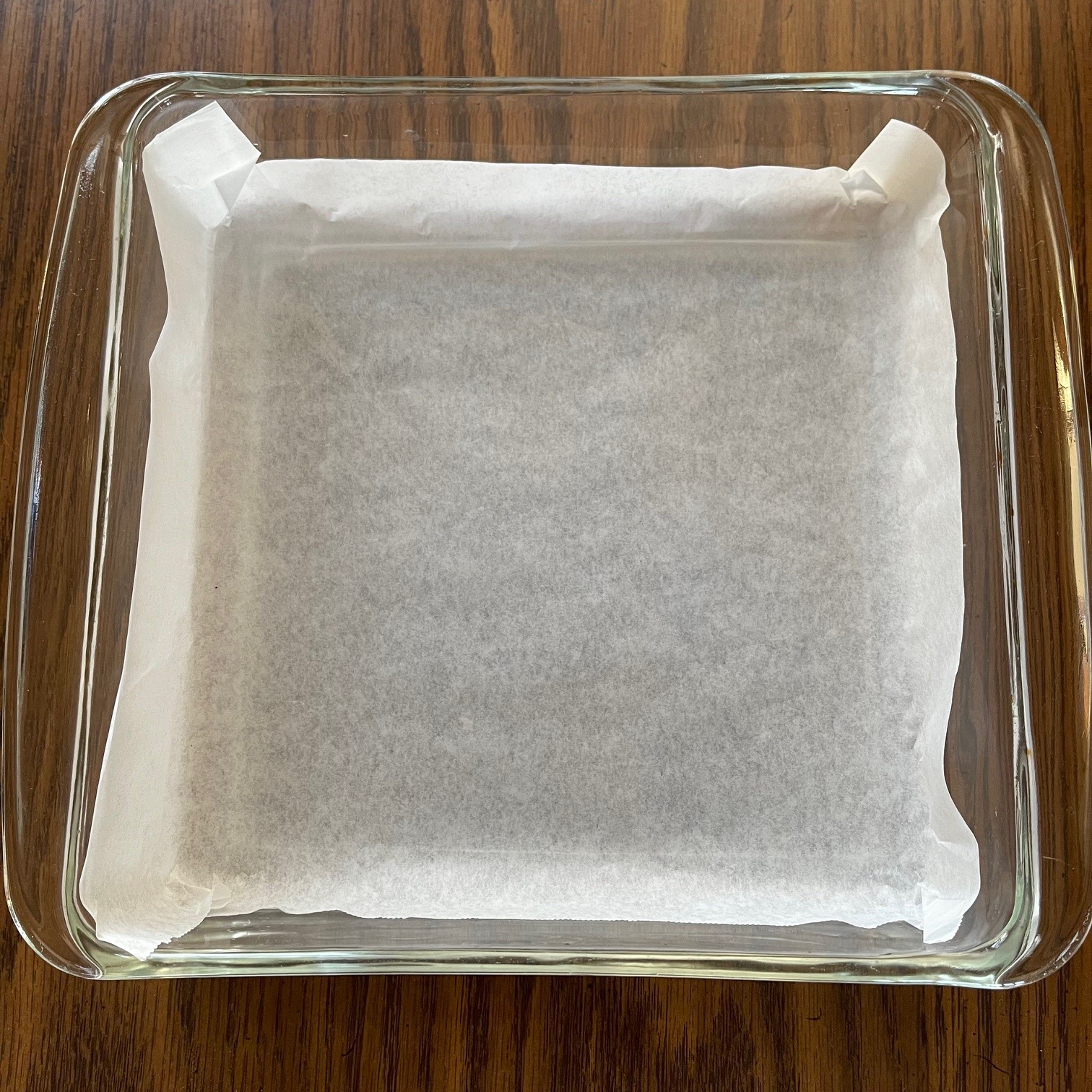
Line the bottom and sides of a 19cm x 19cm (7.5″ x 7.5″) pan (I use a Pyrex glass pan). Lining the pan is NOT mandatory, but it allows you to remove the entire Millionaire Shortbread block at once, thus making the slicing process easier and more attractive.
Shortbread
294g (2.5 cups) all-purpose flour
99g (1/2 cup) granulated sugar
3/4 tsp table salt
3/4 tsp vanilla
226g (1 cup) butter, melted
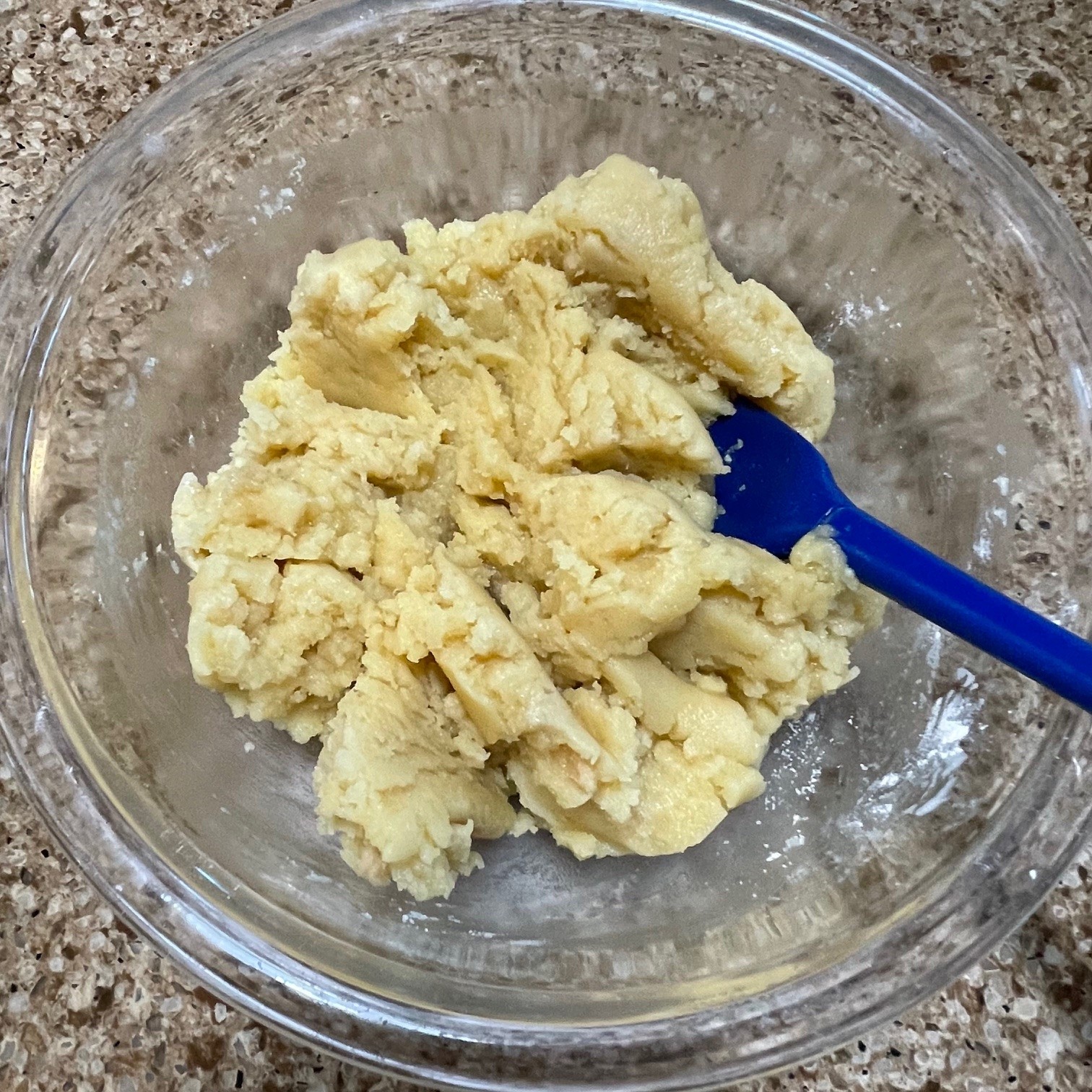
In a bowl, mix together the flour, sugar, salt, and vanilla. Pour in the melted butter and blend with a fork, just until the flour is incorporated.
Break up the dough into pieces and scatter them evenly in the baking pan.
With your fingers, press the dough to an even depth. As an added measure, use a flat bottomed surface (such as a glass or offset spatula) to firmly press out the finger marks. Finally, go around the edges to press down the dough that may have risen up at the edge. The entire surface should be as level as possible.
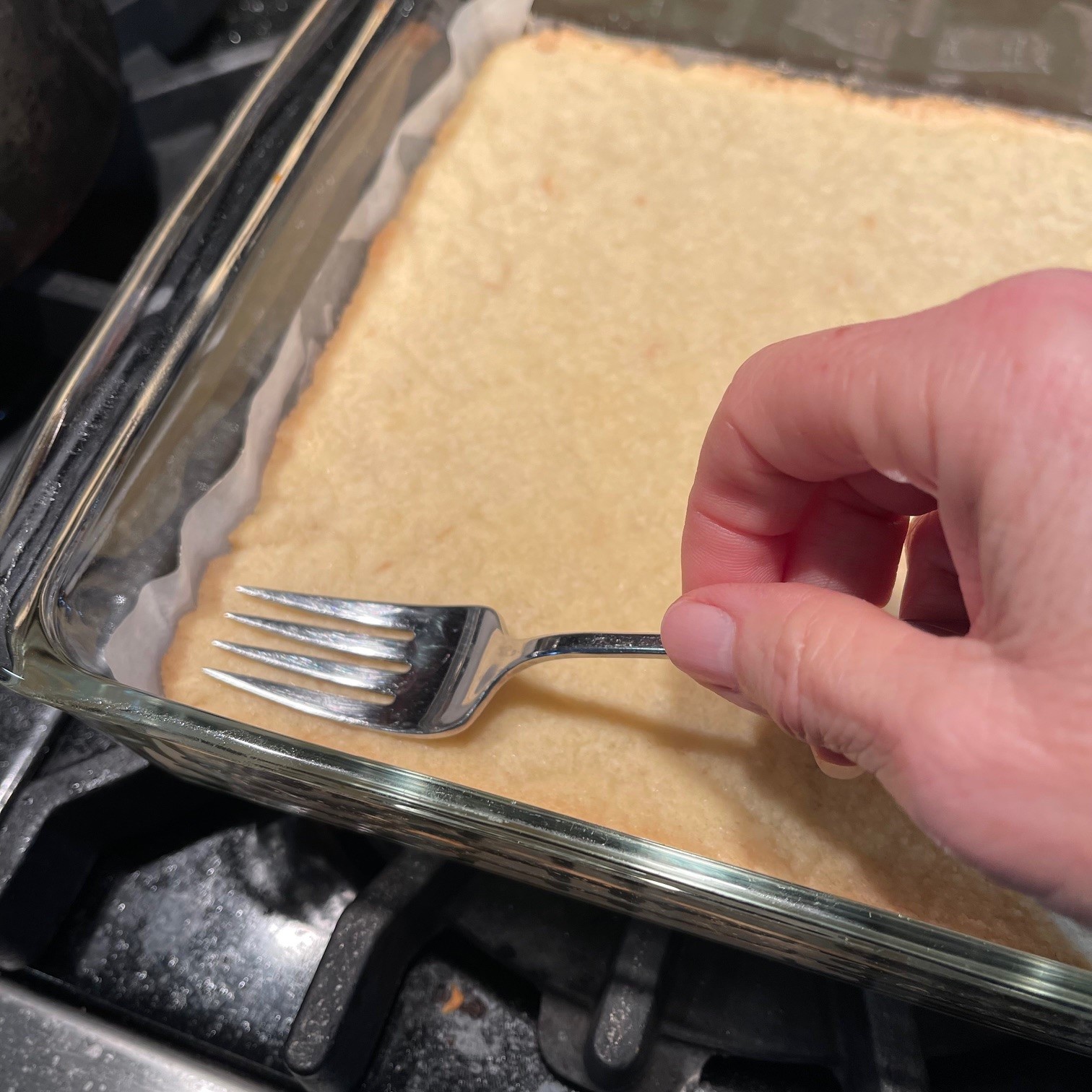
Bake the shortbread in the preheated 177°C (350°F) oven until lightly browned – about 25-30 minutes. Remove from oven, then take an offset spatula or a fork and lightly press down the entire surface to compact the dough – you want the shortbread to be sturdy and not fall apart.
Let shortbread cool while you make the caramel.
Caramel
473g (2 cups) cream
200g (7 oz) light brown sugar
34g (2T) light corn syrup
1/4 tsp salt
1.25 tsp vanilla
Caramel can be daunting, but follow my instructions to the letter, and you should have no problems.
NOTE #1: Plan about 25-30 minutes to be near the stove – caramel needs to be stirred often.
NOTE #2: You’ll need a metal or glass thermometer that can attach to the side of the pan – plastic will soften due to the hot steam.
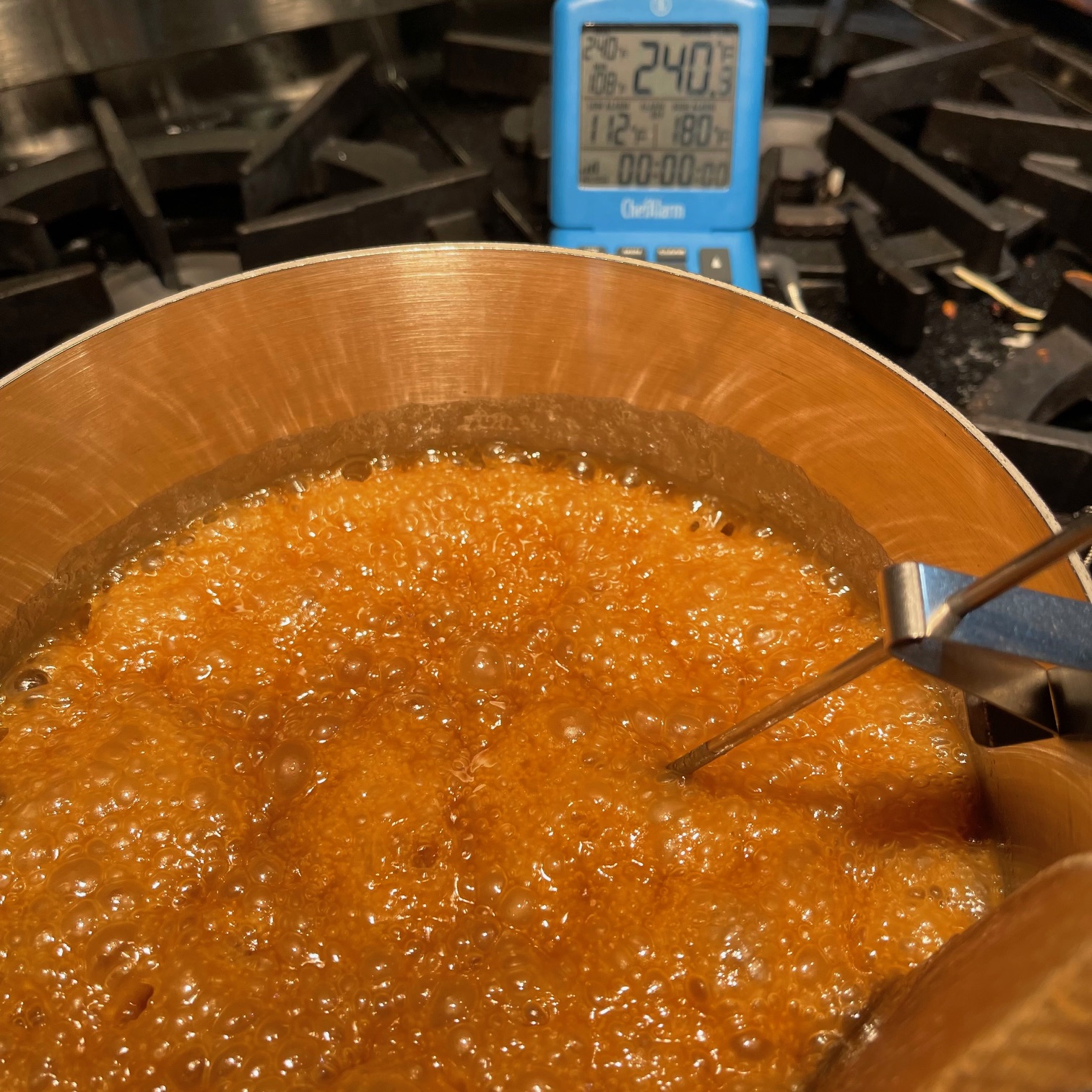
NOTE #3: As the temperature rises, you’ll notice the number bounces around like a roller coaster. This is normal.
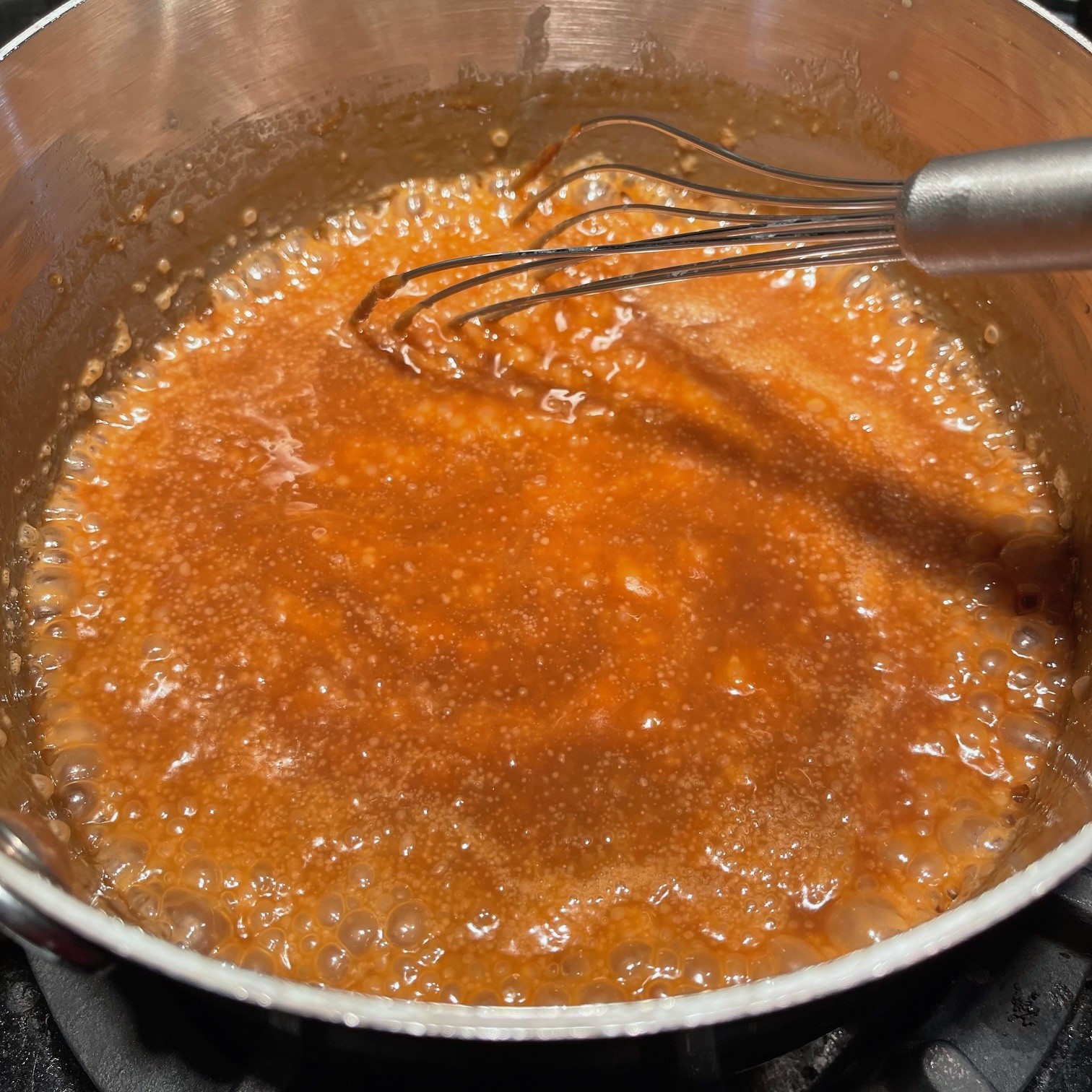
Into a sturdy saucepan, put the cream, brown sugar, corn syrup, and salt. Attach the thermometer so the tip doesn’t touch the bottom of the pan, but is still immersed in the liquid. Turn the flame to med/high and stir. The temperature is going to rise fairly steadily, fluctuating a few degrees up and down, until it gets towards the boiling point of water (100°C / 212°F). The temperature will bounce around here for about 15 minutes. THEN, it will begin to rise to the desired 115°C (239°F).
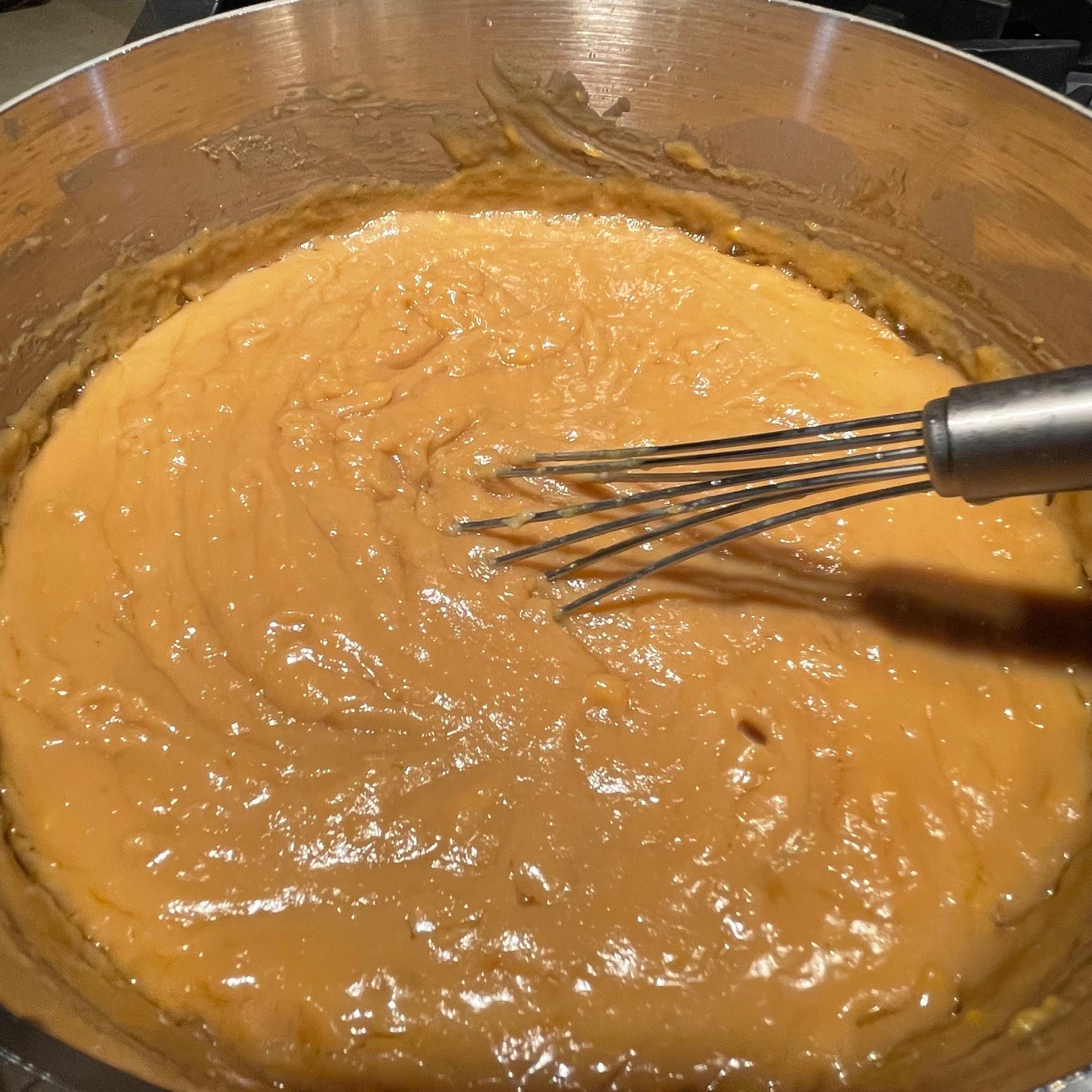
As the caramel nears the end point, you’ll notice it looks like melted peanut butter. Keep your eye on the temperature because it will happen soon. As soon as you see 115°C (239°F) – even if it lowers again – remove the pan from the heat. Stir in the vanilla.
Pour the hot caramel on the shortbread, spreading it evenly. Let cool about 20 minutes, then make the chocolate topping.
Chocolate Topping
After the caramel layer has cooled about 20 minutes, make the chocolate topping. You want the caramel to still be warm when you pour on the hot chocolate so the two layers stick together.
59g (2 oz) 60% cacao chocolate bar (I use Ghiradelli)
115g (4 oz) 72% cacao chocolate bar (I use Ghiradelli)
Break up the chocolate into small pieces and place in small saucepan. Over medium/low heat, melt chocolate, stirring often.
Once the chocolate is completely melted (no lumps), pour over warm caramel and smooth evenly. Let set several hours on the counter. Then set in fridge for a final set.
Fleur de Sel option
If you want to top the chocolate with fleur de sel, wait until the chocolate is no longer hot or the salt will melt. This can take a couple of hours – set it in the fridge, if you like, but don’t let it harden – the chocolate needs to be semi-soft so the salt will stick.
The next day, remove the Millionaire Shortbread from the fridge and let set on the counter for, at least, an hour. Run a rounded tipped knife between the baking paper and the pan. Then, pick up the block by the baking paper and set it on a cutting board. Carefully peel the paper from the sides and bottom.
I like to slice off the edges so the cut bars have clean sides, but it’s not mandatory. Of course, those removed edges don’t go to waste – everyone clamors for them, just to be sure the Millionaire Shortbread is up to par.
Cut into squares or rectangles using a long NON-serrated knife, pressing straight down with a SLOW rocking motion.
When I heard about a risotto dish featuring Gorgonzola, pears, and walnuts, I was intrigued. Salty, sweet, and crunch combined in a creamy risotto? Whoa! Four worlds colliding! (Seinfeld fans will understand my reference.) I set to work to create the recipe which, surprisingly, only took 2 tries. Delizioso!!!!
NOTE: While any type of pear will do for flavor, I suggest using a deep red pear to add color to the dish.
RISOTTO WITH GORGONZOLA-PEARS-WALNUTS – makes about 3 cups
1T (14g) butter
31g (1/3 cup) shallots, sliced into strips
1/4 tsp salt
1/8 ground black pepper
1/2 tsp dried rosemary
1/2 tsp cumin
20g (1T) honey
135g (3/4 cup) raw arborio rice
57g (1/3 cup) white wine
475 ml (2 cups) vegetable stock
1 pear – not too hard, nor mushy, preferably red for color
40g (1/2 cup) walnuts, chopped & lightly toasted
100g (3.5 oz) Gorgonzola cheese, crumbled
In a medium sized saucepan, melt butter. Add in shallots, salt, and pepper. Over medium flame stir to soften the shallots, but not brown them – about 4 minutes.
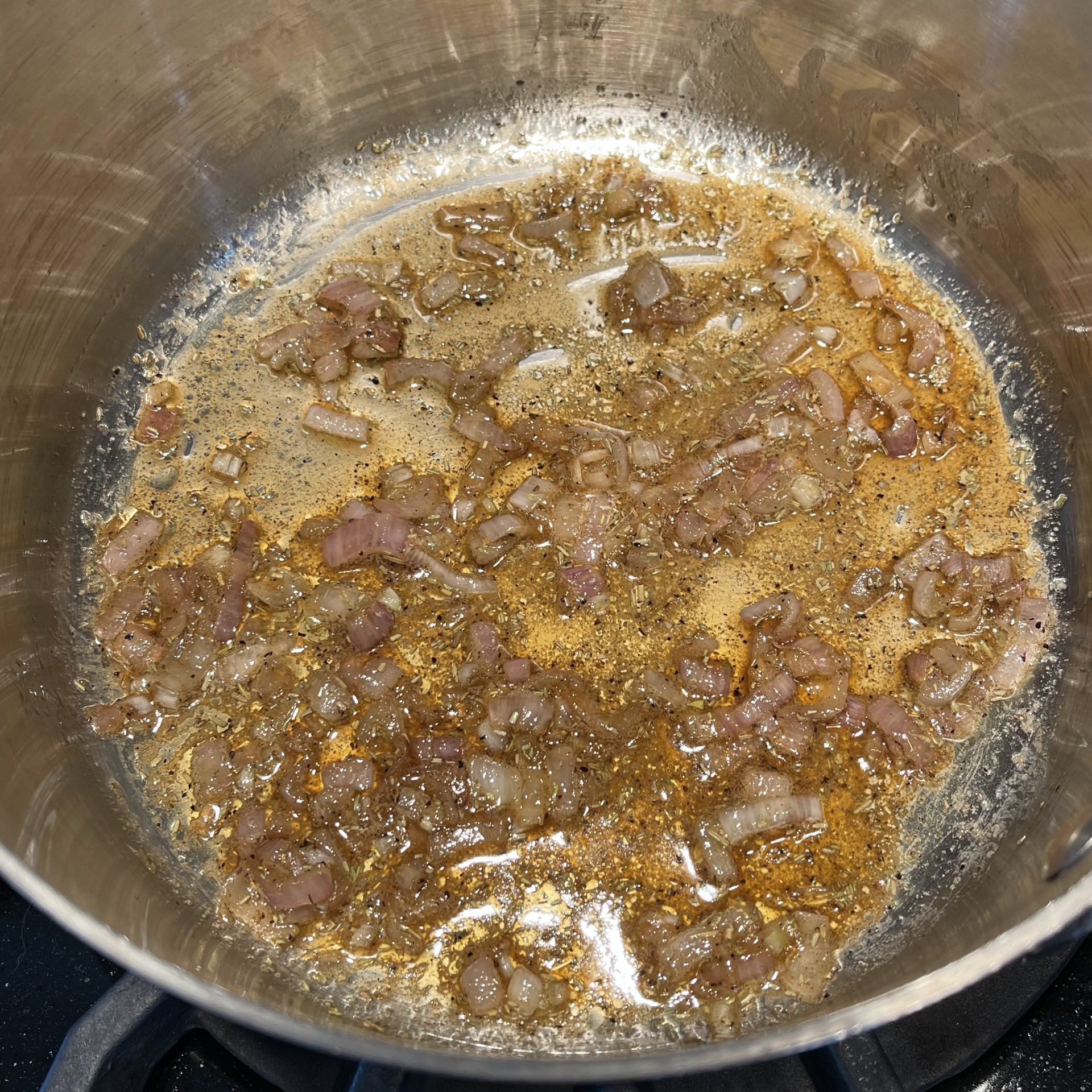
Add rosemary, cumin, and honey to pot. Over low heat, stir together for 30 seconds – just to bloom the spices.
Stir in the arborio rice and saute over low heat for 5 minutes.
Pour in the white wine and stir over low heat until the wine has NEARLY evaporated. (This takes just a few minutes so have the vegetable stock ready to go.) Photo shows wine just being added.
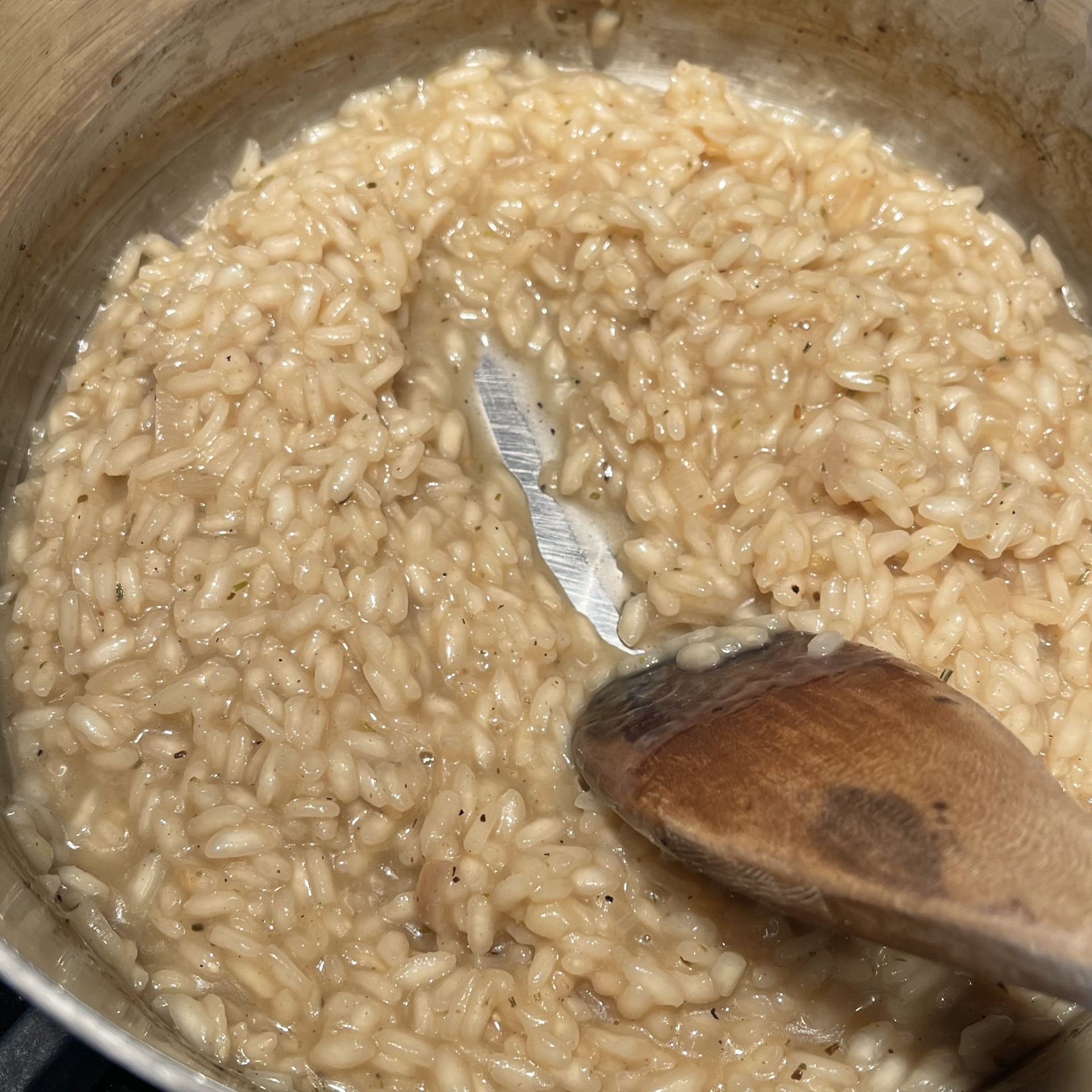
Now comes the part that, while easy, takes time – please don’t rush it. Over medium flame, start adding the stock in about (you don’t have to be precise) 50 ml (1/4 cup) increments, stirring constantly. Add more when the previous amount has been absorbed. Keep going until the final addition – let it absorb somewhat, but not altogether – you want it creamy.
Remove from heat and pour into serving bowl to cool slightly.
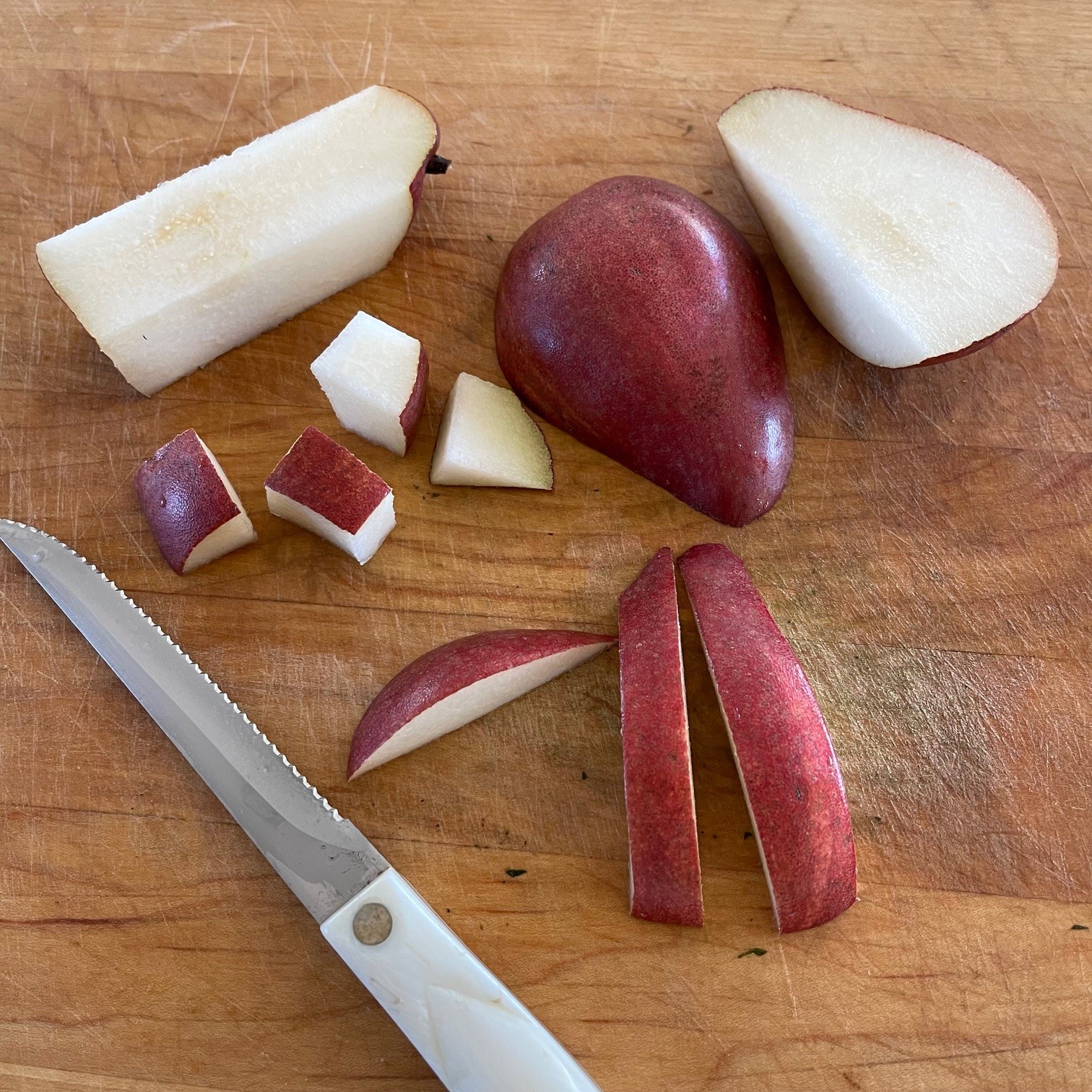
Slice pear from top to bottom around core into four slabs. Cut into 2cm (3/4″) pieces. (I prefer to slice my pear just before adding it to the risotto so it doesn’t start to brown.)
Very gently stir in the pears, Gorgonzola, and walnuts, just to blend.
If I’m going to have dessert – and, I AM going to have dessert – it has to be worth the calories. What’s the point in exercising off a dessert I didn’t absolutely love?! So, while I like cheesecake, I rarely eat it since there are so many other choices that I prefer.
That changed recently when I watched an America’s Test Kitchen episode where they featured a lemon cheesecake. It looked so good, I decided I had to make it. And so began the evolution of my Lemon Cheesecake.
As I watched the episode, I copied down the recipe (or so I thought). One of the first steps was to combine 1/4 cup sugar with 1 T lemon zest in a food processor to break down the zest. Did that, no problem. Then, blend this lemon/sugar mixture with an additional 1 cup sugar. Uh oh! For some reason, I forgot to write down that part, so I ended up with a cheesecake batter 1 cup shy of sugar. I did think it strange there was so little sugar called for in the recipe, but waited until I popped the cheesecake in the oven before re-checking the recipe online. The cheesecake had already begun baking by this point so there was nothing to do but carry on and see what happens.
Much to my amazement, the finished cheesecake was delicious even though 80% of the sugar was left out. But that was just the beginning.
The next step came when I decided to make a triple chocolate cheesecake recipe that I found in one of Joanne Fluke’s mysteries. While, as mentioned previously, cheesecake may not be my favorite dessert, chocolate was, especially TRIPLE CHOCOLATE! The thing about the recipe was, besides the obvious cream cheese, it called for 1 cup of mayonnaise! MAYONNAISE???!!!
Well, even though that sounded crazy, the triple chocolate won me over enough to try it. And it was delicious! The mayonnaise lightened up the cheesecake just enough that it held together but wasn’t so thick and stodgy.
I decided to incorporate mayonnaise into ATK’s lemon cheesecake, making a few other changes such as an added egg, using a graham cracker crust, and putting back 48g (1/4 cup) of the 192g (1 cup) sugar that I originally left out. I ended up with a creamy, very lemony Lemon Cheesecake.
NOTE: The cheesecake is baked in a bain marie (water bath). Since you’ll be using a springform pan in which to bake, you’ll need to cover the bottom and sides up to the top rim so the water doesn’t leak into the cheesecake. Springform pans seem very tight, but water can get in. I happen to have a cake pan the does NOT have a false bottom that will contain the springform pan. But if you don’t have one, you can use heavy duty aluminum foil to encase the pan.
ADDITIONAL NOTE: Lemon Cheesecake needs to be made the day before serving. While the actual hands-on work is minimal, there are 7 hours needed for the cake to rest and chill, plus an hour of baking.
LEMON CHEESECAKE
Crust:
163g (1.5 cups) graham crackers
30g (3 T) granulated sugar
77g (5.5 T) butter, melted
Preheat oven to 350°F (177°C).
Crush the graham crackers into fine crumbs using a rolling pin. (Food processors don’t yield an evenly crushed crumb.) Mix the crumbs and sugar in a bowl. Add in the melted butter and blend with a fork.
Pour graham cracker mixture into a 9″ (23 cm) springform pan and spread to sides. Pat with finger tips as evenly as possible to the bottom only (not up the sides). Then, go around crumbs with a flat bottomed, circular object such a a glass or measuring cup. Press firmly, but not so much that you make indentations. The goal is a smooth, firm crust.
Bake in preheated 350°F (177°C) oven, until lightly browned around edges – about 13-15 minutes. Remove from oven and let cool while you prepare the filling.
Lower oven temperature to 325°F (163°C).
Filling:
96g (1/2 cup) granulated sugar
1 T lemon zest, packed (don’t be stingy – this is where the lemon flavor come from)
678g (24 oz) (1.5 lb) cream cheese, softened – use the block packaged cream cheese, NOT the whipped cream cheese in a tub
5 eggs
200g (1 cup) mayonnaise
53g (1/4 cup lemon juice
1/4 tsp salt
2 tsp vanilla extract
Put sugar and the lemon zest in a food processor or blender. Whirl about 30 seconds to break up zest and infuse the sugar, pausing to scrape down the sides and bottom.
Place the softened cream cheese in an electric mixer and beat on low for about 30 seconds to begin the creaming process. (Yes, I know my spatula has seen better days!)
Add the sugar/zest mixture to the bowl, scraping the sides and bottom of the processor to get every last bit. Beat on medium for 3 minutes – don’t shortchange the time.
Add 2 eggs to the bowl and beat on low just to blend.
Add another 2 eggs and beat on low to blend. Then, add the final egg and the mayonnaise, beating on low just to blend. Finally, add in the 53g (1/4 cup) lemon juice, salt, and 2 tsp vanilla, beating on low just to blend.
Make the bain marie: Place the springform pan with cooled crust either in a slightly larger pan (such as a cake pan that doesn’t have a false bottom) or cover the bottom and sides of the springform pan up to the rim with 1 piece of heavy duty aluminum foil (don’t piece the foil together – the seam would be a port of entry for water). The cake pan or foil will deter water from leaking into the cheesecake.
Place these pans in a large roasting pan, then pour the cheesecake batter into the springform pan. Heat water just before boiling and pour it into the large roasting pan (NOT the cake pan!) about 3/4″ (2 cm) deep. Very carefully place into oven, trying your very best not to slosh the water about. Bake at 325°F (163°C). Set your timer for 45 minutes. The cheesecake is done when the center of the cake registers 150°F (66°C) on your thermometer. It probably won’t be quite done at the 45 minute mark, but better to check early just in case. It takes about 50 minutes in my oven.
When the temperature reaches 150°F (66°C), immediately turn off the oven. Leave the cake in the bain marie in the oven. Crack open the oven door with something like a wooden spoon. Let cheesecake set in oven in the bain marie for 1 hour. Set timer!
After the hour in the oven, remove the springform pan from the bain marie and the cake pan or foil. Don’tunlatch the springform pan – the cheesecake still needs to set. Set springform pan on a wire rack on the counter and run a rounded tipped knife around the sides of the cake just to separate it from the pan. Let set for 2 hours.
Make the lemon curd while the cheesecake is baking.
Lemon Curd:
2 eggs
1 yolk
100g (1/2 cup) granulated sugar
65g (1/3 cup) lemon juice
28g (2 T) butter, cold
1 T heavy cream
1/4 tsp vanilla extract
pinch salt
Beat eggs by hand in a bowl. Slowly pour in sugar, as you continuously beat mixture.
In a small pan, heat the lemon juice to a low simmer. Very gradually (you don’t want to cook the eggs) drizzle the lemon juice into eggs, whisking continuously.
Pour the egg mixture into the now-empty saucepan and cook over medium-low, stirring constantly. At around 160°F (70°C) the mixture will begin to thicken. Continue cooking until the temperature reaches 170°F (77°C). Remove from burner.
Immediately add the cold butter, cream, 1/4 tsp vanilla extract, and salt. Stir until butter is melted. Pour the curd into a strainer which is set upon a clean bowl (don’t forget the bowl or your curd will go down the sink!). Stir the curd in the strainer with a spoon to help the mixture flow through. Remember to scrape off the curd clinging to the underside of the strainer into the bowl (waste not, want not!).
Discard the bits remaining in the strainer – yuck!
Cover bowl and chill.
Once cheesecake has rested for 2 hours, pour curd on top, spreading to edges.
With the latch still locked on the springform pan, chill in fridge at least 4 hours. Release the spring on pan and remove the sides.
Run a long knife under the crust to release it. Carefully, slide the cheesecake onto a serving plate.
Let me state up-front: this HOMEMADE VEGETARIAN GROUND BEEF recipe is NOT designed for a patty – it’s too mushy to form a firm burger. What it’s fabulous for is as a substitute when you need ground beef for a recipe and you’re a vegetarian or vegan. I’ve used it successfully in shepherd’s pie, burritos, tamale pie, and Greek moussaka.
It’s not a difficult recipe, but it takes about 25 minutes to cook off the liquid at the end. Because of this, I double or triple the recipe then, as Queen of Freeze, I freeze it in 1 lb or 1/2 lb portions for future use. This way, if I decide to make a shepherd’s pie, tamale pie, or burrito, the bulk of the work is done.
VEGETARIAN GROUND BEEF – makes at least 1.5 lbs
10g OR 1 T olive oil
112g OR 4 oz OR 1 cup onions, chopped small
1/2 tsp salt
4 cloves garlic, pressed
43g OR 1 oz OR 2 T tomato paste
125 ml OR 1/2 cup red wine (I use a Cabernet)
2 tsp paprika
2 tsp oregano
1/2 tsp red pepper flakes
425g OR 15 oz canned chickpeas (garbanzo beans), drained
227g OR 8 oz whole cremini mushrooms
411g OR 14.5 oz canned whole tomatoes, discard stem end and any flaws, chop, KEEP JUICE – YOU’LL NEED IT!
NOTE: I suggest you try the single recipe before making a larger batch just in case you don’t like it.
ADDITIONALNOTE: If you’re doubling or more this recipe, use a Dutch oven or larger.
Heat oil in a large pot and saute onions and salt over medium heat until the onions are just starting to brown – about 6 minutes.
Add in the garlic and continuously stir 30 seconds to bloom (but not burn), then stir in the tomato paste. Increase heat to medium high and saute 2-3 minutes to darken the tomato paste a bit. (This adds an umami flavor).
Pour in the wine, paprika, oregano, and red pepper flakes. Cook over medium, scraping up the burnt bits into the paste, until the wine has nearly evaporated – about 3 minutes. Remove from heat.
Drain the chickpeas and roughly chop.
Place chopped chickpeas into your food processor and pulse until it’s become small bits, scraping down the sides and bottom as needed. If you don’t have a food processor, you’ll have to chop them by hand.
Empty minced chickpeas into the pot with the onions/tomato paste.
Thoroughly wash mushrooms and coarsely chop into 1cm / 1/2″ pieces.
Place chopped mushrooms in food processor and pulse several times until mushrooms are broken into small bits, scraping sides and bottom, as needed. If you don’t have a food processor, chop by hand.
Empty mushrooms into the pot.
Over medium/high heat, saute mixture, stirring often for 5 minutes.
Pour the chopped tomatoes and their juice into the pot.
Cook over medium/high heat until the liquid has cooked off and the mixture can mound.
My wonderful sister-in-law, Terry, sent me a picture of her grandmother’s recipe card for Date Bread so I could make it for my husband (her brother). My husband remembered the bread with fondness so, of course, I decided to make it. I have to admit I was skeptical – dates in desserts were NOT something I grew up with. My mother was a sworn chocoholic, and I was following in her footsteps.
But when I took my first bite of Grandma’s Date Bread, I felt like a whole new world opened up. It was absolutely, and unexpectedly, delicious! How could this these dried, brown fruit create such a tender and flavorful bread?
GRANDMA’S DATE BREAD – 1 loaf
1 T butter, softened
8 oz (230g / 1.75 cups) pitted dried dates
1 cup (250 ml) boiling water
1 egg
1.5 cups (190g / 6+5/8 oz) all-purpose flour
3/4 cup (140g / 5 oz) granulated sugar
1 tsp vanilla
1 tsp baking soda
1 cup (95g / 3.75 oz) pecans, lightly toasted
Set out butter to soften.
Preheat oven to 300°F (150°C).
Chop dates – I use my kitchen shears.
Place chopped dates in a bowl and pour in the boiling water. Cover with a plate to retain the heat. Let set for 30 minutes so the dates can soften.
Into a mixing bowl, beat the egg. Add in the softened butter, dates (WITH liquid), flour, sugar, vanilla, baking soda, and pecans. Blend together until the flour is just incorporated – don’t overmix or the bread can toughen.
Pour batter into a greased and floured loaf pan – I use a Pyrex glass pan.
Bake until a toothpick comes out clean and the top bounces back when lightly pushed – about 60-75 minutes. (Mine take 74 minutes.) Make sure to gently press down on the cracked portion – if it’s still mushy, keep baking. The bread will LOOK done before it IS done.
Let set in pan 20 minutes before removing to a wire rack to cool.
Try to resist slicing the hot loaf – it needs to firm up a bit. Give it, at least, 45 minutes if you can.