 There is a reason people say, “easy as pie”. Making a pie IS easy. Of course, making a great pie is as easy as making a bad one, so it’s important to have a great recipe.
There are 3 components to pies: crust, filling, and topping.
- Crust: You want it flavorful, but not overpowering. You don’t want soggy-bottoms, but you don’t want crunchy (unless it’s a graham cracker crust, of course.) Yes, you can buy pre-made and it will be okay, but homemade is so easy and world’s better…with the right recipe.
- Filling: The key to apple pie filling is…apples. There is a myth that you should use Granny Smith or some other crisp, tart apple for apple pie. NOOOOO! Why would you want a tart and crunchy apple pie? I’ve found that the absolute BEST variety is Red Delicious (or possibly Golden Delicious). It will NOT get mushy, as some people seem to think. The pieces will soften somewhat during the bake, but will still retain their shape and individuality. And they’re sweet!
- Topping: I’m not a fan of the double crust – a bottom crust is enough for me. A streusel topping provides added flavor (apples really don’t have that much flavor), with a nice crunch.
- Caramel drizzle: I guess this is optional, but drizzling on caramel adds an additional layer of flavor.
CARAMEL APPLE PIE
- 1 par-baked 9″ pastry crust (suggested recipe follows)
- 1/2 cup (94g) granulated sugar
- 3 T (18g) + 1/4 (30g) cup all-purpose flour, divided
- 1/8 tsp salt
- 1 tsp cinnamon
- 6 Red Delicious apples
- 1/2 cup (94g) dark brown sugar, packed
- 1/4 cup (21g) rolled oats (either old fashioned or quick-cooking)
- 1/4 cup (56g) butter, cold
- about 1/3 cup caramel ice cream topping
Preheat oven to 375º Fahrenheit.
Have ready a cooled, par-baked pastry crust. The best recipe I’ve found is America’s Test Kitchen’s Vodka Pie Crust (Don’t worry – the vodka evaporates away.) Recipe follows at bottom.
In a very large bowl (use large so you don’t spill as you stir in the apples), mix together the granulated sugar, 3 T flour, salt, and cinnamon.  Working quickly, peel and core the apples. Cut 3 of the apples into 1/8″ thick slices, and the other 3 a little thicker. Make sure they’re bite-sized for ease of eating – you don’t want long strips of apple.
  Add apples into the flour mixture and blend well.
  Pour into the cooled pie crust – there’s a lot of filling, so you’ll have to pile it high towards the middle. Make sure none of the apple pieces sit on the crust edge.
 To prevent over-browning, cover the pie edge with foil or purchased pie edge protectors (see photo of what I use).
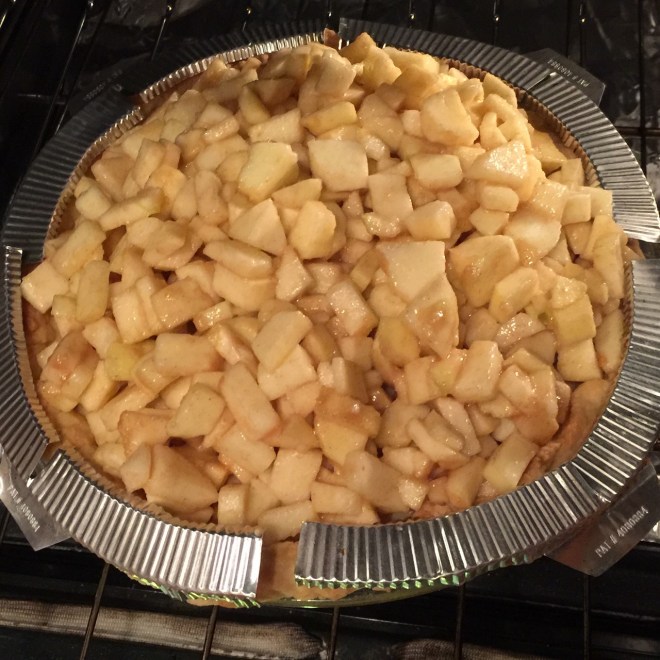 Bake at 375º for 25 minutes.
While pie is baking, prepare the streusel topping. Into the food processor put the remaining 1/4 cup (30g) flour, brown sugar, and oats. Run machine about 20 seconds to grind the oats and break up any hard brown sugar lumps. Cut cold butter into about 5 pieces or so, and add to processor. Pulse about 10 times to blend.  When the pie has cooked for 25 minutes, remove from oven. Evenly sprinkle on streusel and remove the edge protectors. Return pie to 375º F oven and bake another 20-25 minutes. Don’t let the top get too brown or it will make slicing difficult to cut through.
 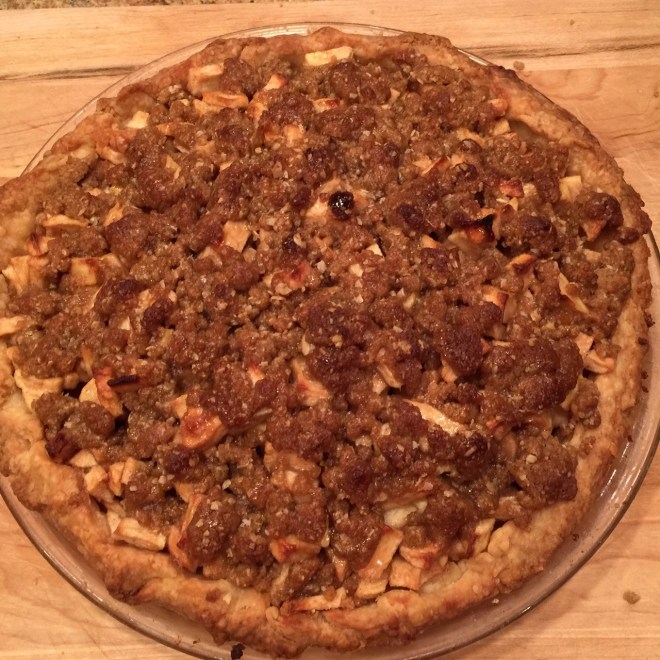 Place pie on a rack or stovetop and drizzle on the caramel topping. Let set at least 1 hour, preferably longer, or you’ll have a lava flow when you slice it.
VODKA PIE CRUST (AMERICA’S TEST KITCHEN RECIPE – amended) – makes 1 crust
Note: This needs to be made in a food processor.
- 3/4 cup (106g) + 1/2 cup (65g) all-purpose flour, divided
- 1½ T granulated sugar
- 1/4 tsp salt
- 6 T (70g) butter, cold
- 4 T (84g) Crisco (or any shortening), cold
- 2 T vodka
- 2 T water
In the workbowl of your food processor, pulse together 3/4 cup (101g) flour, sugar, and salt. Add in the butter and Crisco. Run the machine (don’t pulse) 15 seconds. The dough will come together into a creamy mass. Add in the remaining 1/2 cup (65g) flour and pulse about 8 times. Empty into a bowl.
Pour in the vodka and water. Gently (so it doesn’t splatter) fold together to incorporate the liquid into the dough. This is a very well dough. Press it together into a lump, cover, and refrigerate at least 1 hour.
Empty the cold dough onto a very well floured, flat surface. Sprinkle flour on top and on your rolling pin. Begin rolling dough from center outwards. Keep flouring the dough and the rolling pin lightly, so there’s no sticking.
Once the dough is rolled out large enough to cover the pie plate, with an inch to spare for crimping, you’re going to have to transfer the dough. Take your time – this is a wet dough! My favorite method is to take my bench scraper and go around underneath the dough a little at a time, lifting up the dough and pushing some flour underneath as I go. Once I get to the center, I lift up one side and fold dough in half. Then I carefully lift folded dough from sides and place in pie plate (Make sure you have it very close by!)
Unfold the dough and nudge it into the corners (don’t press the dough down – you’ll stretch it). Arrange the dough so it’s not folded anywhere. Fold over-hanging dough and crimp. Refrigerate 1 hour to prevent shrinkage.
Preheat oven to 375º.
Line cold dough with waxed paper or parchment, then fill with pie weights. (I use metal washers topped with uncooked beans.) Bake for 10 minutes. Remove paper and weights by grabbing the 4 corners of paper and gently rocking the weight package back and forth to loosen, then rocking it up and out. Return dough to oven and continue baking until browned – about 15 minutes. Keep an eye on dough, particularly when you return it to the oven to make sure the crust stays flat. If you notice it rising, gently press down with the back of a fork.
Once the crust is golden brown, remove from oven and let cool to firm up.

 Mexican Rice is one of those foods that can be both a side dish and an ingredient in something else. For example, Monday night you might want a side dish with a bit of a kick to perk up a main course, and then on Tuesday it can become part of a burrito or taco. One preparation, two meals! Love it!!!
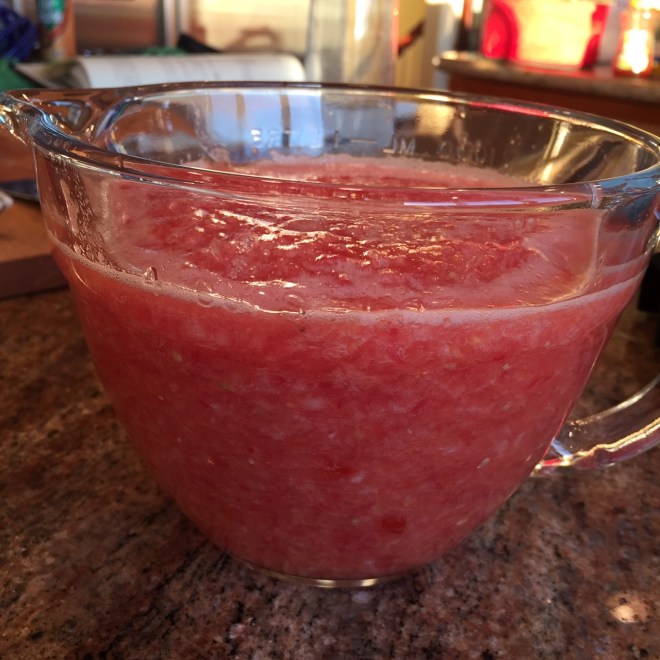
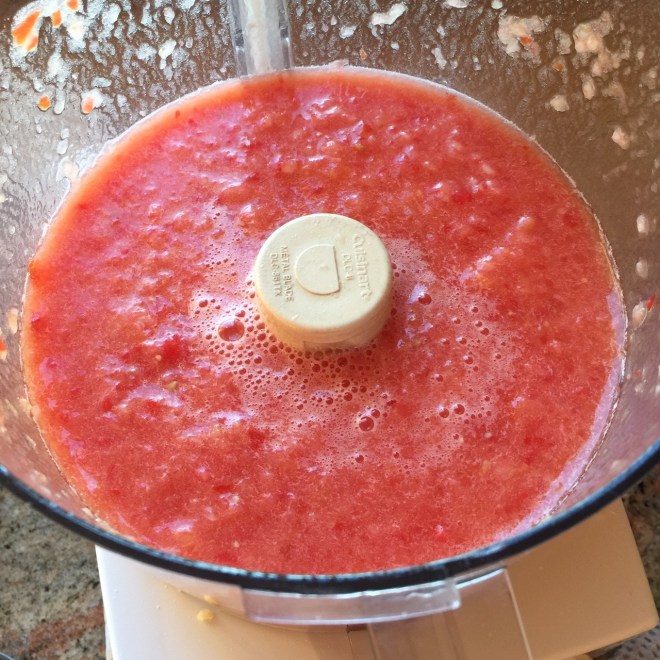 Empty into a large measuring cup and add enough stock or water (both work fine) to add up to 4 cups total. Set aside.
 Put uncooked rice in a sieve and rinse well to remove excess starch.
  In a saucepan, heat oil. Add rinsed rice and sauté 6 minutes.
  Stir in the tomato purée, garlic, salt, jalapeños, and tomato paste. Pour into casserole dish.
  Cover and bake at 350º F 30-40 minutes, stirring halfway through, until rice is fully cooked. (Make sure rice is fully cooked – it won’t continue to soften off-heat.)
  Add in cilantro and lime juice to taste. If you want more kick, stir in another minced jalapeño.
 Apple season is upon us. While there are a plethora of pie, tart, and bread recipes made from these red beauties, I decided to try something a little different: APPLE-SWEET POTATO HASH. The combination of apples, sweet potatoes, and onions works surprisingly well.
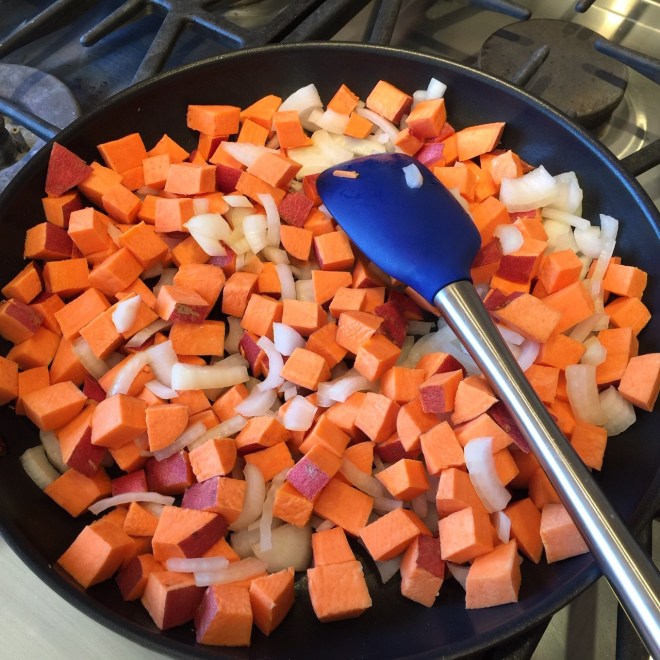 Cover, decrease heat to low, and cook for 8 minutes. Check to see if sweet potato is easily pierced by a sharp knife. If not, cover and let cook a little longer.
 When cooked, add in apples, cinnamon, salt, and dill.
 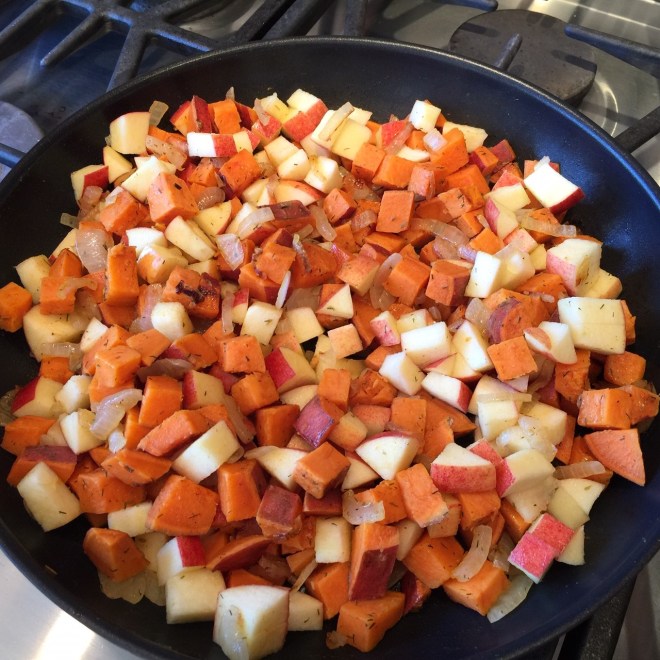 Increase heat to medium/high and sauté until browned, stirring now and then. Add in lemon juice.
 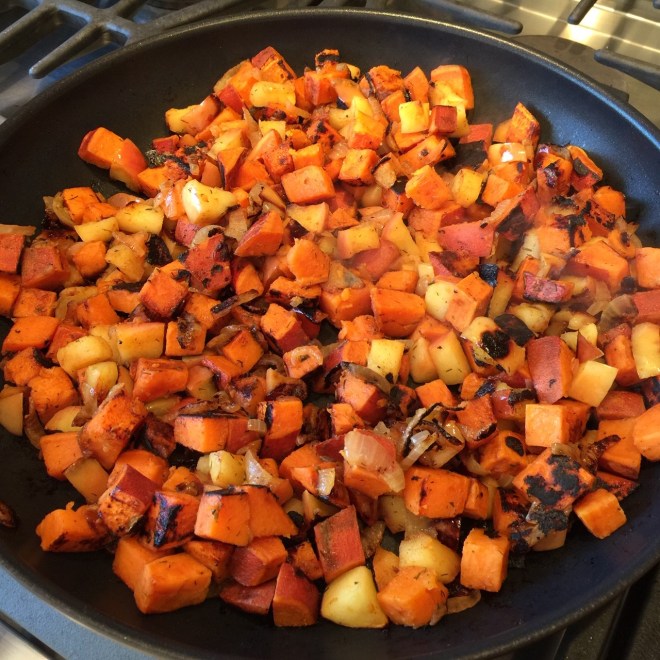 Adjust seasoning, if needed.
 Into the workbowl of your food processor (or a large mixing bowl if you’re going to do this by hand), put the flour, 1 T olive oil, yeast, sugar, and salt. Turn the machine on and slowly pour in the water through the pour tube. Once all the water is poured, let the machine run another 30 seconds or so. This is a very sticky, loose dough.
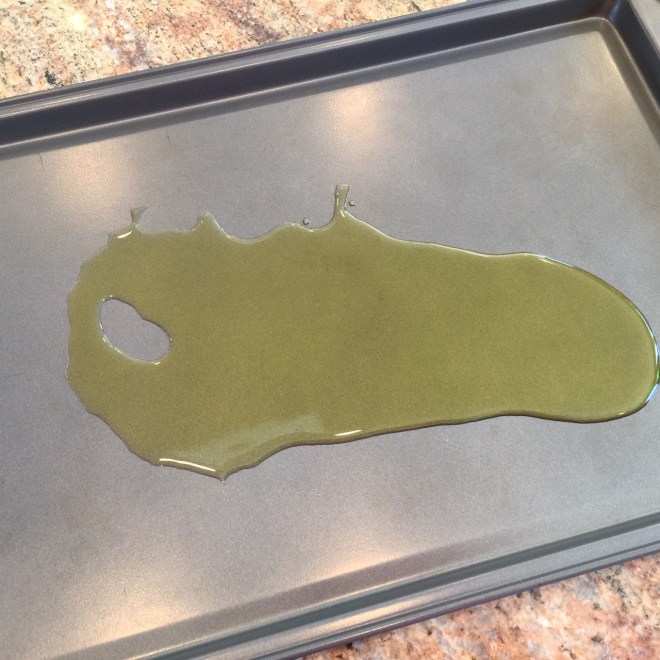
 Empty the dough onto the olive oil in the jelly-roll pan. Dip your finger tips into the oil so the dough won’t stick to them, and flip the dough so it’s now completely covered in oil.
  Cover either with plastic film or a large pan (I use a rectangular roasting pan – it fits perfectly.) DON’T use a tea towel – it will just stick to the dough. (Been there, done that!) Let rise about 45 minutes.
 Sprinkle on mozzarella, then drizzle on the marinara, followed by any other topping, and finally sprinkle on the Parmesan.
  Bake at 500º F in the lower third of oven for 13-15 minutes. Sprinkle on fresh basil.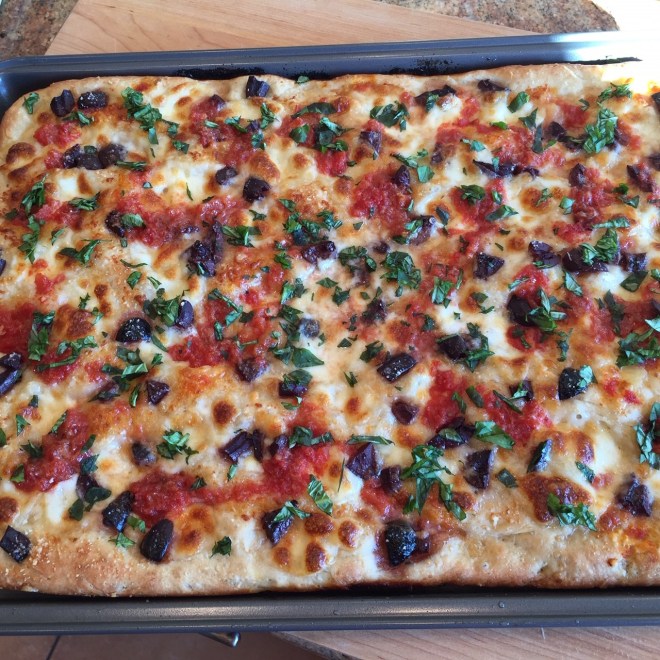

 In a 12″ skillet over medium/high, heat oil. Add onions and sauté until translucent, but not browned – about 5 minutes. Turn off heat and add in garlic and basil, stirring to bloom by using residual heat from the hot skillet.
 Turn heat to medium/high and add in cauliflower. Sauté for 5 minutes.
 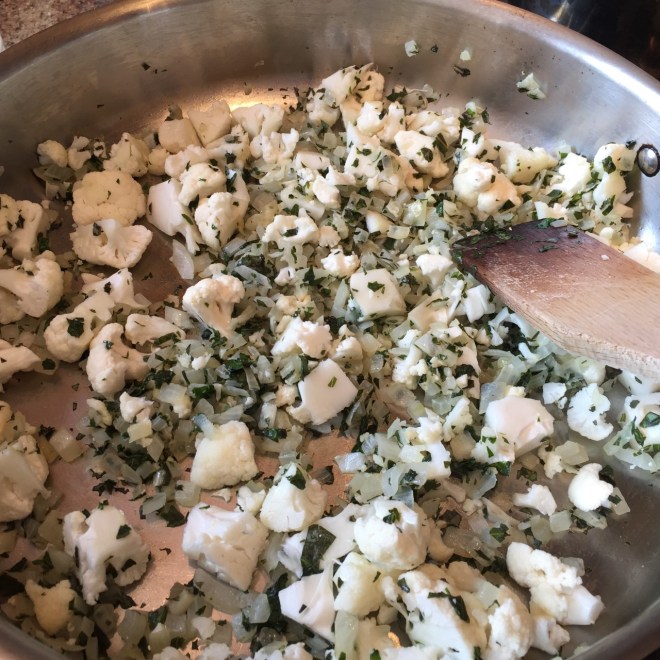 Add in the tomatoes and continue to cook until cauliflower is tender – about 10 minutes.
  In a saucepot, bring 2 quarts of water to a boil. Add in 1 T salt and the pasta. Cook until slightly under-done. Drain.
 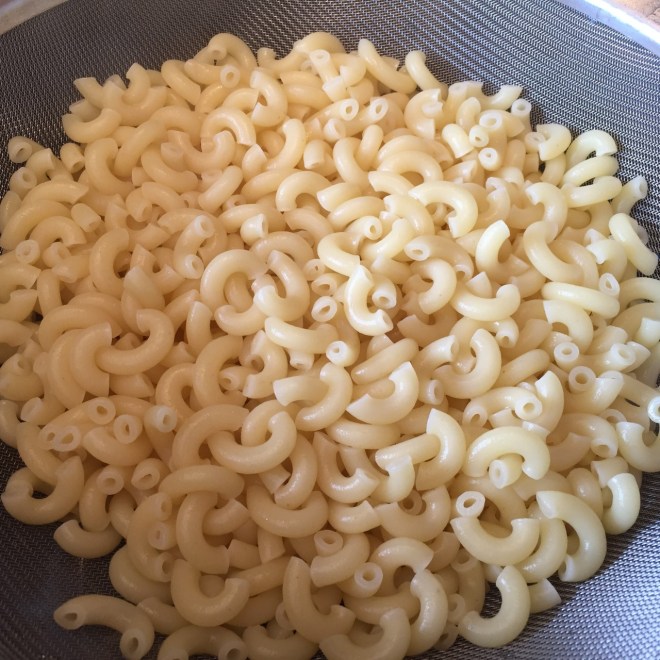 In the now-empty saucepot, combine the white sauce, cauliflower mixture, pasta, and lemon juice.
  Pour half into a casserole dish. Sprinkle on half of Mozzarella and half of Parmesan.
  Cover with the remaining pasta mixture and top with the remaining cheeses.
  Cover and bake at 375º Fahrenheit for 30 minutes. Remove lid and cook 10 minutes longer, if covering with crumb topping. Evenly sprinkle topping over top. Return to oven, uncovered, and bake another 5 minutes.
  If not covering with topping, bake uncovered for 15 minutes.
 Let set 15 minutes before serving – it’s super hot! Pass around Seasoned Breadcrumbs, if desired.
 Remove from heat and pour into a bowl. Stir in Parmesan when crumbs are cooled.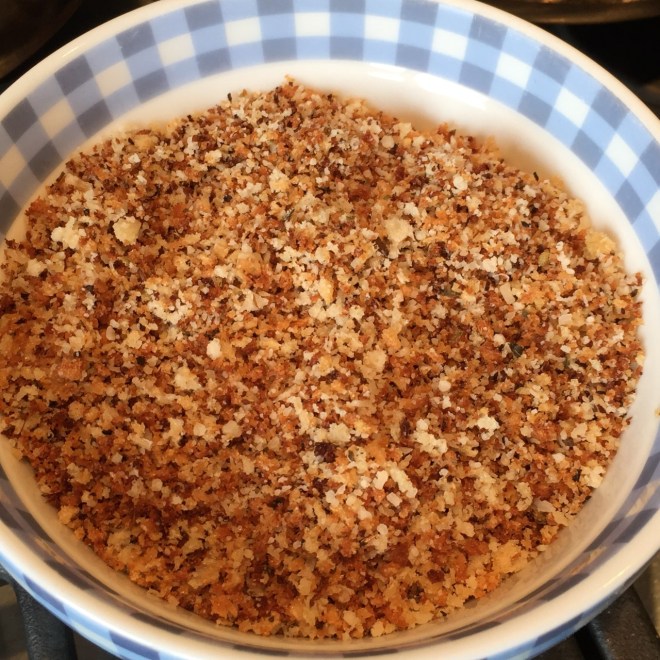
 Some people become vegetarians because they don’t like meat and/or it upsets their body. Not me. I grew up eating some sort of animal everyday – sometimes three times a day and loved it. So when I decided, for humanitarian reasons, to become a vegetarian, it was quite an adjustment.
 Put the butter, rye flour, sugar, salt, caraway seeds, mustard, and 1 cup of the AP flour into the workbowl of a food processor.
 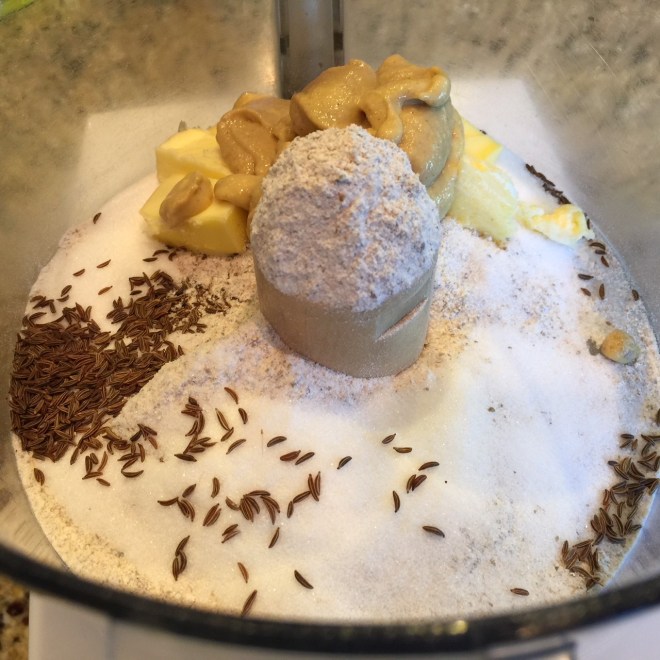 When the yeast is proofed, turn on the machine and slowly pour in the yeast water.
  When it’s mixed, add in remaining flour a little at a time, until dough starts to pull away from the sides. You may or may not need all of the remaining cup of flour.
 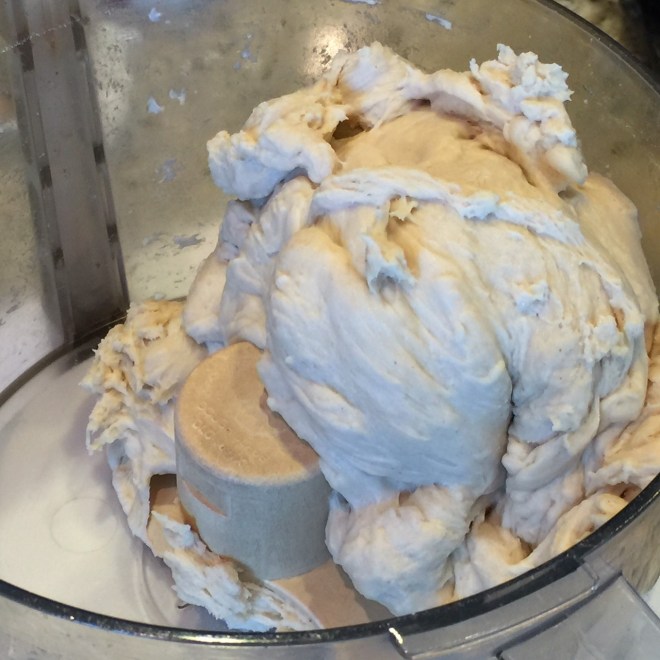 Empty dough into greased bowl, flipping dough ball so entire ball is greased. Cover with tea towel or plate and let rise 1 hour.
 Spread on the “ham”, cheese, then pickles down the center of the dough. Make 1½” cuts along both sides – cut the same number for both sides.
 Fold in one end, then grab the first dough tabs and twist them together, pinching to make sure they stay.
  Keep doing this for all the tabs.
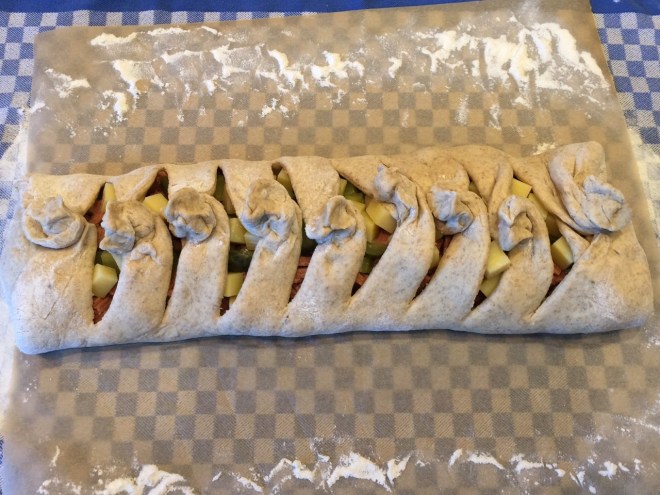 Slide the parchment onto a large, rimless cookie sheet. Cover loaf with the tea towel and let rise 30 minutes. At this time, preheat oven to 375º F.
 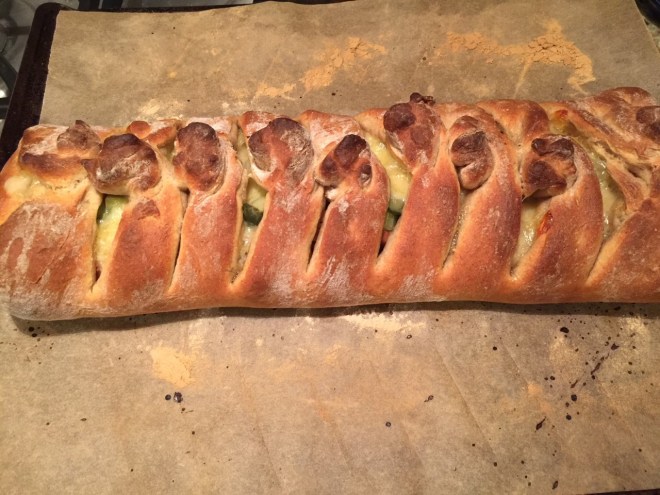 Remove to rack and let set about 15 minutes before serving.
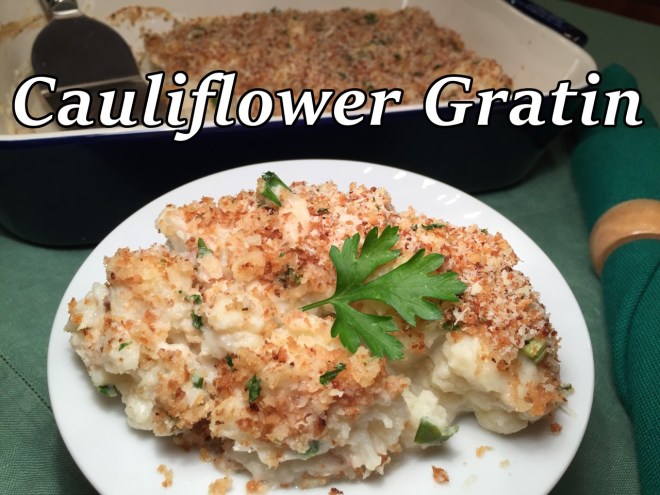 As so often happens, I got the idea for CAULIFLOWER GRATIN from America’s Test Kitchen. Rather than using cream or milk for the sauce, they pureed some of the cauliflower with water to get the liquid. Brilliant!
 Slice off and discard the discolored end of core. Then slice remainder into 1/8″ thick slices.
  Place cauliflower right side up and slice into 3/4″ slabs. Remove florets from stalks. Cut the stalks into 1/8″ slices and place them with the core pieces. (The stalk and core pieces will become the basis for the sauce.)
 Into a Dutch oven, place 3 cups of water, 6 T butter (cut into pieces so it melts faster), all the sliced stalks and core pieces, and 2 cups of the florets. Bring to a boil.
 Place the remaining florets on a large steamer basket. (It’s a bit of a balancing act!)
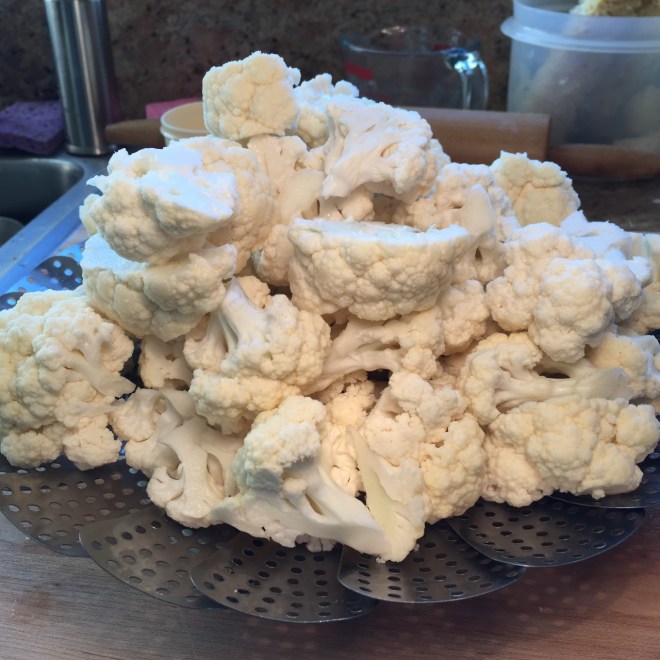 When water/core slices comes to a boil, carefully place steamer basket in Dutch oven. (You may need to remove some of the florets before placing the basket in the Dutch oven – they tend to roll – then replace them once the basket is set in place.) You’re going to steam the florets and boil the core/stalks at the same time.
 Cover and let cook until florets are easily pierced with a sharp knife (about 15 minutes). Don’t undercook the cauliflower in the hopes it will continue to cook in the oven – it won’t.
 When florets are tender, remove steamer basket from Dutch oven and pour cooked florets into a large bowl. Add in the scallions.
 Check to see if the stalks in the water are tender (mine always are). If not, cover and continue to cook until they are tender. Remove lid and let cool about 10 minutes.
 Pour this into the blender, then blend another minute. Pour sauce into the bowl with the florets and gently mix (you don’t want to break the florets).
 Empty mixture into a 9″ x 13″ casserole dish.
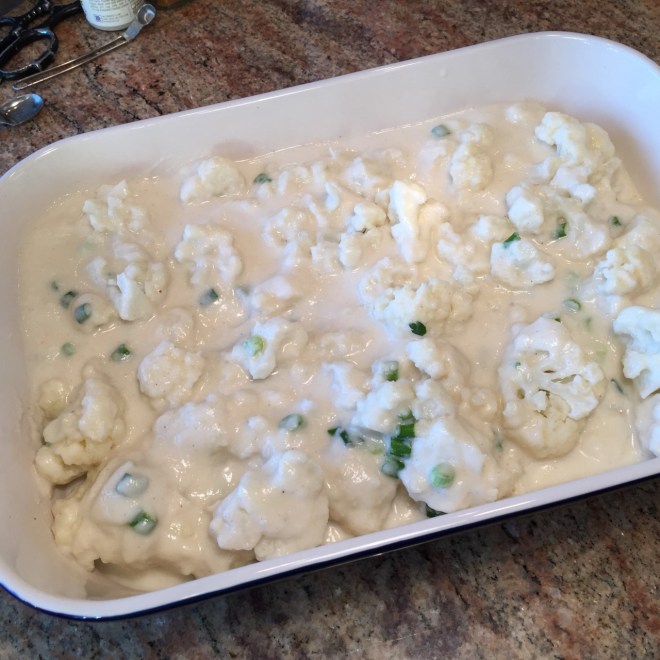 Into the cooled panko stir remaining Parmesan (1 cup) and chopped parsley.
 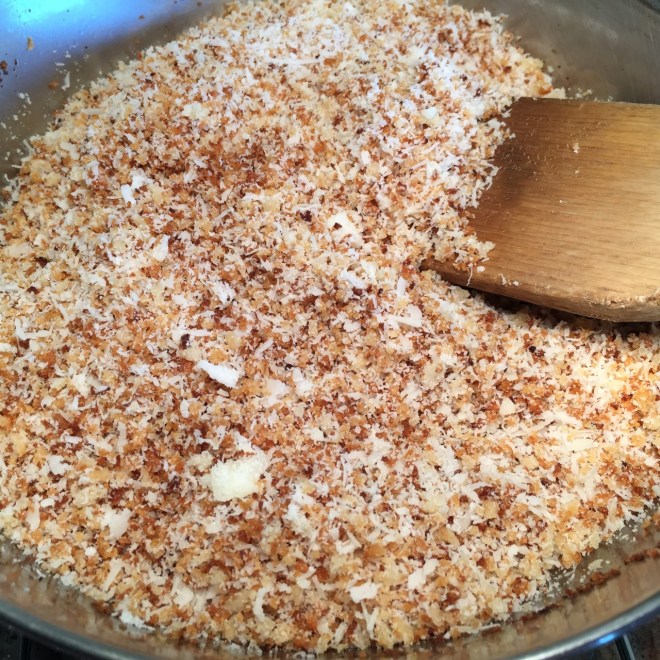 Sprinkle evenly on top of cauliflower.
  Bake, uncovered, at 400º F for 15 minutes. Remove from oven and let set 20-25 minutes before serving.
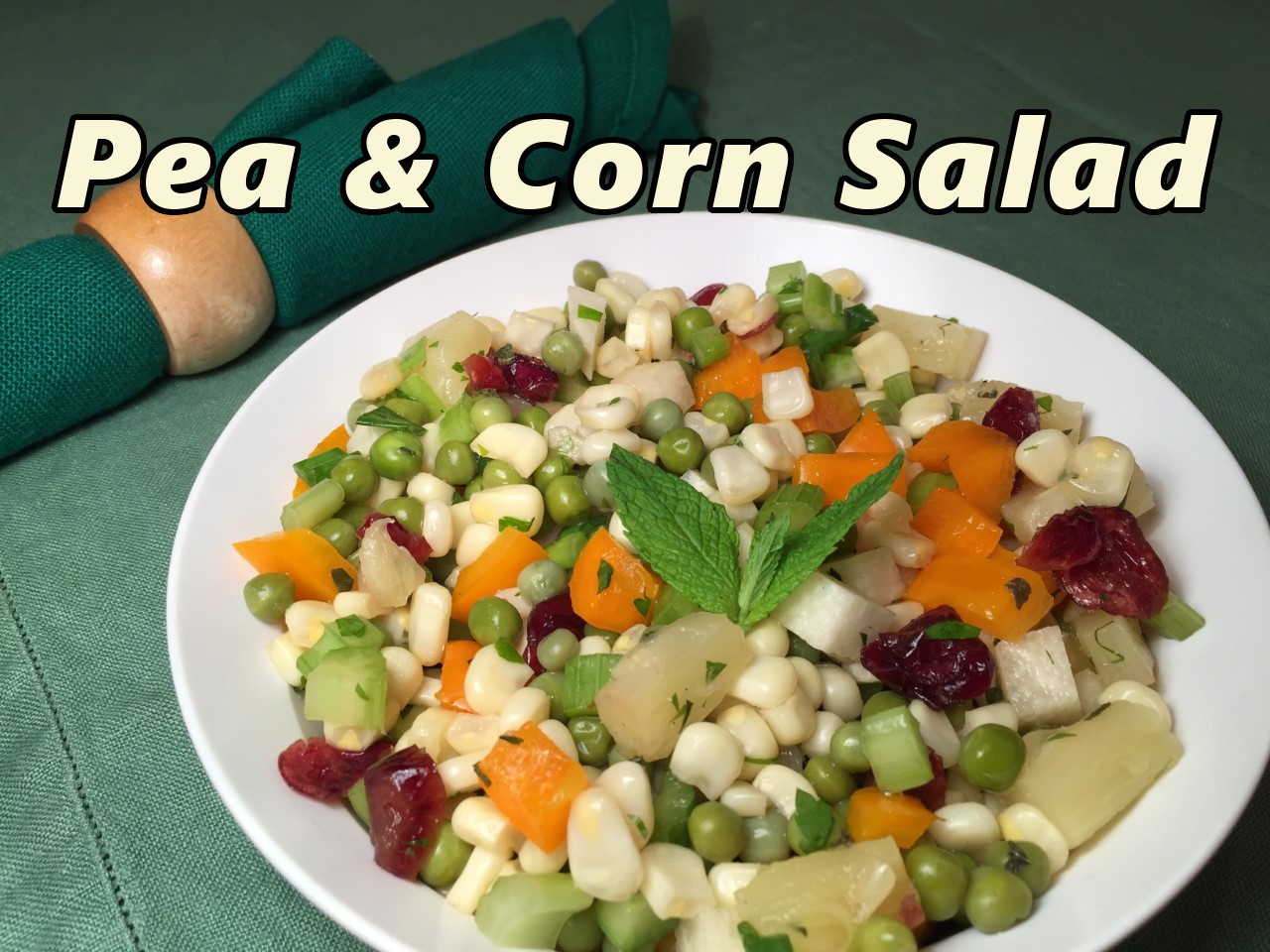 When the weather is hot and you don’t feel like cooking a vegetable, try this non-cook vegetable salad. BONUS: it’s fat free!
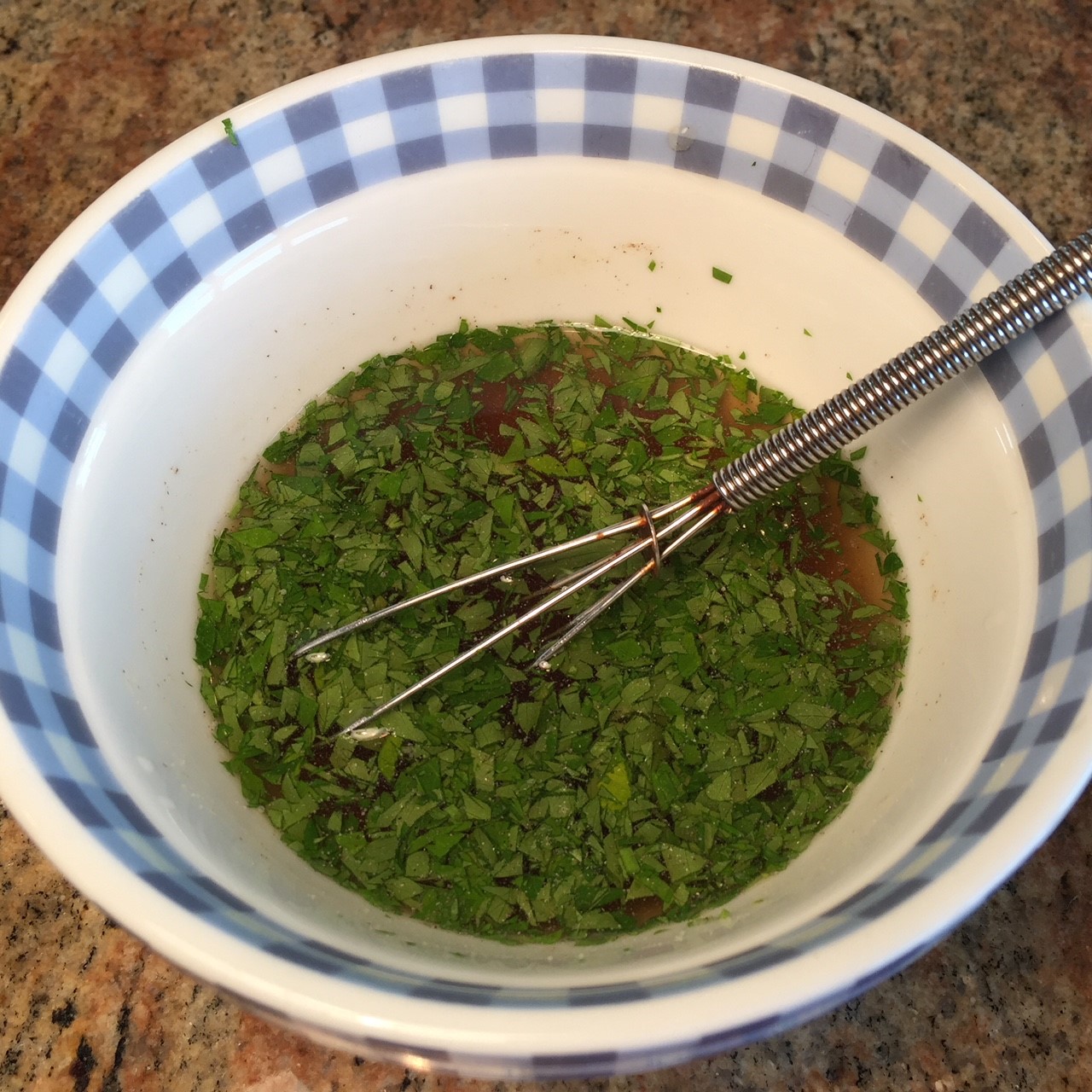
 In a small bowl, stir together the vinegar, brown sugar, parsley, salt, and pepper.
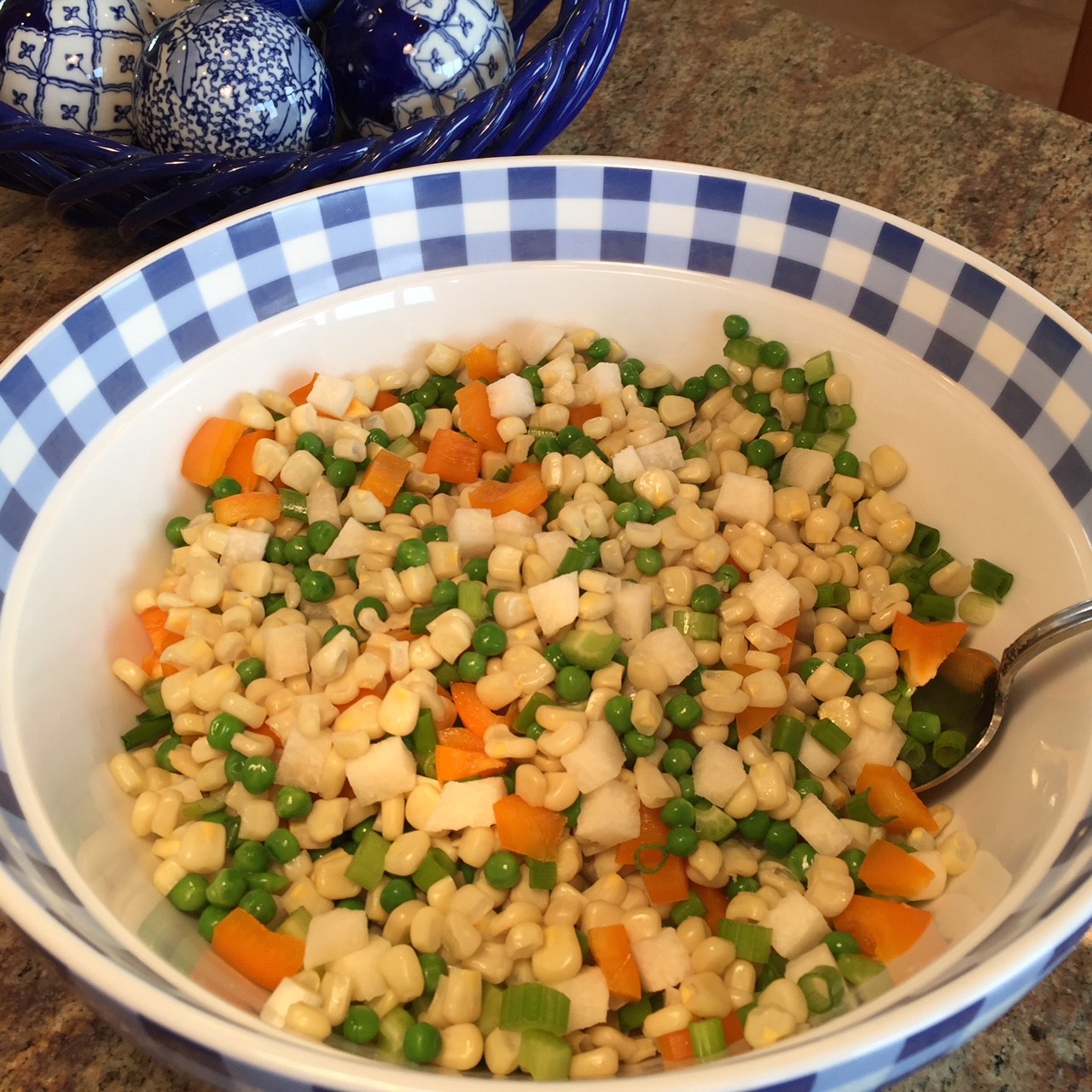
 Pour on veggies and blend.
 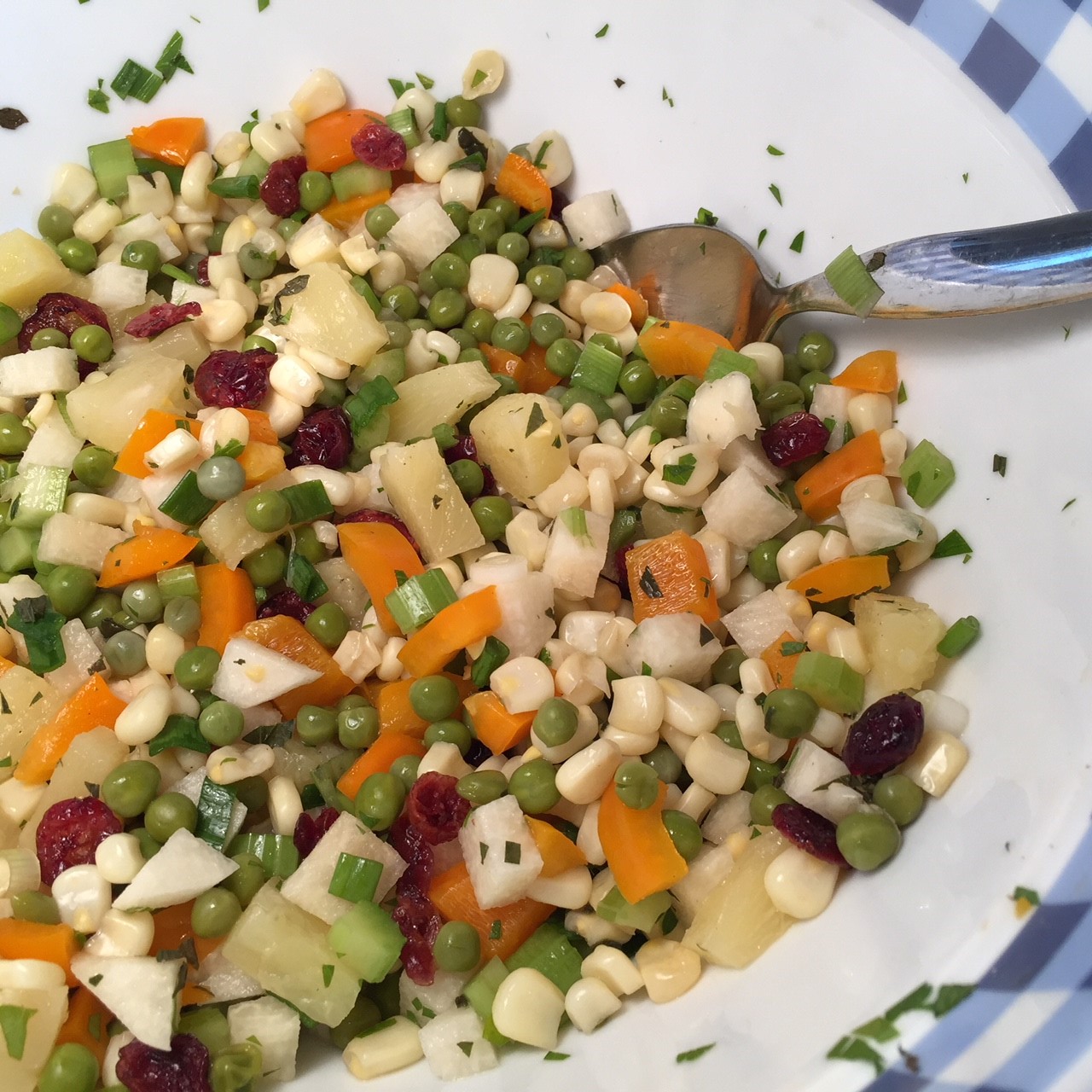 Refrigerate at least 2 hours. Stir in mint and serve.
 Being the loving husband his is, my friend, George, was whipping up a batch of fat-free blueberry muffins for his wife, Kathy, while we were visiting. I was curious about his recipe and what was used instead of the fat.
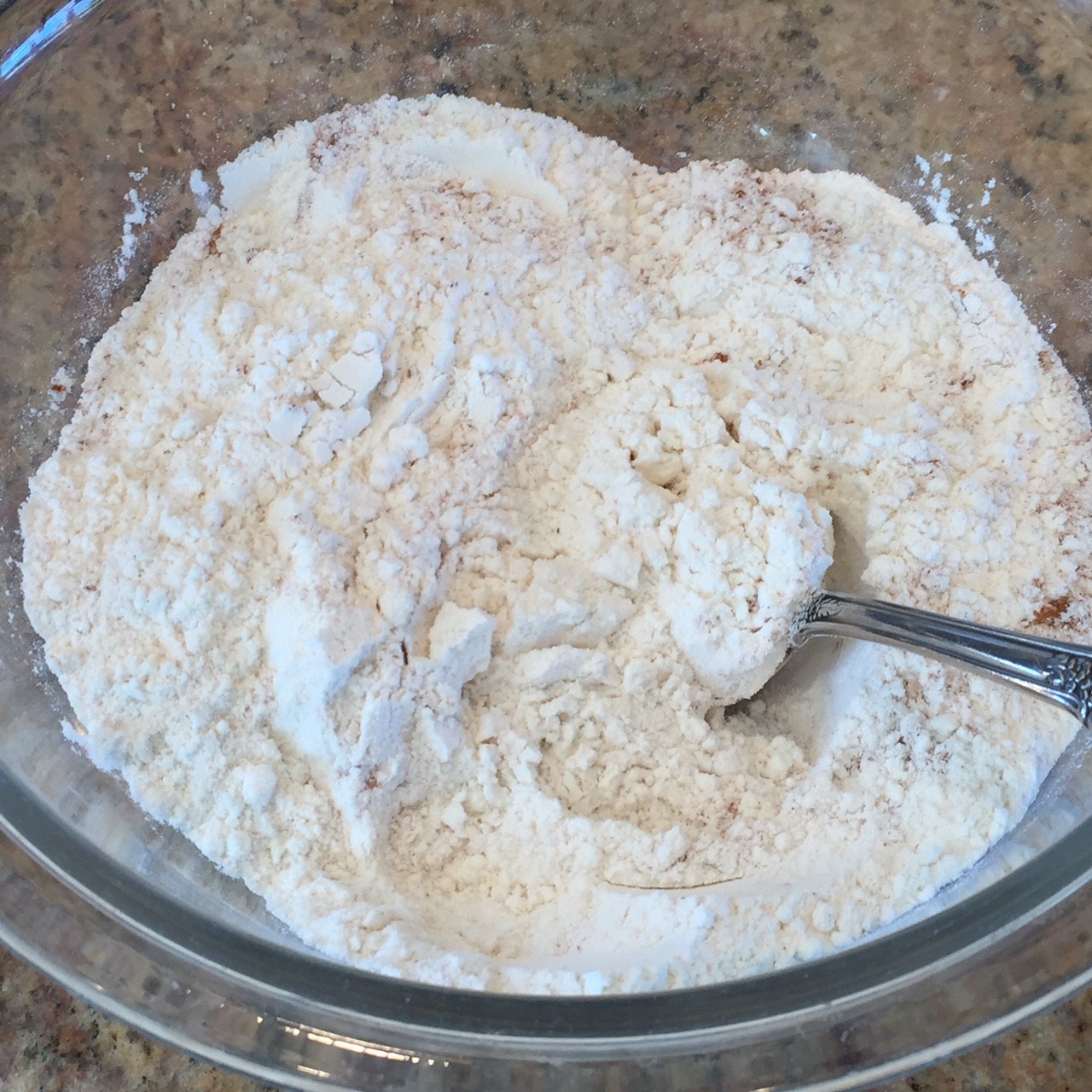 In a larger bowl combine whites, milk, zest, 1/2 cup sugar, and vanilla. Beat with an electric mixer on low, a hand-crank egg beater, or whisk until bubbles form on top – it takes about 30 seconds.
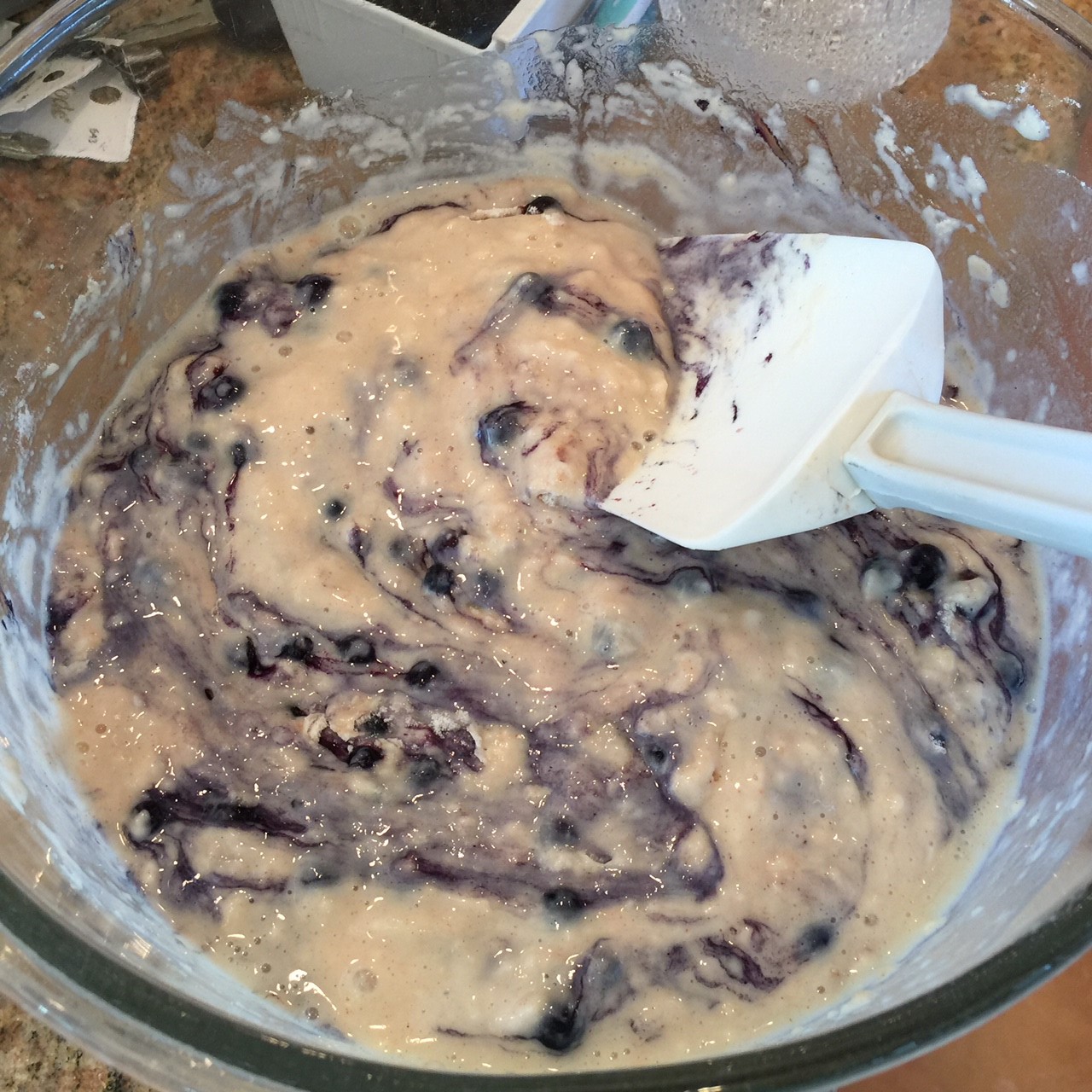
  Pour the dry ingredients into the wet and gently combine, until most of the flour is incorporated. Don’t overmix or you’ll get tough muffins.
  Add in the blueberries and fold in, just to combine. (Frozen blueberries – which I use – tend to bleed.)
 Pour the batter into the prepared muffin tin, dividing batter equally. (An ice cream scooper is perfect for this.) Sprinkle about 1 tsp of sugar onto each.
 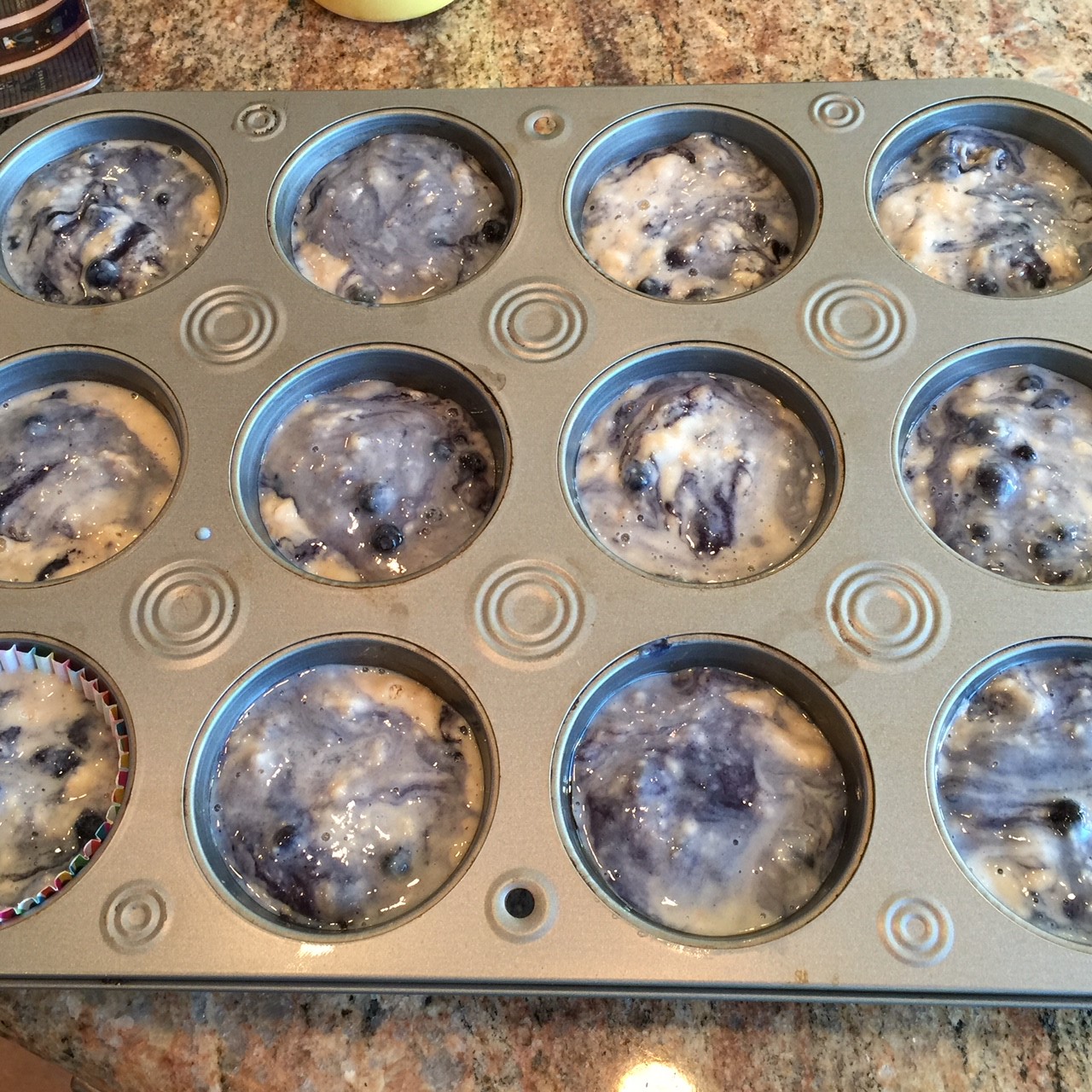 Bake in preheated 400º F oven for about 16 minutes, rotating them halfway through to cook evenly. They should be firm with slightly browned edges.
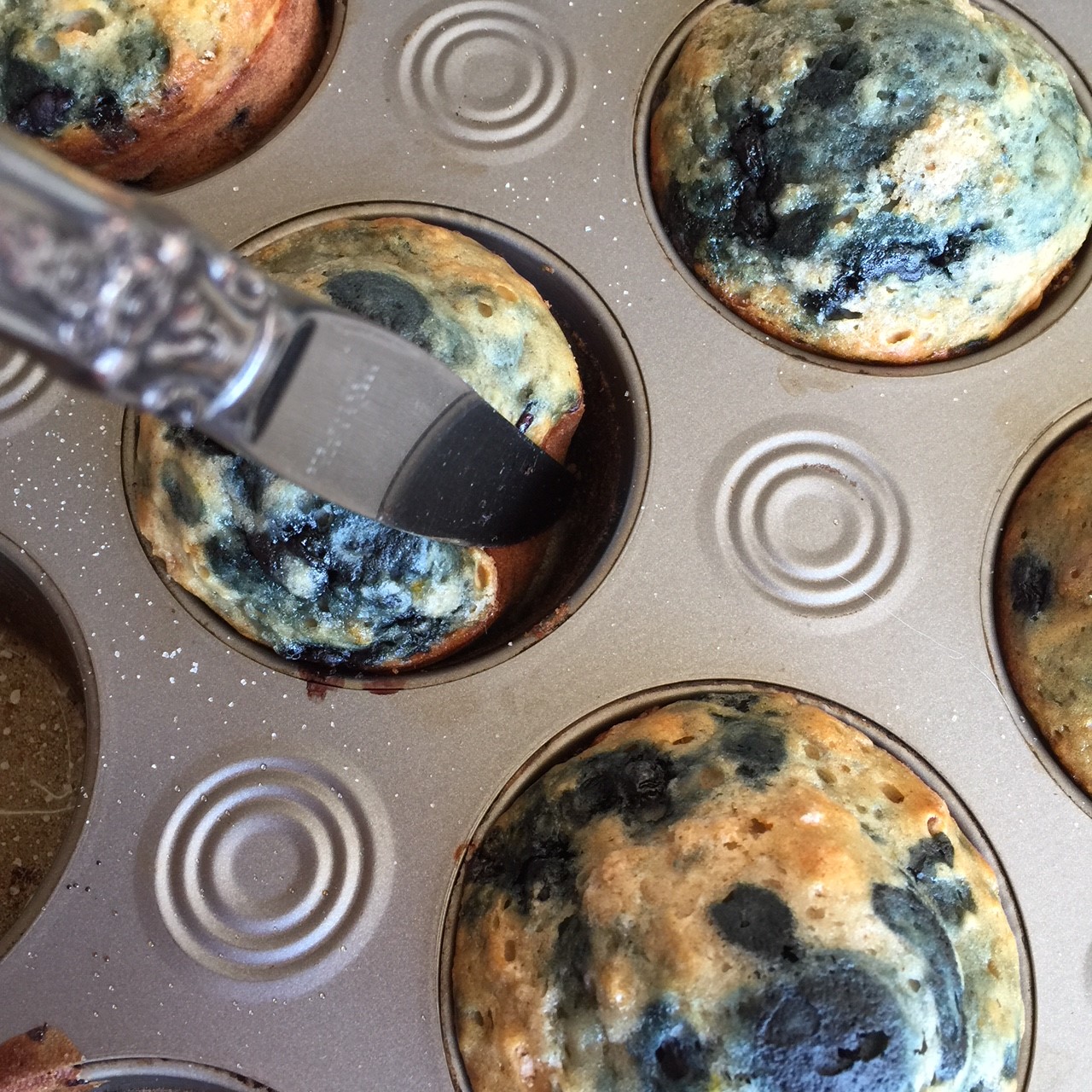
 Remove from oven and let set in tin about 2 minutes. To remove, run a rounded knife around sides, then start pushing in around the bottom with the knife to help release the muffin.
  Set muffins on a wire rack to cool a bit before eating.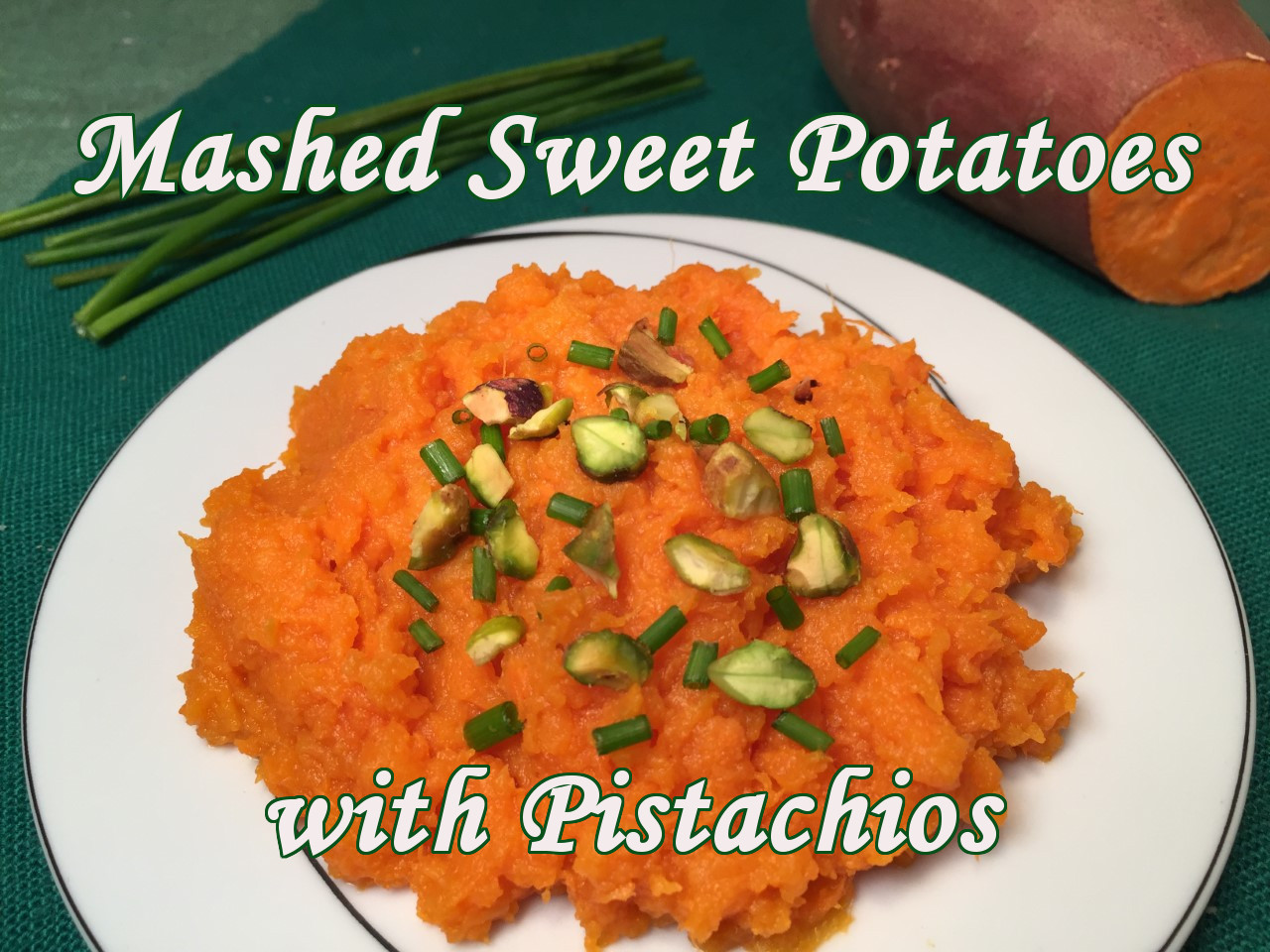
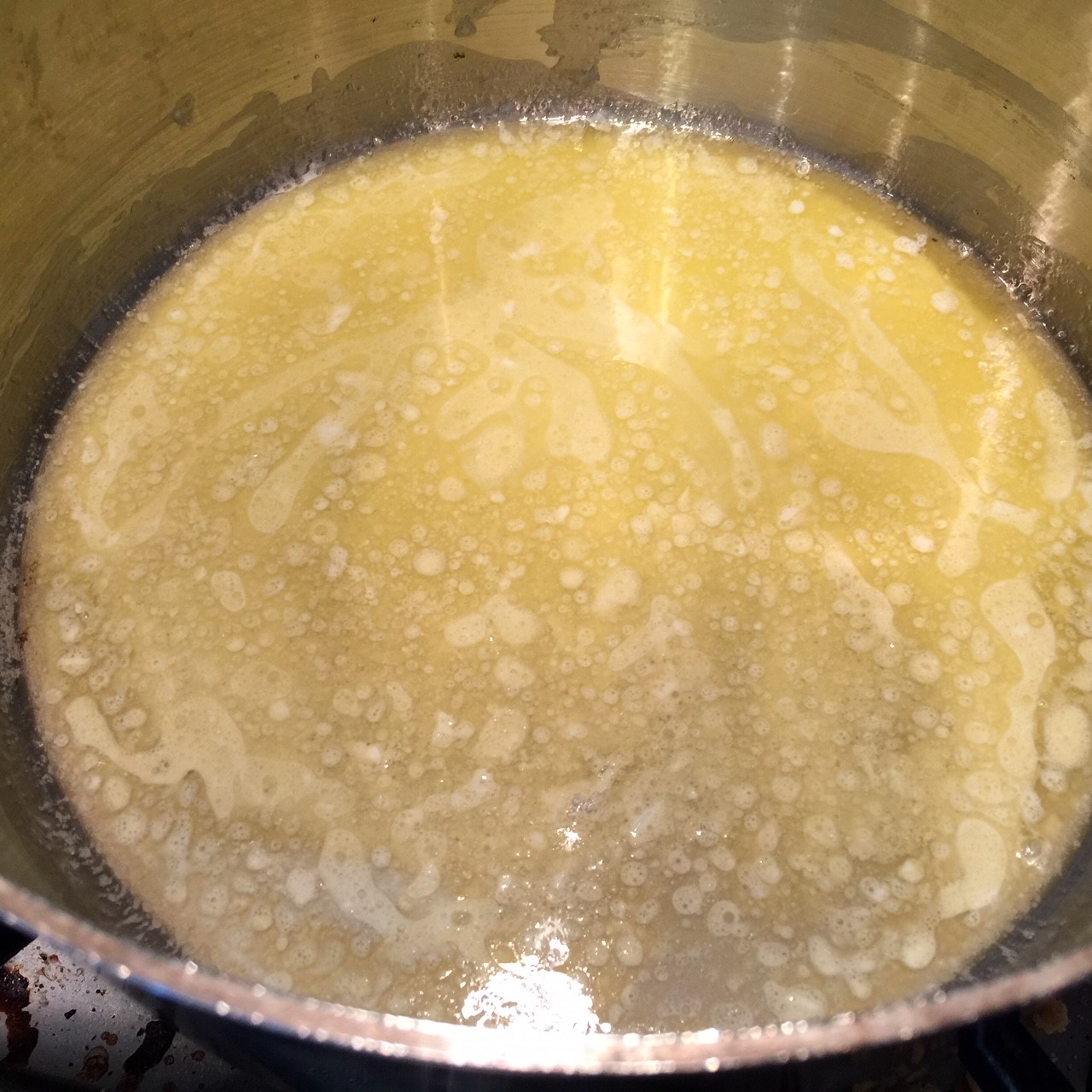
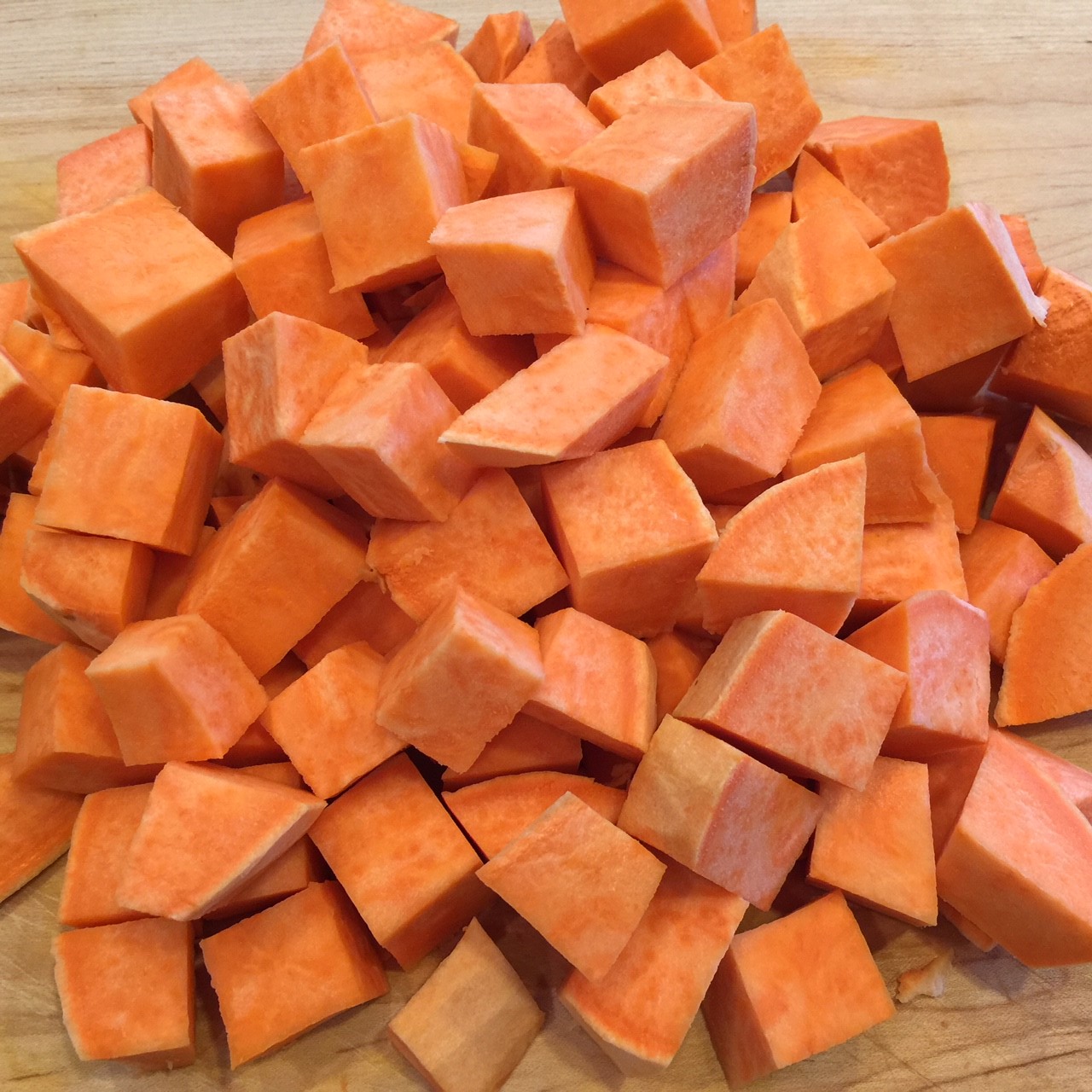 In a saucepan over low heat, melt together the cream, butter, sugar, and salt.
  Add in the sweet potatoes and stir to coat cubes.
  Cover pot and cook over low heat until easily pierced with a fork, stirring now and then. This should take about 17-25 minutes, depending on the type of sweet potato. If the liquid is almost absorbed but the sweet potatoes are still not completely cooked, turn off flame and leave covered to complete cooking.
 Adjust for seasoning – I usually add another 1/8 tsp salt. If desired (and I do desire!), top with chives and toasted pistachio nuts.
 Vegetarian Cooking For Carnivores BLOG