
 Due to my frugal nature (some may say, ‘cheap’), I found myself with an abundance of frozen egg whites. It turns out there are many more recipes that call for an extra egg yoke than an extra egg white. Due to my aforementioned frugal nature, I froze the unused whites rather than throw out perfectly good food.
I’d always scoffed at the humble angel food cake – it just seemed so blah. However, I had an America’s Test Kitchen recipe that called for 12 egg whites in their angel food cake. This would make a significant dent in my frozen egg white stockpile, so I made it.
I was stunned at how good it was. A bonus being there are a lot less calories in an angel food cake compared to an equal sized slice of an iced butter cake.
Note: Ideally, you should use an angel food cake pan because it’s tubular, thus providing more surface area for the batter to climb and attach to. Also, it has little legs to allow air to flow underneath as the cake cools. (Angel food cakes are cooled upside down so they don’t collapse.) Use a bundt pan, if you don’t have the proper pan and elevate it.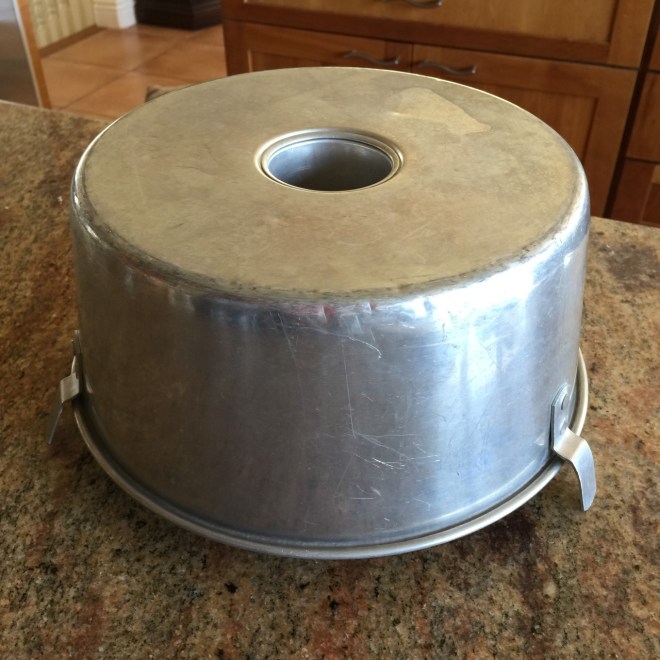 ANGEL FOOD CAKE
- 3 oz (1 cup) cake flour
- 10 oz (1½ cups) granulated sugar, divided
- 1 tsp cream of tartar
- 1/4 tsp salt
- 12 egg whites
- 1½ tsp vanilla
- 1½ tsp lemon juice
- 1/2 tsp almond extract
Preheat oven to 325º Fahrenheit.
Make a liner for the cake pan bottom by placing the pan on parchment paper open side up. Run a pencil around the outside of the pan bottom and cut out the circle. Flip the pan so the bottom of the pan is up, and place the cut-out circle on top. Firmly hold the parchment in place and trace the center tube outline with a pencil. Cut out and discard this inner circle. Very lightly grease the BOTTOM ONLY of the cake pan. (Don’t grease the sides – the batter needs to be able to grip it in order to rise.) Line the bottom of the cake pan with the parchment and press it down. The parchment will help the cake release.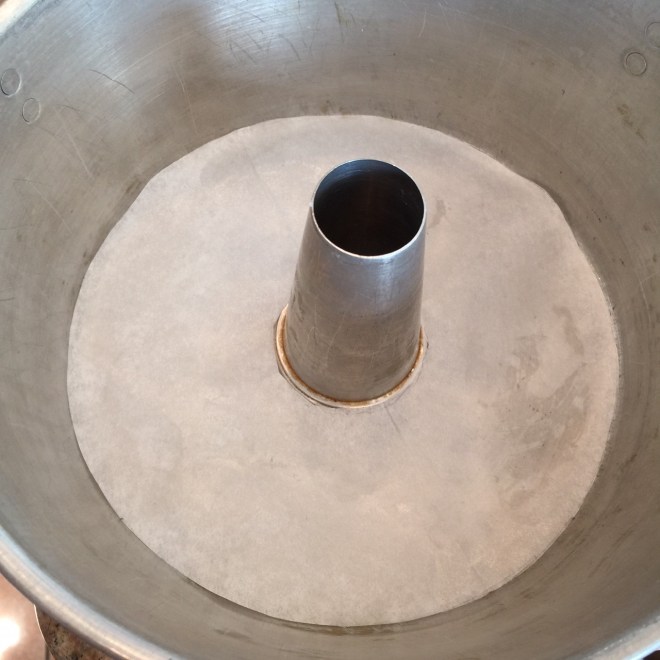 Into a bowl, sift together the cake flour and 5 oz (3/4 cup) of the sugar. Set aside.
Into another bowl mix together the remaining 5 oz (3/4 cup) sugar, the cream of tartar, and the salt. Set aside.
Into a small bowl, mix together the vanilla, lemon juice, and almond extract. Set aside.
Pour the egg whites into the large bowl of your standing electric mixer. Beat on medium. Large bubbles will form at first, then they’ll decrease in size after about a minute. 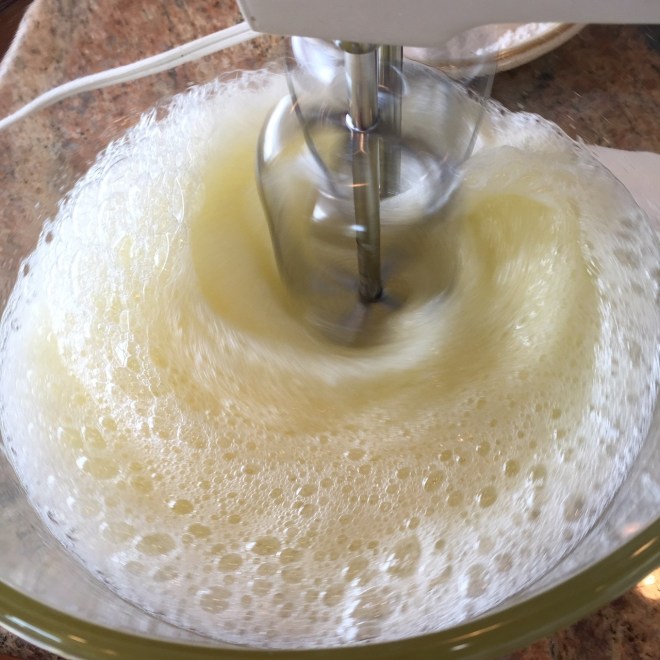 With the mixer still running on medium, start adding the sugar/cream of tartar mixture to the whites 1 tablespoon at a time.
 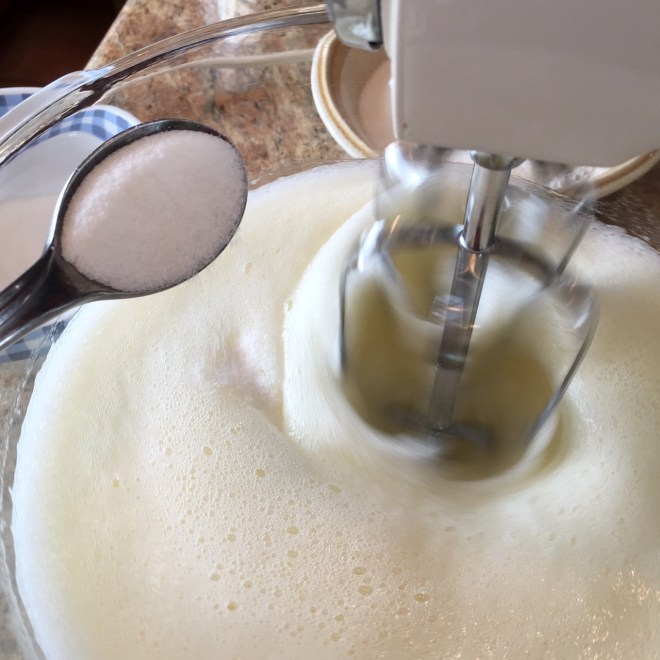 Once all the sugar/tartar has been added, increase mixer speed to high until soft peaks form. Turn off machine, pour in the vanilla mixture, then quickly mix together on low.
 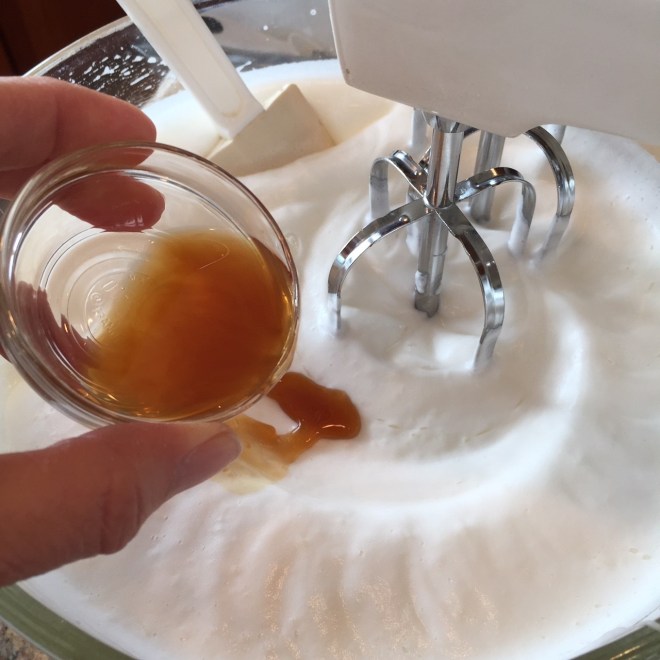 Here’s where your jaw may drop. If you read other angel food cake recipes, they’ll tell you to FOLD in the flour mixture gently in order not to deflate the meringue. I’m here to tell you that you don’t have to bother. Simply add 3 T of the flour mix to the batter through a sieve, then turn your mixer on the lowest speed for a few seconds to incorporate the flour, running a spatula along the sides and bottom of the bowl.
 Turn off the mixer, then add another 3 T flour to the batter, turn on the machine to low and mix to incorporate for a few seconds. Continue until all the flour is added and incorporated.
Once all the flour is incorporated, gently pour batter into the cake pan, smoothing top. Rap pan a couple of times on the counter to dislodge any air bubbles (I’m not sure if this is a myth, but it can’t hurt.)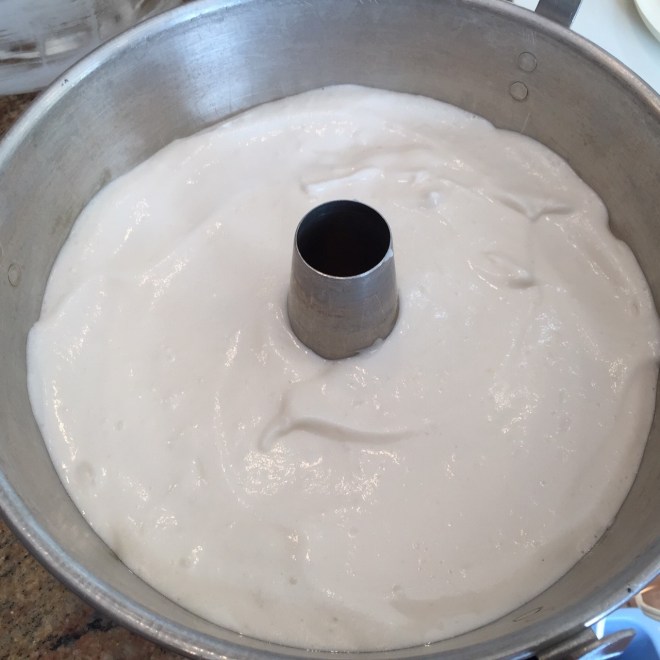 Put into the oven and bake about 45-50 minutes – until golden brown and cake springs back when you press it with your finger.
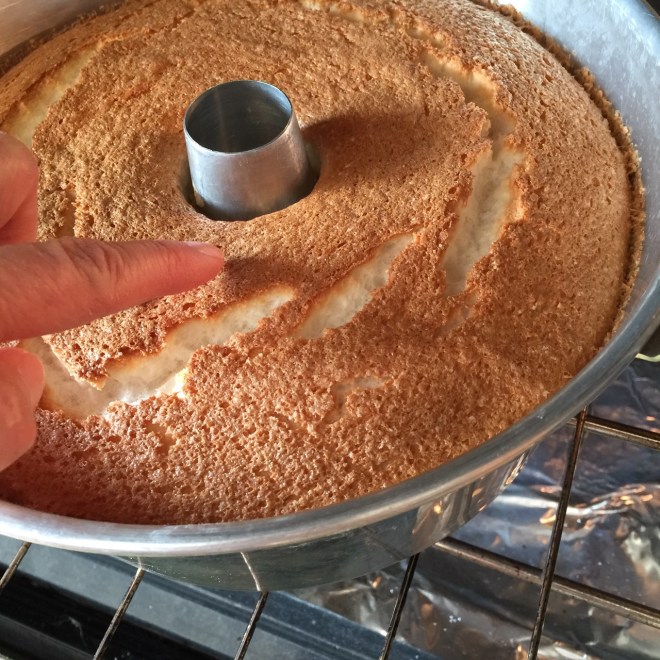 Remove from oven and immediately turn upside-down. Let cake remain like this until completely cooled – about 3 hours. When cool, run a dull knife around the sides of the cake (including the tube), making sure you get all the way to the bottom. Flip the cake onto a plate – hopefully, the cake will fall out. (If not, run the knife around again.) Carefully, remove the parchment and let cake sit to completely cool before serving.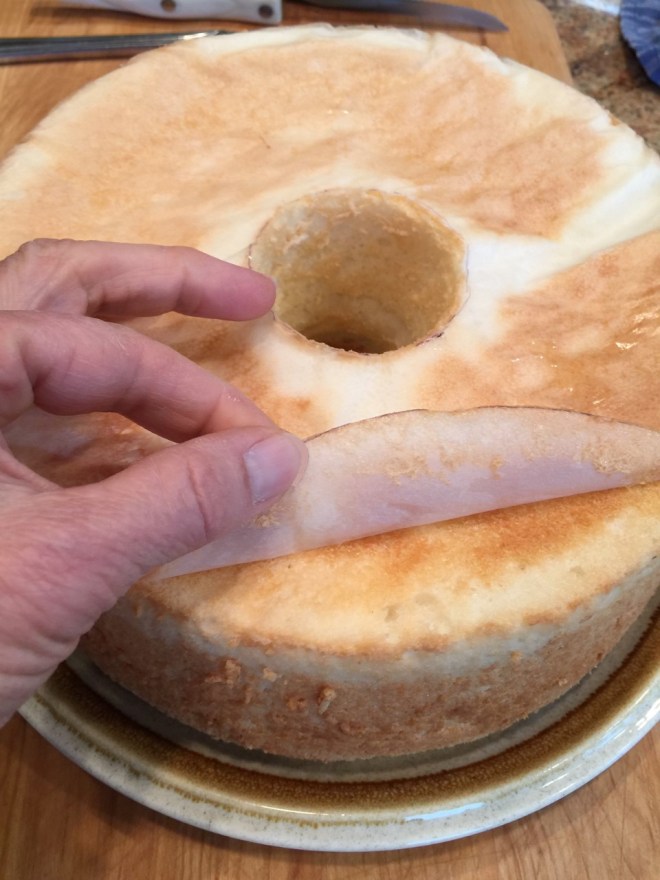

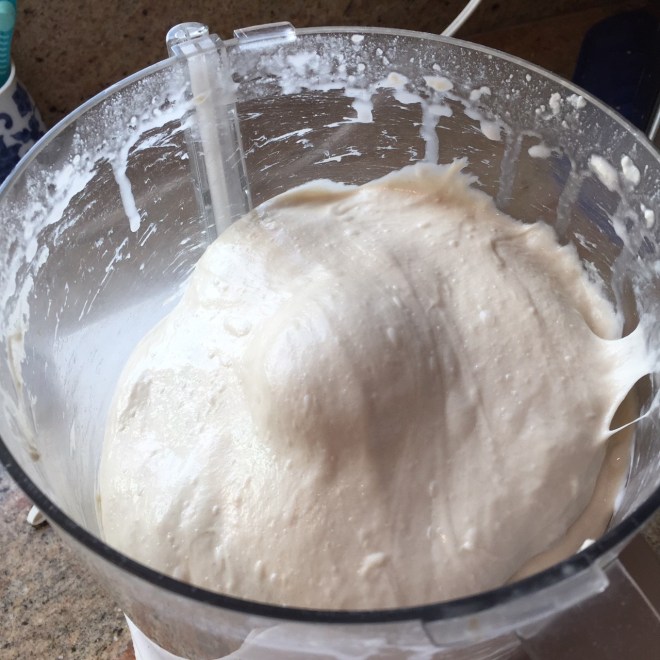 Pour 2 T olive oil into a rectangular or square container with sides at least 3″ high, covering the bottom and sides. (The square corners train the dough somewhat and help it fill the corners of the baking pan. If you don’t have a container like this, just use an oiled deep bowl.) The dough is going to rise very high, then collapse somewhat. Cover container and let rise 5½ – 6 hours. Note the low height of the dough when I pour it in.
  Here’s after 2½ hours:
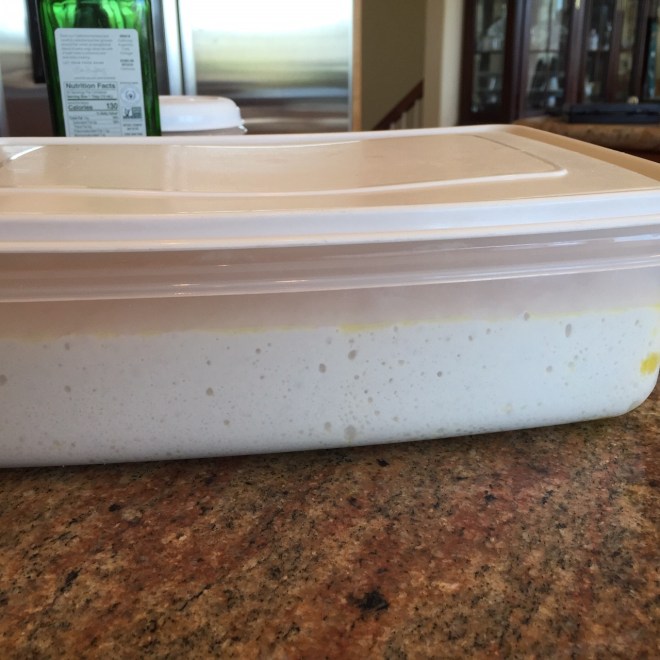 After about 4 hours it starts to collapse a bit – this is normal.
  After dough has been rising for 5 hours, preheat oven to 500º Fahrenheit, rack in the middle position. If you have a baking stone or steel (I use a steel), place it on rack as the oven preheats.
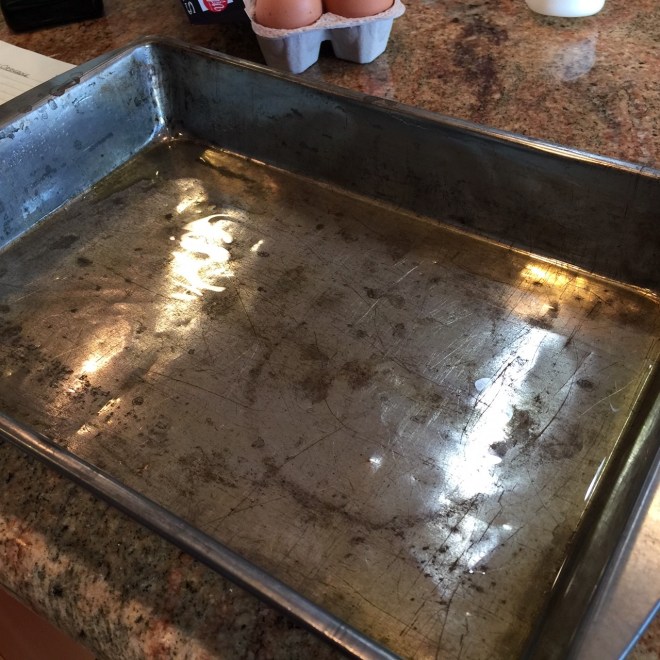 Note how bubbly the dough is:
  Gently pour the dough into the prepared pan, nudging the dough into the corners – try not to deflate the dough.
 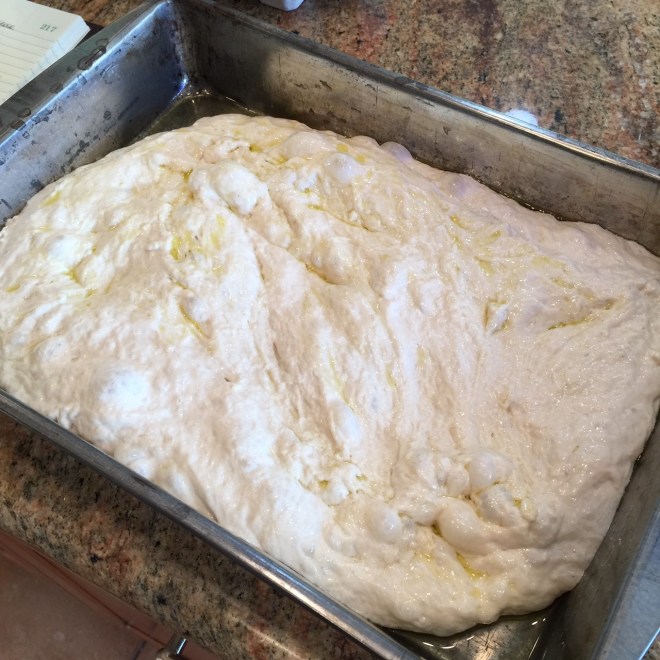 If you’re using toppings such as olives or slices shallots, sprinkle them on, lightly pressing them into the dough. Let dough set uncovered for 20 minutes.
 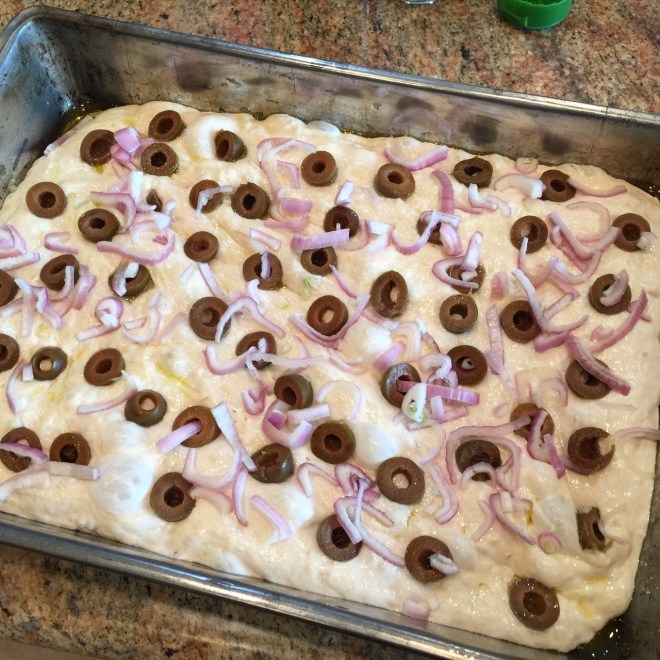 Brush 2 T olive oil over dough, then sprinkle on 1 tsp oregano, pepper, and salt.
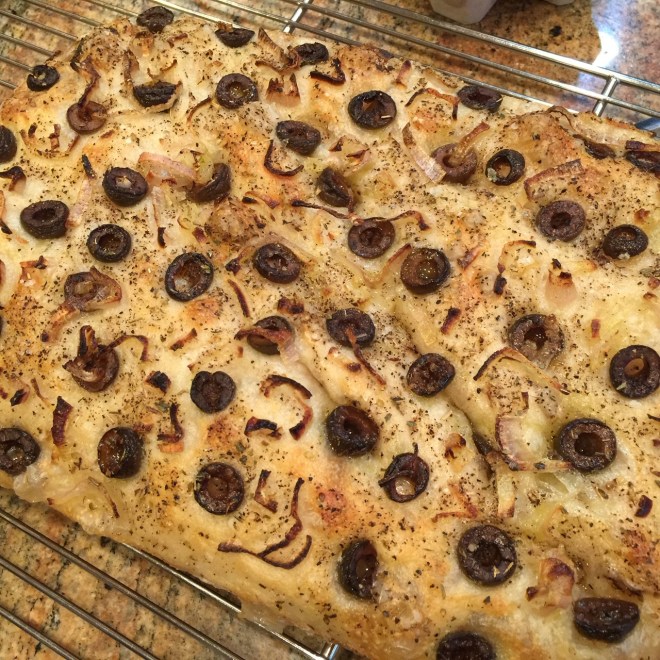
  Place in 500º F preheated oven and bake for 20-25 minutes, until well browned on top and sides have pulled away from the edges a bit. Remove from oven and let rest in pan for about 10 minutes before removing to a wire rack.
 Decrease oven temperature to 350º F, leaving oven door open to expedite the oven temperature drop.
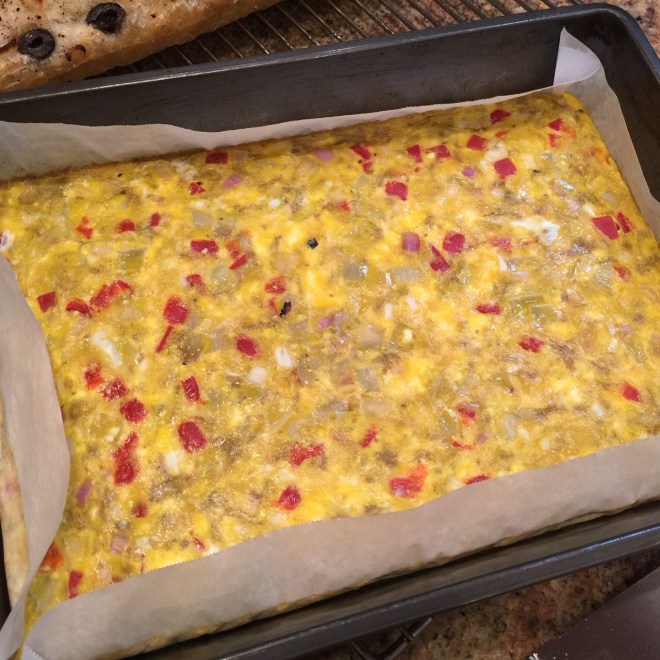 While omelette is baking, remove focaccia to a cutting board. Using a long bread knife, very carefully slice bread in half horizontally. (Take your time – the edges are crispy, making it difficult. I’ve found it best to cut into the bread only – not in and out, which tends to tear the bread.)
 Once the bread is completely sliced through, leave it together to retain its heat.
 This soup started out as a Stuffed Squash recipe I was developing. I had a lot of leftover filling and, as it was on the bland side, knew we weren’t going to eat it. But as regular readers may know – I HATE waste!!! There was no way I was going to throw it out.
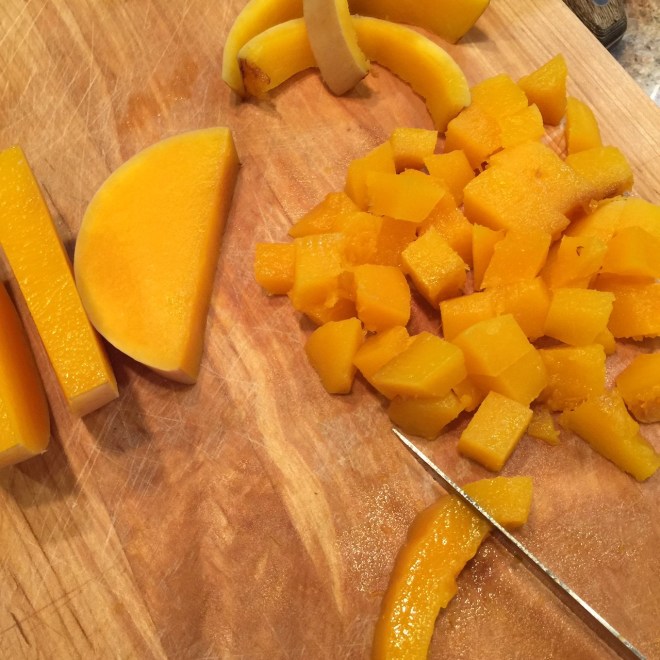
 Let cool enough to handle. Scrape out and discard seeds and fibers. Cut into 1/2″ slices, then cut away the peel. Cut flesh into 1/2″ cubes.
  While squash is cooking, cook the rice.
 Add in shallot, garlic, mushrooms, salt, and pepper. Cook for 5 minutes over medium/high flame, stirring often.
  Add in squash, rice, garbanzo beans, cranberries, pecans, thyme, chopped tomatoes and it’s juice, tomato sauce, and water. Bring to boil, then reduce heat to maintain a simmer for 15 minutes, uncovered.
 Stir in cilantro, adjust seasoning if needed, and serve.
 My family has fond memories of the teriyaki noodle bowls from a local restaurant that closed years ago. Not only did they serve meat choices, but they offered perfectly grilled tofu, too. It was crispy on the outside and creamy on the inside. Topping it off was a luscious, thick teriyaki sauce.
 Liberally coat a nonstick skillet with oil. Heat oil over medium/high until shimmering. Add in tofu and leave undisturbed for at least a minute before moving them. (I suggest using a splatter screen to reduce fallout.) When the tofu is browned on the bottom, flip and cook the other side.
 Remove to a baking sheet and leave in the preheated oven to keep warm until the veggies and noodles are cooked.
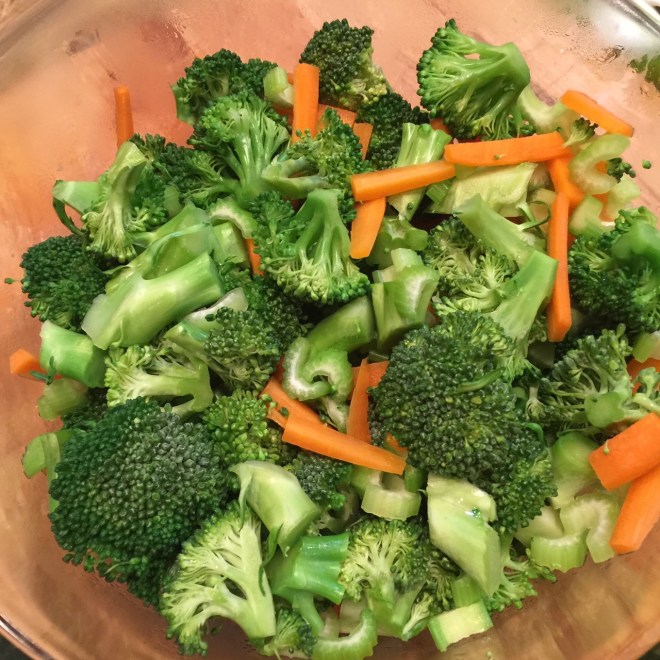 Bring 2 quarts of water to a full boil. Add noodles (recipe follows) and cook until done – about 5 minutes for homemade.
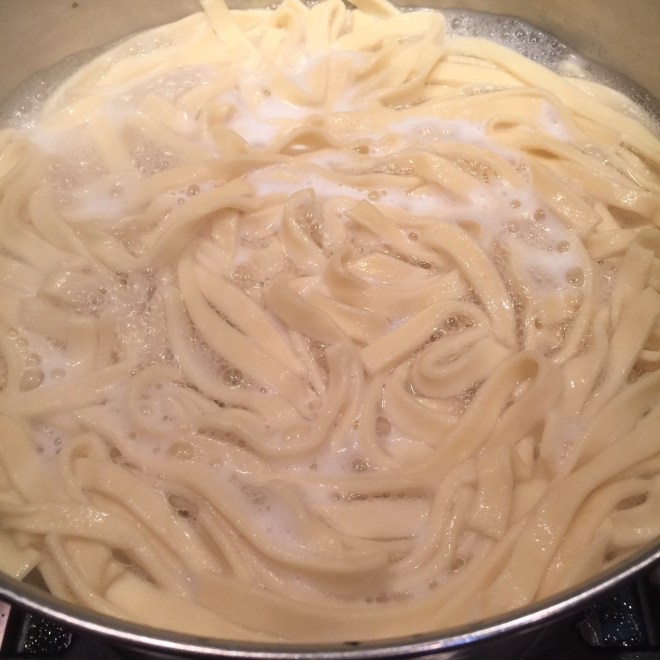 Drain and add noodles to bowl with veggies.
 Form dough into 4 balls and place in the processor with lid. Let rest for at least 30 minutes.
  Using a hand crank pasta machine, roll out dough to one setting thicker than for normal fettuccine (it’s #4 setting on my Atlas machine).
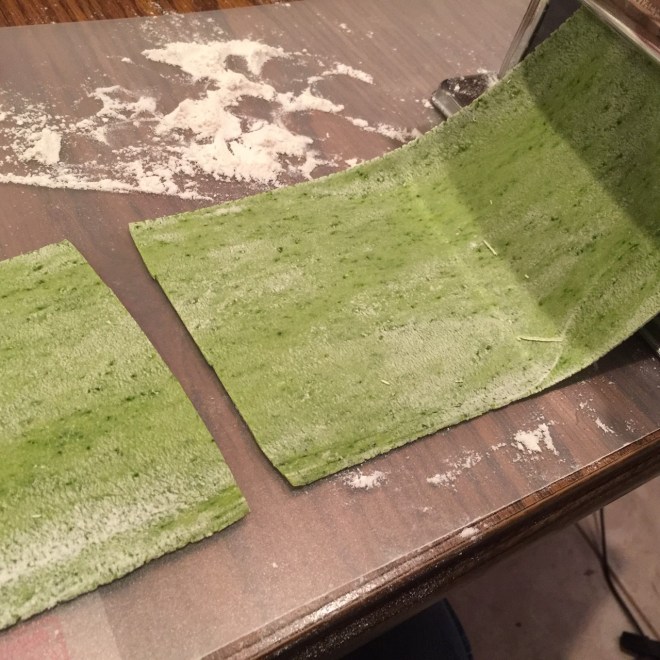 Use the fettuccine blades to cut.
 I’ve rarely met a potato dish I didn’t like. However, I was never very happy with homemade potato cakes. There’s a slight difference between potato patties, latkes, hashbrowns, and pancakes. I’ve tried making them all and never been very happy with any…until America’s Test Kitchen came to the rescue.
 Drain, then return potatoes to pot or large bowl.
 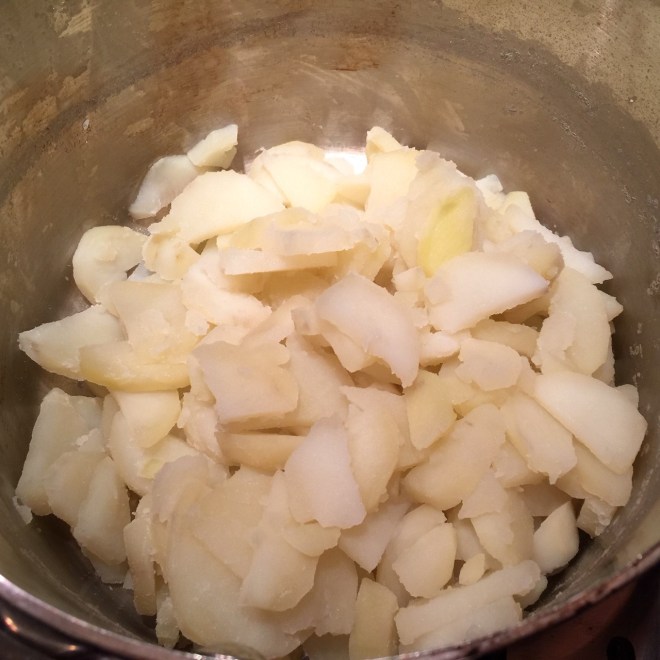 Mash potatoes until smooth and let cool about 10 minutes.
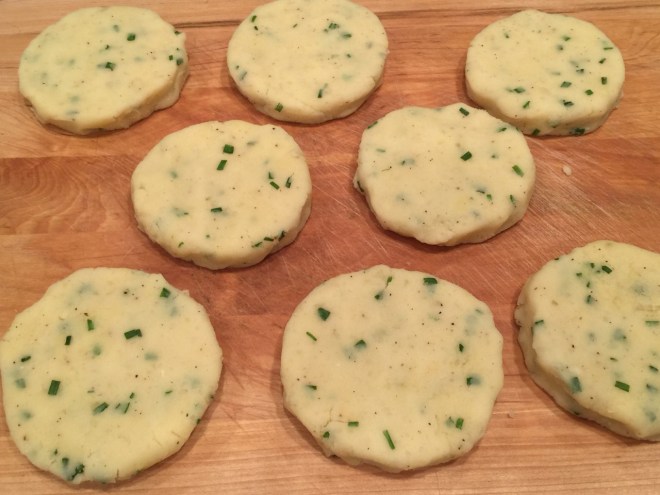
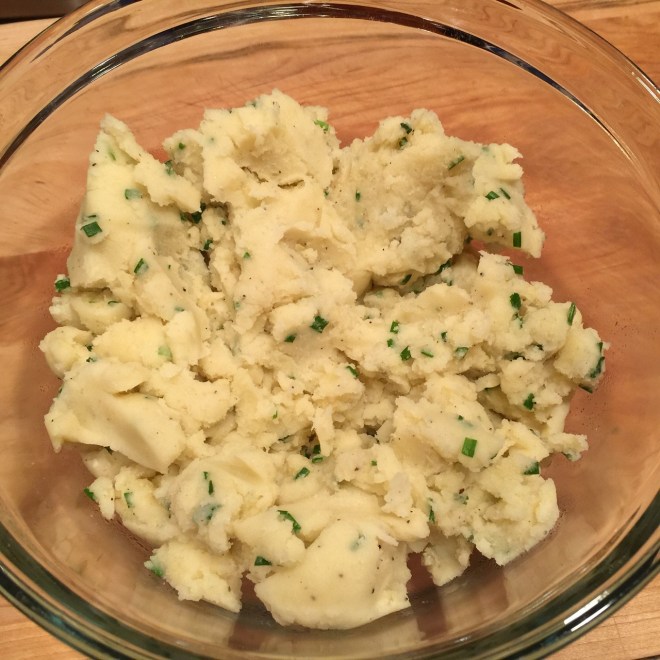 Form 8 3″ patties – they’ll each need about 1/2 cup’s worth of potatoes. Make sure to press the patties together firmly so they don’t fall apart.
  Beat the whole egg with a fork and pour onto a plate. Pour the panko onto another plate. Dip each pattie on both sides into the egg, followed by the panko.
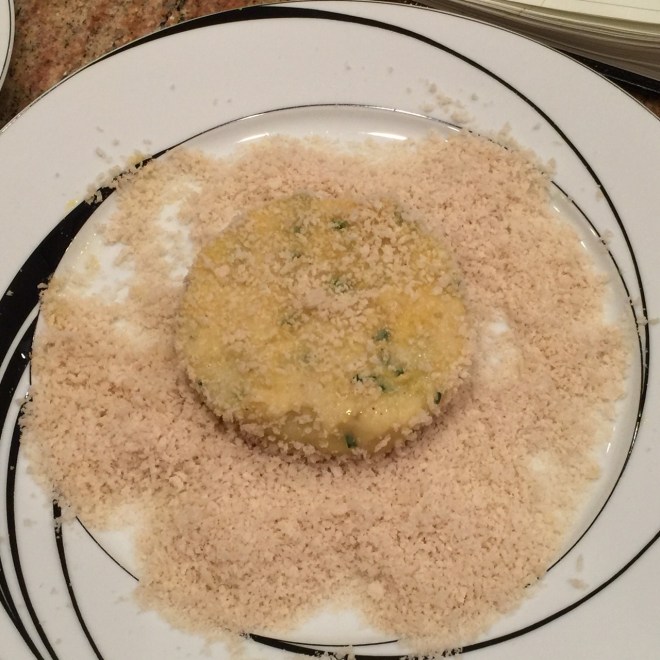 Set all the patties aside for 5 minutes before frying.
 Place on a cookie sheet and keep warm in the 200º F oven. Cook the remaining 4 patties in the same manner. Serve immediately or keep warm in the oven until ready to eat.
 Let me start by pointing out the quotation marks around the word SAUSAGE mean imitation. (For you carnivores, you can use real sausage.)
 Add in onion, red pepper flakes, and garlic. Cook 3-5 minutes – until onions are softened.
  Add in stock, beans, tomatoes, salt, and black pepper. Bring to boil, cover, then reduce heat to maintain a simmer for 15 minutes.
 Stir in spinach off heat and check for seasoning (I add another 1/2 tsp salt).
  Sprinkle servings with Parmesan or Pecorino Romano, if desired.
 Speedy Thin Crust Pizza has become my go-to pizza recipe not only because I can have it on the table in a little over an hour, but because it’s REALLY good. It’s a very thin pizza with a nice chew.
 Set the workbowl on the processor base and run the machine for 10 seconds.
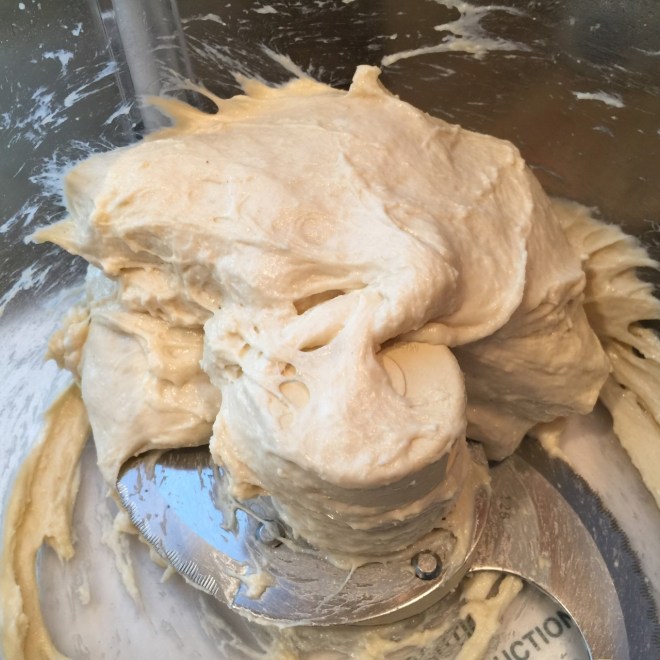 Let mixture set in place for 10 minutes. Add in the salt and process for 30 seconds.
  Empty dough onto a floured counter and fold the dough onto itself a few times to bring the dough together.
  Divide the ball in half and place each one on a piece of oiled (I use olive oil) parchment paper approximately 12″ wide. DO NOT USE WAXED PAPER – IT’S TOO THIN!!!
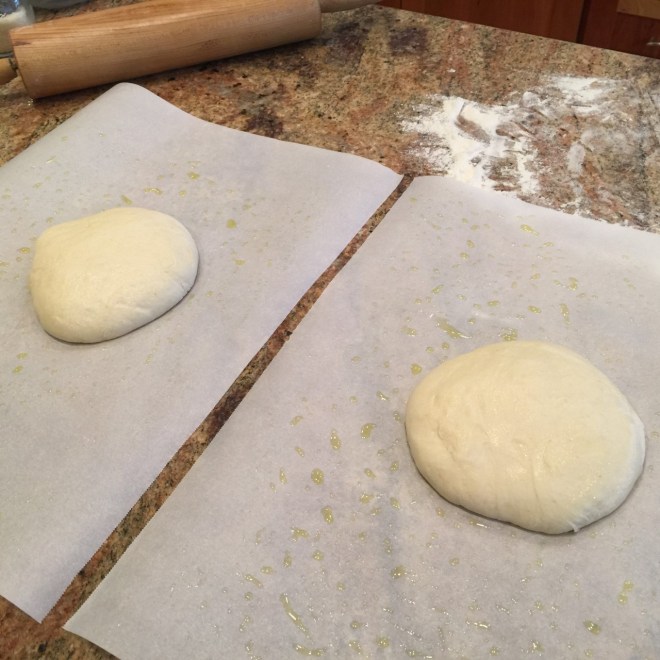 Rub the tops of the dough with a little more oil then top each with another piece of same-sized parchment. Press down with your hands to smoosh the dough into a square to get it started. With a rolling pin roll both dough balls to about 13″ x 10″ using short strokes, working from the center outward. (I find it easier to keep the parchment from sliding on my counter if I place it on a dry tea towel.) Let set 30 minutes.
 Use this time to get your toppings ready.
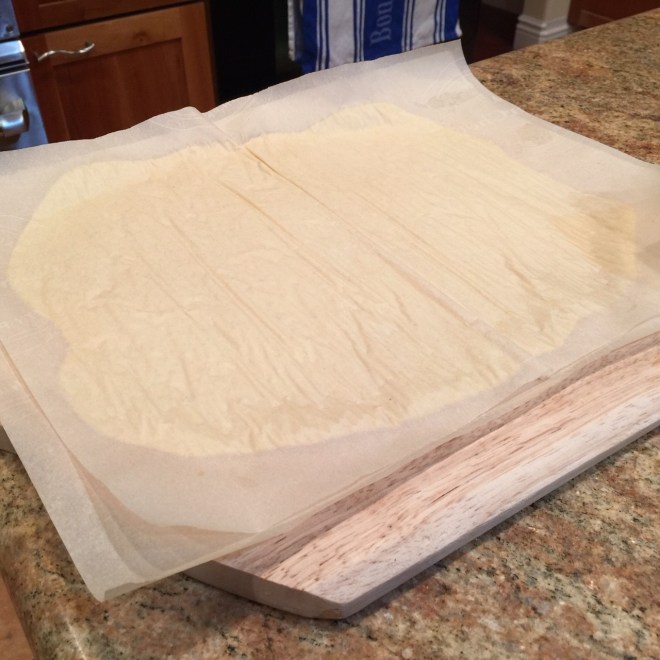 Carefully peel away and discard the top parchment (which used to be the bottom parchment).
 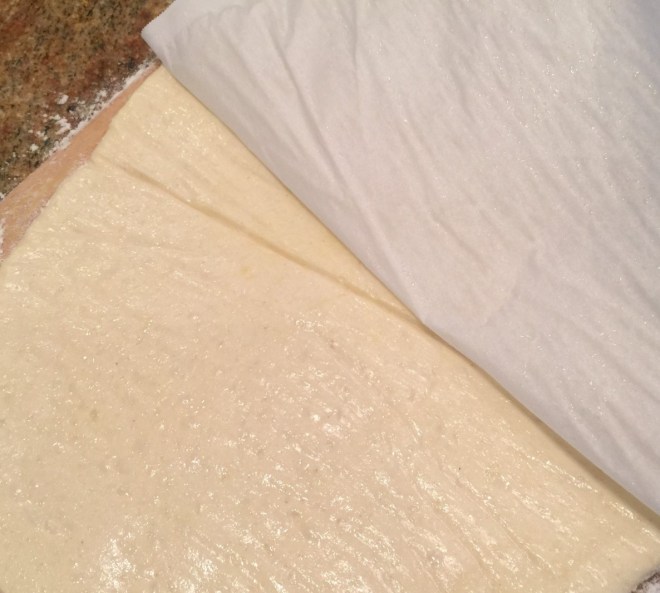 Top pizzas with your choice of sauce and toppings.
 Slide the pizza with bottom parchment onto the preheated stone or steel.
  Bake for 4 minutes. Rotate the pizza 180º, then remove and discard the parchment by securing it in place with a spatula with one hand and pulling out the parchment with the other. (The parchment won’t burn your fingers, so you don’t need to use an oven mitt as long as you don’t touch anything else.)
  Let bake another couple of minutes, until it’s browned to your liking. Remove from oven, let set a minute or two, then slice it up and serve. (This is not the same pizza I placed in the oven in the above pictures.)
 I’m not sure when it happened but, for better or worse, every year new foods become pumpkin flavored during Autumn.
 In a small bowl, whisk together the egg, pumpkin, milk, and vanilla. Pour the wet ingredients into the dry and gently fold to mix.
 Empty onto a well-floured counter and knead about 5 or 6 times. (I use a bench scraper to help since the dough is sticky.)
  With floured fingers, pat dough into an 8″ circle (try to keep the dough to an even thickness) and cut into 8 wedges.
 Place on a greased or parchment lined cookie sheet (I prefer a dark sheet that’s greased.)
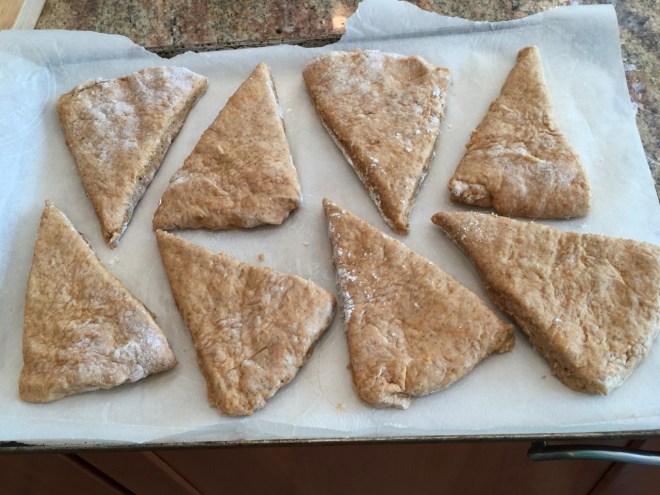 Bake at 400º F with the rack in the middle position for about 16 minutes. They’re at their best when they’re slightly dark on the bottom.
 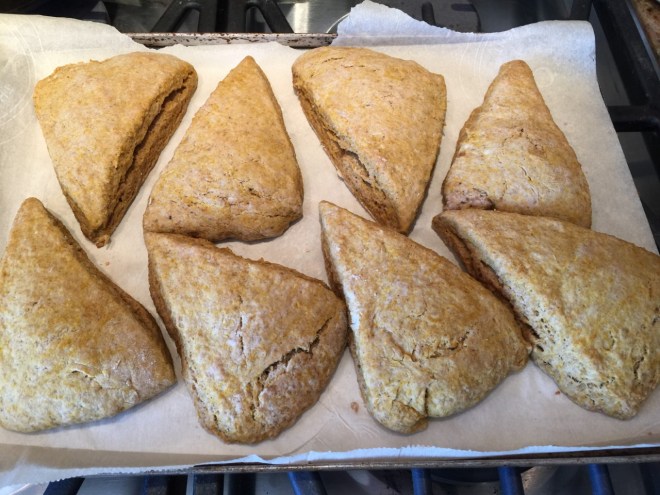 The last time I baked them, I thought I overcooked them (see photo), but they were amazing – a slight crunch on the outside and perfect chew inside. So when you check them for doneness, look for slightly dark sides.
  Then remove from oven onto wire rack to completely cool before icing.
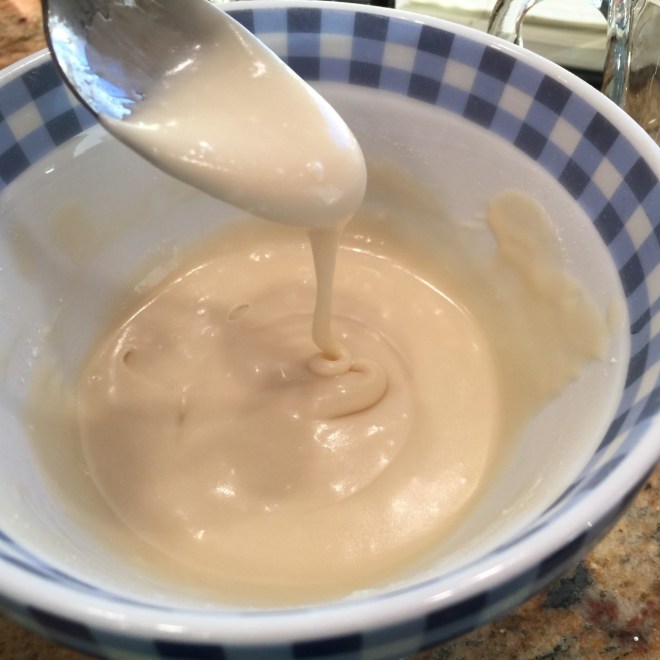 For easier control over the drizzle, pour icing into a spouted cup or a pastry bag with a small circle tip. Design as you wish.
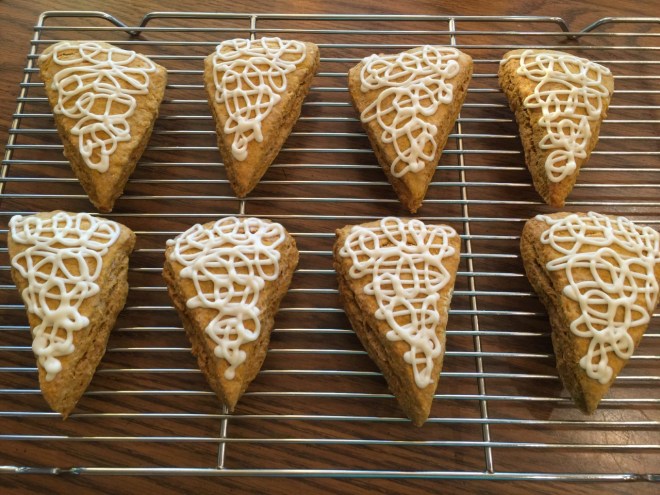 Allow icing to harden before serving.
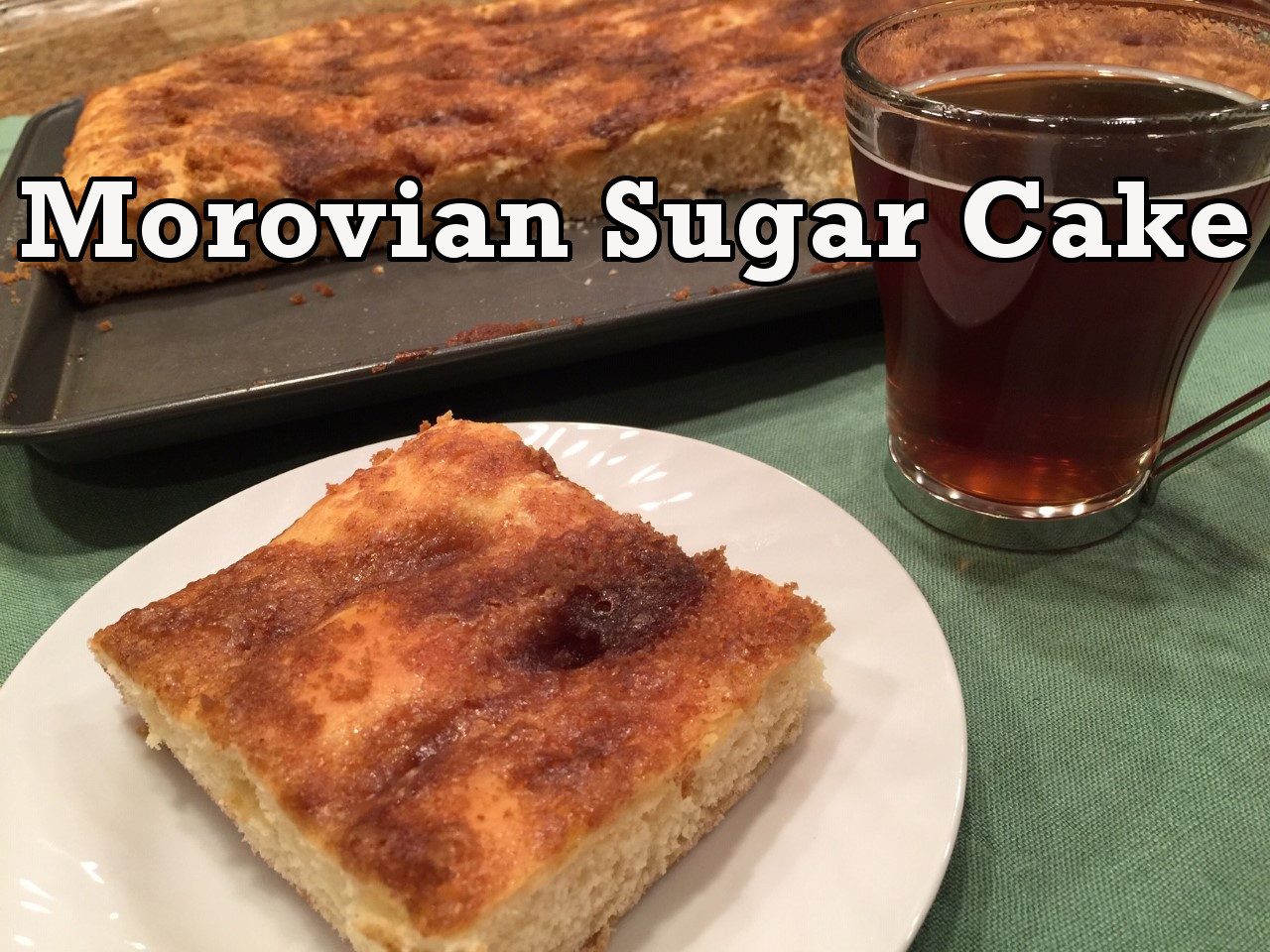 My introduction to Morovian Sugar Cake was a little bittersweet.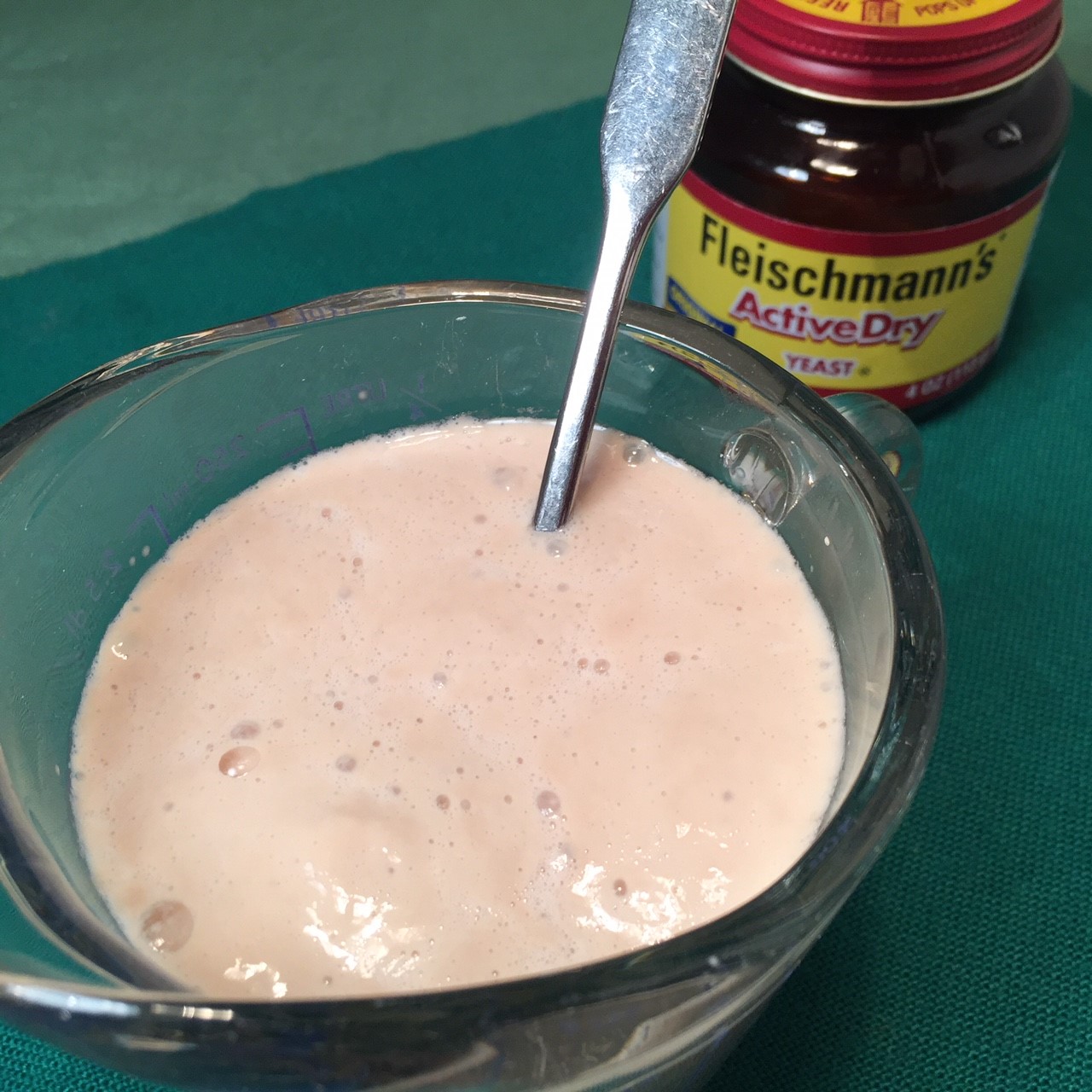
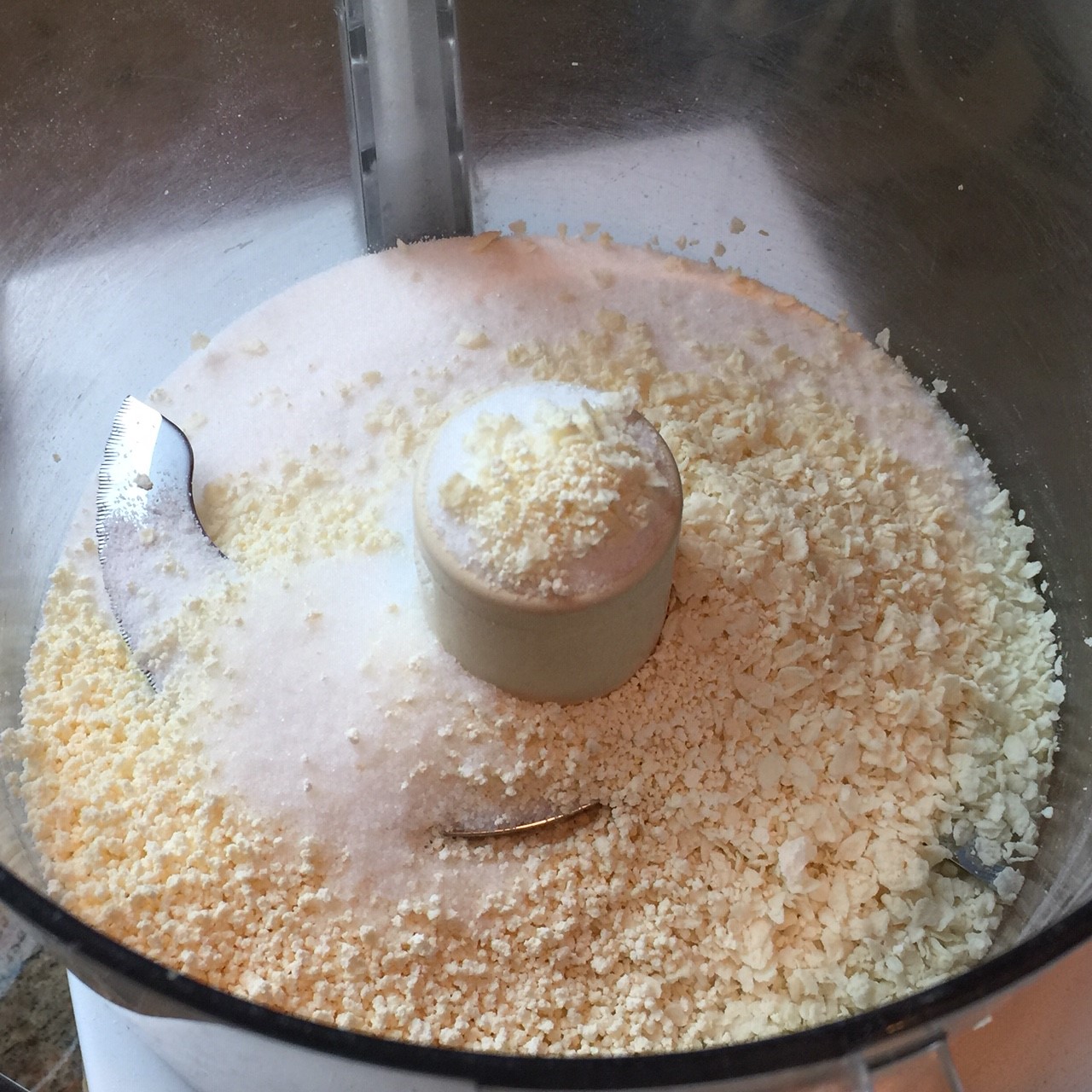 Add in 84g (6 T) butter and eggs. Process to blend.
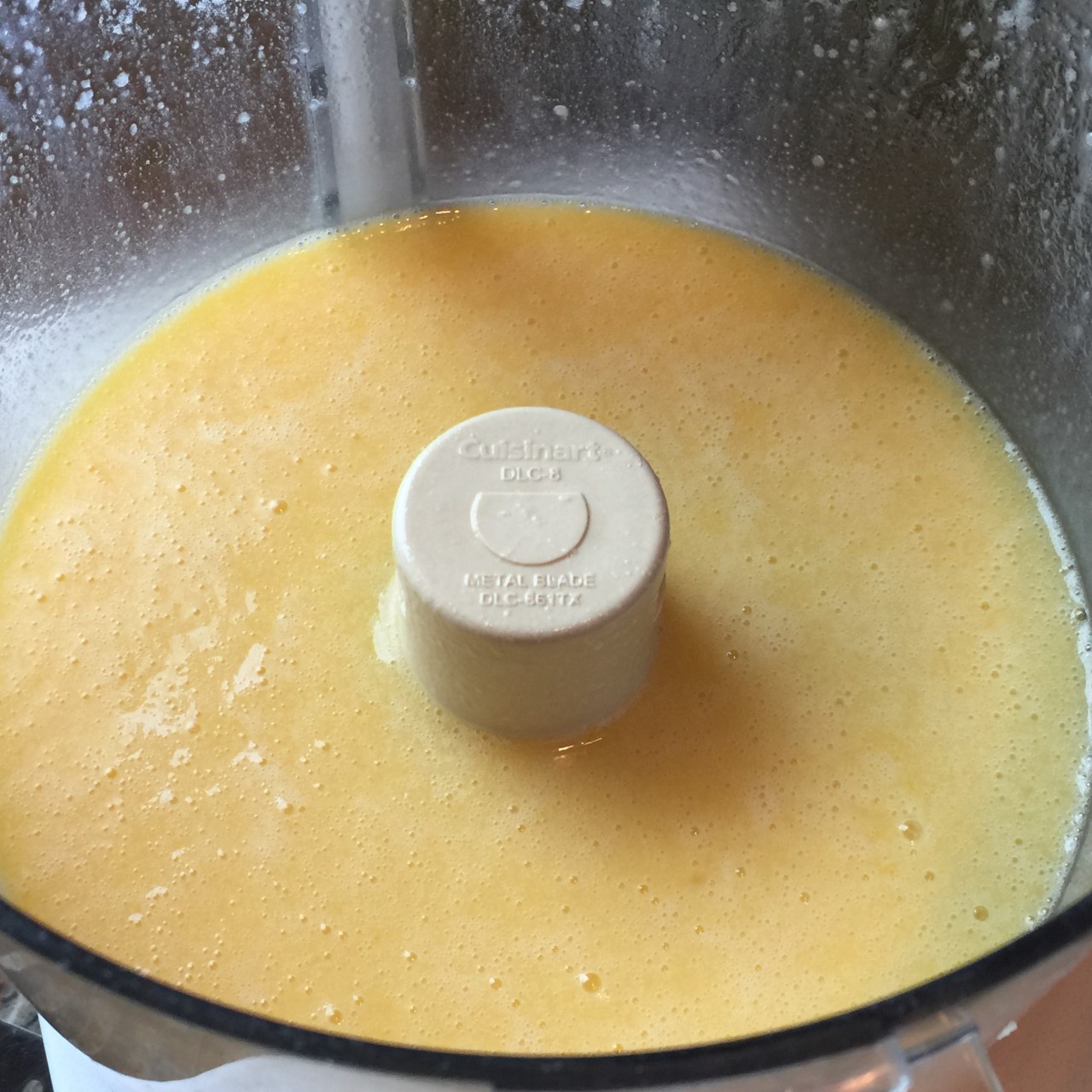 With machine running, pour in the proofed yeast water.
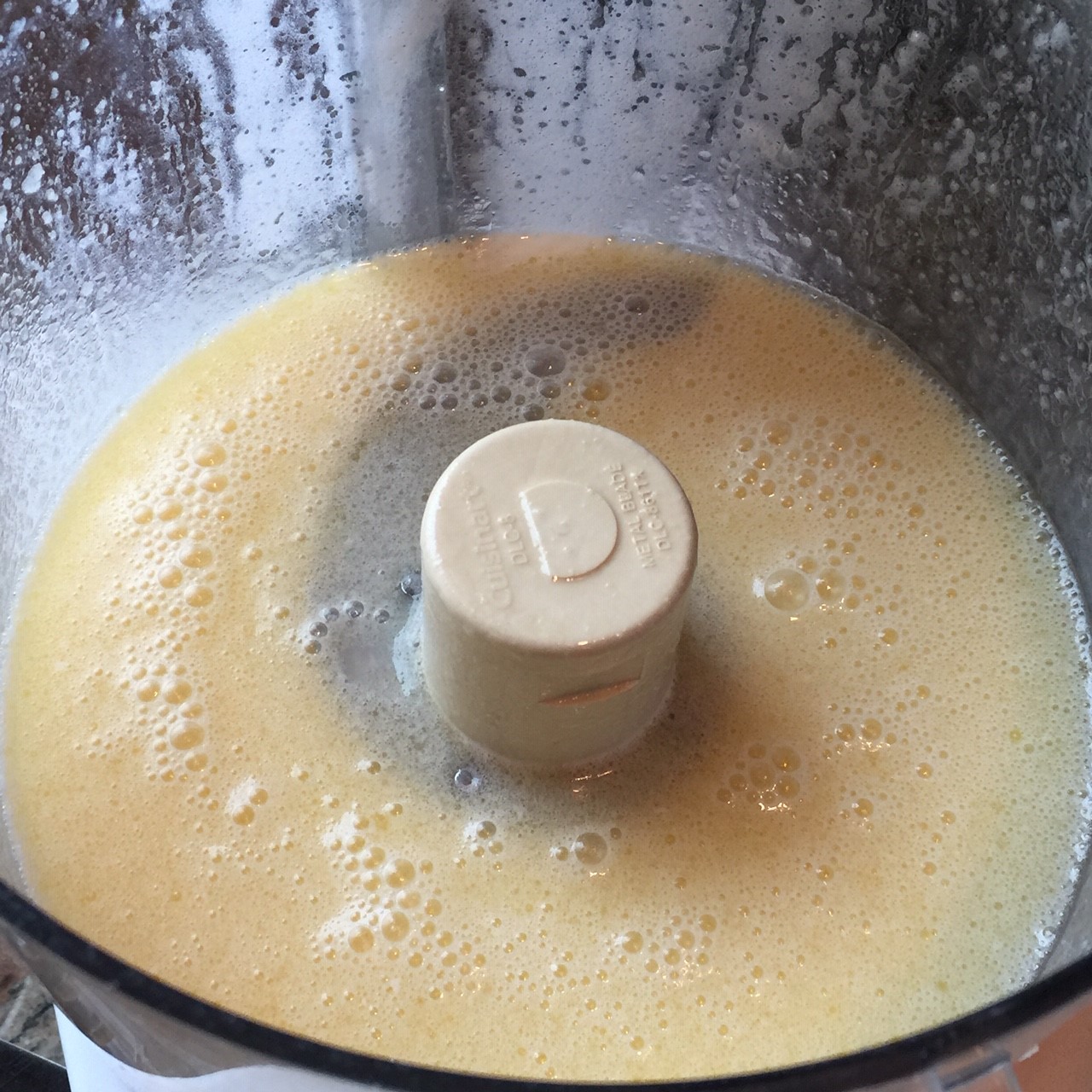 Add 400g (3½ cups) to processor and blend. Add flour 25g (¼ cup) at a time, processing after each, until dough starts pulling away from sides of the work bowl. Stop adding flour, and run machine another 30 seconds to knead the dough. Empty dough onto a floured surface and knead a few times to bring together.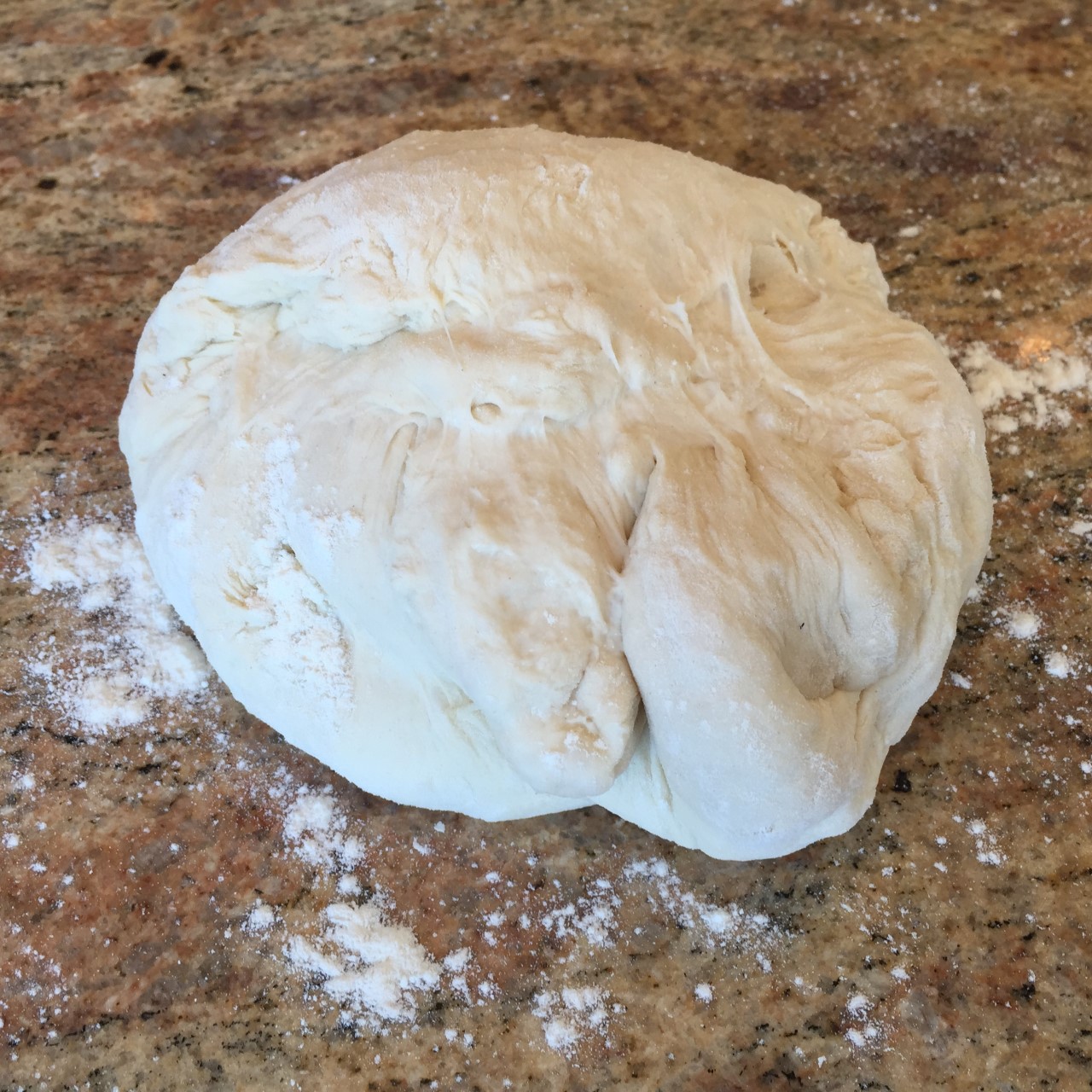


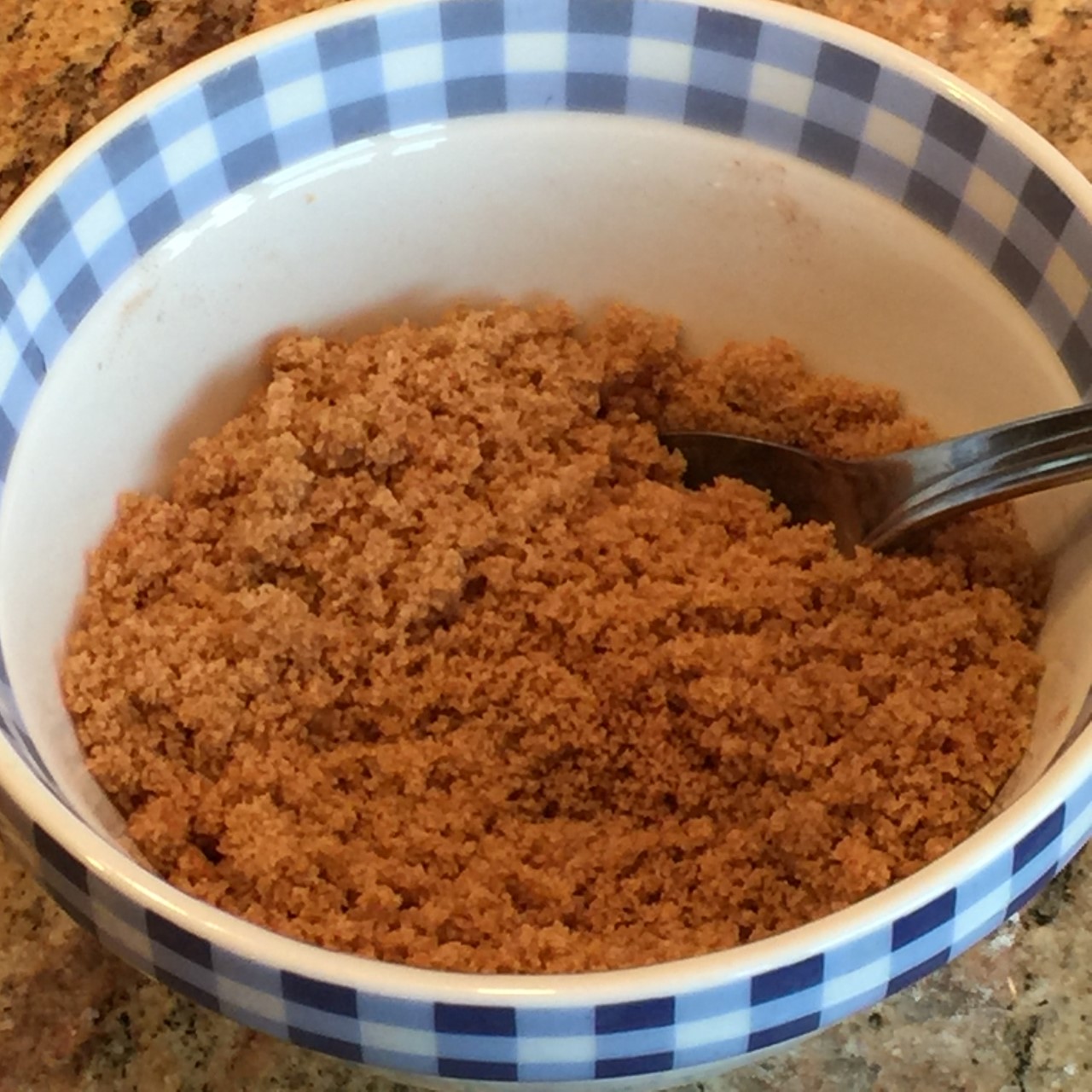 After dough has risen, create pockets with your fingertip, the handle of a wooden spoon, or something else that’s about 1/2″ diameter.
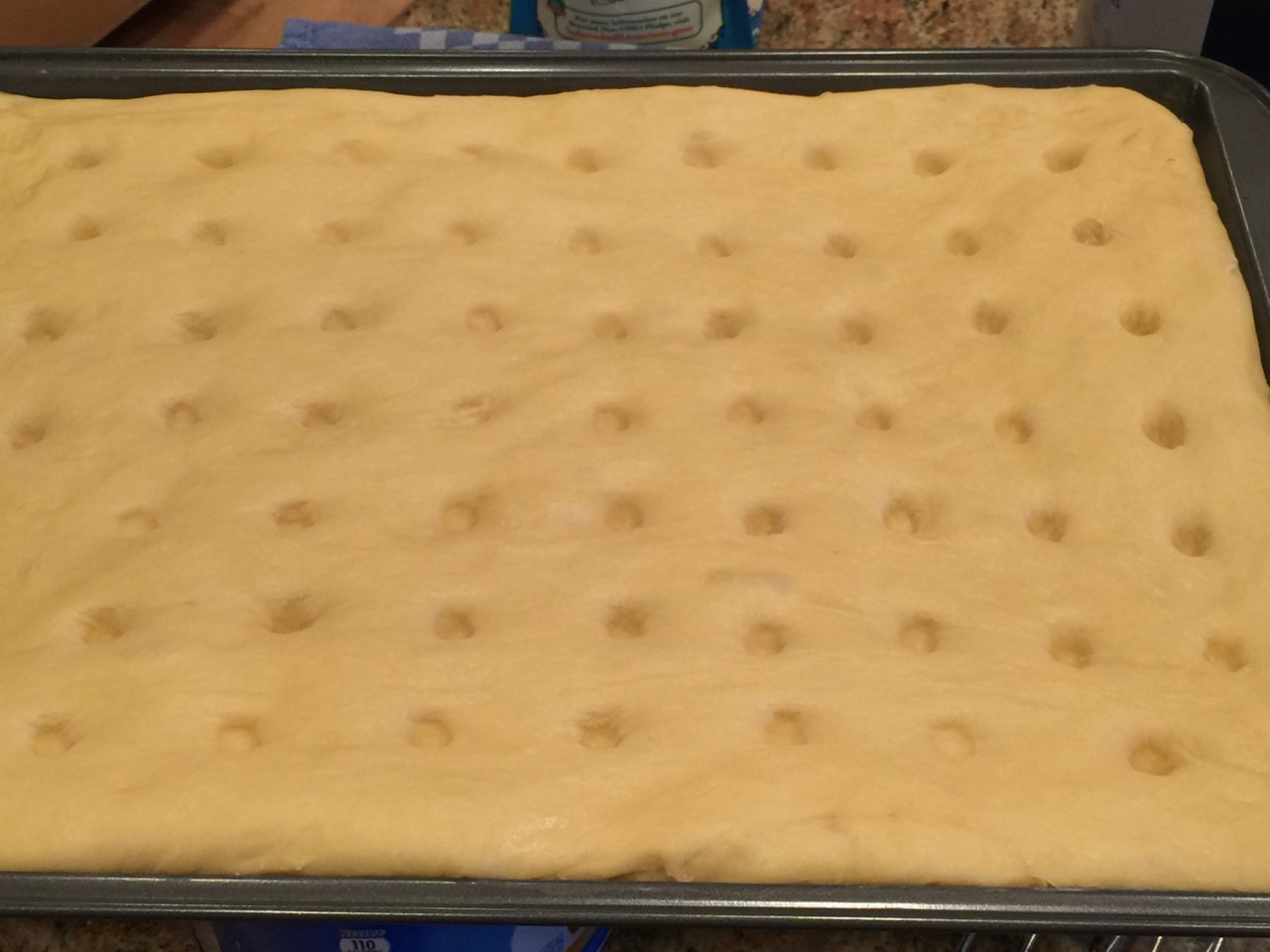 Sprinkle the sugar topping over the entire cake. Drizzle the remaining 84g (6 T) melted butter over all.
  Bake at 350º F for about 20 minutes, until golden brown.
  Cool at least 5 minutes before serving.
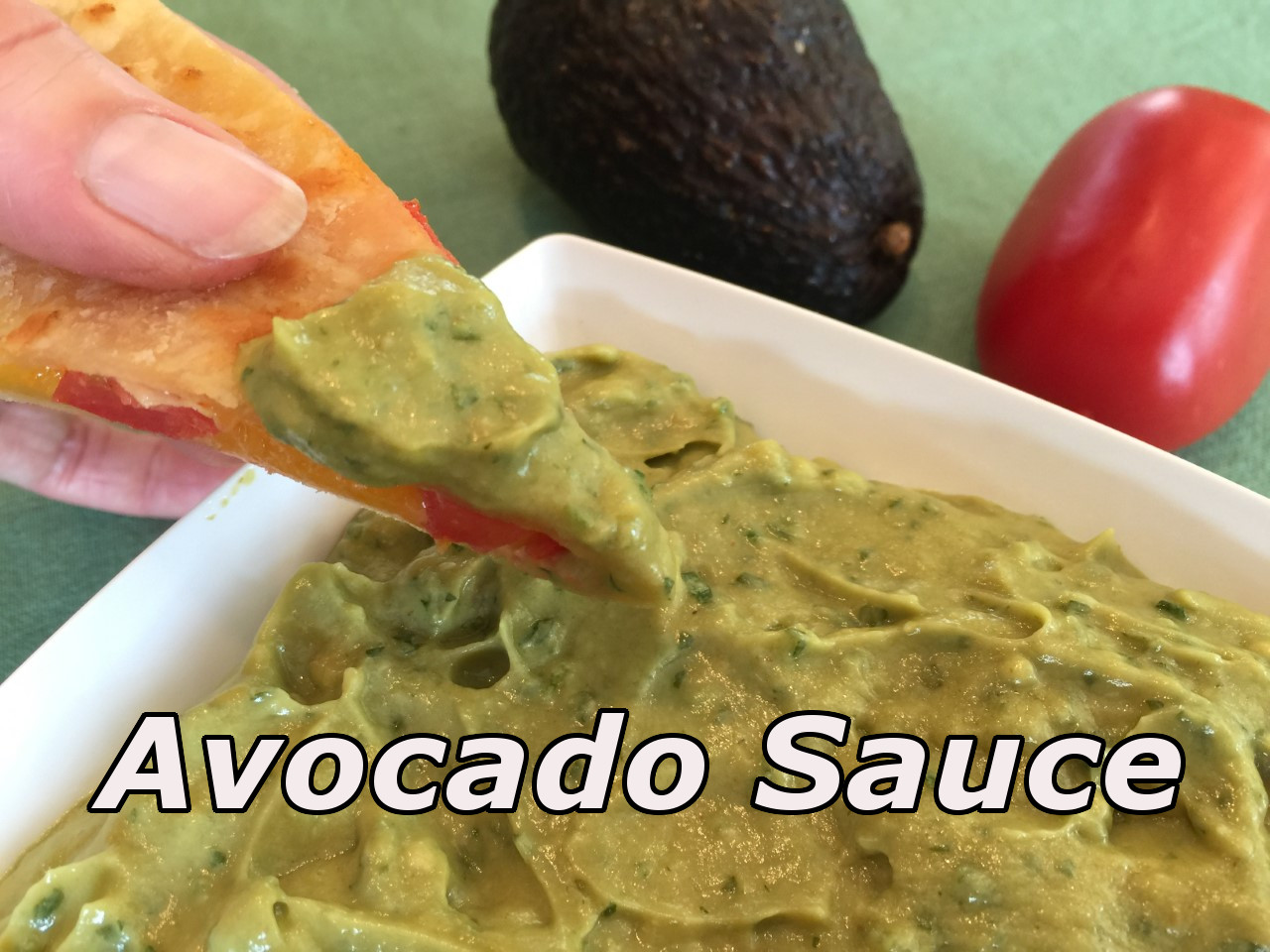 Avocado Sauce is a quick and easy topping for tacos, salads, quesadillas, or anything else you want. As opposed to guacamole, which is usually chunkier, it’s meant to pour – thus covering more territory.
 Pulse until creamy – scraping down sides as needed.
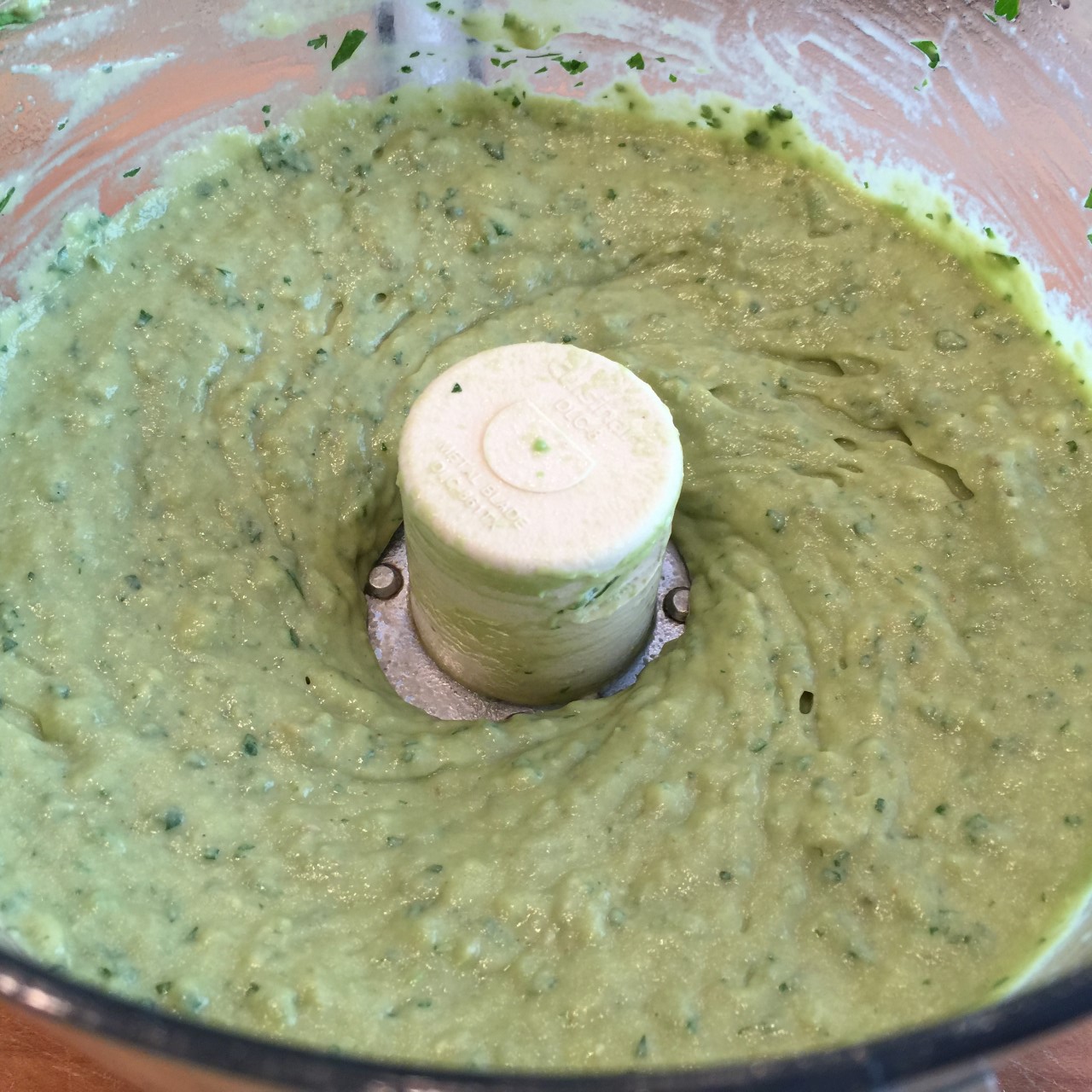 Adjust seasoning to your preference.
 Vegetarian Cooking For Carnivores BLOG