Nutty “Meat”loaf

NUTTY "MEAT"LOAF

NUTTY “MEAT”LOAF

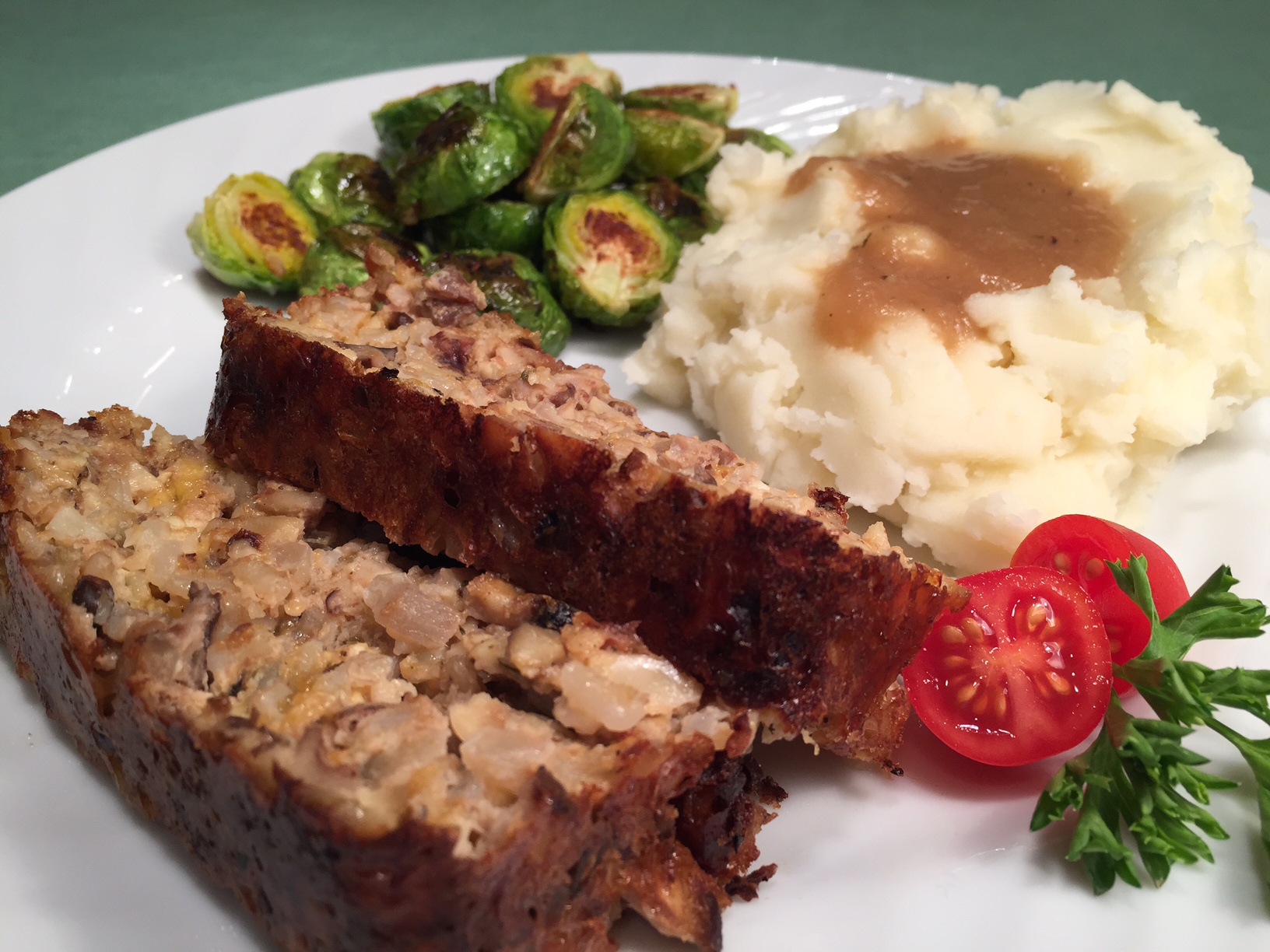
Every time I make Nutty “Meat”loaf, I ask myself why I don’t make it more often – it’s THAT good!

For those of you new to my site, you might be wondering why a vegetarian cooking blog has a recipe for “meat”loaf.  First of all, welcome!  Second, look carefully – there are quotation marks around the word meat.  That’s my special code for “not real meat”. Often times I’m using purchased imitation (aka, fake) meat. But in this case, the “meat” is a cornucopia of ingredients that individually are good, then blend together symbiotically to create a delectable dish, even tastier than the sum of its parts. (Whoa – creative moment!)

What I love about Nutty “Meat”loaf is that, unlike other veggie loafs, it has a meaty bite to it. This is helpful for those of you still weaning yourself from your carnivorous ways. Temptations lurk everywhere – like a siren beckoning the hapless sailor (Have I mentioned I write poetry?), enticing us with adverts for burgers, chicken, and steak.  We must fight these tactics with creative vegetarian dishes so satisfying, we won’t miss the meat.

Nutty “Meat”loaf is another weapon in my arsenal of recipes  to combat the proverbial fall off the vegetarian wagon. (How did I veer from poetry to battle so quickly?) But be warned: this is NOT one of those 30 minute recipes – the prep can take as long as 30 minutes (unless your rice is already cooked), cooking time is 60 minutes, and then it needs to set for about 15 minutes.  But I beg you – don’t be daunted! This recipe is worth the time. And, if you like, you can prepare the ingredients ahead of time and set the ‘delay bake’ button on your oven (if you have this feature). Just make sure you’re home when the loaf is done so it doesn’t overbake.

NOTE:  I highly recommend using Trader Joe’s Brown Rice Medley (and, no, they’re not paying me to say that) for the rice. I’ve used other rices before in this recipe, but I love the taste and texture of this blend best. It’s a combination of long grain brown rice, black barley, and daikon radish seeds.

ADDITIONAL NOTE: This Nutty “Meat”loaf makes crazy good sandwiches the next day. (Crazy. Nutty. Get it?)

NUTTY “MEAT”LOAF 

  • 1/3 cup (53g) uncooked rice
  • 1 cup (250ml) water
  • ¾ cup (65g) walnuts, finely chopped, lightly toasted
  • ¼ cup (40g) cashews, finely chopped, lightly toasted
  • 1 cup (112g) onion, chopped
  • 1 T butter
  • ½ tsp salt
  • 1 clove garlic, pressed
  • 2 common mushrooms, finely chopped
  • 3 oz  fresh shittake mushrooms, finely chopped (or ½ oz dried – make sure you soak them in water)
  • ¼ tsp dried thyme
  • ½ tsp dried marjoram
  • ¼ tsp dried sage
  • 2 eggs
  • 118g (½ cup) cottage cheese (I use lowfat)
  • 170g (6 oz) medium cheddar cheese, shredded (or use whatever cheese you have on hand)

Cook the rice in water. Cool. This can be done ahead of time.

Sauté onions in the butter for a few minutes. Add in the salt, garlic, mushrooms, thyme, marjoram, and sage. Continue sautéing until liquid is released from the mushrooms and then is reduced but not gone. Cool. (This can be done ahead of time, too.)

In a large mixing bowl beat the eggs.  Add in the rice, cottage cheese, nuts, onions, and cheese. MAKE SURE YOU’VE INCLUDED ALL THE INGREDIENTS (I have a tendency to forget something, then have to remix everything.) Pour into an oiled loaf pan. An 8″ square pan works, too.

Bake at 375º Fahrenheit for 1 hour. Let set for at least 15 minutes.

The Evolution Of My “Chicken” Crescent Sandwiches

"Chicken" Crescent Sandwiches
“Chicken” Crescent Sandwiches

I’m one of those people always trying to build a better mousetrap.  (Perhaps that’s not the best metaphor for a vegetarian cooking blog!) No matter how tasty a dish is, I ask myself (and, yes, I do this audibly), ” What would make this recipe even better?”

Years ago, while still a carnivore, I made chicken sandwiches encased in crescent rolls (called Savory Crescent Chicken Squares), using a recipe I found in one of those ladies club cookbooks. (By the way, that genre of cookbook generally has the BEST recipes!) But when I said ‘goodbye’ to meat, I also had to bid a fond farewell to some fabulous recipes, including those tasty chicken sandwiches.

Then I discovered (drum roll, please):  IMITATION MEATS!!! I revisited my old carnivore recipes, adapting them to my vegetarian lifestyle.

Obviously, the first thing to change in the chicken sandwich recipe is Chicken to “Chicken”. Do you see the quotation marks?  That’s my special code for fake (aka, imitation …or faux – for you posh people)  Newbies often cringe, asking, ‘What’s in it?’  (Oddly enough, these same people will eat salami, hot dogs, and sausage.) Well, there are MANY fake meat products, so there’s no quick answer – you’ll just have to check the ingredients list on the packages.  But I assure you, there isn’t anything inedible or weird.

That being said, imitation meats are a processed food.  Like any processed food, I don’t believe they should be eaten everyday. I permit myself two meals per week in which some sort of fake meat is used.  For me, these foods serve two functions.  One, they’ve vastly expanded my vegetarian recipe repertoire. And, two, they talk me off the ledge when I’m tempted by a KFC or Burger King commercial.

The original chicken sandwich recipe used real chicken, canned crescent rolls, store-bought cream cheese, onions, diced pimento, and was topped with crushed croutons.  I put on my thinking cap, rolled up my sleeves, and began the arduous process of refining that mousetrap.

Being the compulsive person I am (some might think that’s an understatement) I decided to make the crescent rolls from scratch. Then I figured I may as well make the cream cheese, too.  Yes, this added to the amount of work, but I like to know what’s in my food. Of course, you can purchase said items, if you like, but I encourage you to give them a try.

The next thing to tackle was modifying the filling to make a more flavorful sandwich – it was a little bland for my taste. I felt it needed something sweet, so I added pineapple. Dried pineapple worked best – fresh made the sandwich too soggy.  Then the diced pimentos were increased to add more color and seasoning. A little crunch was needed, so I threw in chopped celery and toasted slivered almonds. The last task was to swap the crushed crouton topping for shredded asiago cheese.

By the time I was done revamping the original chicken sandwich, the only thing remaining of the recipe was the idea: a chicken sandwich encased in a crescent roll.

A big THANK YOU to my family for not complaining about the numerous meals of  “Chicken” Crescent Sandwiches as my recipe evolved. There was a lot of trial and error.

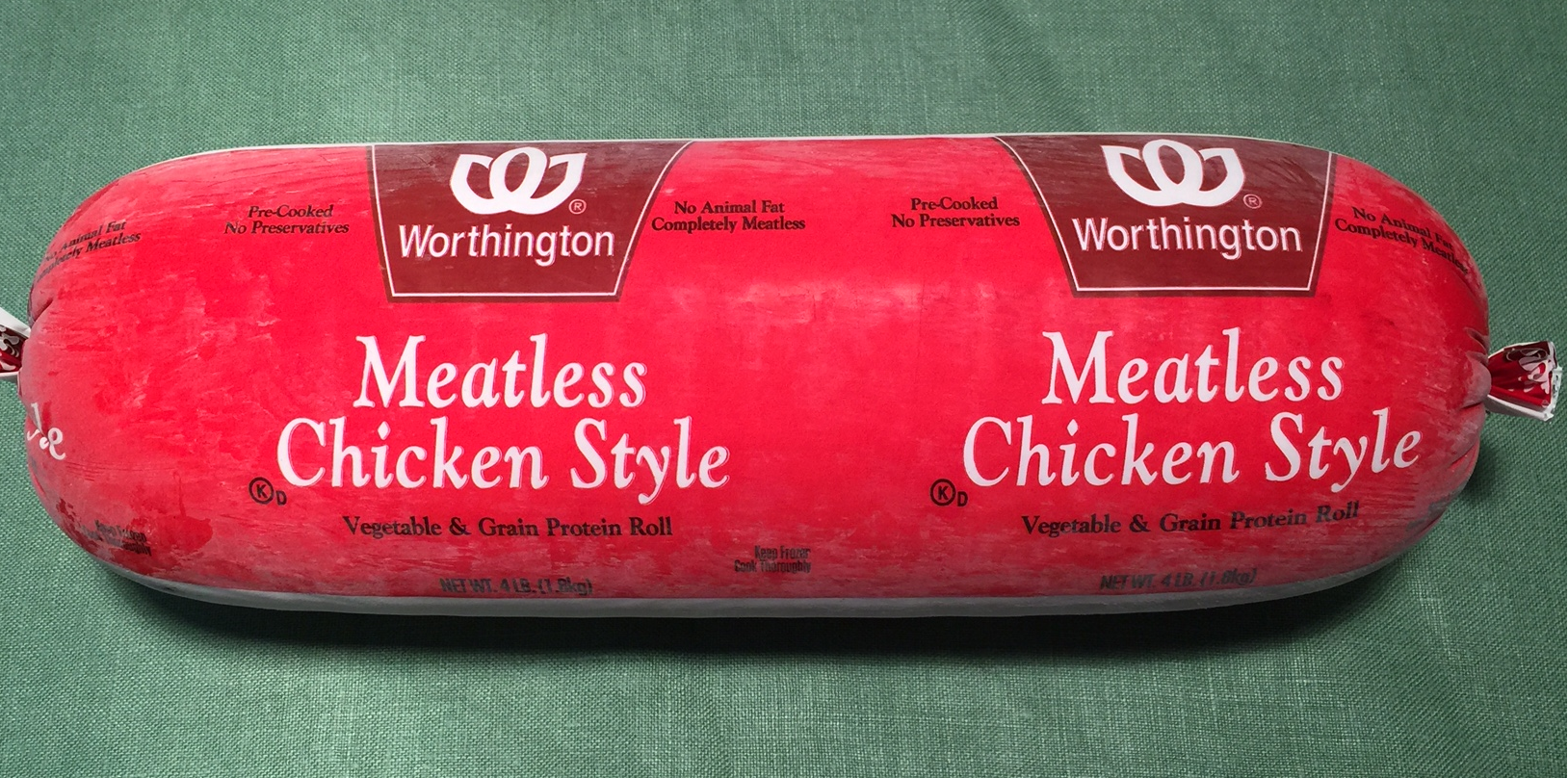
Here’s a picture of my preferred fake chicken for this recipe:

It’s made by Worthington, comes frozen, weighs 4 pounds, and appears pricey (about $26.00) until you realize that it cuts up to 18 cups cubed. When I haul (and I mean haul) these rolls home, I let them thaw just enough so I can cut them into meal sized pieces. Then I refreeze them.

Just as beauty is in the eye of the beholder, taste is in the mouth of the diner. You may not like the brand I suggest.  That’s fine. My feelings won’t be hurt if you use a different product. As always, I encourage you to tweak recipes to suit your own preference.

“CHICKEN” CRESCENT SANDWICHES – makes 24 small sandwiches

Crescent Rolls

  • ½ cup water
  • ½ cup milk (I used nonfat)
  • 2¼ tsp dry active yeast (1 packet)
  • ½ cup (1 stick) butter, room temperature
  • ¼ cup sugar
  • ½ tsp salt
  • 1 egg
  • 3½-4 cups all purpose flour

Heat the milk and water to 104ºF. Stir in the yeast and set aside to proof (about 5 minutes).

Into your food processor put 3 cups of the flour, the butter, sugar, salt, and egg.  When the yeast is proofed, turn on food processor and slowly pour in the yeast liquid through the pour spout. Add more flour in small increments until the dough forms a ball. Let the machine run for 45 seconds to knead. Remove the dough and press into a greased bowl. Flip the dough and press down again. Cover and let rise 1 hour.

Filling

  • 2½ cups “chicken”, cubed
  • 4 oz jar diced pimentos
  • ½ tsp dried dill
  • ½ tsp salt
  • 1 tsp dried minced onion
  • ¼ tsp garlic salt
  • 2/3 cup celery, chopped
  • ½ cup slivered almonds, toasted
  • 4 dehydrated pineapple rings, chopped
  • 1 cup cream cheese (to make it click on How To Make Cream Cheese)

Mix all filling ingredients together.

NOTE: Dried cranberries would make a yummy substitution or addition to the pineapple rings.

To assemble sandwiches:

Cut crescent roll dough into 24 pieces. One by one, roll each piece into a circle approximately 4″ in diameter. Place ½ cup of filling on one side of circle. Run a wet finger along the rim of the dough, fold the dough in half to encase filling, then press the edges together with a fork. Place on a greased cookie sheet.

Preheat oven to 350º Fahrenheit.

Once they’re all assembled, brush the tops with milk and sprinkle on asiago cheese.

Bake at 350º F for 23 minutes, until golden brown.


Think Outside The Box Spaghetti

Spaghetti with 'Meat' Sauce

Spaghetti with ‘Meat’ Sauce

I’ve mentioned before that my mother was NOT the most adventurous cook. It wasn’t that she was a bad cook – she was just a nervous cook.  Afraid to try new things.  Plus, she was a product of the modern world of boxed, canned, and frozen foods. She bought into the idea of why take the time and trouble to make something yourself when a large corporation (whose only concern was to make a profit) could do the work for you.

We kids didn’t mind.  After all, we could pick out specifically what frozen dinner we each wanted – some of them even had a little dessert! The only fresh vegetable we ever had was corn on the cob – when it was in season. The rest of the time we had canned green beans or peas. I’d never even heard of broccoli or cauliflower before I left home.

Which brings me to my spaghetti story.

As probably most of you know, when you have to start paying your own bills you really take notice of how much things cost. Fortunately, I was born with a dominant frugal gene (yeah- cheap, okay?). I figured out pretty quickly I was going to have to learn how to cook.

One thing my mother made was spaghetti. She used Kraft Spaghetti, which came in a box, and she added ground beef. It was good, and all I knew. So I decided to make spaghetti and bought the box of Kraft, the ground beef, and made my spaghetti. It was good – again, it was all I knew.

Then one day in the supermarket I happened to notice plastic bags full of dried spaghetti noodles.  What the heck was this? Why are these spaghetti noodles all by themselves and not packaged in a box with a can of sauce?, I wondered.  (You’ll be happy to know this was only said in my head…THAT time, anyway.) It took awhile, but it eventually dawned on me:  I could make the sauce FROM SCRATCH and buy as many noodles as I wanted. (It took many more years to figure out I could actually make the pasta, too.) It honestly never occurred to me people made spaghetti sauce.

Once enlightened, I tried various spaghetti sauces through the years. When I became a vegetarian, the problem became that without the meat, it was really just a marinara sauce.  Having grown up with a nice hefty meaty sauce, plain old marinara sauce just seemed kind of empty. It was tough being a vegetarian in the early days.

Fast forward to my discovery of fake meats (‘faux’ to you posh people), which greatly expanded my vegetarian recipe repertoire.  I’d already started using Loma Linda’s Redi-Burger in my ‘Beef’ Salsa Burritos (remember, quote marks denotes FAKE) and my Navajo Tacos. But it didn’t seem like a good choice for my spaghetti sauce.

I guess good things come to those who wait because, low and behold, in the frozen food section I found Morningstar’s Griller’s Recipe Crumbles.  They come in a pouch and are like ground beef that’s already stir fried (minus the fat).  So it’s a snap to use – no frying, no wondering what to do with all the grease.  Just open the pouch and pour out the ‘ground beef’.

Thanks to these Crumbles, my family can now enjoy a delicious Spaghetti With ‘Meat’ Sauce. I’ve come up with a recipe in which I  simply throw everything in the stockpot and cook for an hour.  As always, when I make something that freezes well, I make a vat of it and freeze it in meal sized portions.  No point in cleaning the pot and utensils more than once.  Making a multiple batch is not that much more work.  Once I’m done, I have enough spaghetti sauce for months!

I’ll give you the recipe for both one batch and six batches (that’s what I make).  I would suggest you make the one batch version first, just to make sure you like the recipe.  If you’d like to see my video of me making this dish, click on: Spaghetti With ‘Meat’ Sauce.

NOTE:  If you want to save about 20 minutes, and are NOT obsessive and paranoid like I am, then buy the canned tomatoes diced instead of whole.  I buy the whole so I can inspect each one and cut off any imperfections and the stem end. Also, you can buy garlic already minced in a jar. It took me 35 minutes to put all the ingredients in the stockpot. You can see where most of the time was spent.

ADDITIONAL NOTE:  It doesn’t matter what kind of red wine you choose.  Just make sure it’s a wine you would actually drink because the flavor will come through.  I usually use Black Mountain cabernet sauvignon – it’s reasonably priced and has a nice taste.

WILL SHE EVER STOP TALKING ADDITIONAL NOTE:  You can either buy vegetable stock OR do what I do and make your own.  Click on: Back To Basics: Vegetable Stock for my recipe.

SPAGHETTI WITH ‘MEAT’ SAUCE 

1 BATCH VERSION – makes 3 cups

  • 1 pouch (12 oz / 340 grams) Morningstar Griller’s Recipe Crumbles
  • 1/3 cup (80g) extra virgin olive oil
  • ½ cup (125 ml) vegetable stock
  • 1 clove garlic, pressed
  • 1 tsp each of dried oregano, dried basil, and salt
  • 1 bay leaf
  • ½ cup (122g) tomato paste
  • 2 cups (528 g) canned whole tomatoes
  • ½ cup (125 ml) red wine
  • 1/2 tsp red pepper flakes

6 BATCH VERSION – makes 18 cups

  • 6 pouches (each pouch is 12 oz / 340 grams) Morningstar Griller’s Recipe Crumbles
  • 2 cups (475 ml) extra virgin olive oil
  • 3 cups (720 ml) vegetable stock
  • 2 T minced garlic
  • 2 T each of dried oregano, dried basil, and salt
  • 6 bay leaves
  • 4   6 oz (170g) cans tomato paste
  • 4   28 oz (793g) cans whole peeled tomatoes, chopped
  • 1 bottle red wine (YES – a whole bottle!)
  • 1 T red pepper flakes

Throw everything in a stockpot and bring to a boil. Lower flame enough so the sauce continues simmering. Cook for 1 hour, stirring often – you don’t want the bottom to burn. Done!!!

IMPORTANT NOTE (this is the last note, I promise):  Make sure you remove the bay leaves before serving the ‘Meat’ Sauce.  Actually, I kind of enjoy the fishing expedition I go on trying to find my 6 leaves. (Shows you how exciting my life is!)  The last leaf is always the hardest to find.

Egg Foo Yummm!

It isn’t always easy being a vegetarian. Before I changed my carnivorous ways, I had my go-to picks when I went for Chinese food:  won-ton soup, sweet and sour pork, egg rolls, and chicken chow mein.  When I became a vegetarian I found myself carefully examining the menus for meatless choices.  Back in those days I was pretty much limited to stir fried vegetables and rice. This was long before the days when Chinese restaurants started adding tofu – or even removing the meat – from selections on their menus.

I finally spied ‘Egg Foo Yong’ (sometimes spelled ‘yung’ or ‘young’) on the menu and gave it a try.  Mmmmm!  Fortunately, my first sample of egg foo yong was delicious. Since then, I’ve discovered it really depends on the restaurant and the chef.

Egg Foo Yong seemed like a dish I could make at home – I’m always looking for vegetarian recipes AND ways to save money.  Not only can eating out be costly, but I tend to worry if the food preparers are using sanitary precautions.  I admit it – I’m a smidge frugal (okay – I’m cheap) and paranoid.

For those of you who have never heard of Egg Foo Yong, it’s basically an egg pancake with bits of things like mushroom and bean sprouts mixed in, served over sticky rice, and topped with a brown sauce.  I’ll give you the recipe the way I make it, but there’s a lot of room for personalizing. Because these egg patties cook quickly and are best served immediately, I make the brown sauce first, then the sticky rice (and while it’s cooking I get the side dishes going), then I begin the egg pancakes.

The more you can fit on your skillet or griddle the better so the first ones don’t have to sit around too long.  But – word to the wise – don’t crowd them. You’re going to have to flip these babies and, unless you’re a whiz with a spatula, they rarely land where they started. You want to avoid flipping them onto another one.

NOTE:  I use a 13″ All Clad skillet to cook the egg patties and have found that making 3 at a time is the best number.  Perhaps in future, I’ll use my griddle, as well.  That way, I can squeeze in a few more per cooking batch.

NOTE: Cook the rice before cooking the egg patties so it’s ready to go.

BROWN SAUCE – makes 2/3 cup

  • 3g (1½ tsp) cornstarch
  • 4g (1 tsp) sugar
  • 5g (1 tsp) rice vinegar
  • 29g (2½ T) soy sauce
  • 112g (½ cup) water

In a small saucepan put the cornstarch, sugar, vinegar, and soy sauce.  Stir and mash until you have smooth paste (no lumps), then add in the water.

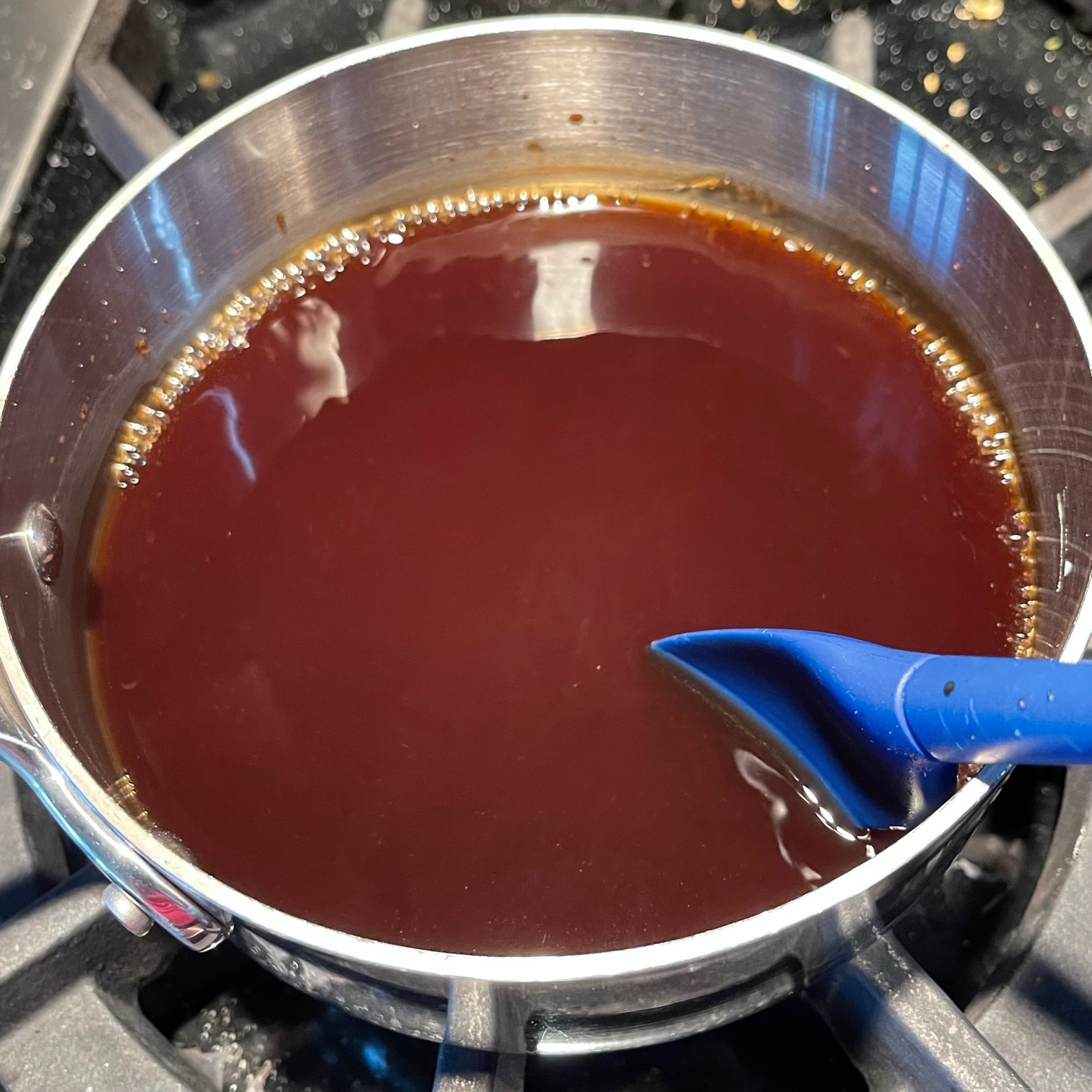
Heat over a medium flame until the color changes from coffee-with-cream color to black coffee color, stirring often. At this point the sauce will thicken a bit.  The color and thickness change will occur just before the boiling point.  Once the sauce begins to boil, turn off the heat.

EGG FOO YONG –  makes 8 patties 4″ in diameter

  • 5 eggs
  • ½ T soy sauce
  • 1/3 cup onions, thinly sliced
  • 4 mushrooms, chopped
  • 4 oz bean sprouts (1 cup)
  • vegetable oil for frying

NOTE:  You don’t have to restrict yourself to onions, mushrooms, and bean sprouts (or even use them at all).  You might try carrots, peas, scallions – whatever you fancy!

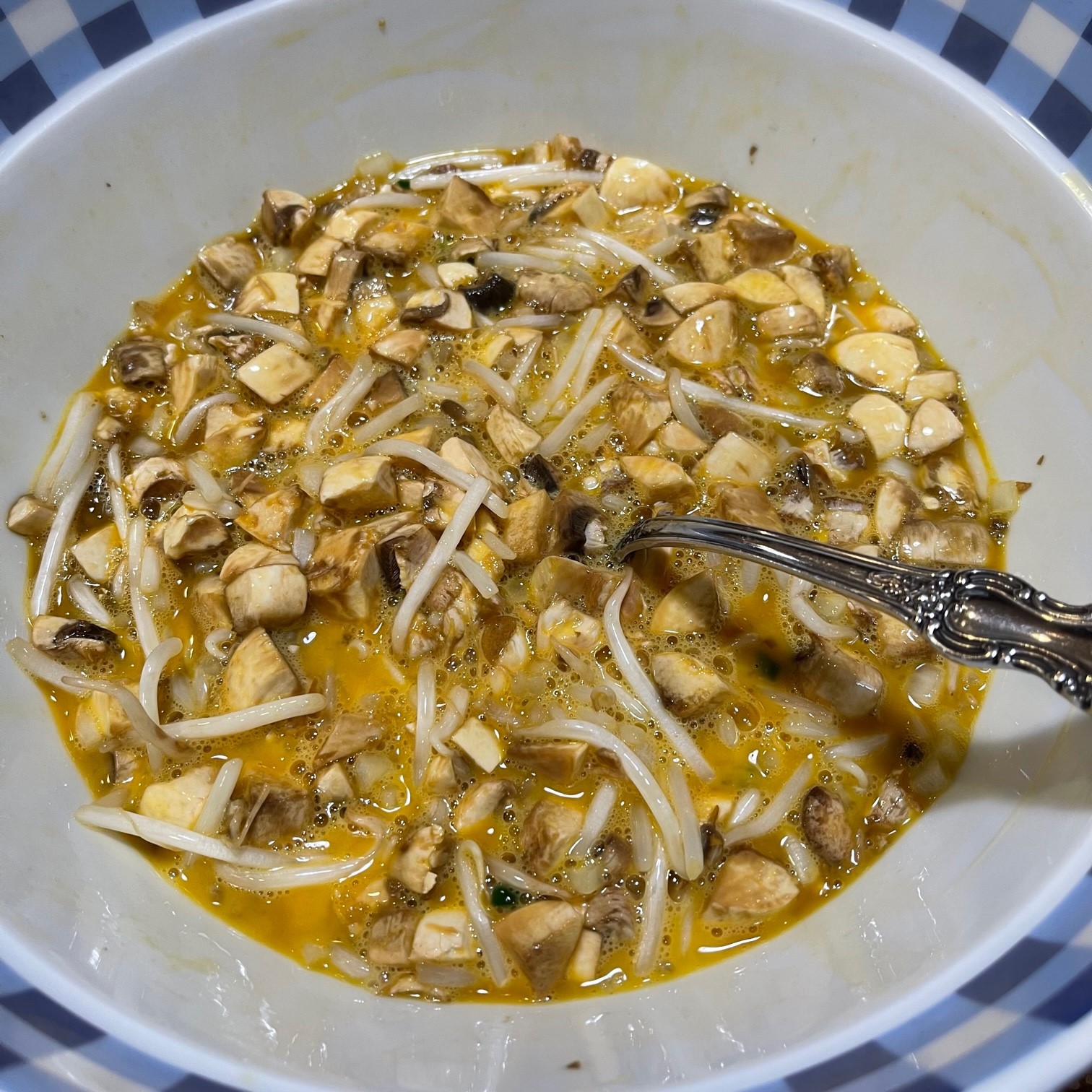
In a medium bowl beat the eggs.  Stir in the soy sauce, bean sprouts, onions and mushrooms.

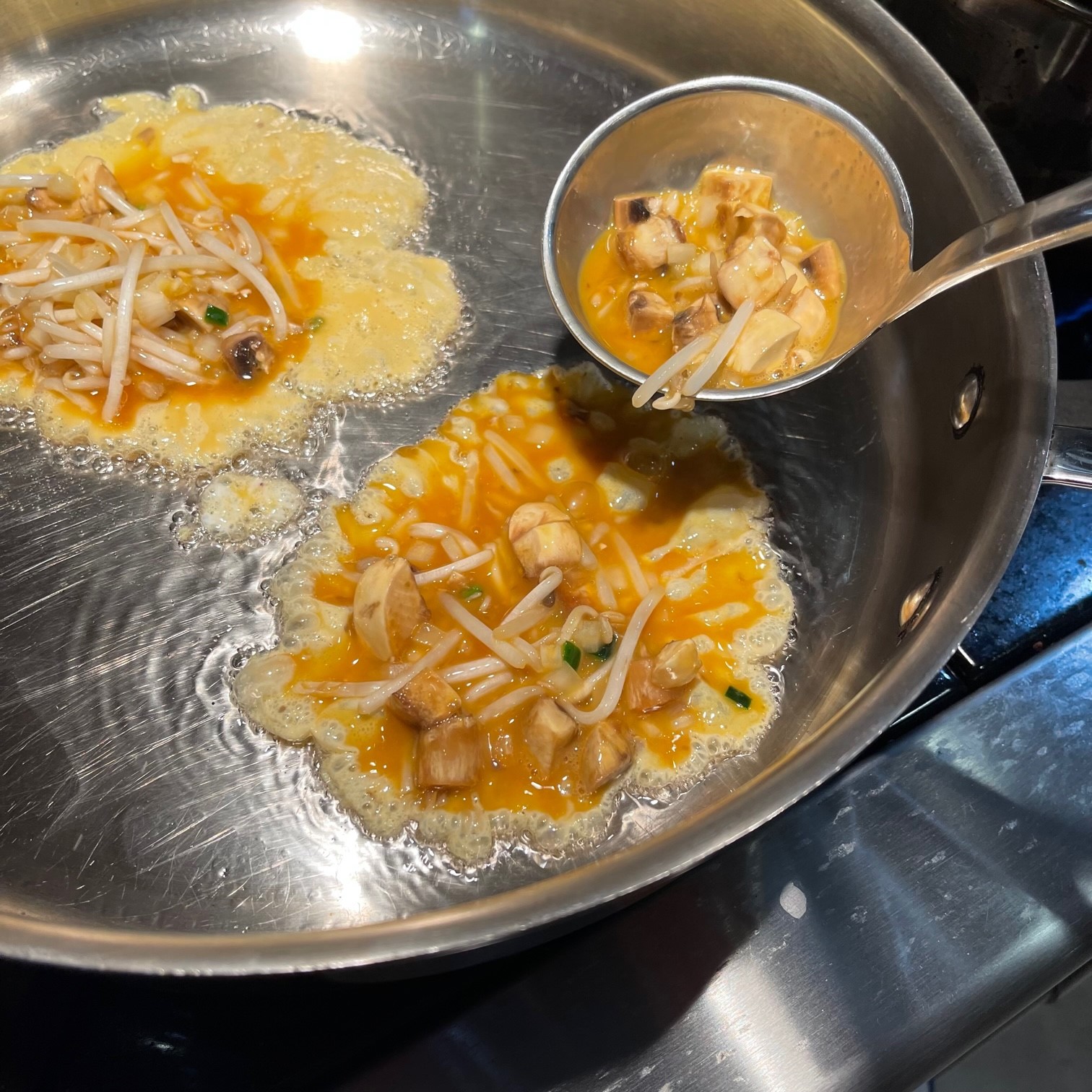
In a large skillet, pour in enough oil to cover the bottom and heat over medium/high.  Ladle on the egg mixture like you were making pancakes.  You don’t want to use too much per patty – maybe 1/3 cup. They spread rapidly and then kind of keep spreading. Try not to have them touch – you don’t want to have to cut them if you can avoid it.  

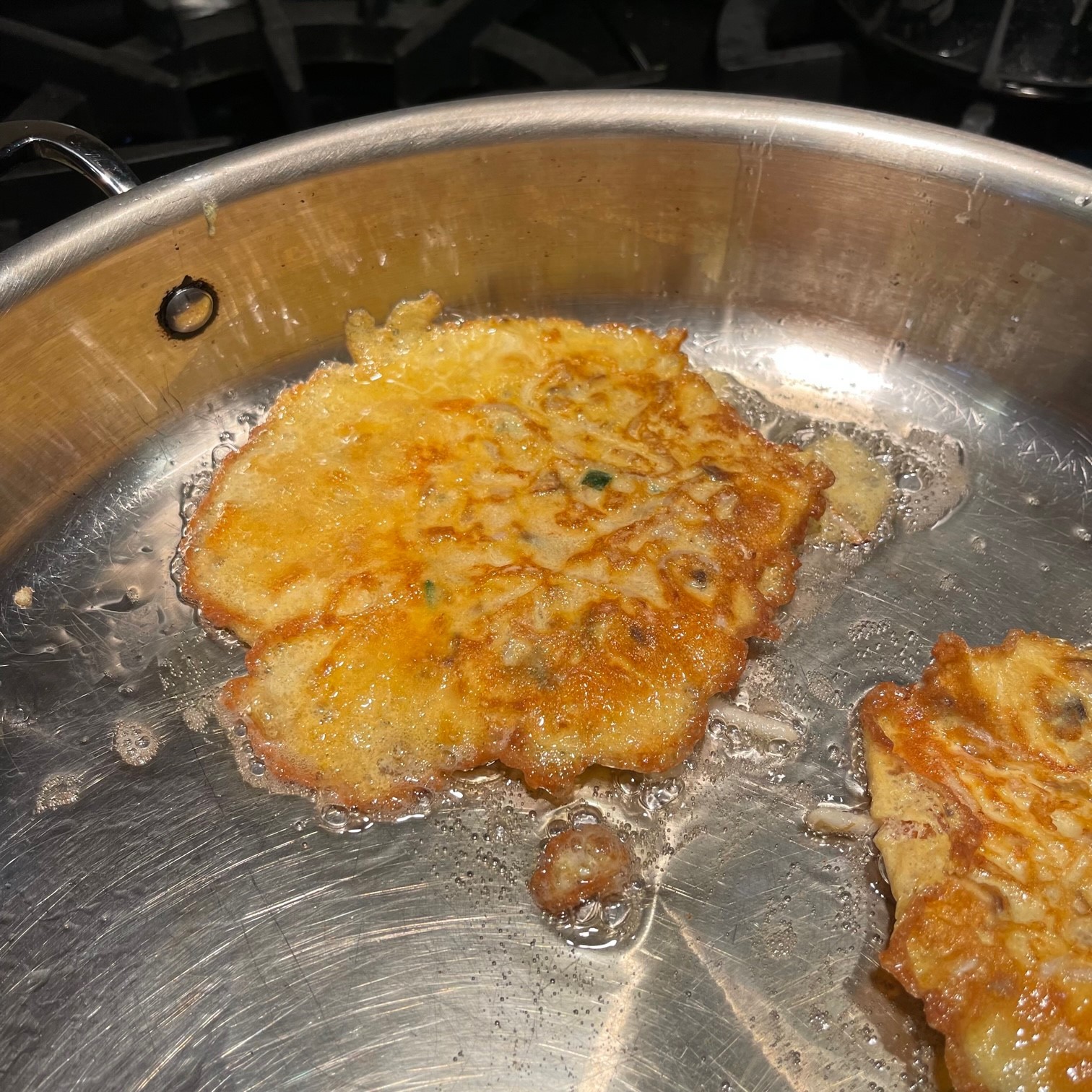
Flip them when they’re well browned on bottom.  Side 2 cooks very fast.

Once they’re well browned on both sides transfer to a platter.  Add more oil as necessary as you cook the remainder.

Serve them hot over sticky rice, generously pouring the brown sauce on top.

Leftover Easter Eggs? Mom’s ‘Chicken’ Casserole To The Rescue!!!

Unless you’re Cool Hand Luke, you may be reaching your wit’s end trying to use up all those hard boiled eggs from Easter. Well, have I got a recipe for you!  It’s my mom’s famous chicken casserole which I ingeniously call:  Mom’s ‘Chicken’ Casserole. Notice the quote marks around the word ‘chicken’.  That means I use faux (aka – fake, imitation) chicken. This recipe uses 4 hard boiled eggs! And, what the heck – if you’re getting desperate, throw in a couple more.

My mother was a very nervous cook.  She generally stuck to what she knew.  Somewhere along the line she found this fabulous chicken casserole that she made for every occasion. It always drew rave reviews so she figured if it ain’t broke, don’t fix it.  No one ever tired of it.

When I became a vegetarian, I figured that was the end of my mother’s casserole for me. But once I discovered there was such a thing as imitation chicken, I (with much anticipation) tried various brands. While some of them were good, they were all too dry for this recipe. Dang! Then I found Worthington’s frozen Meatless Chicken Style roll. What a difference! It’s very moist and gives the illusion that you’re actually eating chicken. So I dug out my chicken casserole recipe and tried the Worthington roll.  It tasted great!  Imitation meats have really expanded my vegetarian cooking repertoire.

A bit of warning (the bad news) – this roll is pricey, so don’t faint when you’re shopping. BUT it weighs 4 lbs (the good news), so you get a lot for your money.  If you were to cut it into cubes, you’d get approximately 14 cups.  And remember, unlike real chicken, the entire roll is edible – there are no bones, skin, fat, and gristle!  Yuck!!!

Here’s my tip:  Since these logs are far too much for any one meal, I let it thaw enough so I can cut it into thirds.  Then I refreeze the portions on a cookie sheet and, when frozen, seal and store them in a freezer bag.  (If you store and seal the portions before they’re refrozen, they’ll stick to each other.)

Mom’s ‘Chicken’ Casserole is one of those great recipes that you can make ahead of time. My mother always made it the day before – she claimed that allowed the flavors to blend. If you do make it ahead, don’t sprinkle on the potato chips (if you decide to use them) or almonds until just before you bake it.  By the way, my mom used the potato chips; I never do.  Of course, it’s delicious with the potato chips (why wouldn’t it be?) but I’m constantly watching my fat and calorie intake so I leave them out.  Either way, the casserole is fabulous!

The original chicken casserole recipe calls for Cream of Chicken Soup.  Of course, since this was now a vegetarian recipe I had to come up with a substitute.  I decided on a thick basic white sauce with some herbs added in.

NOTE:  You don’t have to use Worthington Chicken Style roll.  If you have another brand you prefer, use that.  Taste is subjective.

This recipe is made in the traditional 9½” x 13″ casserole dish.  If you choose to half it (which I did this time), use an 8″ x 8″ pan.  I actually have a cooking video of me making this recipe, if you’re a visual learner.  Click on Mom’s ‘Chicken’ Casserole to watch.

MOM’S ‘CHICKEN’ CASSEROLE

  • 8 cups cubed fake chicken (I used Worthington’s Chicken Style – see photo above)
  • 2 cups celery, diced (about 6 stalks)
  • 1  4-oz jar diced pimento
  • 4 hard boiled eggs, chopped (throw in more, if you like)
  • ¾ cup mayonaise
  • 3 T butter
  • 3 T flour
  • ¾ cup milk (I used organic nonfat)
  • ½ tsp salt (this is separate from the 1 tsp salt that follows)
  • ¼ tsp each of thyme, dill, and celery salt
  • 1 tsp salt
  • 1 tsp dried minced onion (found with the jarred spices & herbs)
  • 2 T lemon juice (fresh or bottled)
  • 1 cup medium cheddar cheese, shredded
  • 2/3 cup slivered almonds, toasted
  • Optional:  1½ cups crushed potato chips

The first thing to do is make a white sauce.  In a small saucepan melt the butter.  Add in the flour and mash it together with the melted butter to form a smooth paste (make sure there are NO lumps – if you don’t do this now, they’ll never come out).  I use a flat-headed wooden stirrer for this.  Once blended, cook the paste over a low flame for 1 minute.  Pour in the milk, increase the heat to medium, and continue to stir until it thickens.  Stir in the ½ tsp salt and the thyme, dill, and celery salt.

In a large mixing bowl mix everything together (including the white sauce) EXCEPT the cheese, almonds, and potato chips (if using).  

Spread evenly into the casserole dish.  If you plan on baking this later, cover with foil and refrigerate.

Preheat oven to 350º F.

To bake, layer the potato chips (if using) on top, then the cheese, and finally the slivered almonds.  Cover with foil and bake for 25 minutes.  Remove foil and bake another 5 minutes.  Serve hot.

I’ll be the first to admit the fake chicken version isn’t quite as good as the real thing. Chicken, Cream of Chicken Soup, and crushed potato chips are all really tasty.  But this is still an excellent casserole!  Remember, the fake meats are geared to talk you off the ledge when you start to weaken. The imitation chicken forms a base to all those other yummy ingredients.

Thanks to imitation meats, vegetarian cooking has come a long way.


Beer & Cheese Omelette Casserole – Perfect For Brunch, Lunch, Or Dinner!

Beer & Cheese Omelette Casserole

Beer & Cheese Omelette Casserole

Don’t get me wrong – I LOVE Beer Bread.  But you can only eat so much of it before you start wearing it…on your hips.  You know what I’m talking about.  You keep eating something because it’s going to go bad if you don’t.  And, of course, it really tastes better slathered with butter (well, what doesn’t?).

I made Beer Bread the other day (click: Beer Bread – No Need To Knead) and there was still half a loaf left.  I thought about freezing it – I AM the queen of freezing, after all – but wondered if I could use it for dinner somehow.  I perused my recipe cards (for you young folks out there, recipe cards are what we used before the internet).  When I came upon Briggs House 24-Hour Wine And Cheese Omelet I had a ‘hmmm’ moment.  The recipe was an egg casserole with pieces of day-old French bread and white wine, among other ingredients.  I said to myself (and, yes, I talk to myself), ‘How would this taste if I replaced the French bread and wine with beer bread and beer?’  The recipe also called for Swiss cheese.  I wasn’t sure how Swiss cheese would taste with the beer flavor, but I did have jack with jalapeño.  ‘Hmmmm’ (once again – this time with an added ‘m’)….’now that might give it a bit of a kick’.

The final change was made out of necessity.  As the name indicates, you put together the original in advance and then let it rest 24 hours before baking it.  (It’s one of those handy recipes for brunch when you won’t have time to cook.)  It was coming on to the dinner hour so I didn’t have time for it to even take 40 winks, let alone a 24 hour rest.  Once I put it together, into the oven it went.

The final verdict?  It was good.  Very good.  But I have to say, I prefer the French bread and white wine taste.  Maybe next time I’ll split the difference and use beer bread with white wine.  My husband will appreciate that – I had to beg ¼ cup of the beer he was about to drink. The jalapeño jack was great, although so is the Swiss.  The Swiss is more subtle, but the jalapeño really wakes your mouth up.  I guess I’ll just have to see what I have in the fridge next time I make it.

Here’s my version of Briggs House 24-Hour Wine And Cheese Omelet.  Of course, as with most recipes, tweak it to suit yourself.

BEER & CHEESE OMELETTE CASSEROLE

  • ½ loaf beer bread, torn into 1″ cubes
  • 3 T butter, melted
  • 2/3 cup jalapeño jack cheese, shredded
  • 8 eggs
  • ¼ cup beer (I used Hefe.  Use a brand you like since the flavor will come through)
  • 1½ cups milk (I used organic nonfat)
  • ½ T dry mustard
  • ¼ tsp cayenne pepper

Preheat oven to 325ºF.

Butter a casserole dish.  I used a 6″ x 11″ dish which makes a thicker casserole.  But you can use the standard 9½” x 13″ casserole dish if you prefer a thinner omelette (or if that’s all you have).  Spread the beer bread evenly in the dish, then drizzle with the melted butter. Sprinkle on the cheese.

In a medium sized bowl beat the eggs.  In a small bowl put the dry mustard and cayenne pepper. Pour in a little of the beer and, with the back of a spoon,  make a smooth paste. Add this paste, the remainder of the beer, and the milk to the eggs.  Beat until foamy.  Pour evenly into the casserole dish.  Cover with foil and bake for 50 minutes covered, then remove foil and continue to bake another 10 minutes, until the top is browned.  Let rest at least 10 minutes before serving.

NOTE:  Next time I make this, I’m going to add in Morningstar’s Veggie Sausage Patties. They would go really well with this dish – and they’re so good, your carnivores will love it!


Homemade Yogurt – The Easy Way!!!

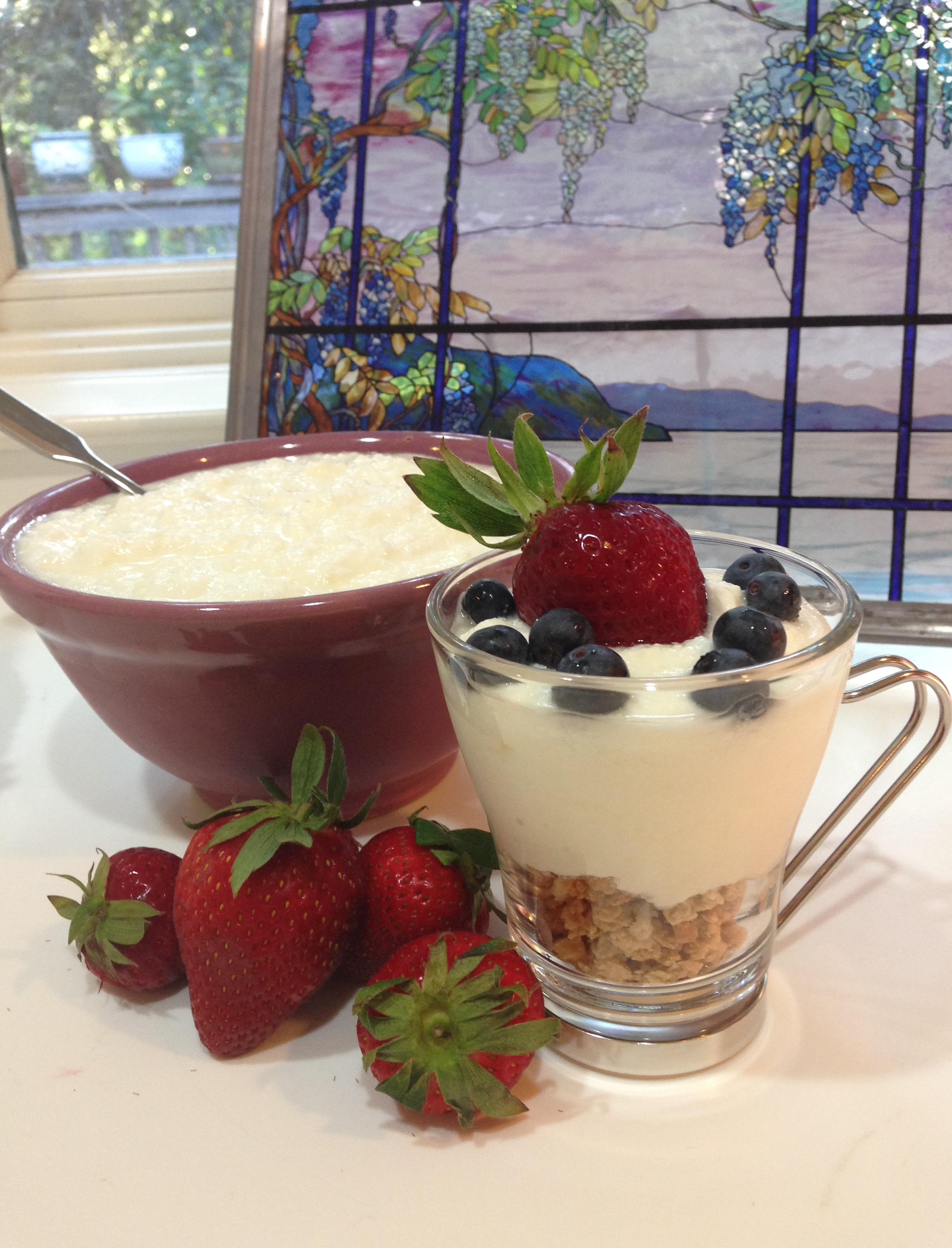
Yummy Homemade Yogurt

Yummy Homemade Yogurt

After my last post – Roasted Carrots – Shaking It Up A Little – I felt the need to redeem myself in your eyes – to prove to you I AM a frugal (cheap) and careful (paranoid – as in wondering, ‘Whose disease ridden hands have been touching my food?!’) cook. In that post I confessed to using bagged, ready-to-go carrots.  I’m planning on buying unbagged carrots next time I shop….unless, of course, the bagged are on sale – in which case all bets are off. Cheap trumps paranoid every time.

So, how about this:  I make my own yogurt!  And I don’t mean I buy the plain, then add in fruit. I actually grow my own. People are often astounded when I tell them that.  In truth, it’s the easiest thing in the world – once you learn the secret:  make it in a thermos.  Crazy? Crazy like a fox!

I remember my dad making yogurt, although we called it by the Armenian name – madzoon. I can still see him opening the oven door and removing a stockpot full of fresh yogurt.  We used to eat it with crushed strawberries. It was so good.  And healthy!  I firmly believe that’s why Armenians live to such a ripe old age even though they are often a smidge overweight (I’m trying to be tactful.  Holiday dinners were always in 2 parts:  Part 1 – the freshly made dinner.  Part 2 – everyone had recovered from Part 1, reheated the food, and eaten again.)

When I left home, I bought the container yogurts because that’s what everyone did.  You know those container brands:  you turned them over and the yogurt plopped out but kept the container shape.  My dad’s yogurt never did that.  Then I found Yoplait and it was more like the real thing.  But, it was expensive. Finally, I decided to make my own and save money (me?).  I found a recipe, mixed up my yogurt, and then put it in the oven to grow, the way my dad did.  Nothing happened.  I threw that batch out and tried again.  Again – nothing happened. I wondered if it was my oven – too hot?  not hot enough?  I gave up – I was throwing money down the drain, rather than saving it.

Then one day I was thumbing through a giant how-to book I’d borrowed from the library.  (I love how-to books!) And there it was:  make yogurt in a thermos. Now THAT sounded interesting. I tried it and – hurrah! – it worked.  When I thought it through, I realized that a thermos was the PERFECT venue to grow yogurt.  As Mr. Spock would say, ‘It’s only logical.’ In order for the yogurt culture to grow, you need a constant temperature and it needs to be left alone (like Greta Garbo). What could be better than a thermos?

I used to make my yogurt in a 32 oz mirrored-interior Aladdin thermos.  It worked great.  If you’d like to see my video for making yogurt, go to:  Yogurt Made In A Thermos.  Since then, however, I’ve bought a larger and wider mouthed thermos:  a 68 oz stainless steel Thermos Brand thermos that I got on Amazon.  (My family goes through a lot of yogurt.) With the wider mouth, it’s so much easier to remove the yogurt. Bonus!  And, for some reason, the yogurt is coming out creamier. Double Bonus! Finally, the interior will never shatter if you accidentally knock it over – (yeah- I’ve done that twice).  Triple Bonus!

Yogurt offers lots of health benefits: it has calcium (good for bones), bacteria (good for the gut), helps boost the immune system, and may reduce blood pressure – to name a few. Google ‘yogurt’ and read about it. It’s amazing!  I eat yogurt nearly everyday.  In fact, my brother lost 20 pounds and the only thing different in his life was he started eating yogurt every morning.  Maybe not scientific proof… but anecdotal.  And it couldn’t hurt.

Besides saving tons of money by making it yourself,  homemade yogurt has no additives or preservatives or thickeners or added sugars.  Take a look at the ingredients list on the side of a carton of store-bought yogurt – almost without exception, there will be things on that list that you’d be better off without.  All that should be in yogurt is milk and a bit of culture from your last batch.  (I’ve heard you can freeze that starter culture until you’re ready to use it – but I’ve never tried it.)

NOTE:  If you’ve never eaten homemade yogurt, it might take some getting used to. Commercial yogurt has sugar to sweeten it up.  The real thing is pretty tart.  Since I grew up eating it, it doesn’t bother me at all.  But you may need to add fruit (which is a great way to fulfill that pesky daily fruit requirement) and/or granola.  Just make sure you don’t add anything to the whole batch before setting aside enough to start your next batch.

YOGURT IN A THERMOS – makes 32 oz of yogurt (recipe can be doubled – use a bigger themos)

  • 3¾ cups milk (I use organic nonfat)
  • ¼ cup PLAIN yogurt (if you don’t have some from your last batch, buy plain yogurt)
  • Optional:  1 cup powdered milk (I use this to thicken up my yogurt since I used nonfat milk)

Over a medium-low flame, heat the milk and powdered milk (if using) to 180º F – stirring often. Remove from heat and let cool to 112º F.  While it’s cooling, prime your thermos by filling it with hot water – by doing this the warm milk won’t lose heat when it’s poured in. When the milk has reached 112ºF, gently stir in the yogurt starter.  Empty the water from the thermos and pour in the milk mixture.  I STRONGLY suggest you use a funnel when pouring so you get the milk IN the thermos instead of ON your counter.  (I learned THAT the hard way!) Then, set the filled thermos aside where it won’t be disturbed.

The yogurt needs 8-12 hours to grow – the longer it grows, the tarter it gets.  There’s no right or wrong – it’s all a matter of preference.  I like mine to grow 12 hours or a little less. When time is up, empty the yogurt out of the thermos and into a container.  Store in the fridge.  If your thermos has a narrow mouth, you’re going to need to be a little creative because the yogurt won’t pour out.  I’ve taped a narrow spatula to a long wooden spoon and, also, used the stick end of a really long wooden spoon.

For those of you Greek yogurt fans out there, all you have to do is drain the whey from your homemade yogurt.  Let the newly made yogurt cool in the fridge first, then line a large sieve or colander with a tea towel or coffee liners and pour in the yogurt.  Make sure you have a container to catch the whey – it starts dripping out immediately.  And save the whey for future use (google it) – it can be frozen.  You know me – I hate waste!

NOTE:  Make sure you have a thermometer that registers as low as 112º F.  I used to use a glass candy thermometer, but after breaking two of them, I finally bought a metal digital.  I love it!!!

You may have already worked out the math, but if you haven’t, let me warn you:  DON’T START MAKING YOUR YOGURT AT A TIME WHEN THE YOGURT WILL BE DONE WHEN YOU’RE ASLEEP OR NOT HOME!  It takes about an hour to heat and cool the milk, then the growing time is 8-12 hours.  So add up the hours before starting.  Yogurt doesn’t shut off when it’s done – you have to remove it from the thermos and cool it in the refrigerator to stop the process.

Real Men Love My ‘BACON’-ONION-CHEESE QUICHE

Thank goodness my onion hating brother doesn’t read my blog.  He’s had an aversion to onions since….well, forever.  I did, too – when I was a kid.  But I grew out of it; my brother didn’t.  My sister-in-law and I just roll our eyes at this because he actually DOES like onions – he just doesn’t know it.  If he sees them in food, he won’t eat it.  But if he doesn’t know they’re there, he gobbles down the dish.  (Of course, I don’t mean an actual DISH.)

So my brother and his wife came to dinner the other night and I planned on making dolma for him, since it’s his favorite.  I decided to make my ‘Bacon’-Onion-Cheese Quiche for the rest of us.  There were plenty of sides dishes, as well:  mushy peas (see my post – Mushy Peas: A Super-Food Disguised As A Side Dish), steamed broccoli, seasoned roasted potatoes, and a green salad.  Two desserts were upcoming, as well.  (Two desserts for 4 people?  Oh, yeah – cause that’s how I roll!) There was no dearth of food.

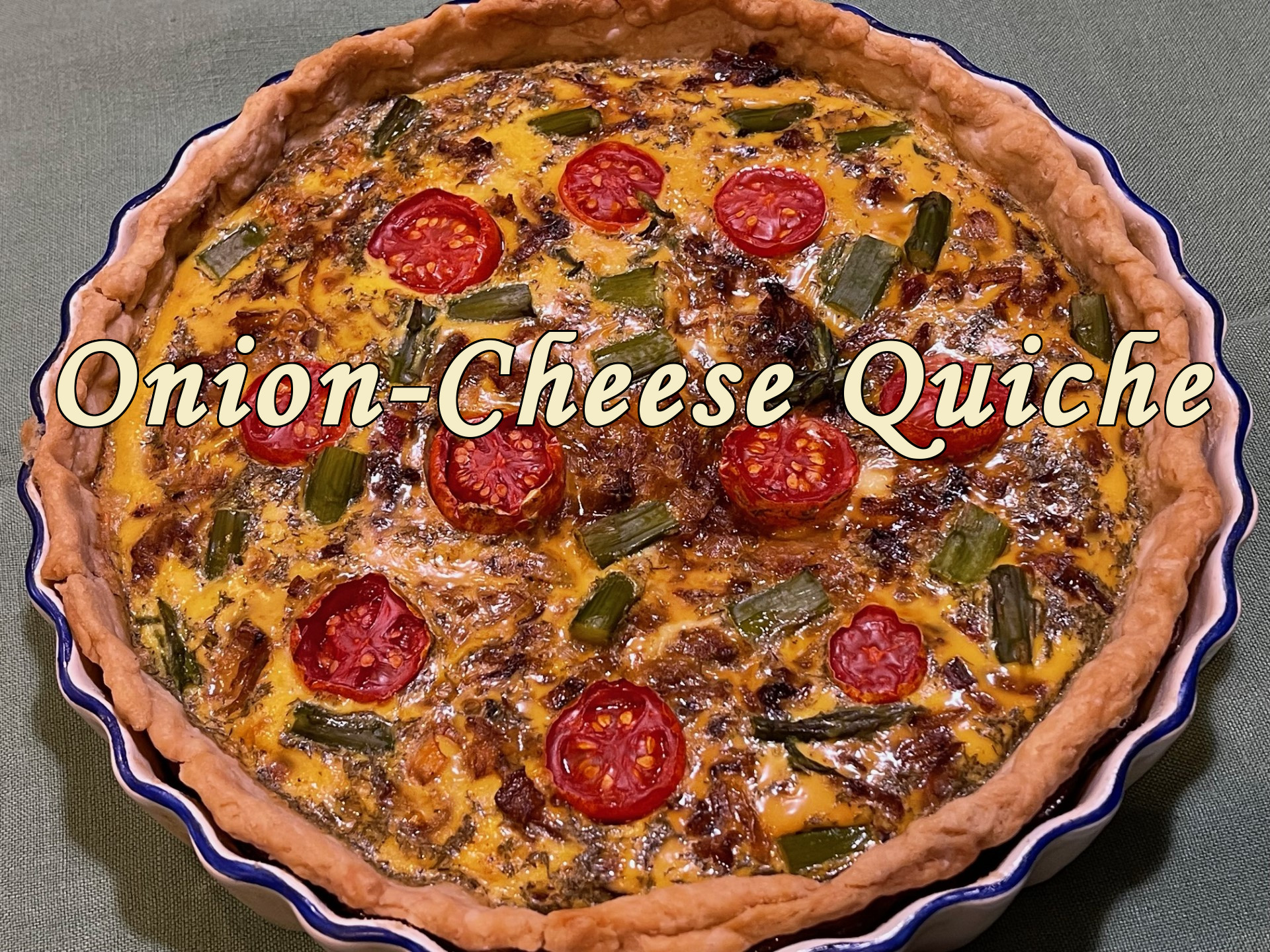
I never actually named the type of quiche – I wasn’t hiding anything…I was just busy.  Food was being passed and consumed, compliments were forthcoming (if I do say so myself), and at least two conversations were going on at once.  This was a family dinner, after all.  Then I hear my brother say, ‘This is really good quiche.’  If you know me at all by now, you’ll know I’m rarely at a loss for words.  But I was then because I censored myself in the nick of time from saying, ‘It’s an ONION quiche.  It’s full of ONIONS! Why are you eating that? I made dolma just for you!’  I stared at him for several seconds as I was deleting those words, before filling in said deletion with a brief, ‘Thanks’ and changed the subject quickly before anyone could ask what was in it.  Knowledge may be power, but in this case ignorance was bliss.  If my brother found out about the onions, he would have re-thought his compliment and stopped eating the quiche.  Not to mention that the bacon topping was fake bacon. Vegetarian food is of no interest to him.

You may or may not know, but I have an online video cooking show called, VEGETARIAN COOKING FOR CARNIVORES. Yes, it’s the same name as this blog – but if it ain’t broke, don’t fix it. (Or maybe I’m just too lazy to come up with another name.)  I actually have an instructional video about making ‘Bacon’-Onion-Cheese Quiche which you can view at: ‘Bacon’-Onion’Cheese Quiche.  I even show you how to make the pie crust.  To see the entire list of my videos, complete with links,  go to my website at VegCookingForCarnivores.com and click on the Episode Guide in the toolbar.

But here’s the written recipe, for those of you who prefer to read it:

‘BACON’-ONION-CHEESE QUICHE

  • 157g / 1¼ cups flour (I used organic all-purpose)
  • 1/8 tsp salt
  • 90g / ½ cup shortening (I used Crisco)
  • 4 T ice water
  • 2 yellow onions, chopped
  • 42g / 3 T butter
  • 1 tsp salt
  • 1 tsp dried dill
  • ¼ tsp ground pepper
  • 5 strips fake bacon (I used Morningstar brand)
  • 225g / 1 cup plain yogurt, drained
  • 4 eggs
  • 2/3 cup (152g) milk (I used nonfat – use what you have)
  • 1 cup (86g) Swiss cheese, shredded

While you can’t assemble this quiche ahead of time, you can do many of the steps early (even the day before) and assemble it when you’re ready to bake it.  I love recipes like that. Dinner time always seems to catch me by surprise.  Then I’m like a mad woman – flying around the kitchen.  Don’t even think about getting in my way!

It’s really best to make the pie crust early – that way it’s nice and cold when you roll it out. ‘Roll out the crust?’ you say. ‘ Can’t I just buy pre-made?’  Yes.  Yes, you can.  But compare the cost of pre-made to the meager ingredients in making your own.  AND, look at the ingredients list on the pre-made. I suspect there are words you don’t understand and can’t pronounce.  (If you get nervous, watch my video.)

Into a medium sized bowl put the flour and salt – briefly mix these with a pastry cutter (or fork).  Add in the shortening and, using your pastry cutter, mix everything together until the consistency of the dough becomes like little peas.  Sprinkle in the ice water.  Then using a fork, gently blend the water into the dough.  DON’T OVER MIX!  And DON’T USE YOUR FOOD PROCESSOR!  Over working dough leads to a tough crust.  Been there, done that!  Gather the dough into a tight ball, lay it back in the bowl, and refrigerate.

Drain the yogurt in a sieve lined with a coffee filter.  It takes at least an hour.  BTW, save the drained whey – that’s the liquid – to use in place of water in various recipes.  Google it! Remember, I hate waste. (Cheap!)

Fry the onions in butter until they’re golden brown.  Caramelizing onions (that’s what you’re doing) makes them sweet and SOOOO good! Stir often, especially once they start to brown. (A flat headed wooden stirrer works really well for this.)  Stir in the salt, pepper, and dill. Let sit until room temperature.

Bake the ‘bacon’.  Follow package directions.  For Morningstar, bake at 375ºF for a total of 15 minutes, turning once.  Let cool completely so the ‘bacon’ gets nice and crispy.

All of those steps can be done ahead of time, if you want.

To assemble the quiche, first roll out the pie crust.  On a well floured FLAT surface (I use Tupperware’s pastry sheet), and with well floured hands, take your chilled dough ball and start to flatten it with the palm of one hand, while pushing in the raggedy edges with the other.  You want a smooth perimeter.  Now take your well floured rolling pin and start rolling back and forth one way, then 90º the other way.  Push in the edges again, as needed. Continue to flour the rolling pin, and roll in all directions to keep the circle round.  Once it’s big enough to line the bottom and sides of your 10″ quiche pan (with a little extra for crimping), fold the dough circle in half. CAREFULLY, lift up the dough and let it dangle over one hand. With the other hand brush off the excess flour.  Set the folded edge along the center of the quiche pan.  Unfold the dough.  Go around and crimp the edges by rolling it towards the center and pinching it. Crimping give the crust a finished touch.

Preheat the oven to 375ºF.  Do this now – the oven will be ready when you’ve assembled the quiche.

In a medium bowl beat the eggs with a fork.  Beat in the milk and yogurt.

Layer the onions on the crust, then sprinkle on the cheese, pour on the egg mixture, and crumble on the ‘bacon’.  It’s going to look like you don’t have enough egg mixture, but don’t worry – it puffs up while baking.  Bake for 45-50 minutes – until the top is golden brown. Remove carefully from the oven (don’t jiggle it) and let set for at least 15 minutes before slicing. It will be a mushy mess if you try to cut it sooner – it needs time to firm up.

You can bet I’ll be serving this quiche to my brother again.  However, I’m going to have to come up with another name for it so he doesn’t know what’s in it.  Any ideas? I’d love to hear them!

‘Tis No Blarney – Vegetarian Corned ‘Beef’

Toasted Corned 'Beef' Sandwich with Swiss & sauerkraut

Toasted Corned ‘Beef’ Sandwich with Swiss & sauerkraut

My mouth still waters at the memory of the mile high corned beef sandwiches my parents would buy from our favorite deli when I was a kid.  My poor mother had to brave the disapproving glare from the server because I insisted on ordering mine on white bread. Somewhere in my late teens, I finally made the transfer to rye.  Everyone breathed a sigh of relief.

The victory was short lived, however, because I became a vegetarian soon thereafter.  Ah, well!  It was nice while it lasted.  Goodbye corned beef, hello….corn.

But, never fear.  This story has a happy ending.  Over the last several years, more and better tasting imitation meats have hit the markets.  Including corned ‘beef’.  (When I use quotes around a meat, I’m talking about faux – aka, fake – meats).  I’ve mentioned before, and will continue to do so – there are all kinds of imitation products out there.  Some inedible, some excellent.  And taste is subjective – what I like, you may hate.  So experiment with the various products and decide for yourself.  Experimenting is important in vegetarian cooking.

The thing about most fake meats is they work best when they’re the base for other ingredients (such spaghetti sauce, or a casserole).  On their own….well, no meat-lover will be satisfied.  So boiled corned beef, cabbage, and potatoes is out of the question.  But a toasted corned ‘beef’ on rye with melted Swiss, sauerkraut, and mustard….now you’re talking!  The marriage between the corned beef essence of the fake stuff, and the flavors of the rye, sauerkraut, Swiss, and mustard are enough to pull off this sandwich.  Now, I’m not gonna lie – it’s not exactly the same as the real thing.  But, for me, it’s enough to talk me off the ledge when I’m tempted to sneak the real thing. Add to that some Mushy Peas (see post: Mushy Peas:  A Super-Food Disguised As A Side Dish), roasted carrots , and a green salad, and my Irish half is quite content.

CORNED ‘BEEF’ SANDWICH

  • Imitation corned beef (I used Cedar Lake brand, but I’ve tried others I liked, too)
  • rye bread
  • sauerkraut
  • Swiss cheese
  • yellow mustard

Drain the sauerkraut in a sieve.  Fold several slices of fake corned ‘beef’ in half and lay them on one slice of rye bread.  Lay Swiss cheese on another slice of rye.  Put them in the toaster oven (or big oven if you don’t have one) and toast on high setting (I used the highest setting).  Once toasted, pile the sauerkraut on the corned ‘beef’ half, squeeze on the mustard, then top with the cheese half.  And, VOILÀ – a vegetarian corned ‘beef’ sandwich.

Butternut Pesto Pizza: Mamma Mia, Thatsa Pizza Pie!

SQUASH PIZZA

You know what the problem with butternut squash is?  It’s so darned big!  Several days ago I made Squash Stew (check out my post:  Squash Stew: Or, How I Learned The Importance Of Carefully Reading A Recipe).  I only needed 1½  cups of cubed butternut squash.  Now, I’m no squash expert.  In fact, before making this stew, I’d only given the various winter squashes a fleeting, curious glance as I wheeled my shopping cart past them on the way to the potatoes.  So I don’t know if these 10″ winter squash wonders are typically sized butternut squash, or if my market just has a penchant for purchasing mega produce. (How’s THAT for alliteration?)  I used the ‘neck’ of the squash for my stew (I read it was the sweeter part), which yielded the needed 1½ cups.  I was then left with the bulbous ‘head’. What to do with it? (Neck?  Head?  This vegetable is taking on a decided carnivorous undertone. Isn’t this supposed to be a vegetarian cooking blog?)

As you may have gleaned by now, I HATE waste.  Okay, I’m cheap!  But, honestly, it really does wound me to throw out food.  Surely, there must be another tasty vegetarian recipe out there in which I could use the leftover squash.  So I googled ‘butternut squash recipes’ and scanned through the various choices.  EUREKA!  There it was:  pizza topped with pesto and grilled butternut squash. Perfect!  I realized the leftover feta and mozzarella cheeses I had, plus some kalamata olives would would go nicely with the pesto – although, I wasn’t sure if it would work with the squash.  I also decided to add some mashed squash to the pizza dough.  What the heck – in for a penny, in for a pound!

The result:  Mmmmwwwwwaaaaa! (the Italian fingertips to lips thing)  Fabulous!!!!

NOTE:  Next time I think I’ll use a little more mashed squash in the dough –  I couldn’t really taste it that much.

If you’re short on time (or desire), you can use pre-made pizza dough that you buy.  But, honestly, making dough is a snap.   The cost of making dough is almost nothing, and the labor is minimal. Just pull out that food processor you have stored in the back of the cupboard, and start using it.  If you don’t have one, I strongly suggest you to buy one – I use mine constantly!  And don’t be afraid of using yeast – there’s nothing to it.

BUTTERNUT PESTO PIZZA – makes 3 personal pizzas (about 7″ in diameter)

  • 3 cups flour (I used organic all-purpose)
  • 1 cup + 2 T water
  • 3 T olive oil
  • 1½ T milk
  • ¾ tsp salt
  • 1 T active dry yeast
  • ¾ cup pesto (see recipe in post ‘Homemade Pasta:  Crazy Obsessive?  Or Just Crazy?’)
  • ½ a butternut squash
  • 2/3 cup kalamata olives
  • 3 oz mozzarella cheese
  • 3 oz feta cheese
  • a couple T additional olive oil for brushing

Peel the squash. I used leftover butternut squash, so I’d already softened the squash before.  But if you’re using an unused squash, you’re going to want to soften it before peeling.  The easiest way to do this is to first wash and dry the squash (so you don’t contaminate the inner part with the dirty skin when you slice it), then pop it in the microwave for 1½ minutes on high, flip it and nuke it again for another 1½ minutes.  Then off with her head!  (Remove the head from the neck).  You’ll only need half the squash for this recipe – you choose which half.  To remove the skin, simply take a sharp knife and slice off the skin –  easy as pie.  Cut off about ½ cup’s worth and cut it into ¾” cubes.  This will be used IN the dough.  Steam the cubes in a steamer basket until they pierce easily with a fork (about 15 minutes).

Deep breath.  Now you’re going to make the pizza dough.  Heat the water to 104º F and stir in the yeast.  It’s going to begin to get kind of frothy – that’s what it’s supposed to do.  While that’s happening, put the flour, oil, milk, salt, and steamed squash cubes in the work bowl of your food processor.  Turn it on and as it’s whirling around, CAREFULLY and SLOWLY pour the yeast water in from the port on top.  You may need to stop the machine if the flour around the perimeter doesn’t start to blend in.  If that happens (and it always does for me), just remove the lid and run a dull knife along the edge to loosen the flour.  Then start the machine again.  A dough ball will form after about 45 seconds.  That’s what you want.  If the dough is still all over the place, you need more flour.  Add about a tablespoon more.  Turn on the machine and see what happens.  Once the ball forms, continue running the processor for another 15 seconds.  Whew!  Now that wasn’t so hard, was it?  You’ve just kneaded dough – the easy way!  Lightly oil a bowl with olive oil and press the dough ball into it.  Then flip the ball and set it back down – now the dough is coated with oil and won’t dry out.  Cover with a tea towel and let rise for 1 hour.

Sometime during the hour that the dough is rising, get your toppings ready.  Shred the mozzarella, break up the feta, dish out the olives, and fry the squash.  To do this, cut the remainder of the squash half you’re using into 1/3″ slices. Fry both sides in oil (I used canola) until they’re well browned. Drain on a paper towel and cut into smaller pieces.

Punch the dough with your fist.  Your goal is to deflate it.  Try NOT to imagine the guy who wouldn’t let you merge in front of him yesterday when they were doing road mending (he obviously couldn’t spare that half second he would have been delayed) – you don’t want to send the bowl sailing!  Take a dull knife, slice the dough in thirds.  With floured hands, grab one of the thirds and form it into a ball.  Preheat the oven now to 500º F, moving the rack to 4″ below the heating element.  Place pizza tiles in the oven to heat.  I’ve never made pizza without them, so if you don’t have the tiles I guess you’ll have to use a cookie sheet. But it has to be sturdy so it doesn’t warp under the high heat.  The tiles have to be HOT when you slide the uncooked pizza onto them.

The best place to prepare the pizza is on a well floured pizza peel.  If you don’t have one you’ll have to use a wooden cutting board or a really REALLY well floured cookie sheet.  The idea is to slide the pizza easily into the oven.  Take the dough ball and flatten it with your palm.  So I don’t have to keep repeating myself – everything that comes in contact with the dough needs to be WELL FLOURED.  Pick it up and start stretching it a bit.  Lay it over the back of your fists and then start tossing and spinning it several times- this is to get it bigger and thinner.  Now, unless you’re a trained professional, DON’T get crazy with the tossing and spinning.  You eventually want the dough on your dinner plate, not the floor (or ceiling). Lay the dough on the peel, stretching out thicker parts, if needed.

With a pastry brush, paint the border of the dough with olive oil – about 1″ wide.  Spread 1/3 of the pesto to about ¾” from the edge.  Sprinkle on cheeses, place the squash, then fill in with the kalamata olives.  By now the oven should be heated.  With a wide spatula, gently guide the pizza into the oven.  Set the timer for 5 minutes.  Turn the pizza 180º and continue baking until browned – about another 3 minutes.

While one pizza is in the oven baking, prepare the next.  My family starts eating when the first one comes out of the oven – that’s when it’s at its best.  Sometimes I just wait for the last one – otherwise I’m up and down.  I like to relax and enjoyed the fruits (or should I say ‘pizza’) of my labor.

As long as you have the right tools (food processor, pizza peel, pizza tiles), making pizza is easy! And by making it yourself, you control the amount of grease.  So, go ahead – give Butternut Pesto Pizza a try.  You’ll be glad you did.  Now, go scrape that dough off the ceiling – I warned you!