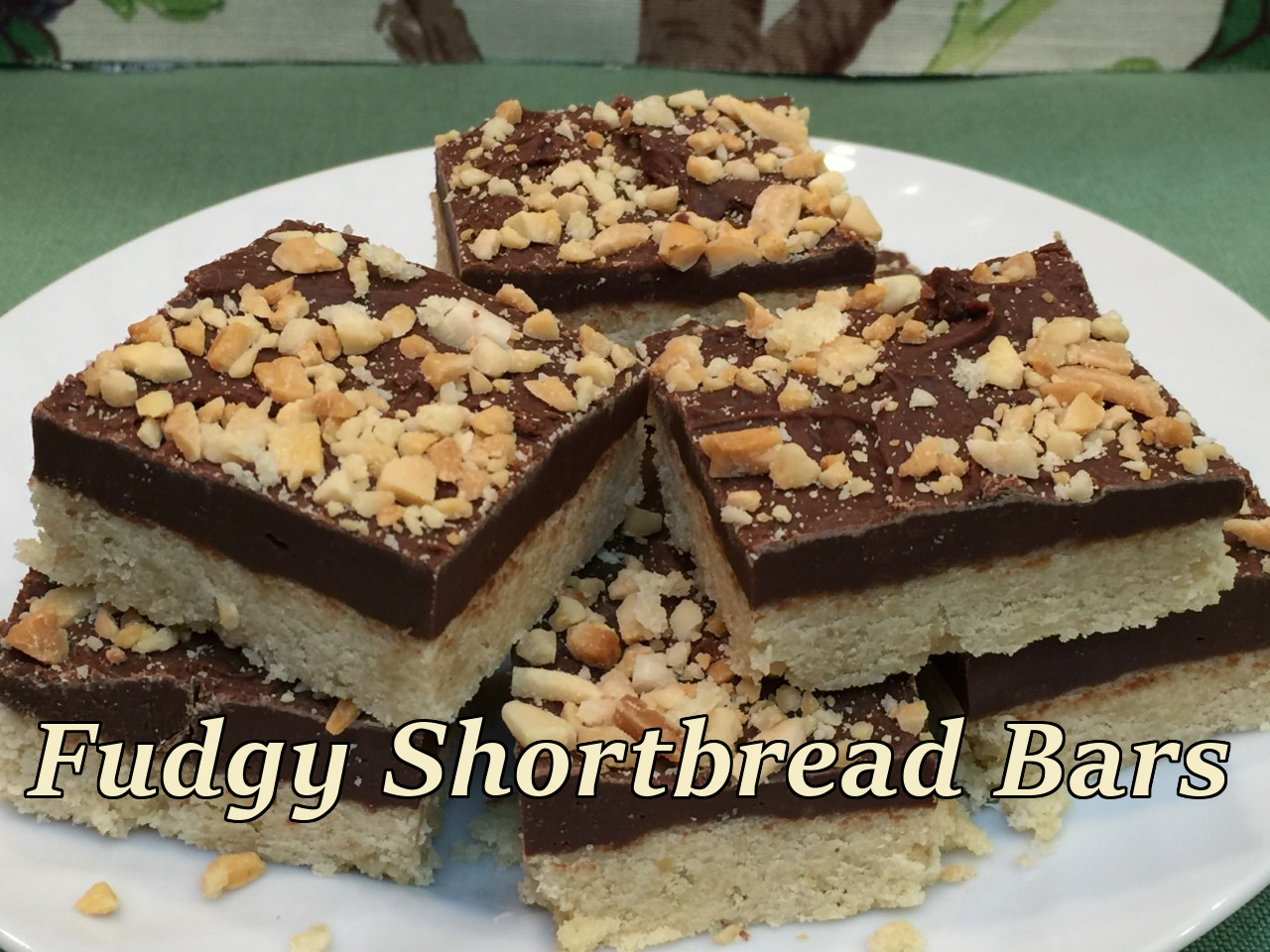
As you might imagine, between the Great British Bake-Off, America’s Test Kitchen, and the internet, there is no shortage of recipes for me to try. But, every now and then, I pull out my old recipe box (yes, there was a time when we had recipe cards) and thumb through it. I came across a recipe for Fudgy Shortbread Bars and decided to almond it up by altering the plain shortbread to an almond shortbread, adding a drop of almond extract to the fudge, and topping it with toasted almonds.
If you’re a purist, you can leave out all traces of the almonds, exchanging vanilla for the almond extract. Or, use walnuts, pecans, or hazelnuts – it’s up to you.
Note: This recipe can be doubled and made in a 9″x13″ (or 23cm x 33cm) pan.
Queen of Freeze Note: As the self-proclaimed Queen of Freeze, I would be remiss in my duties if I didn’t point out that these bars can be sliced and frozen for future use.
Second Queen of Freeze Note: This recipe calls for half of a can of sweetened condensed milk. The remaining half can be frozen.
190g (150ml) (6.75oz) sweetened condensed milk (this is half a standard can)
1/4 tsp almond extract
Preheat oven to 325°F (163°C)
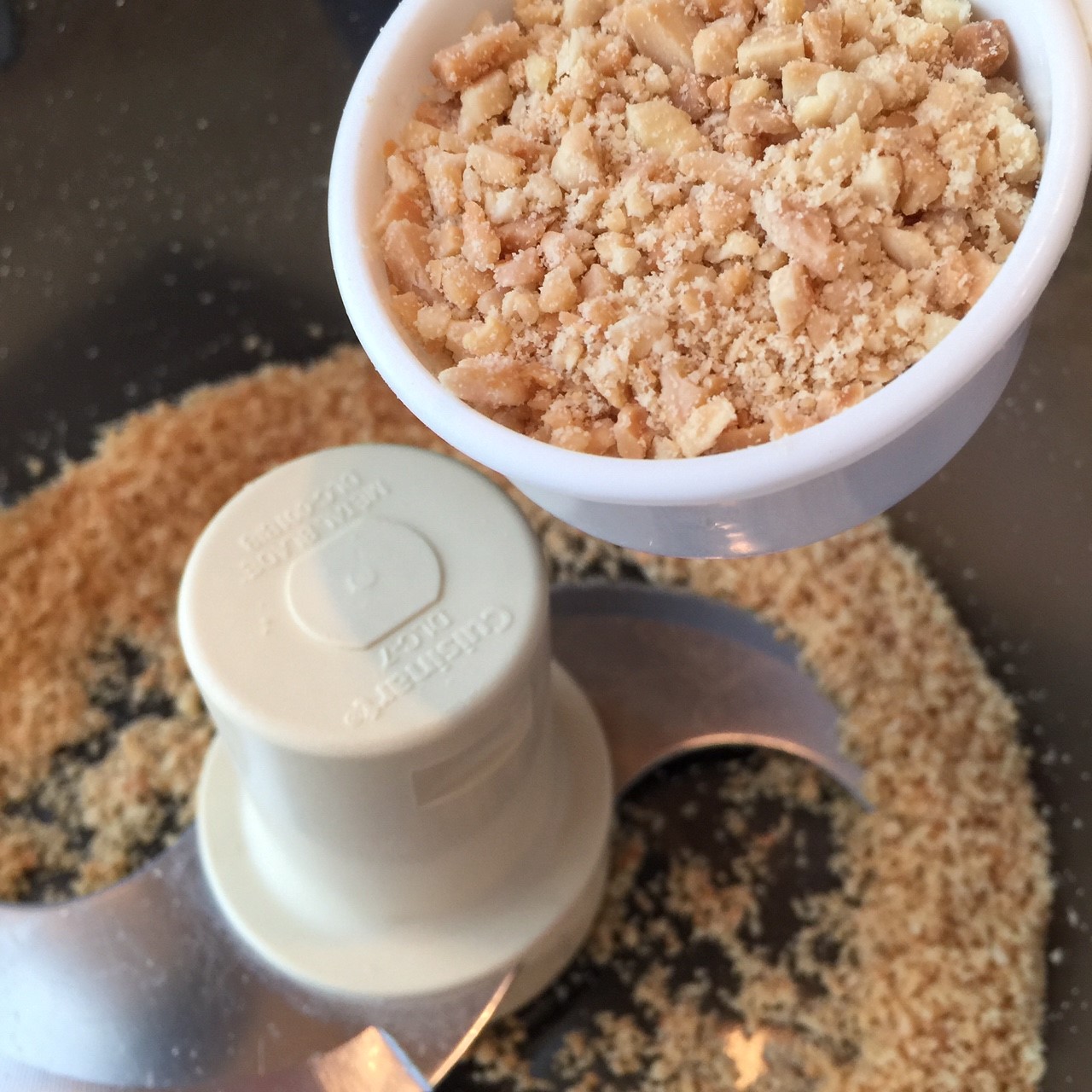
Make the shortbread: Pulse the almonds in the food processor 5-6 times – until they’re coarsely chopped. Remove 30g (1/4 cup) of the pieces and set aside – these will be sprinkled on top of the bars. Pulse remaining almonds to finely chopped.
Cut the butter into at least 12 slices and add to the almonds in the processor, along with the sugar and almond extract. Whirl to blend.
Add the flour to the mixture and pulse until blended, scraping the sides and corners now and then.
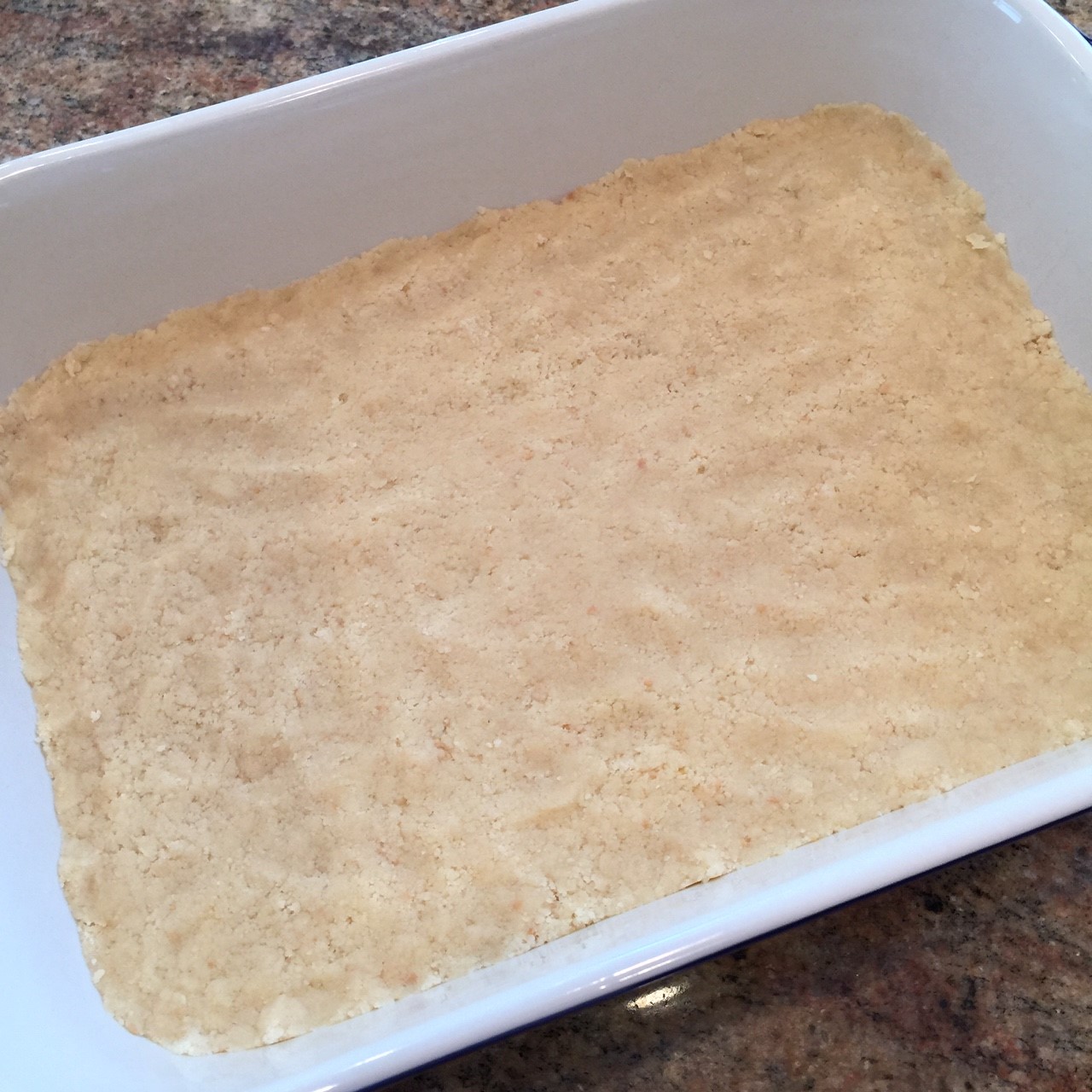
Scatter shortbread dough evenly (do your best) around an approximately 153 square cm (60 square inch) pan- such as a 20cm x 20cm (8″ x 8″). Press down the dough firmly, trying to maintain a level top.
Bake in preheated 325°F (163°C) oven for 25 minutes – until edges are starting to brown. Remove from oven.
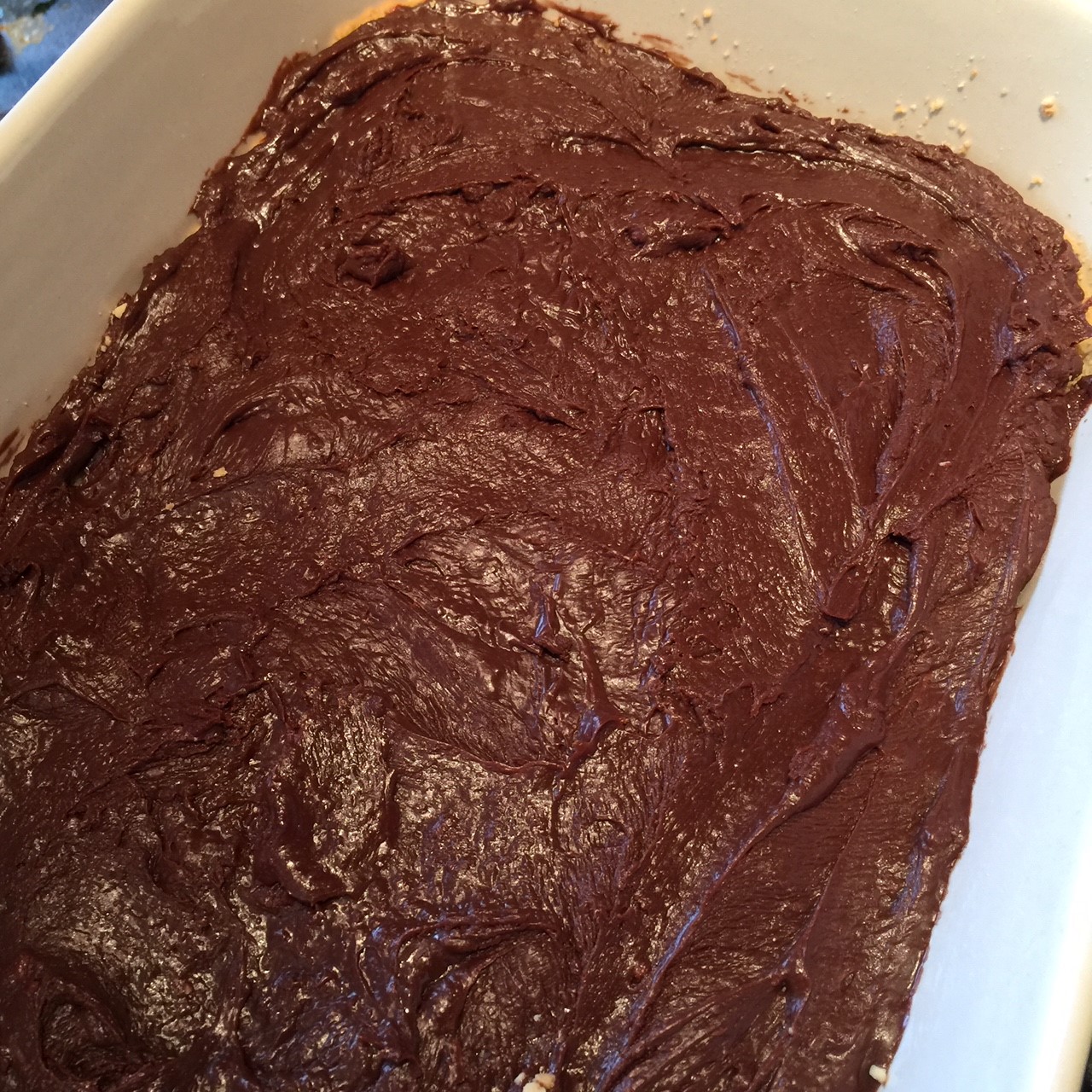
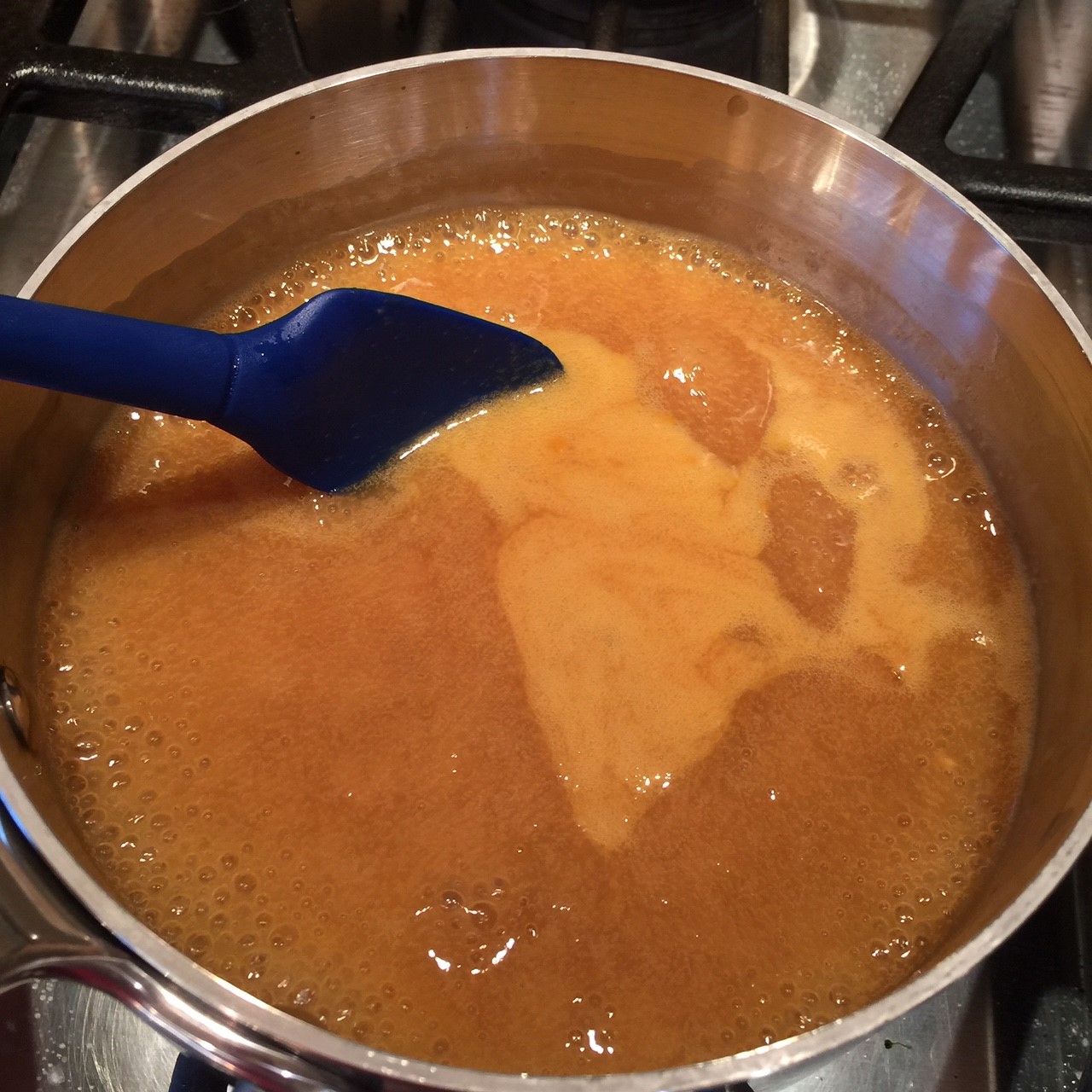
Prepare the topping: In a small saucepan, melt together the chocolate chips and condensed milk over low flame. Once the chips are nearly all melted, remove from heat and stir in the almond extract. Stir off-heat until all chips are completely melted. Pour over hot shortbread, spreading evenly.
Sprinkle on reserved toasted almonds. Lightly press into the fudge so they stick. Let cool, then refrigerate to firm up. They can be stored covered in either the fridge or on the counter.
I love hand-pies, be they piroshkis, beureg, empanadas, potstickers, or pasties. They’re perfect for an on-the-go nosh and picnics, as well as at-home eating.
Yes, they’re a little bit of work since you have to roll out individual dough circles, fill them, and fold them. But prepare them in an assembly-line fashion and/or get a helper or two, and you’ll have them done in no time.
I prefer a hot-water crust for my pasties, but if you have a crust you like better, use that.
You may notice that I don’t refer to my pasties as CORNISH pasties. They take their pasties very seriously in Cornwall and have a list of rules that must be followed in order to use the term, ‘Cornish’. Two of the rules that I will never be able to follow are that they be prepared in Cornwall, and they are made with meat. Oh, well! A rose by any other name would smell as sweet. And my Potato-Mushroom Pasties are delicious!!!
POTATO-MUSHROOM PASTY – makes 6
Filling
140 g (4.75 oz) shiitake mushrooms
190 g (6.5 oz) onions
260 g (10.25 oz) waxy potatoes (such as Yukon gold)
1.25 tsp vegetarian Worchestershire sauce
1 tsp salt
75 g (2.5 oz) sharp Cheddar cheese, grated
Dough – makes 6 discs, 20cm/8in diameter
400 g (14 oz) (3 cups) bread flour
1 tsp salt
173 g (12 T) butter, cold & cut into 12 or more slices
166 ml (2/3 cup + 1 T) very hot water
Egg Wash: beat 1 egg with 1 T water
Make the filling first: Chop the shiitakes and onions into 2.5 cm/1/2″ pieces. Cut the potatoes into .25 cm/1/8 in thick slices, then chop these up into small pieces. Mix the shiitakes, onions, potatoes, Worchestershire sauce, salt, and cheese in a bowl. Set aside.
Preheat oven to 200° C/400° F.
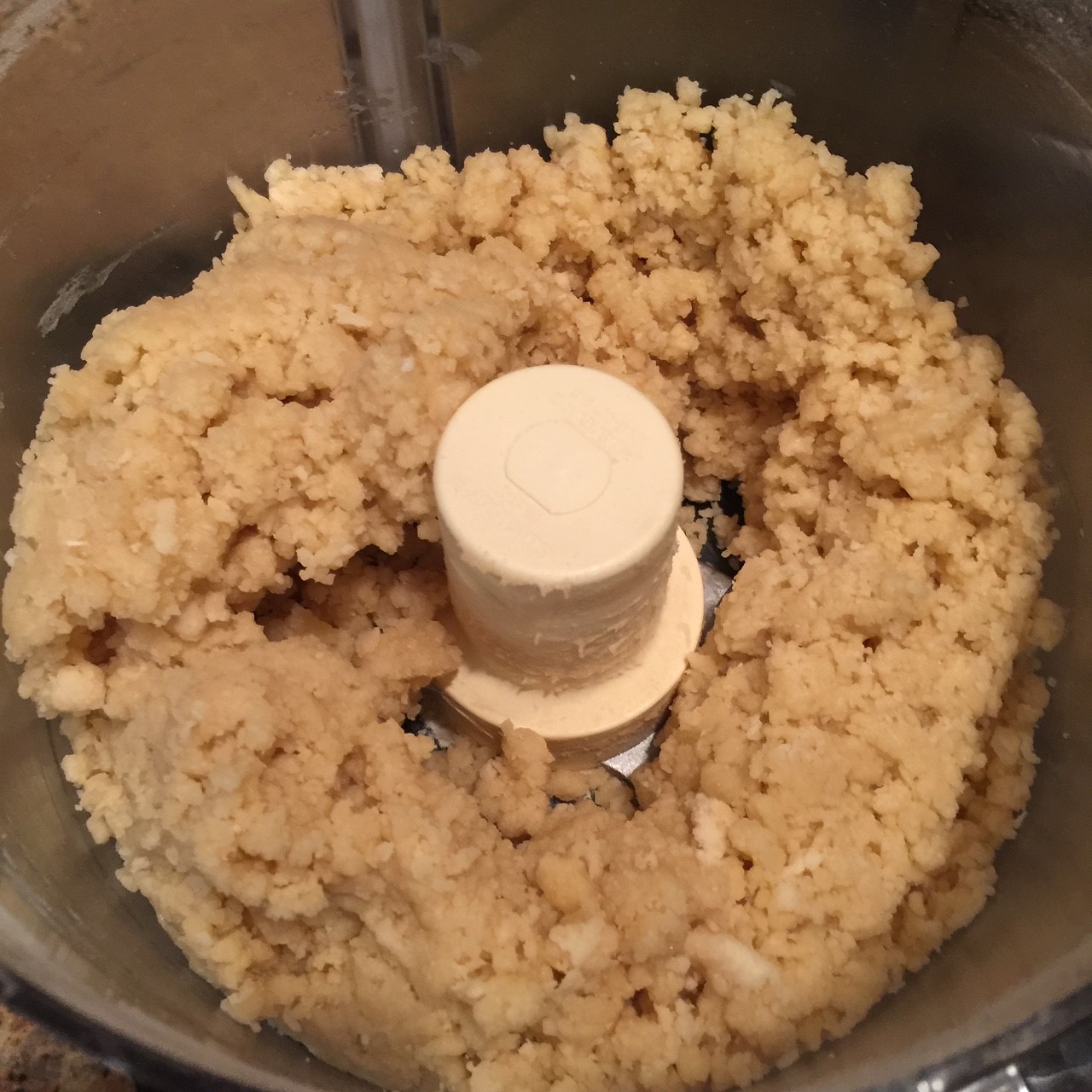
Prepare the hot water crust once the oven is preheating and the filling is mixed: Into your food processor put the flour and salt. Pulse 1 or 2 times. Scatter the butter into the flour and pulse until you don’t see any large blobs of butter – about 8 pulses.
Pour in the hot water all at once. Pulse to incorporate the water. You should be able to form a soft, pliable ball. Add a tsp at a time of water if the dough seems too dry. Don’t worry if it’s too wet – you’ll be adding flour when you roll out the circles.
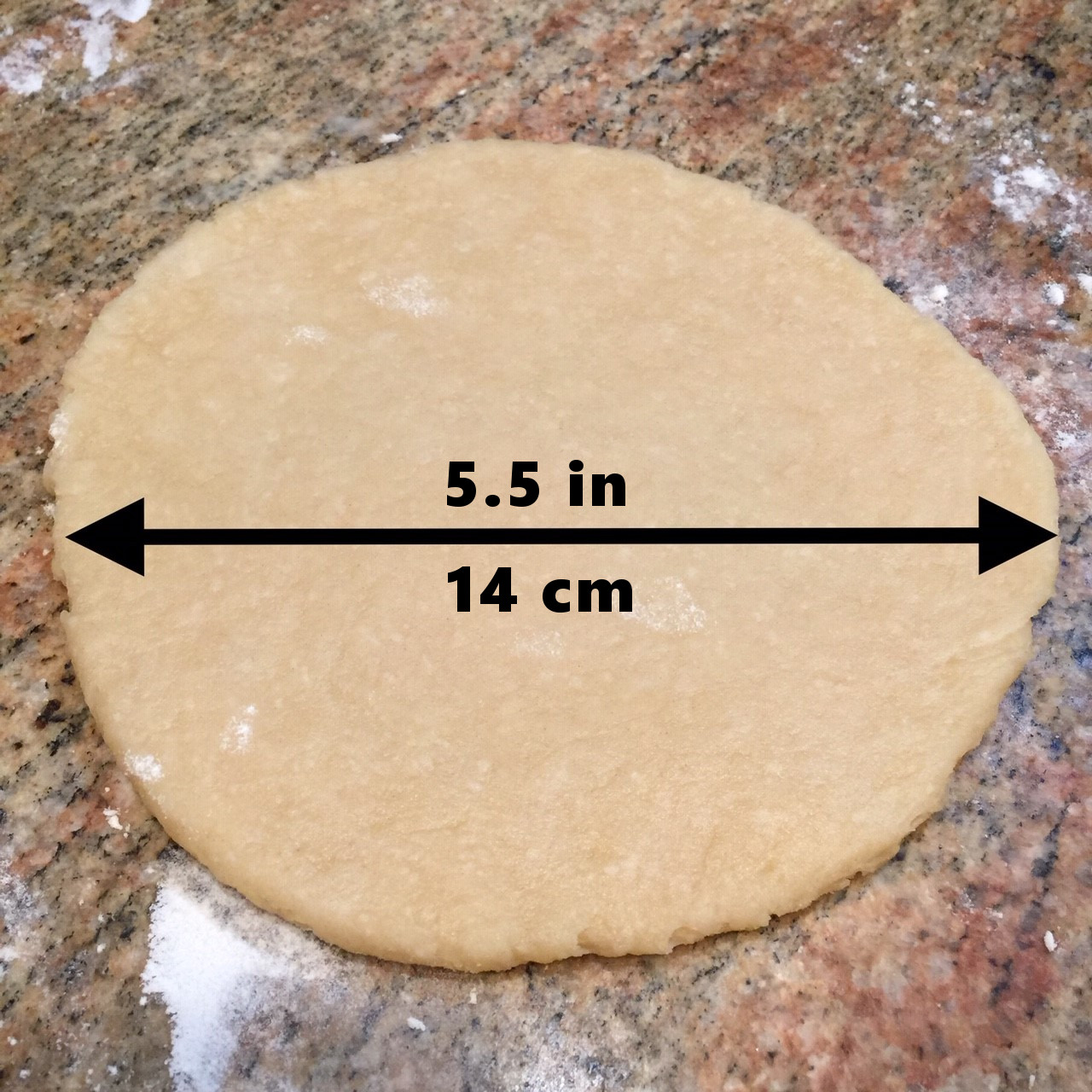
Lightly flour a flat surface and empty dough onto it. Knead the dough 3 or 4 times to bring it together. Cut into 6 equal pieces and roll into balls. Keep them covered until you roll them. One at a time, roll a ball into about a 14 cm/5.5″ circle.
You’re going to roll the dough into a final 20 cm/8″ circle, but rather than placing the rolling pin on the center and rolling outward, place it a little closer to the side it’s going toward and roll. (This keeps the center of the circle from getting too thin, which can allow leakage in the oven.) Try to make them as circular as you can, but don’t stress too much (you’ll be folding up the edges which will hide small imperfections.) You can use a 20cm/8″ template (such as a plate) and cut around it, if you like, but I can’t be bothered.
Keep the dough circles covered after you roll them out to prevent them from drying.
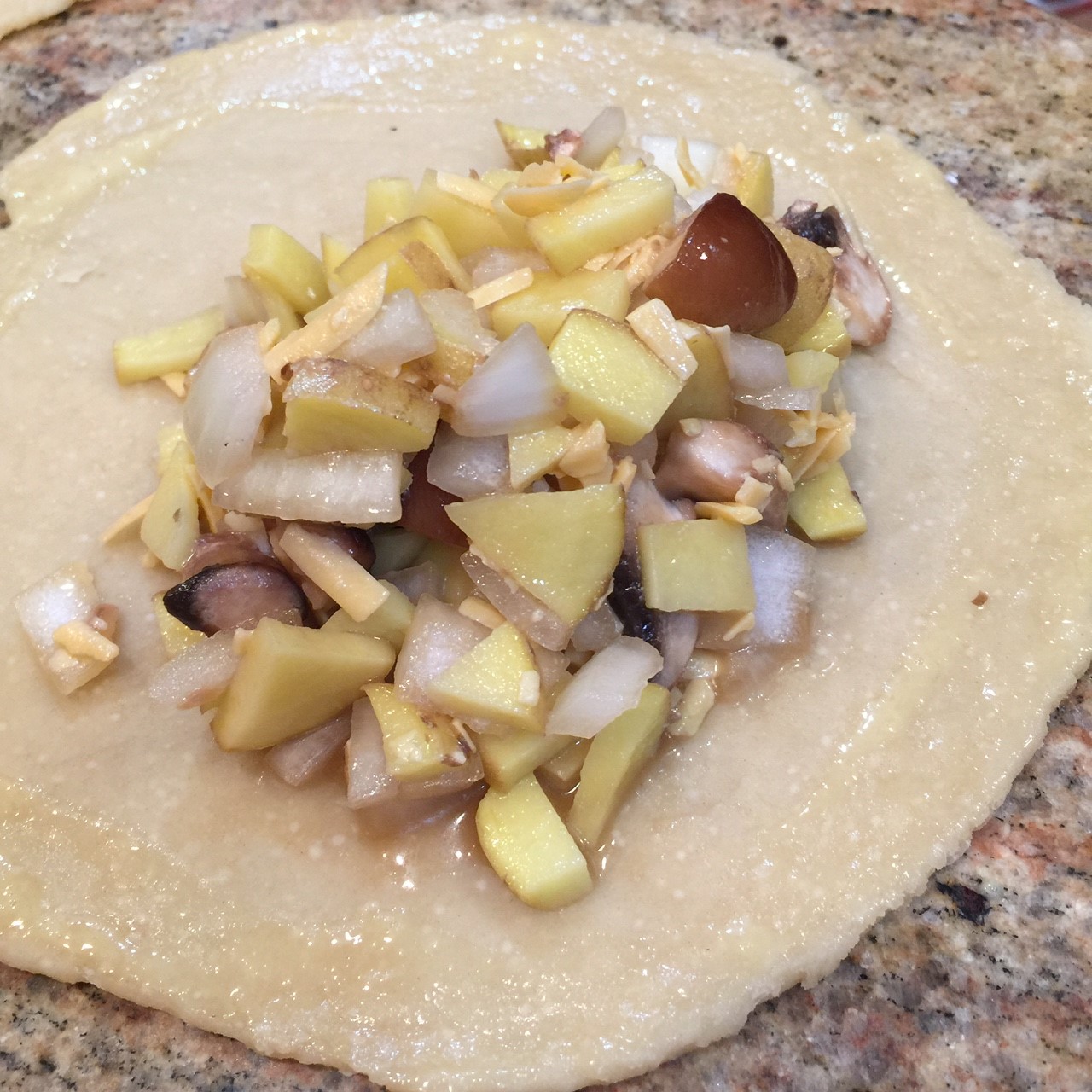
Divide the filling equally between the 6 circles. Place the filling mostly on one side of the circle, leaving a border of 2 cm/.75 in. Cover the dough circles you’re not working with with a tea towel so they don’t dry out. Working with one pasty at a time, dip your finger or a pastry brush in the egg wash and wet the border. (This will act as a glue to seal the sides together.)
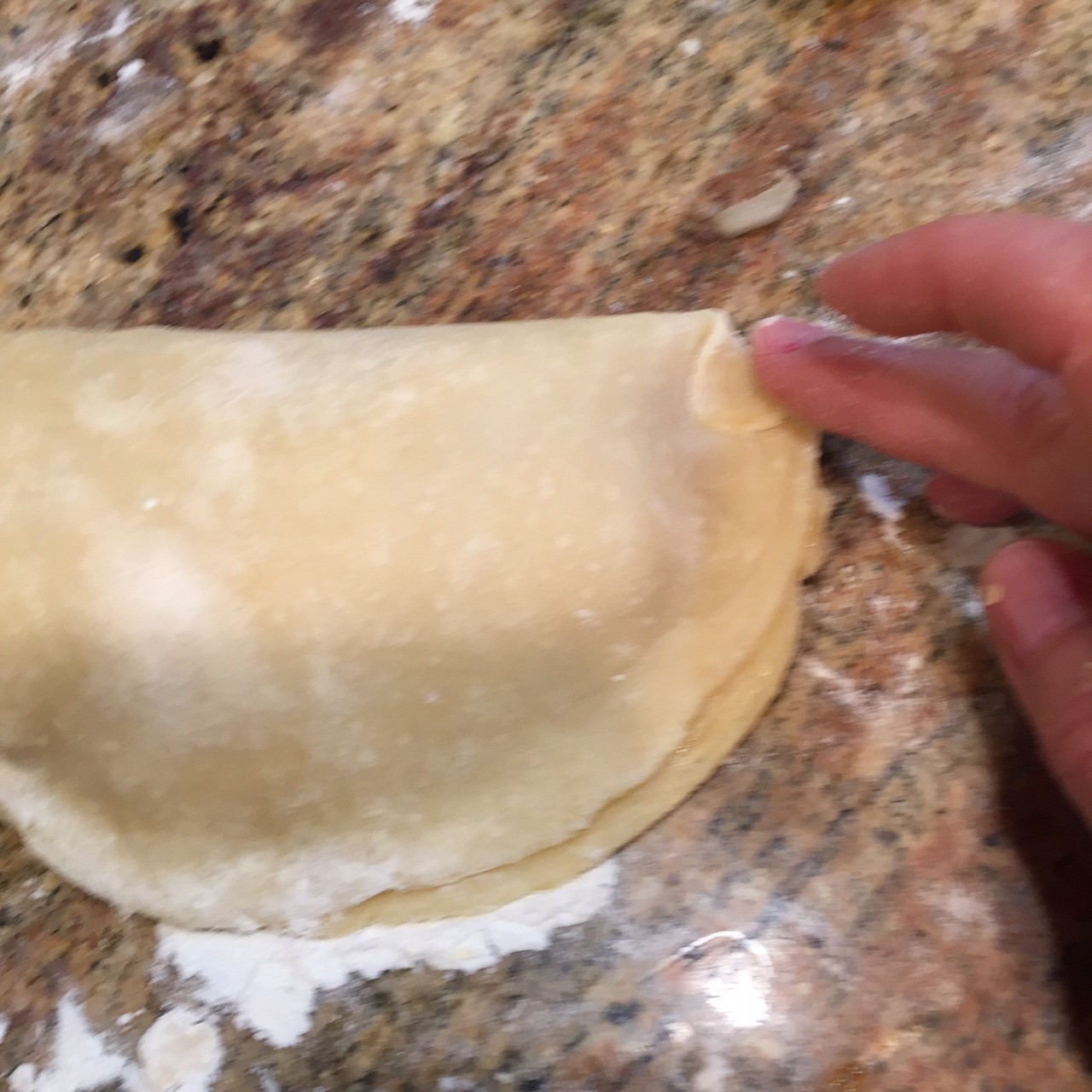
Carefully fold the dough in half, making sure the filling stays 2 cm/.75″ from the edge. Firmly press the border together so it’s completely sealed. Fold both corners in.
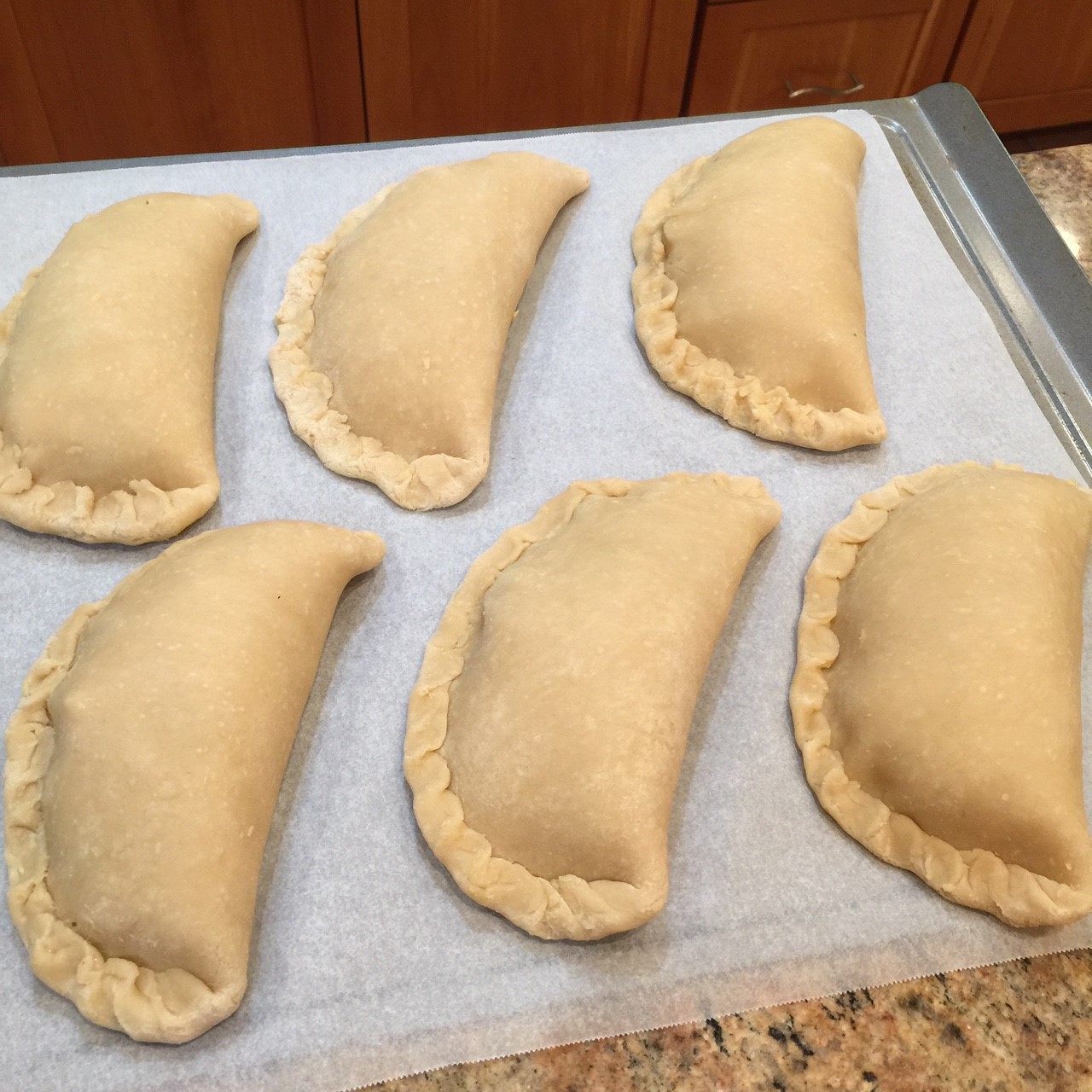
With your non-dominant hand, hold down the folded corner with your index finger. With your dominant hand, grasp the dough next to the fold and fold that in, pressing down. Continue along the entire border. The idea is to form a ropelike crimp. I’ve never managed to get that look, but I’m happy with my version. Find your own way, if you like. The point is to seal in the filling.
Lay the folded and crimped pasties on a parchment lined or greased baking sheet.
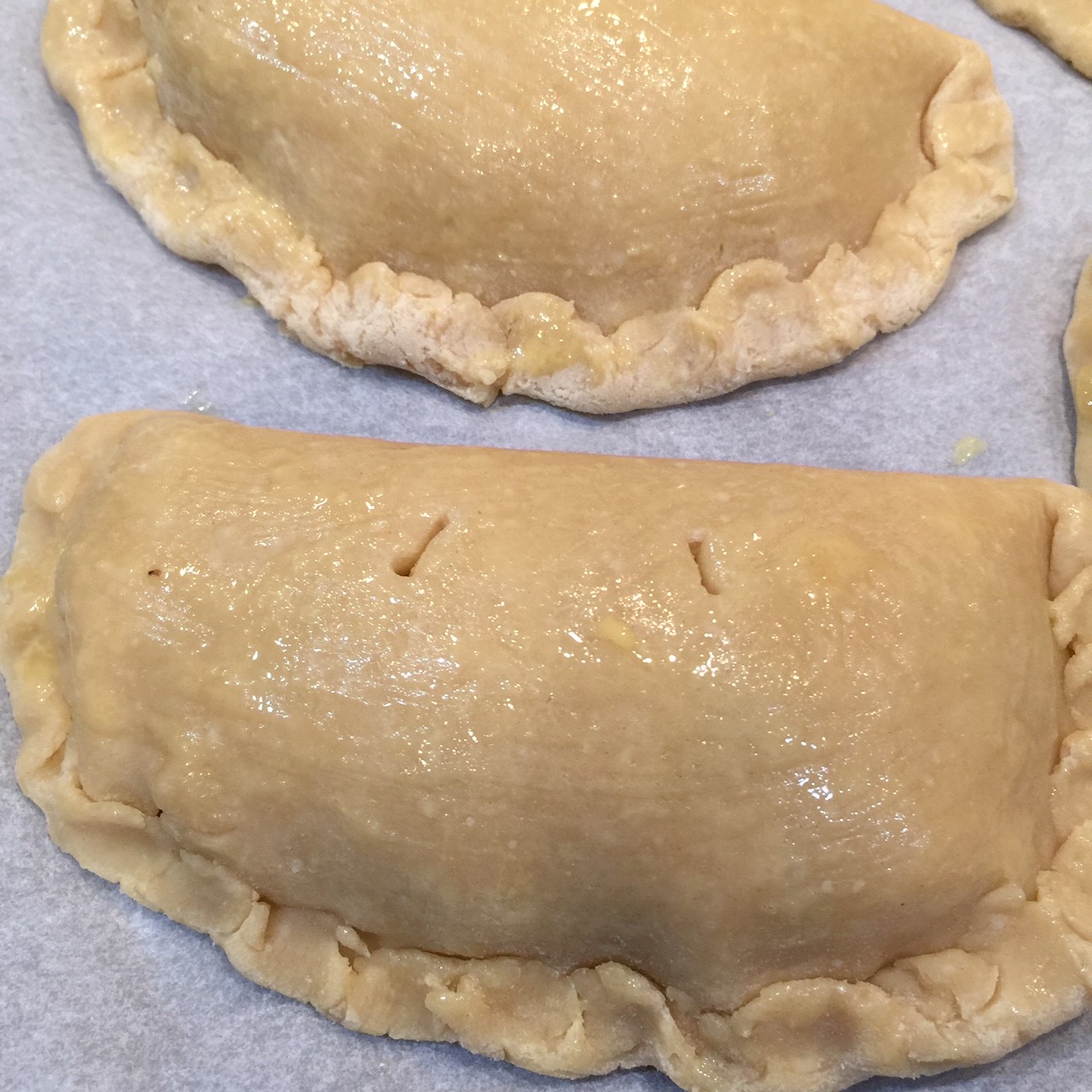
Once all the pasties are formed, paint the exposed surfaces generously with the egg wash.
Using a knife, make 2 slits in the top near the fold to allow steam to escape.
Place in the preheated 200° C/400° F oven on the middle rack. Bake until well-browned – 30-35 minutes. Remove to a rack to cool slightly before eating.
My friend, Lynne, was telling me about the food served at a recent gathering. Somewhere in the middle of her list she mentioned ‘warm bok choy salad’. I, actually, didn’t hear anything else after that – my mind became focused on this intriguing-sounding dish. Warm salad? Bok choy? Hmmm.
Like a detective interrogating a prime suspect, I grilled her for details. What was in it? Anything else? How did she make it? My friend was becoming increasingly nervous – possibly fearing I would soon be reading her Miranda Rights. So, I let it go… and googled it.
As one would expect, there were multiple Warm Bok Choy Salad recipes. I read several, and came up with my own version. Feel free to change my recipe to suit yourself.
WARM BOK CHOY SALAD – serves 2
12 oz / 340g bok choy
3 tsp rice wine vinegar
3 tsp soy sauce
1 tsp honey
3/4 tsp sesame oil
1/4 cup carrots, shredded
1/4 cup dried cranberries
1.5 oz / 43g Feta cheese, crumbled
3 oz / 85g Mandarin oranges
1 tsp sesame seeds
Slice off and discard bottom of bok choy. Wash stems and chop into bite-sized pieces.
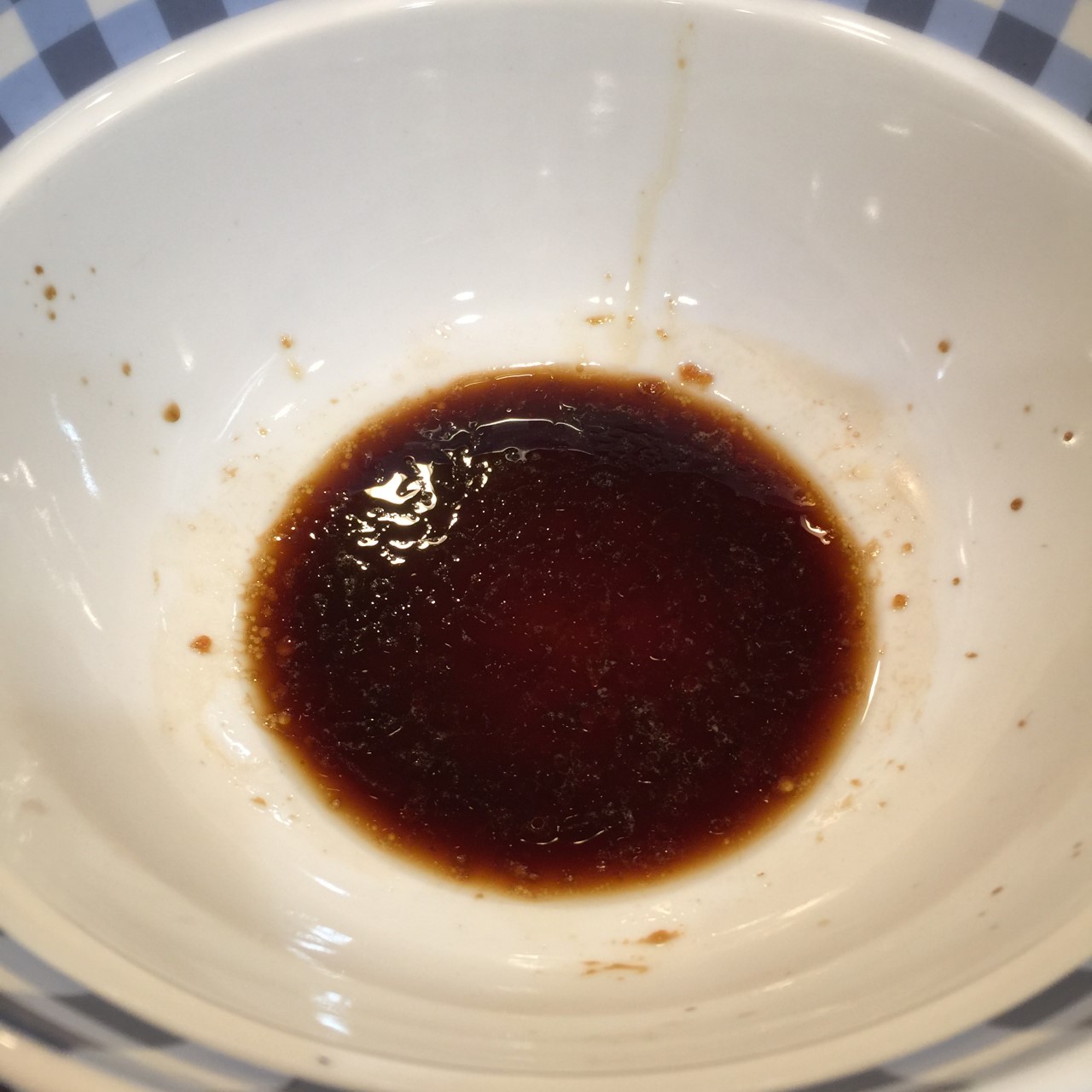
Heat together the vinegar, soy sauce, sesame oil, and honey. (You can use the serving bowl, if it’s microwave-proof.)
Place bok choy in a steamer basket but don’t put basket in the pan yet. Add about 1/2″ (2 cm) to the pan and bring to boil. Then place the steamer basket in pan, cover with a lid, and steam for about 1-2 minutes. (If you place the basket in before the water is boiling, you run the risk of over-steaming.)
Immediately remove basket from pan and empty bok choy into bowl with dressing. Stir in remaining ingredients and serve.
Tofu Noodle Satay is one of those fast and easy meals that even picky kids like. Use this recipe as a base, but go ahead and substitute as you prefer. Add a red pepper or asparagus, make it chunky peanut butter – the sky’s the limit. You can even sneak in some finely chopped spinach! (The kids will never know.)
Queen of Freeze Note: The satay sauce freezes well so, if you like it, next time double or more the recipe. Then, go ahead and freeze the extra in portion sized containers for future use.
1/3 cup (40 g) roasted peanuts (I prefer spicy lime flavored)
Sandwich the tofu between between two plates to squeeze out excess water. To speed up the process, set something weighty (such as a can) on top to add pressure. Pour off drained water from time to time.
Into a blender, combine the peanut butter, water, soy sauce, lime juice, garlic, ginger, sesame oil, and red pepper flakes. Whirl on low until blended. Pour into a small saucepan and heat over medium/low, just to boil. Turn off heat, and let sauce set while preparing the rest of the recipe.
Turn on oven to 200° F (93° C) – so the cooked tofu will be able to stay warm until ready to use.
Steam the broccoli pieces for 3 minutes only. They will go from a dark green to a bright green. Immediately remove the steamer basket from the pot to stop the cooking. (You don’t want mushy broccoli.)
Bring about 2 quarts of water to cook the pasta to a full boil in a Dutch oven while you prepare the tofu.
Slice the drained tofu into 5/8″ (1.5 cm) slabs. Cut these into smaller pieces – I prefer 1.5″ x 1.5″ (3.5 cm x 3.5cm).
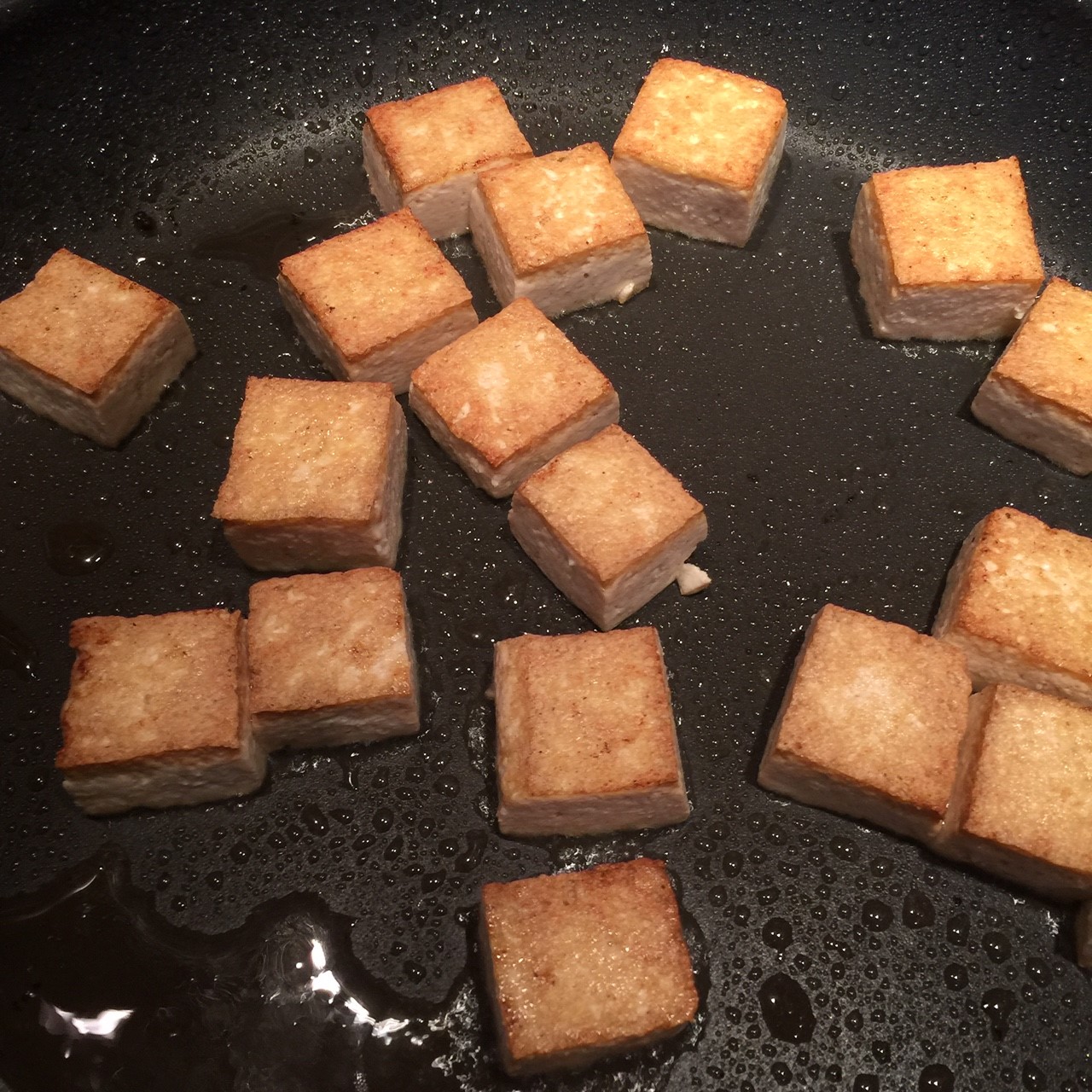
Heat vegetable oil in a nonstick skillet over medium/high heat. When oil is shimmering, add as many tofu pieces as will fit. If you have a splatter guard, use it! As soon as the bottoms are browned, flip and cook the other side. Don’t overcook or the tofu will become rubbery.
Place the cooked tofu pieces on a paper towel lined baking sheet and put in the 200° F (93° C) oven to keep warm.
When the water in the Dutch oven is at a full boil, add in the spaghetti noodles and cook until done. Drain in a sieve, but don’t rinse or shake.
Into to now empty Dutch oven, pour in the satay sauce and heat over low. When warmed, add in the broccoli, peanuts, and pasta. Stir to mix. Then add in the tofu and gently combine (the tofu will break apart if you’re over-zealous. Serve.
Sometimes all it takes for a recipe to go from ‘meh’ to marvelous is one thing. This is usually an ingredient. But, every now and then, it’s a technique. With my Orange Tofu Balls: it was both.
In developing a new recipe, I generally start with a recipe that catches my eye. I make the recipe as written, then tweak it to suit my taste. In this case, I started with Moosewood Cookbook’s Buddha’s Jewels – Asian style tofu balls.
The recipe instructed to drain the tofu by sandwiching it between 2 plates and pressing out as much liquid as would come. After chopping the drained tofu and mixing it with the remaining ingredients, I formed golf-ball sized balls and baked. However, the uncooked balls were never really firm and had to be dealt with gingerly or they’d fall apart. During the baking process they sank into a mound rather than remain in a tight ball.
It finally came to my attention that there was too much moisture in the tofu. The plate pressing was not enough – I had to squeeze chopped tofu in a tea towel to properly extract the water. Then, I added some flour for good measure. Success!
ORANGE TOFU BALLS – makes about 15
Balls:
397 g (14 oz) firm or soft tofu
30g (2 T) peanut butter (I use creamy)
28g (2 T) soy sauce
2 scallions, white and green part, sliced thin
60 g (1/2 cup) red pepper, chopped fine
111 g (4 oz) mushrooms (I’ve used shiitakes & white common – both worked)
61 g (1/2 cup) water chestnuts, chopped fine
33 g (1/4 cup) all-purpose flour
Orange Sauce
8g / 1 T cornstarch
12g / 1 T water
172g (3/4 cup) orange juice
32g (2 T) pure maple syrup
46g (1/4 cup) rice wine vinegar
28g (2 T) soy sauce
1 garlic, pressed or minced
Preheat oven to 375° Fahrenheit (190° Celsius).
The first thing to do is extract as much water as you can from the tofu. You can either begin by sandwiching the tofu block between two plates to get it started (you can use this time to chop the remaining ingredients), or go straight to squeezing it in a tea towel. Either way works.
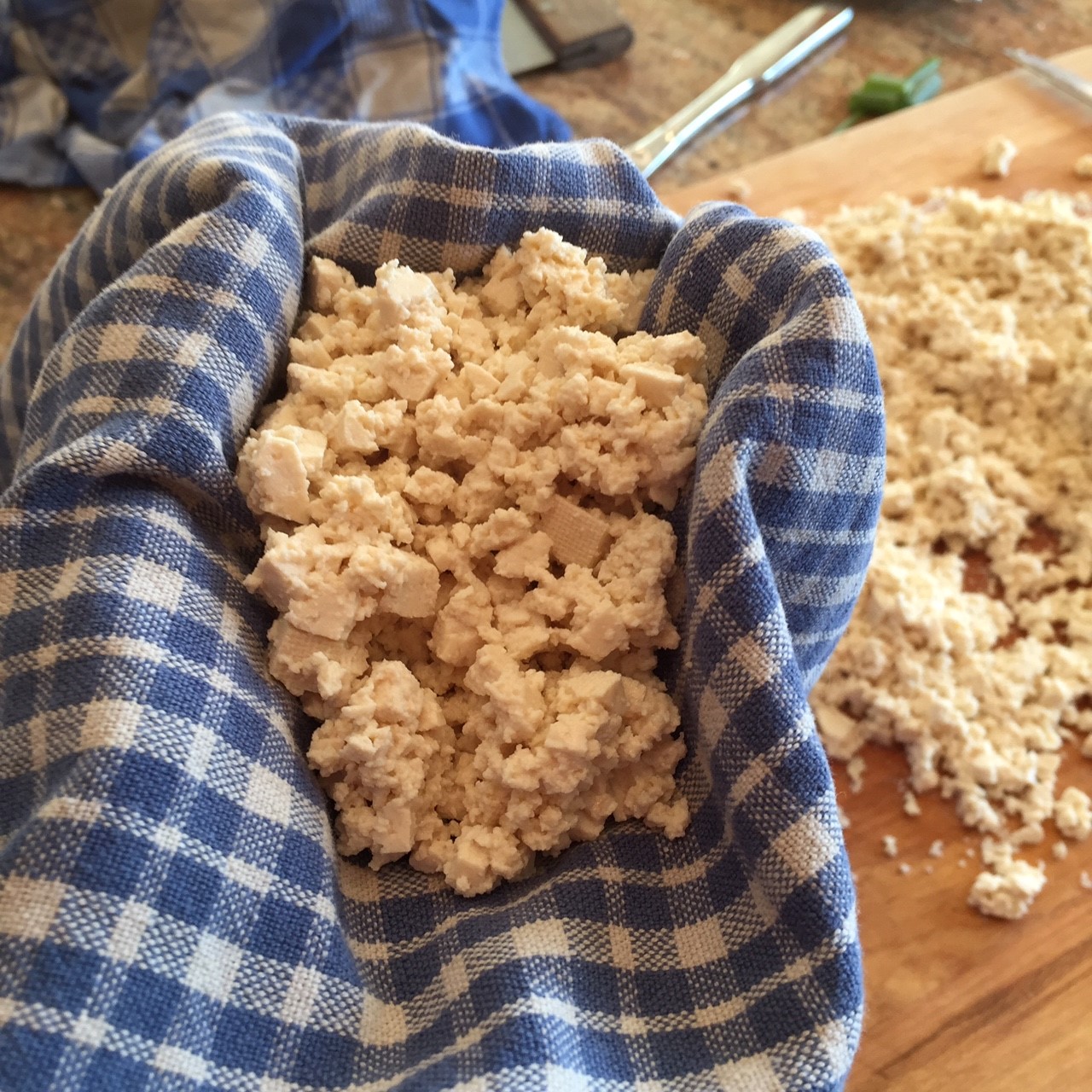
Chop the tofu block (drained or not) into very small pieces. Spoon a fistful onto a clean tea towel.
Wrap the towel around the tofu, forming a sack, and twist to extract as much liquid as you can. (Do this in small batches – if there’s too much, it’s harder to twist out the water.) Empty tofu onto a bread board. Continue until all tofu has been squeezed.
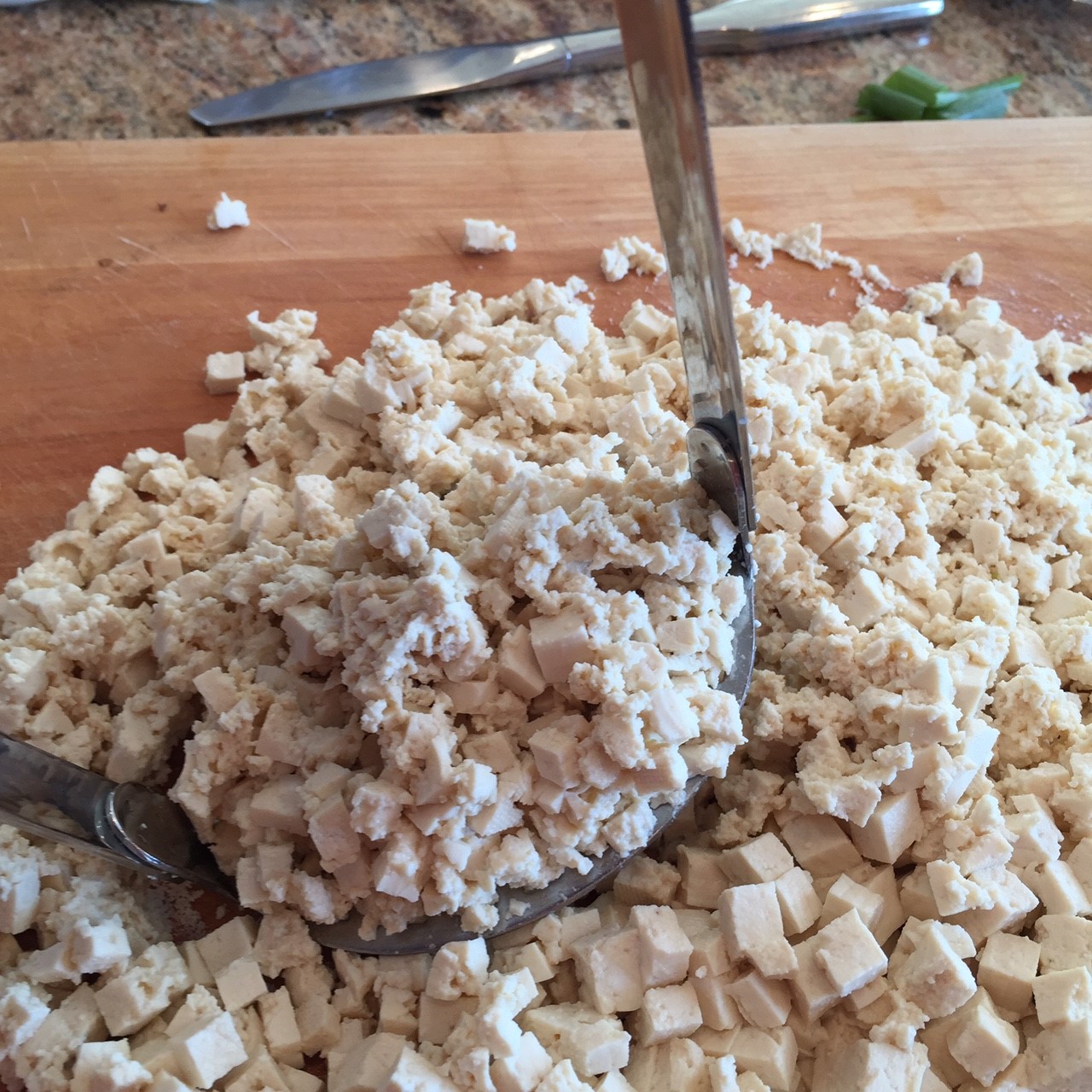
Use a potato masher to smash the drained tofu.
In an empty mixing bowl, add the peanut butter, soy sauce, scallions, red pepper, water chestnuts, mushrooms, and flour – blend well.
Add in the mashed tofu and blend well.
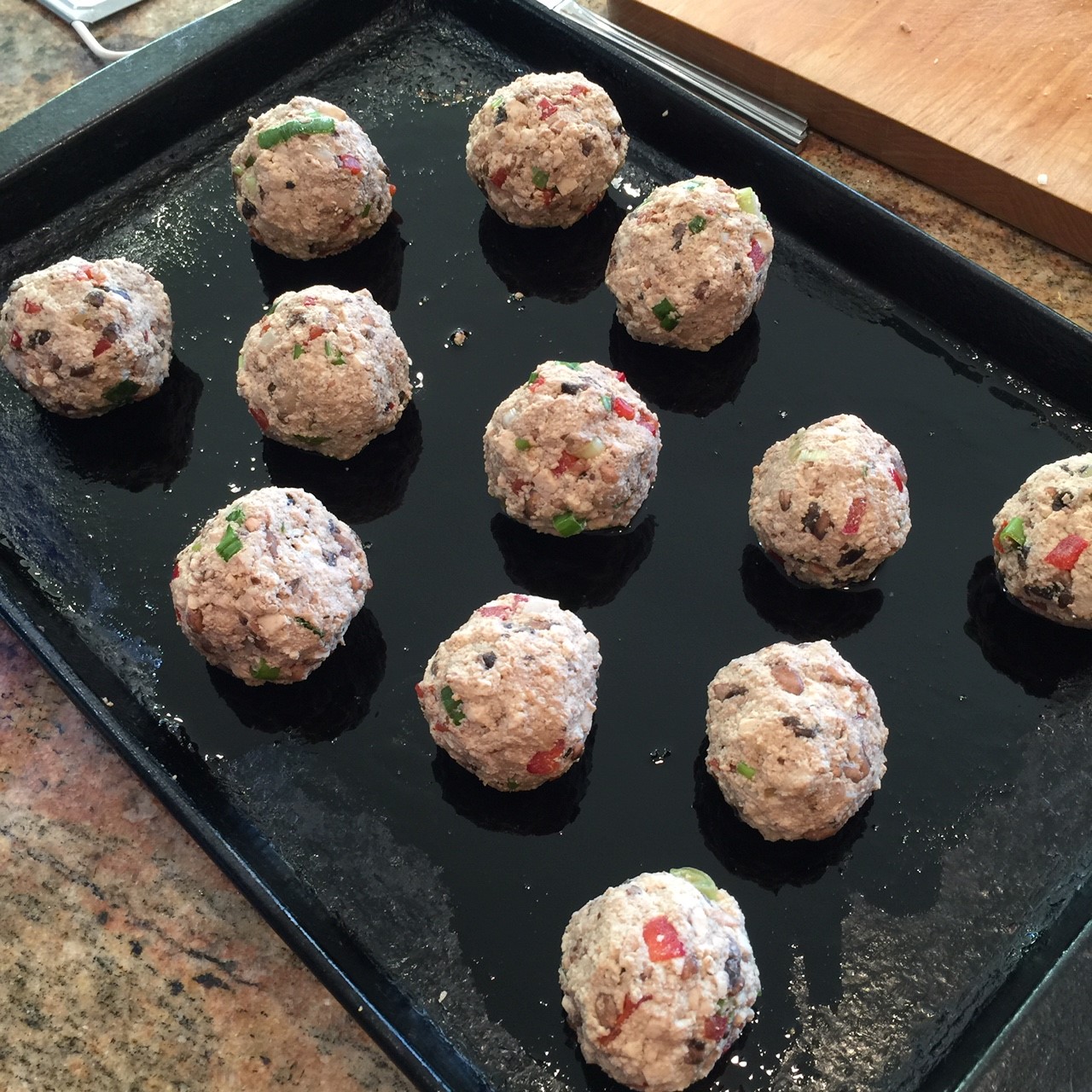
Oil a rimmed cookie sheet with a very light coating of oil. Form about 14-15 compact balls with the tofu mixture and place on sheet spaced well apart to get good heat circulation. (A 3-T scoop, packed tightly, forms just the right size.)
Bake in preheated 375° F (190° C) oven for 45 minutes.
As the tofu balls are baking, prepare the orange sauce: In a small bowl combine the 1 T cornstarch with 1 T water to form a slurry. Set aside.
In a small saucepan, combine the orange juice, maple syrup, rice wine vinegar, 2 T soy sauce, and garlic. Bring to a boil.
When the liquid begins to boil, drizzle in the slurry – stirring as you pour. Continue to stir until the sauce thickens. Remove from heat.
When the Tofu Balls are darkened, serve immediately with the warmed orange sauce. I like to serve it over rice.
Cheese Crusted Spinach Pie is a tasty quiche-like pie that incorporates cheese into the crust rather than the filling. It’s quick and easy to put together (unless you’re like me and insist on washing EVERY spinach leaf thoroughly), but do allow an hour from the time it goes into the oven to when it can be served.
CHEESE CRUSTED SPINACH PIE
Crust
173 g (1.5 cups; 6 oz) sharp cheddar cheese, grated
97 g (3/4 cup; 3.5 oz) all-purpose flour
1/2 tsp salt
1/4 tsp dry mustard
99 g (7 T; 3.5 oz) butter, melted
Filling
240g (1 cup milk) (I use 1% or 2%)
14 g (1 T; 1/2 oz) butter
66 g (1/2 cup; 2.25 oz) onion, chopped
1/2 tsp nutmeg
1 tsp salt
227 g (8 oz) fresh spinach, stems discarded, coarsely chopped
4 eggs, beaten
12 cherry tomatoes, sliced in half
Preheat the oven to 400° Fahrenheit (200° Celsius).
In a mixing bowl, combine cheese, flour, 1/2 tsp salt, and dry mustard.
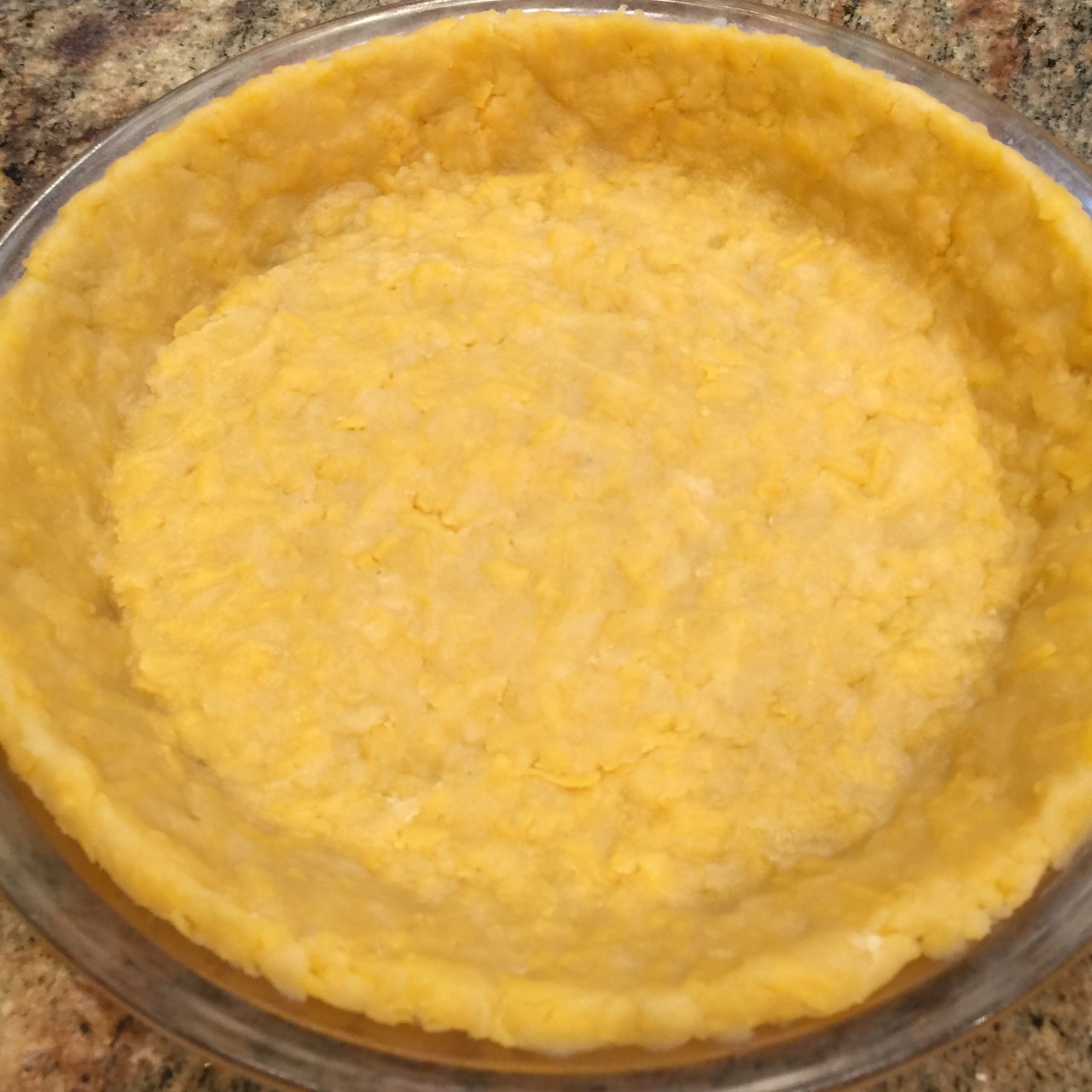
Using a fork, mix in the 99 g (7 T) melted butter – dough will be clumpy. Pour into a 9″ pie plate, spreading evenly.
Using your fingers, press dough firmly into the bottom and sides, pushing tightly into the corners (this will allow more surface area for the filling).
Into a large pot (when you add the spinach, you’ll understand why you need a large pot), add the milk, 14g (1 T) butter, onion, nutmeg, and 1 tsp salt. Bring mixture to a simmer. Turn off heat but leave pot on burner to keep the liquid warm as the spinach wilts.
Add in spinach, occasionally stirring until spinach wilts.
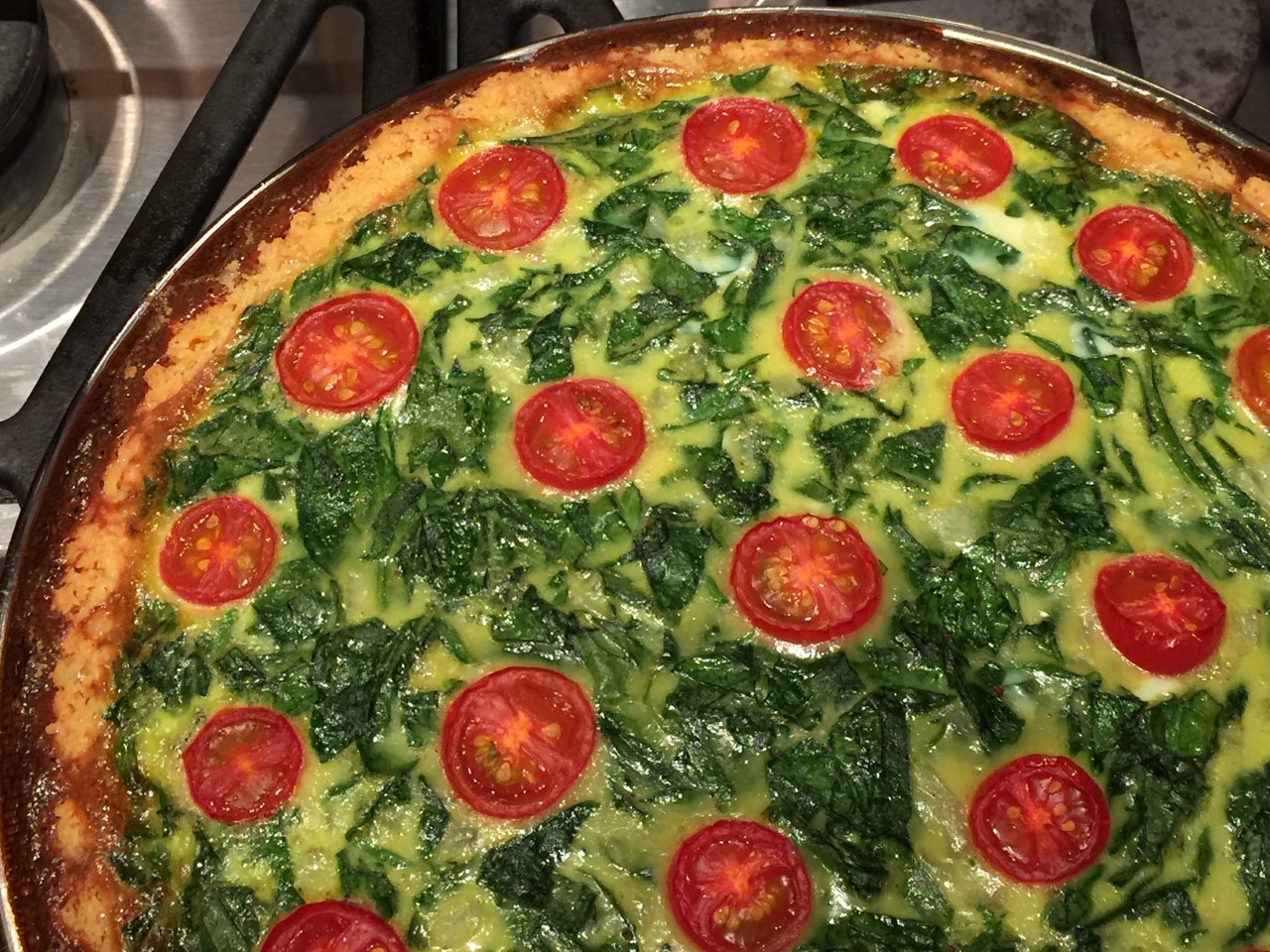
Place the pie plate on a rimmed cookie sheet to catch any spills. Mix beaten eggs into the spinach mixture, then pour into the crust to just below the brim. Arrange cherry tomatoes around top, cut side up.
CAREFULLY place in preheated oven – trying your best not to spill. (You can also place the unfilled crust on a cookie in the oven and then pour in the filling, if you prefer.)
Bake pie at 400° F (200° C) for 20 minutes – SET TIMER! Then decrease oven temperature to 350° F (175° C) and continue cooking pie until filling is set – about 15-20 minutes. (This is in bold to remind you!) Remove from oven and let gel for, at least, 15 minutes before serving.
a crisp crust (but not rock hard) that allows the cookie to be safely held
the cookie should be 1/3 crust and 2/3 filling
the filling should be firm enough that it doesn’t ooze, but not Jello-like
the filling should be tart
no stove-top cooking of the filling – oven bake only
whole eggs only rather than yolks, if possible
Is that too much to ask? It took MANY attempts but, as it turns out – no, it’s not.
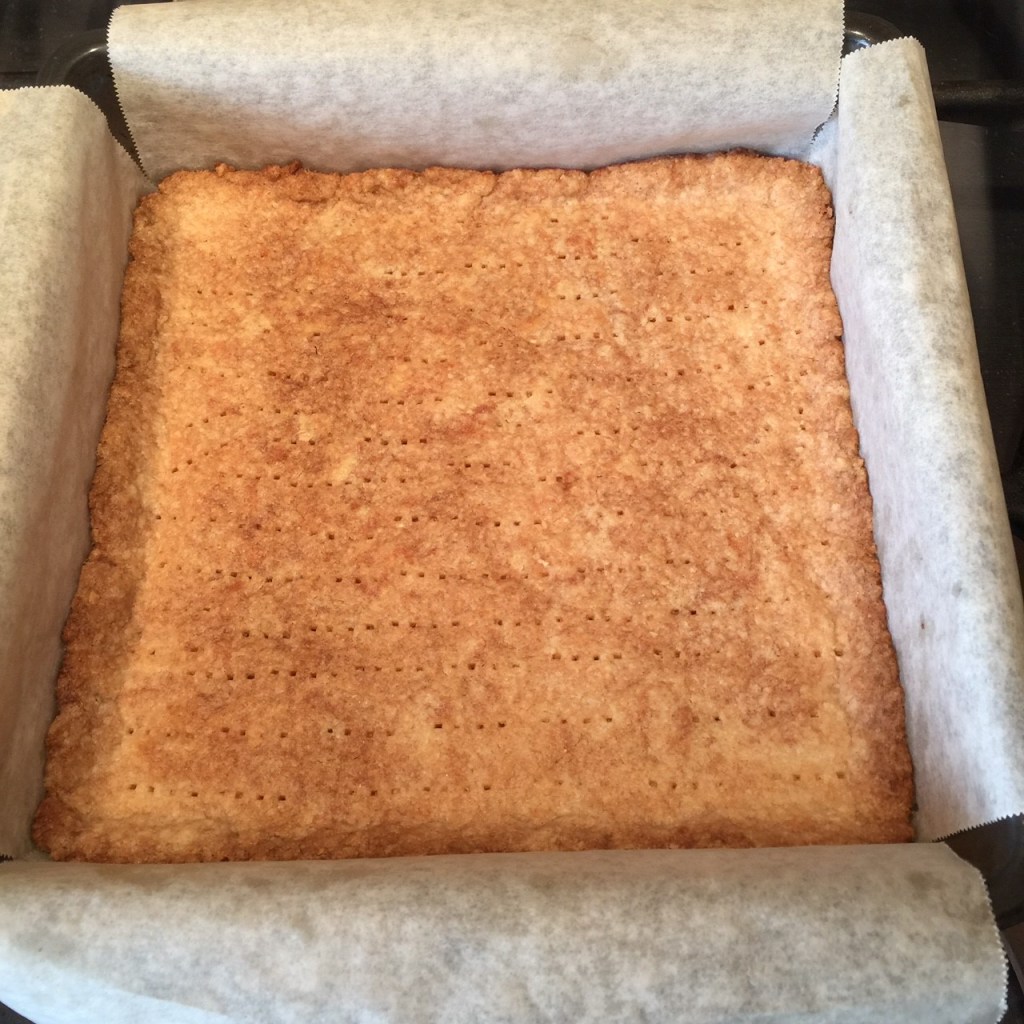
As far as the crust goes, the keys were to use granulated sugar (rather than the often used confectioner’s sugar), and melted butter (rather than soft). Also, freezing the patted out dough for 5-10 minutes, followed by docking it (piercing it with a fork) before par-baking, kept the crust flat.
For the filling, remember – tartness comes from the lemon zest. Adding extra lemon juice only dilutes the curd. Pack the zest when measuring – don’t worry about the zest marring the creaminess, you’ll strain it out before baking. When I got down to the best number of eggs, I could either go with 2 whole eggs plus 2 yolks, or 3 whole eggs. Because the fillings were equal in consistency and flavor (although the ones with yolks were yellower), I went with 3 whole eggs since it was easier.
I started my Lemon Bars journey using a glass 8″ x 8″ pan. In my research, someone wrote metal pans lead to a crispier crust. I happened to have a metal 8″ x 8″, so I switched over. Of course, there were other variables I was doing to the dough, so I’m not sure how important the metal vs glass is. Use what you’ve got before buying something new.
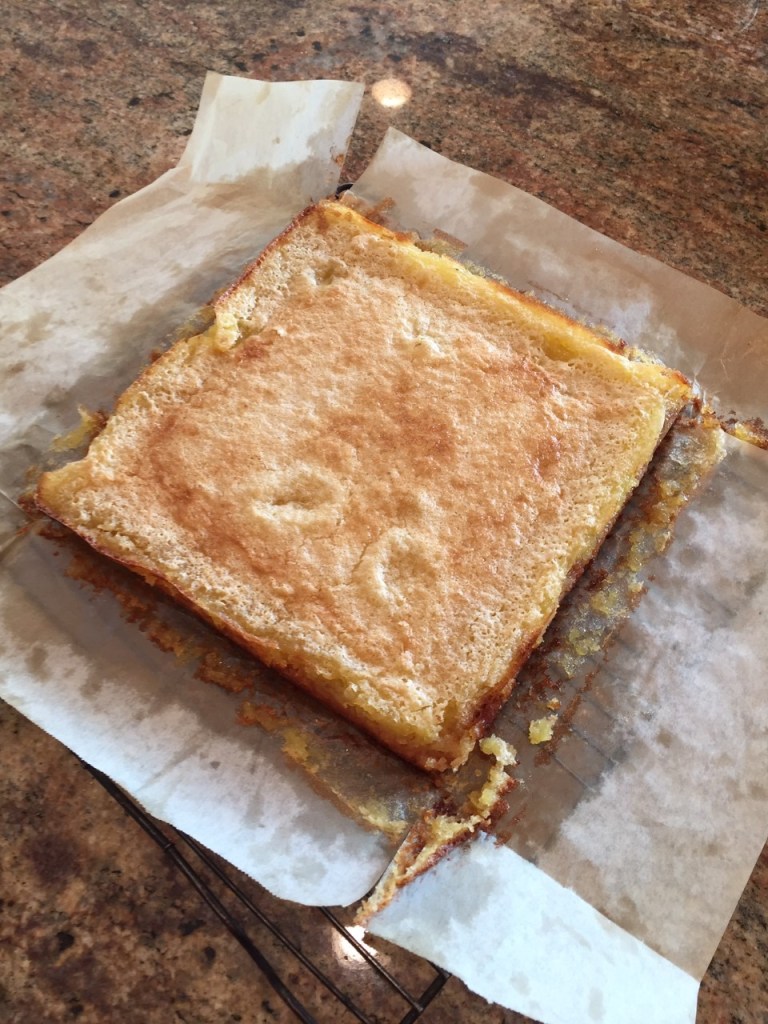
The final piece of the Lemon Bar puzzle was removing them from the pan. I had a heck of a time. I watched tons of videos and they always seemed to just pop out – Ina Garten didn’t even use parchment! – so it may just be me. My problem may have been that I didn’t grease the pan before placing the parchment slings, nor did I grease the parchment itself. When I did grease the pan and the parchment, I was able to pry them out.
I, also, concocted a method of using one large piece of parchment to limit leakage (and using slightly less parchment!). I’ve fine-tuned my folding method since I did my last bake. Pictures and instructions of my latest fold method are at the end of this post, following the recipe. If you have a better method, by all means, use that.
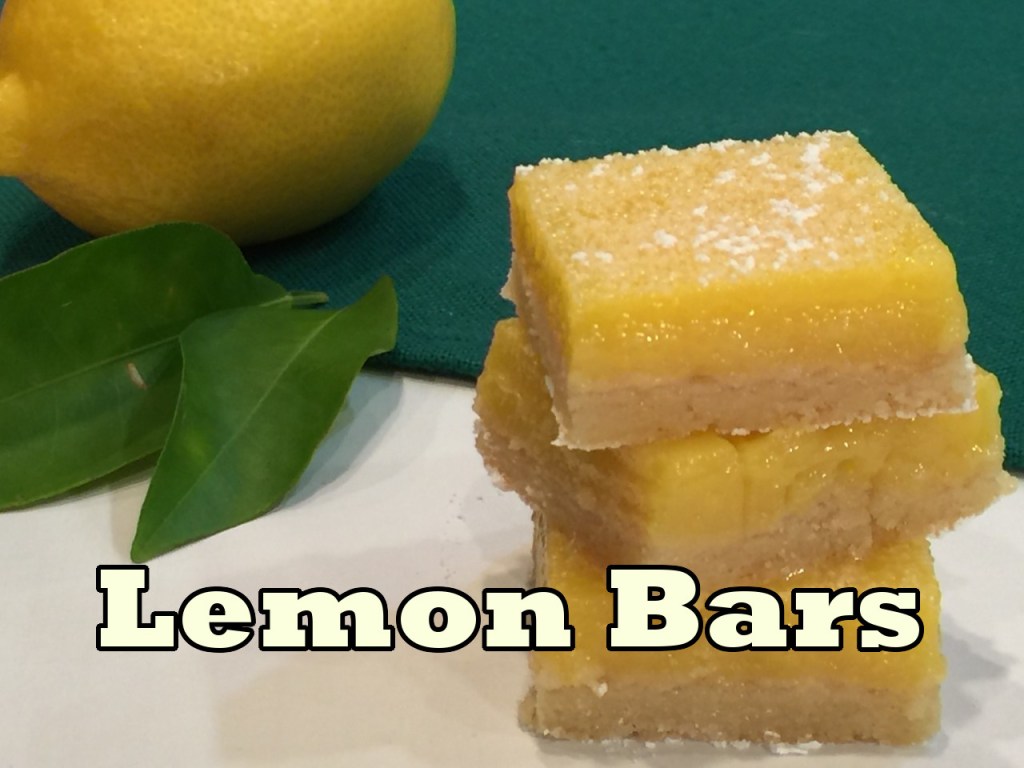
LEMON BARS
Note: I put measurements in grams, cups, and ounces – use what you like.
Crust Ingredients:
115 g (1 cup / 4 oz) all-purpose flour
30g (3 T / 1 oz) granulated sugar
1/8 tsp salt
85 g (6 T / 3 oz) butter, melted
Filling Ingredients:
287 g (1½ cups / 10 oz) granulated sugar
19 g (3 T / ½ oz) all-purpose flour
1/4 tsp salt
1½ T lemon zest – packed (don’t be stingy)
4½ T lemon juice (bottled or fresh)
3 eggs, beaten in a small bowl
1/4 tsp baking powder
confectioner’s sugar for sprinkling
Instructions:
Preheat oven to 350º Fahrenheit / 177º Celsius
Grease an 8″ x 8″ pan (I prefer metal). Line pan with parchment and grease the parchment. You can use the folded 1-sheet insert method (instructions below after the recipe), the 2-sheet sling method in which you have a parchment strip going north-south, and the other going east-west, or any other method you choose.
Start by combining the filling in order to draw out the lemon flavor from the zest: In a bowl, stir together the 287g sugar, 19g flour, 1/4 tsp salt, lemon zest, lemon juice, and beaten eggs. Set aside while you make the crust. The baking powder will be added just before pouring into the crust.
To make the crust, stir together the 115g flour, 30g (3 T) sugar, and 1/8 tsp salt, then pour in the melted butter. Using a fork, stir just until all the flour is incorporated. Sprinkle small clumps of dough evenly over bottom of prepared pan, then press dough to evenly cover bottom. Smooth it as best you can to lessen finger indentations. Freeze 5-10 minutes to firm up.
When oven is heated to 350 F/ 177 C, remove crust from the freezer and liberally dock the crust (pierce it with a fork) to prevent it from rising.
Bake until well-browned – about 19-22 minutes (it needs 21 minutes in my oven). Remove from oven.
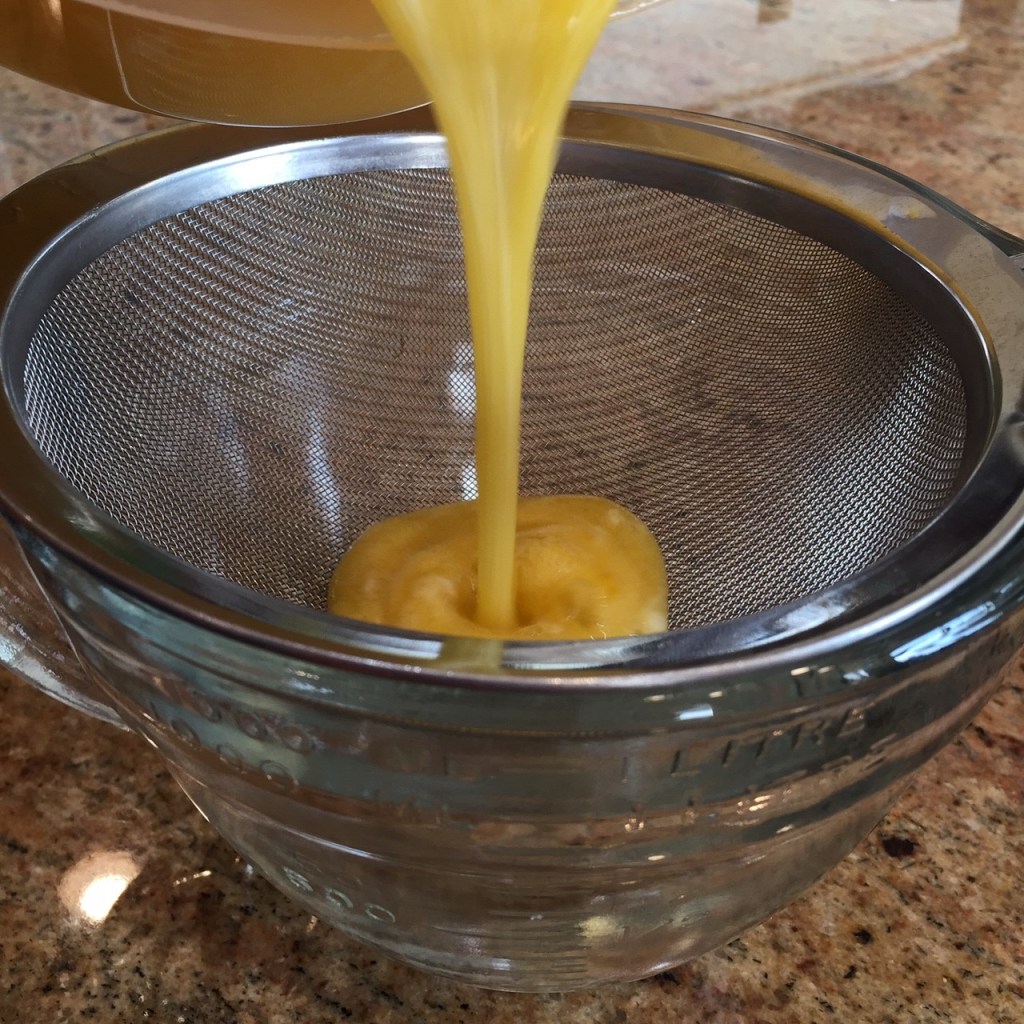
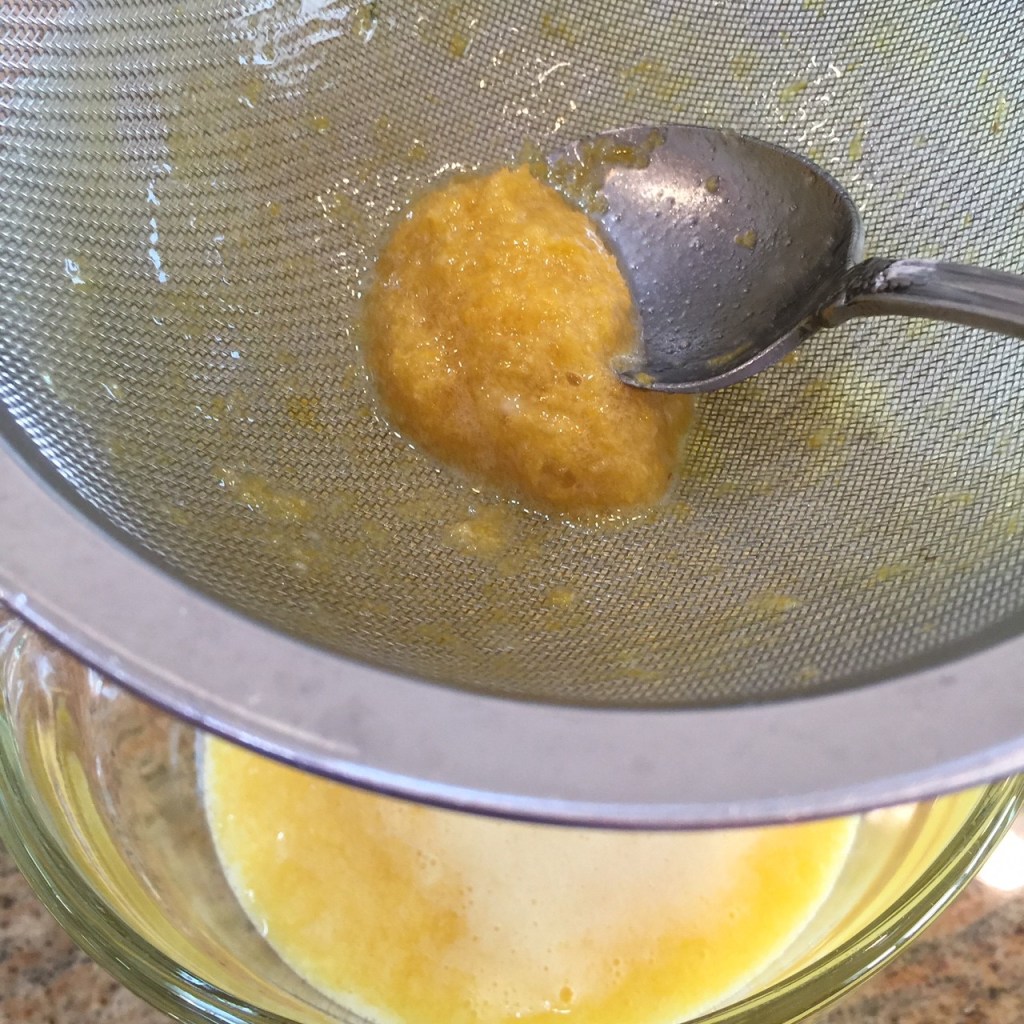
When the crust comes out of the oven, stir the baking powder into the filling, then pour through a strainer into a clean container. Stir the filling in the sieve with a spoon to help the filling flow. Don’t forget to scrap off the filling clinging to the underside of the sieve! (Waste not, want not!)
Discard the bits of zest and egg that remain in the sieve. Yuck!
Pour filling onto the hot crust.
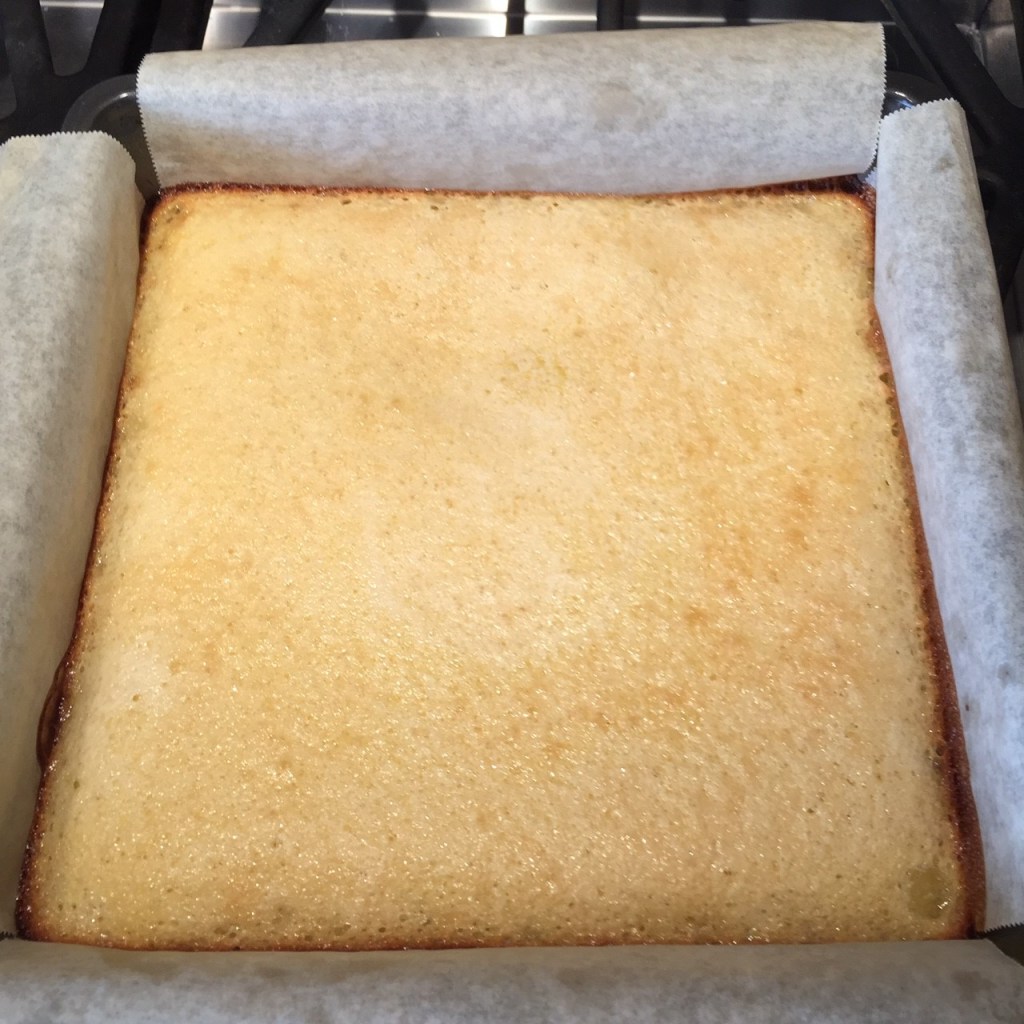
Bake at 350 F / 177 C until the very center of filling still has a slight wobble – 19-21 minutes. (Keep an eye out – the filling cooks quickly at the end). Remove from oven and let rest in the pan for 10-15 minutes.
Run a dull knife between the pan and parchment – the filling tends to leak before it solidifies and needs to be gently dislodged. Gently (notice I use this word again – the crust is still very soft and you don’t want to break it), begin to lift up the bars out of the pan. You’ll probably have to work your way around the parchment ears, lifting….gently. Once it breaks free, place the bars on a wire rack, then peel down the sides of the parchment and let cool completely. Yes, the sides look raggety, but you can cut those away later (or not).
Once the bars are completely cool (and I mean completely!), flip them over by sandwiching them between another wire rack or flat plate. Peel away the parchment and flip them back to right side up.
Slide them onto a flat surface and cover (I have a square Tupperware, or you can use the baking pan.) Refrigerate at least 24 hours. (I know that sounds like a long time to wait, but they need that time to come into their own.) Sprinkle liberally with confectioners sugar and slice away the ratty-looking edges (you can still eat them).
For appearances sake, it’s best to slice the bars with a non-serrated long knife, cutting straight down, using a rocking motion when you get down to the crust. Some people wipe the knife clean after each slice, but I’m not that particular.
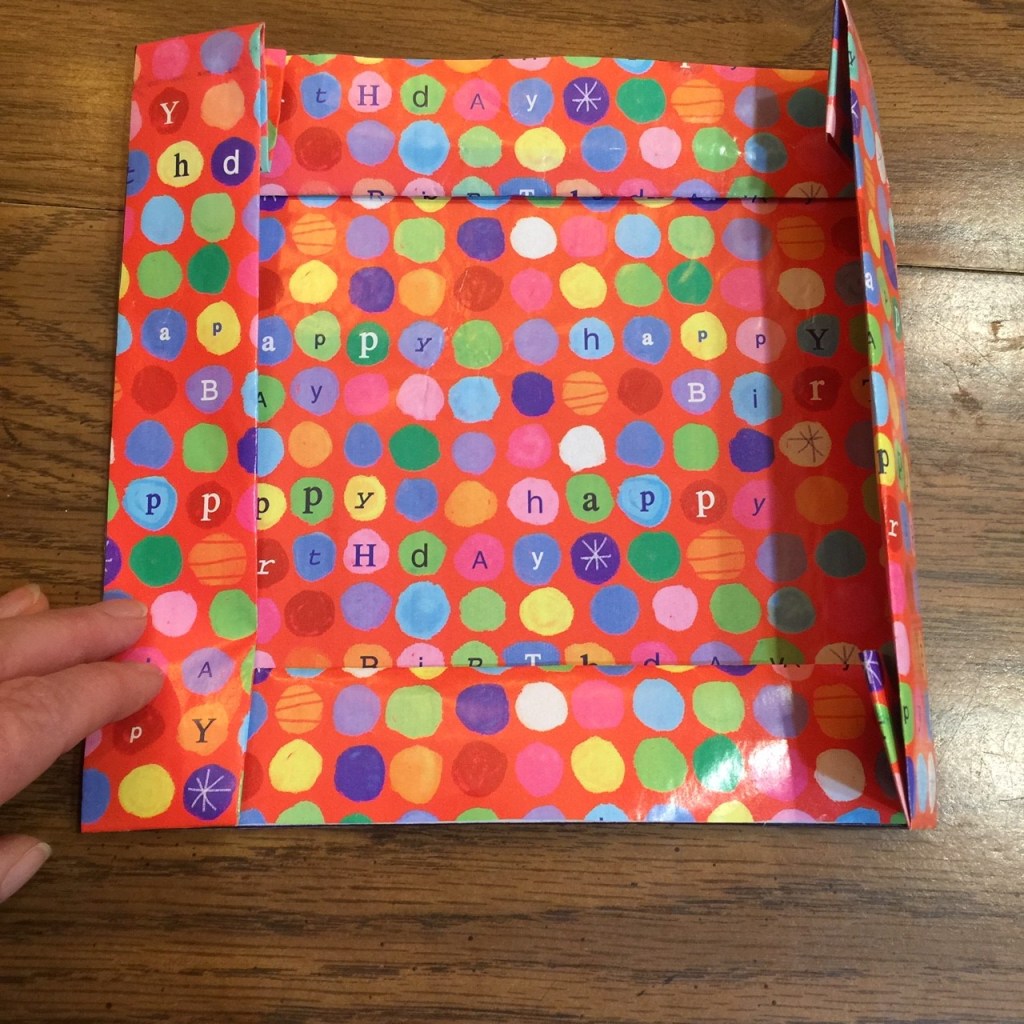
INSTRUCTIONS FOR FOLDING A PARCHMENT INSERT
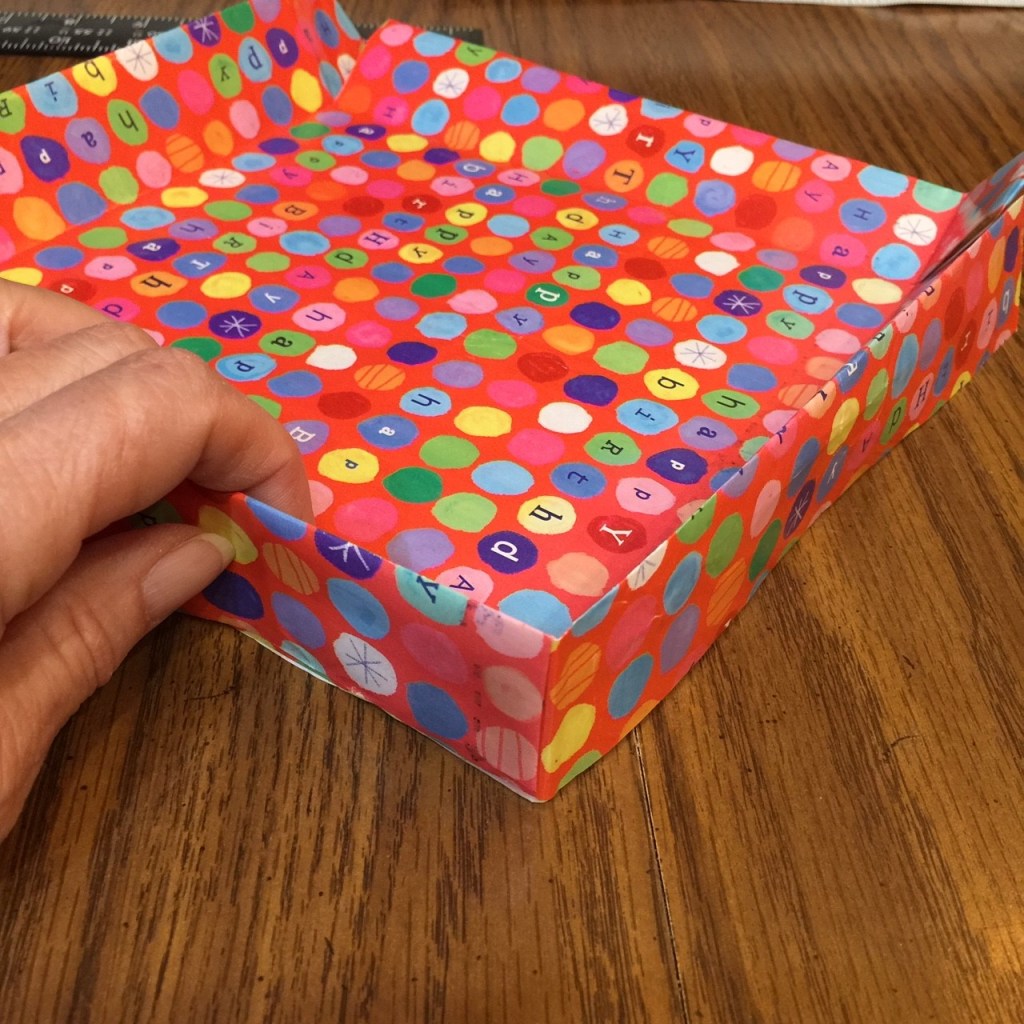
I’m using wrapping paper for this demonstration so you can see which side of the paper goes where. The final product will look like this:
To line an 8″ x 8″ pan, cut out a 14″ x 14″ square (8″ for the pan, plus 3″ for each border. Draw an 8″ x 8″ square in the center of the paper (you don’t have to write the numbers). This will become the bottom of the insert – you don’t want food touching the pencil or ink marks.
2. Fold each border in so the edge meets the ink mark. This fold will be 1.5″ for an 8″ x 8″ pan. There’s no special order to the folding.
3. Flip the paper and fold in each side border, creasing at the ink line. The side border will be 1.5″ tall, double folded. You will now have an 8″ x 8″ square.
4. Unfold the fold you made in Step 3. In each corner you’ll notice a 1.5″ square created by 2 outside edges and 2 creases. Cut one of the 2 creases in each of the 4 corner squares to the corner point (see the neon green lines in the photo below). It doesn’t matter which of the 2 creases you cut in each square, but only cut 1 crease per square.
5. Unfold the paper from each corner flap.
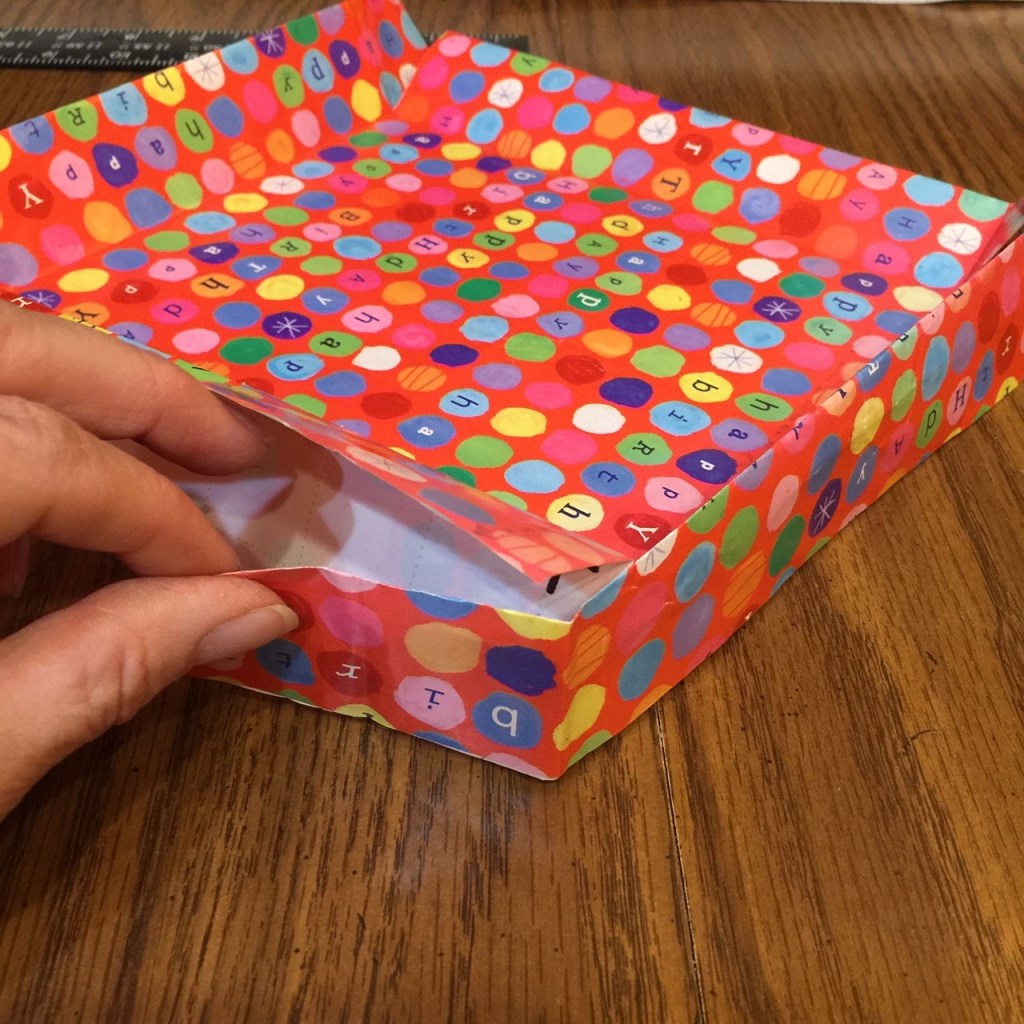
6. Fold each corner flap underneath the side border next to it.
7. Unfold the side border and nestle the flap inside the side border so it fits snuggly.
Every now and then I come across a long-forgotten recipe. Such was the case the other day while thumbing through my old Joy of Cooking cookbook. Boston Steamed Brown Bread!
For those of you unfamiliar with Boston Steamed Brown Bread, it’s a flavorful quick bread that’s cooked in a can and steamed in a water bath. It’s sliced into discs and can be eaten plain, smeared with cream cheese, paired with egg salad – really, the ideas are endless!
This bread takes minutes to prepare, but 3 hours to steam (which is hands off, of course), so make sure you get your timing worked out.
Traditionally, Boston Steamed Brown Bread was cooked in a coffee can, but I found that a 28-oz can – such as the can from whole tomatoes – is the perfect size to contain the entire recipe. You can, also, divvy up the batter between tomato paste cans or the slightly larger soup can, if you’re looking to make canapes. I would suggest making sure the can is BPA free (it will say it on the label).
BOSTON STEAMED BROWN BREAD – makes 1 loaf
1 cup (250 ml) buttermilk
3/8 cup (114g / 4 oz) dark molasses or treacle
1/2 cup (63 g) raisins
1/2 cup (76 g, 2+5/8 oz) cornmeal – I’ve used medium & coarse grind
1/2 cup (56 g, 2 oz) rye flour
1/2 cup (76 g, 2+5/8 oz) graham flour
1/2 tsp salt
1 tsp baking soda
Combine the buttermilk, molasses, and raisins in a bowl.
In a larger bowl, combine the cornmeal, rye, graham, salt, and baking soda.
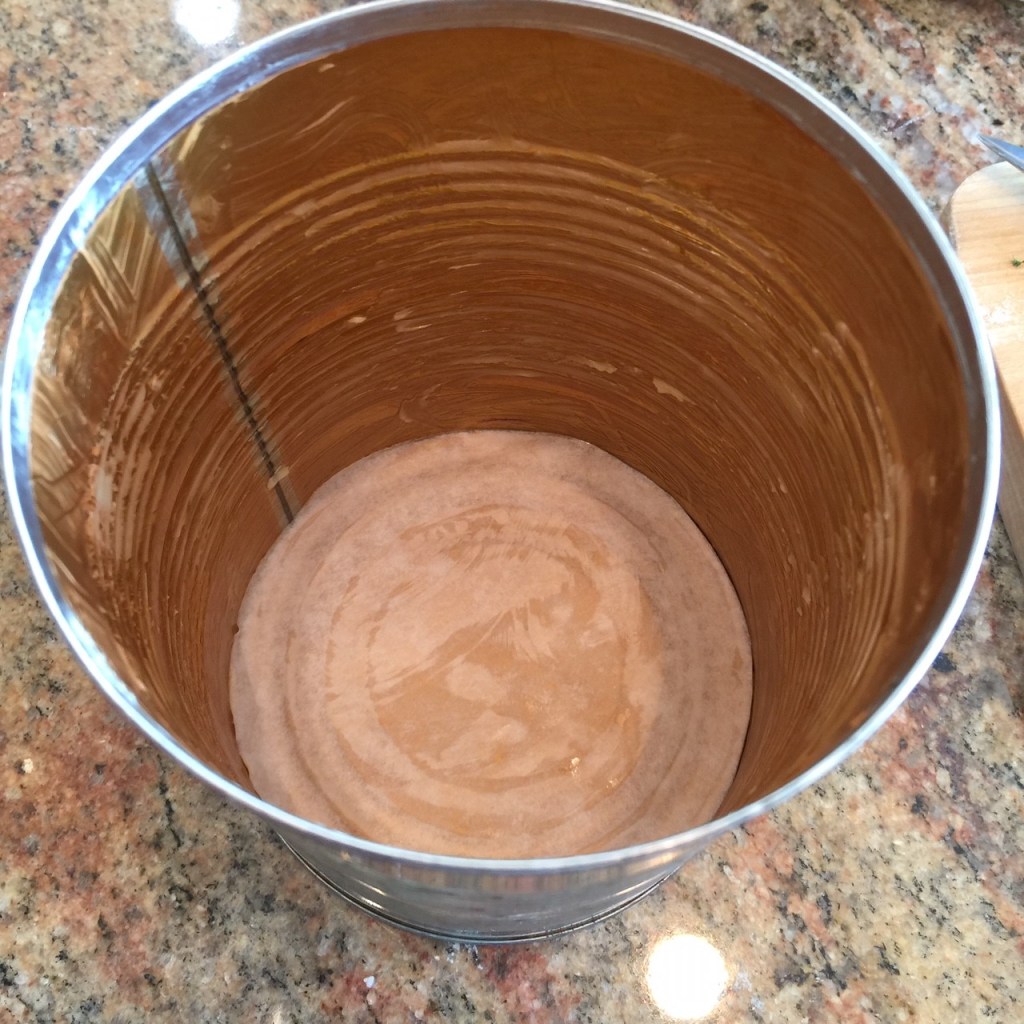
Prepare your can by buttering the bottom and sides thoroughly. Cut out a parchment circle to fit the can bottom and lay it flat on the can floor – you don’t have to butter it.
Put about 1½” of water into a pot that’s taller than the can.
Pour the wet ingredients into the dry and gently stir to combine.
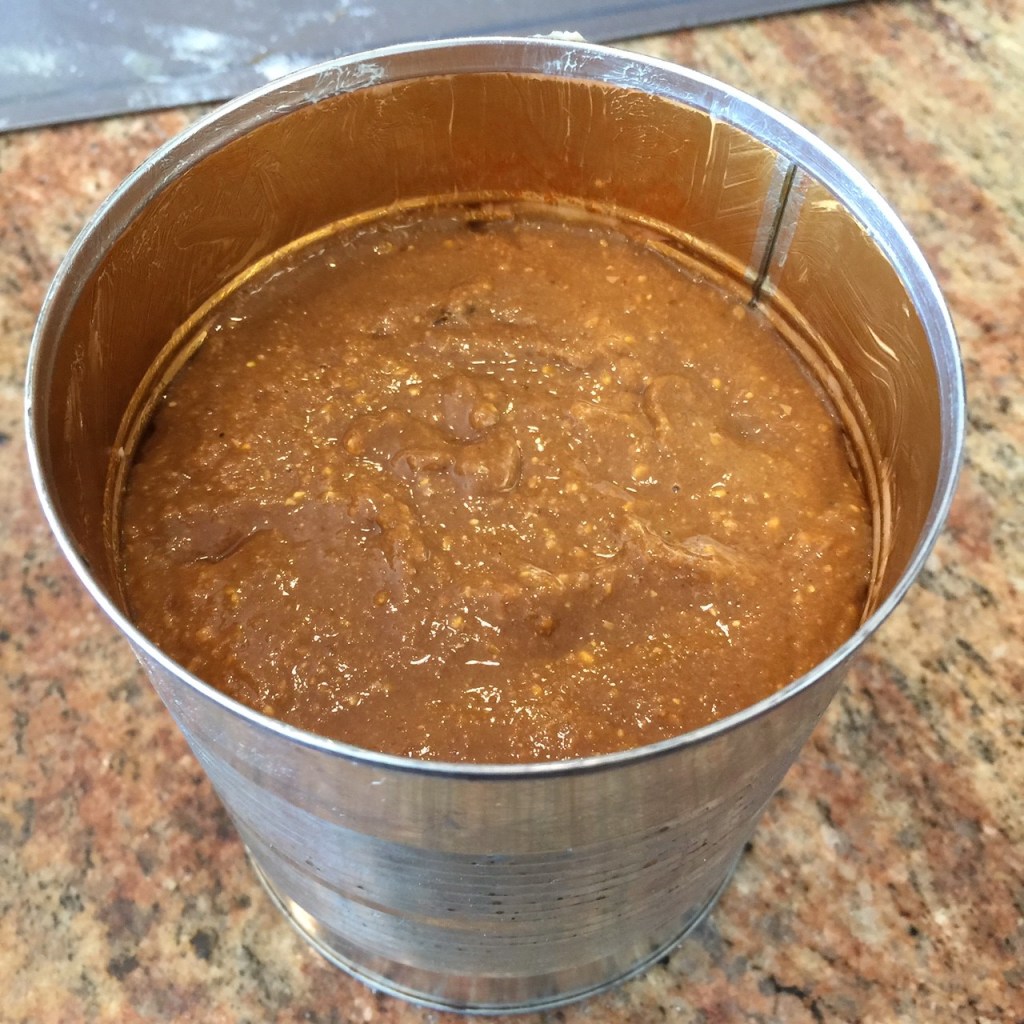
Pour into prepared can so it’s no more than 3/4 full. (This recipe is the perfect amount for a 28 oz (794 g) can. Cover top tightly with foil with an overhang of about 1″ (2 cm).
Place in water bath, turning flame on high to bring a slow boil. Turn down flame to maintain a simmer, cover pot with lid, and steam for 3 hours. SET A TIMER – 3 HOURS IS LONG ENOUGH YOU MAY FORGET WHEN YOU STARTED! (Uh, this may have happened to someone I know.)
After 3 hours, remove can from water bath and discard foil.
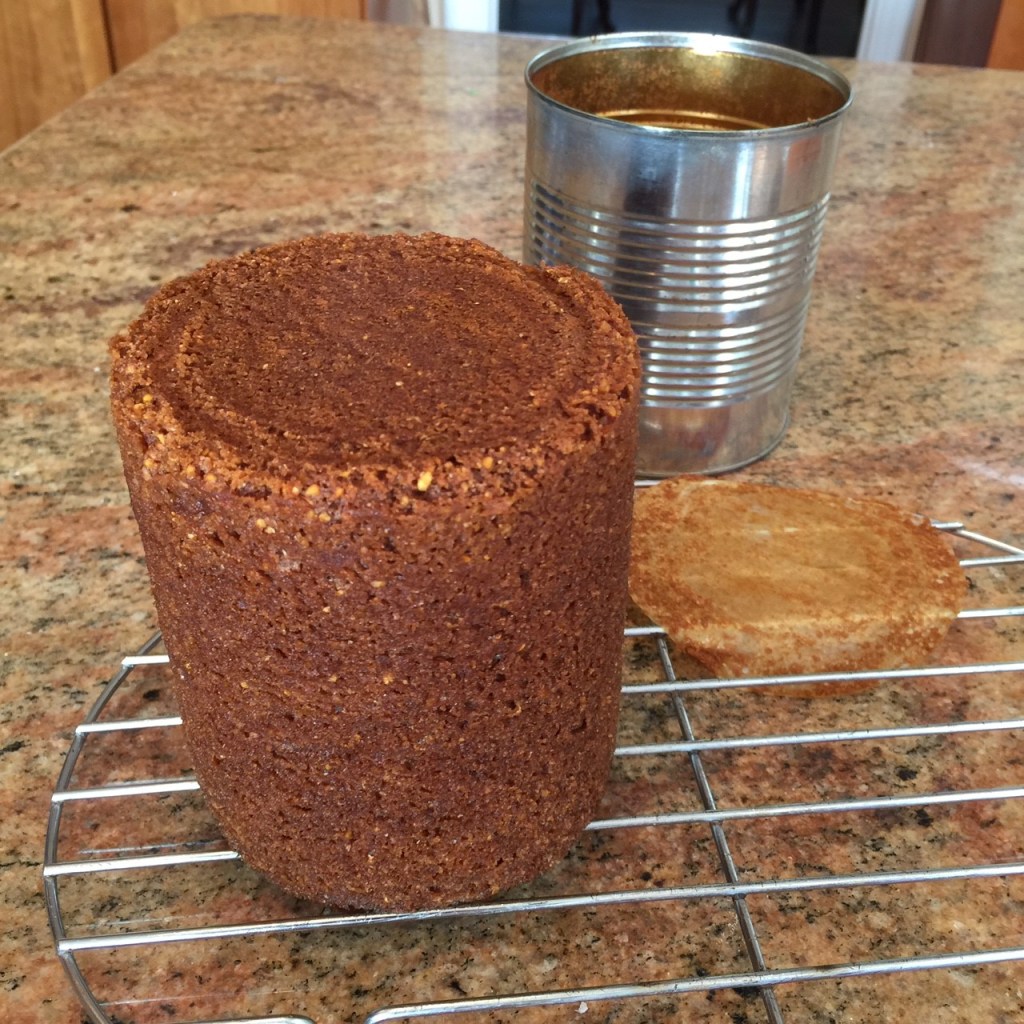
Let set 20 minutes then flip can and let bread slowly drop out. Discard parchment. Let loaf cool, at least, an hour before slicing. (A proper bread knife will give you nice clean slices!)
Needless to say, having a food blog, I cook a lot! Not only do I prepare tried and true favorites, but I’m always on the search for something new. As we all have preferences in tastes, I often tweak other’s recipes to suit myself.
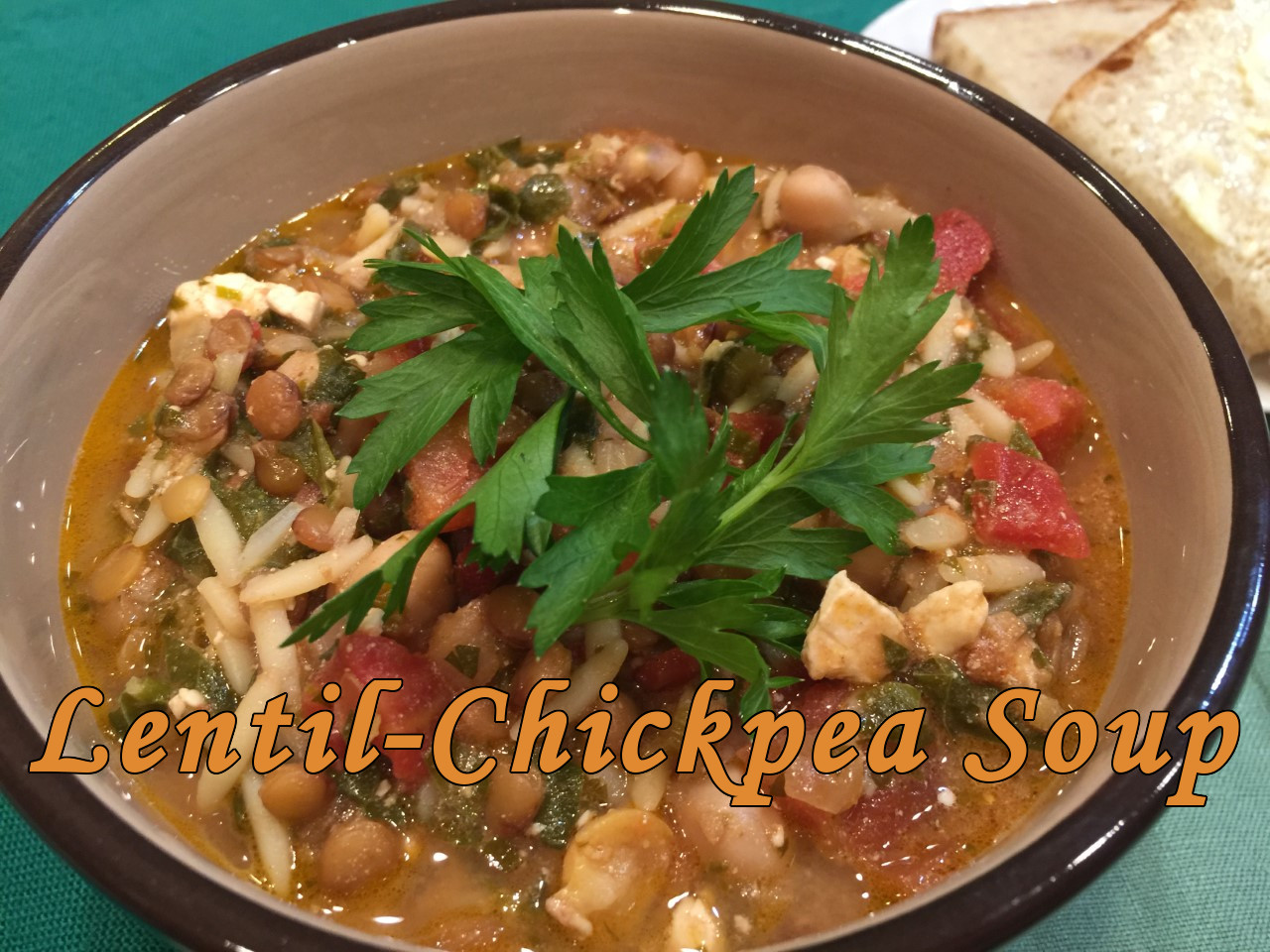
But every now and then, there’s a recipe upon which I write in bold letters: DON’T MAKE AGAIN!!! (yes, I include the exclamation points). That’s what happened when I made the original recipe for Lentil-Chickpea Soup. However, due to my frugal nature and disdain for waste, I thought long and hard about what could be added to make it, at least, palatable. I always have Feta cheese on hand, so I figured, “why not”.
This dish instantly went from 0 to 100! Lesson learnt.
Note: Prepare all the ingredients ahead of time. There’s quite a bit of very short-term cooking before adding the next ingredients. If everything is ready to go, you can zip through a lot faster.
LENTIL-CHICKPEA SOUP – makes about 6 cups
2½ T olive oil
122g (1 cup) onion, chopped
53g (1 stalk) celery rib, chopped
1/2 T fresh ginger, grated or minced
3 cloves garlic, pressed or minced
1 tsp paprika
1 tsp coriander
1/2 tsp cumin
1/4 tsp cinnamon
1/4 tsp red pepper flakes
14g (1/4 cup + 2 T) cilantro, divided
2 T parsley
900g (4 cups) vegetable stock (homemade or store-bought)
425g (15-oz) can chickpeas (also called garbanzo beans), drained & rinsed
Wash the Swiss chard, then remove and discard the spine. Chop the greens into 1″ (approximately) pieces.
In a large saucepan, heat the oil over medium/high heat and add in the onions and celery. Sauté until the onions start to get a little brown – about 7 minutes. Add in the ginger, garlic, paprika, coriander, cumin, cinnamon, and red pepper flakes – bloom 1 minute. (Blooming brings out the flavors.)Add in the 1/4 cup cilantro – bloom for another 1 minute. Add in the vegetable stock, chickpeas, and lentils. Bring to a boil, then reduce heat to maintain a simmer. Cover with the lid slightly askew and let simmer for 20 minutes. Add in the tomatoes (plus their juice) and orzo. Partially cover and let simmer for 7 minutes. Add in the Swiss chard (or whatever greens you want) and cook for 5 minutes. Remove from heat. Add in the lemon juice, the parsley, the 2T cilantro, and Feta. Taste for seasoning. (I added 1/2 tsp salt.)
Ah, summer! Longer days, sunny weather, and fresh produce. Besides fresh-from-the-vine tomatoes, corn on the cob ranks at the top.
Of course, delicious as eating a perfectly cooked corn on the cob is, it’s one of those foods best eaten in privacy or with close friends/family. No one looks to impress with a kernel or two stuck between their teeth.
And that’s where Spicy Corn Salad comes to the rescue! You get the mouth-pleasing crunch of fresh corn with the kick of serrano thrown in, all the while flashing those pearly whites without fear.
Spicy Corn Salad is a fast and easy side dish that can be eaten warm or cold.
SPICY CORN SALAD
42g (3 T) sour cream
25g (3 T) lime juice
13g (1 T) mayonnaise
1/4 tsp + 1/2 tsp salt, divided
1-2 serrano chilis (use your own judgment – 1½ was our preference)
6 ears (450g) (4.5 cups) of white corn (or yellow)
2 T + 1 tsp vegetable oil, divided
2 cloves garlic, pressed or minced
1/2 tsp chili powder
117g (1 cup) Feta cheese, crumbled
3/4 cup (15g) cilantro, chopped
3 scallions, white and green part, sliced
Remove and discard the ends on the serranos. Slice into thin discs, leaving the seeds and ribs intact. In a large bowl, whisk the sour cream, lime juice, mayonnaise, 1/4 tsp salt, and the sliced chilis. Remove the husk and silk from the corn cobs, then wash and dry the ears. Next (this may sound daunting, but I promise you it’s not), holding each cob at an angle, remove the kernels by running a sharp knife down the sides. It’s easiest to begin a couple of inches from the top and work downwards, away from you. Then flip the cob, and remove the bit that was at the top in the same manner. (You can help cut down on flying kernels by holding the ear in a large bowl.) You’ll get about 3/4 cup of corn from each cob – I found that amazing. In a large nonstick skillet, put 1 T of the oil, half (approximately) of the corn, and 1/4 tsp of the salt. Spread corn out evenly in the skillet. Turn heat to medium/high, cover and let cook untouched for 3 minutes – this will char the corn. Remove covered skillet from burner and let set for an additional 15 seconds to allow the corn to stop popping before removing the lid. Pour cooked corn into into the sour cream mixture. Repeat the charring process with 1 T oil, the remaining corn, and 1/4 tsp salt. Pour into bowl. In the now empty skillet, put 1 tsp oil in the center. Top the oil with the garlic and chili powder and cook for about 30 seconds to bloom the flavors. Add to the corn mixture and stir together. Let cool for 15 minutes. Add in the Feta, cilantro, and scallions. Serve at room temperature or chilled.







































 Needless to say, having a food blog, I cook a lot! Not only do I prepare tried and true favorites, but I’m always on the search for something new. As we all have preferences in tastes, I often tweak other’s recipes to suit myself.
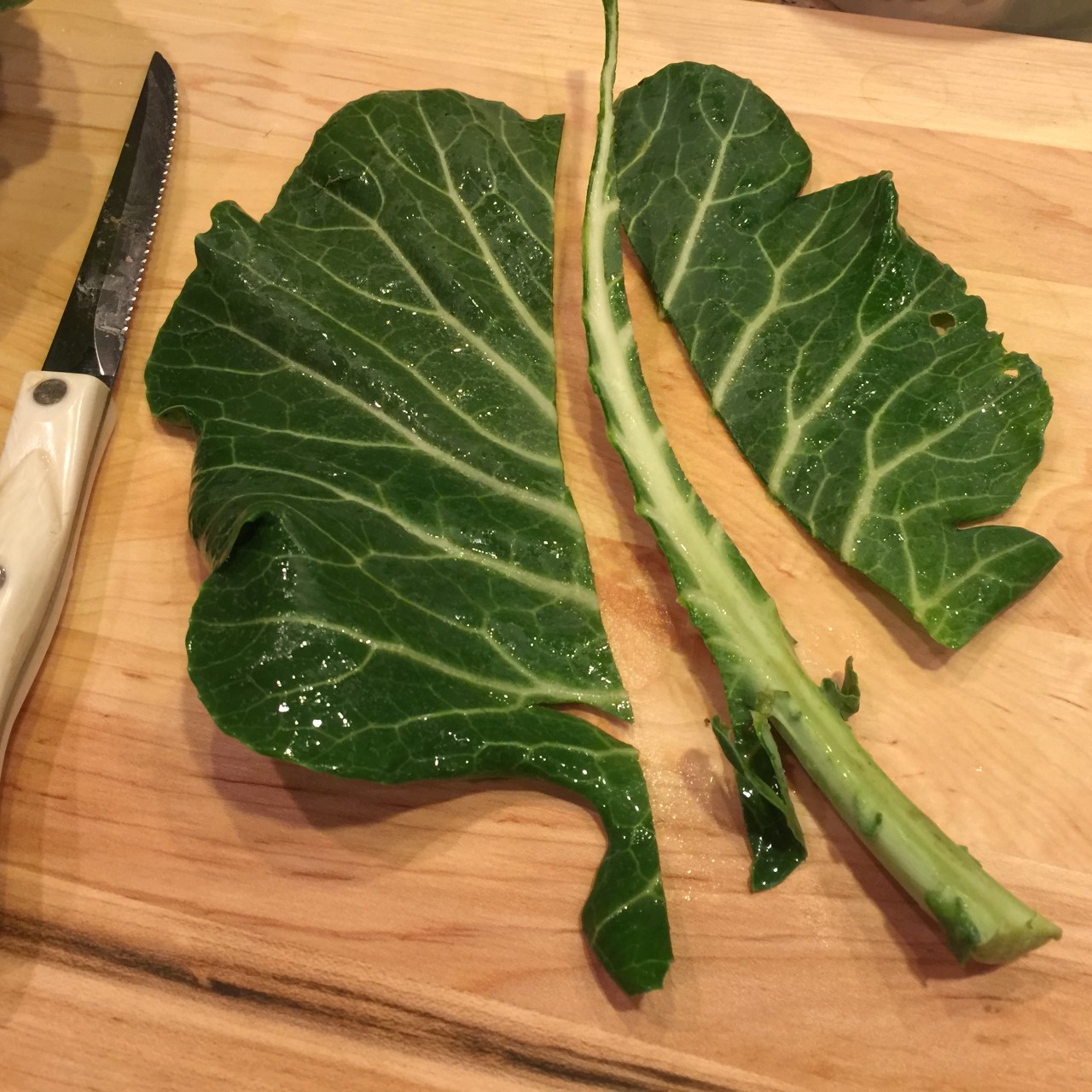 Chop the greens into 1″ (approximately) pieces.
 Add in the ginger, garlic, paprika, coriander, cumin, cinnamon, and red pepper flakes – bloom 1 minute. (Blooming brings out the flavors.)
 Add in the 1/4 cup cilantro – bloom for another 1 minute.
  Add in the vegetable stock, chickpeas, and lentils. Bring to a boil, then reduce heat to maintain a simmer. Cover with the lid slightly askew and let simmer for 20 minutes.
  Add in the tomatoes (plus their juice) and orzo. Partially cover and let simmer for 7 minutes.
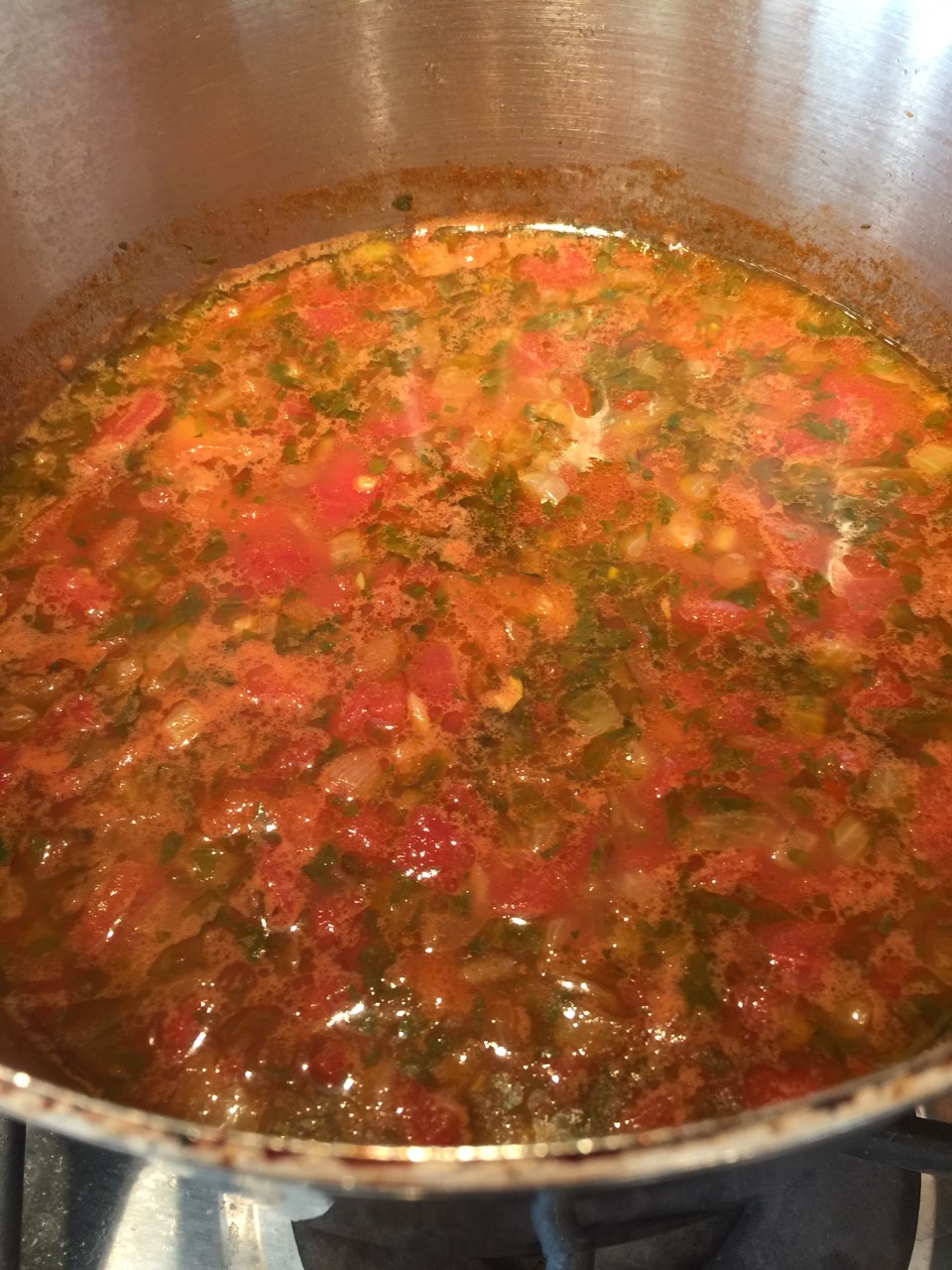 Add in the Swiss chard (or whatever greens you want) and cook for 5 minutes. Remove from heat.
 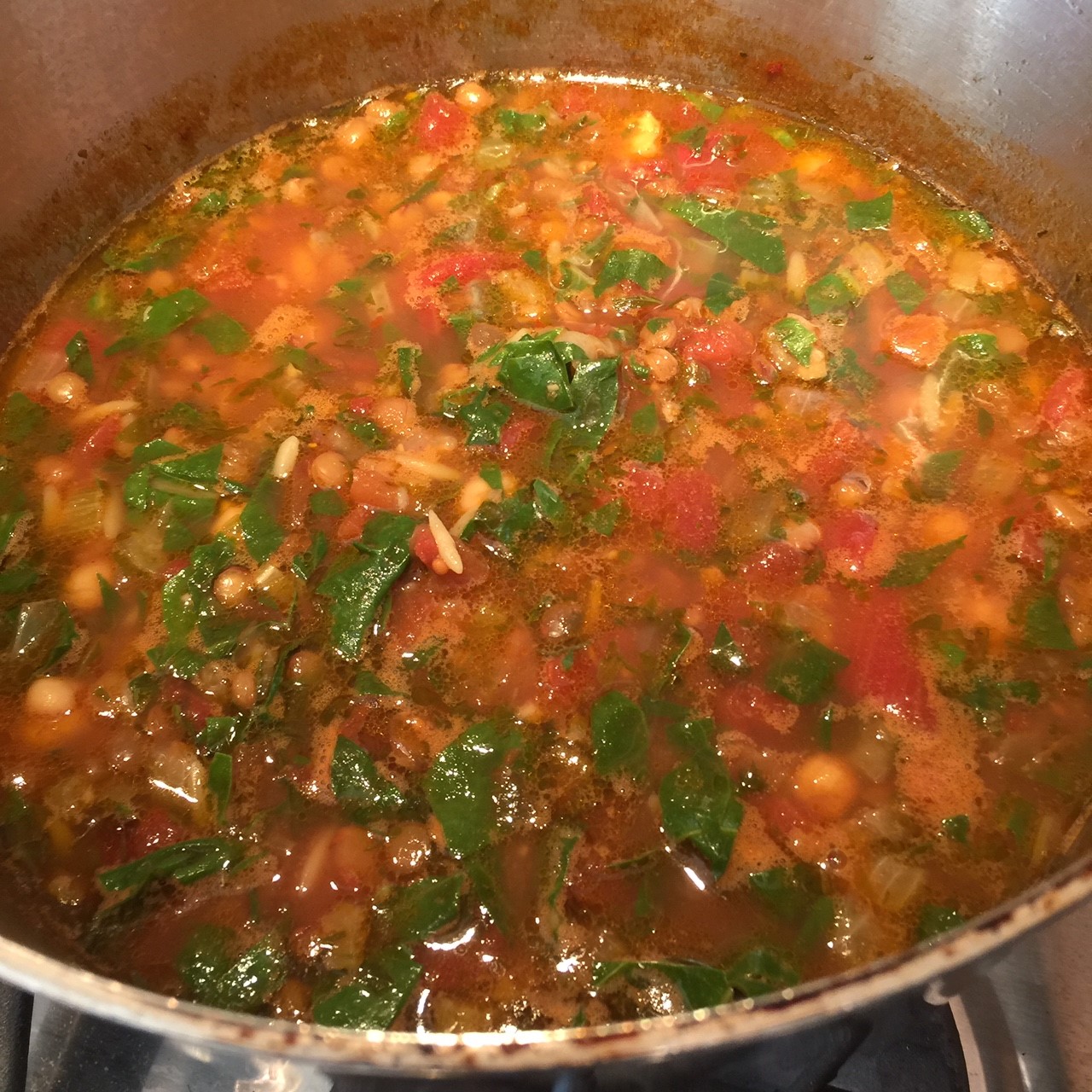 Add in the lemon juice, the parsley, the 2T cilantro, and Feta.
  Taste for seasoning. (I added 1/2 tsp salt.)
 Ah, summer! Longer days, sunny weather, and fresh produce. Besides fresh-from-the-vine tomatoes, corn on the cob ranks at the top.
 In a large bowl, whisk the sour cream, lime juice, mayonnaise, 1/4 tsp salt, and the sliced chilis.
  Remove the husk and silk from the corn cobs, then wash and dry the ears. Next (this may sound daunting, but I promise you it’s not), holding each cob at an angle, remove the kernels by running a sharp knife down the sides. It’s easiest to begin a couple of inches from the top and work downwards, away from you. Then flip the cob, and remove the bit that was at the top in the same manner. (You can help cut down on flying kernels by holding the ear in a large bowl.) You’ll get about 3/4 cup of corn from each cob – I found that amazing.
  In a large nonstick skillet, put 1 T of the oil, half (approximately) of the corn, and 1/4 tsp of the salt. Spread corn out evenly in the skillet.
 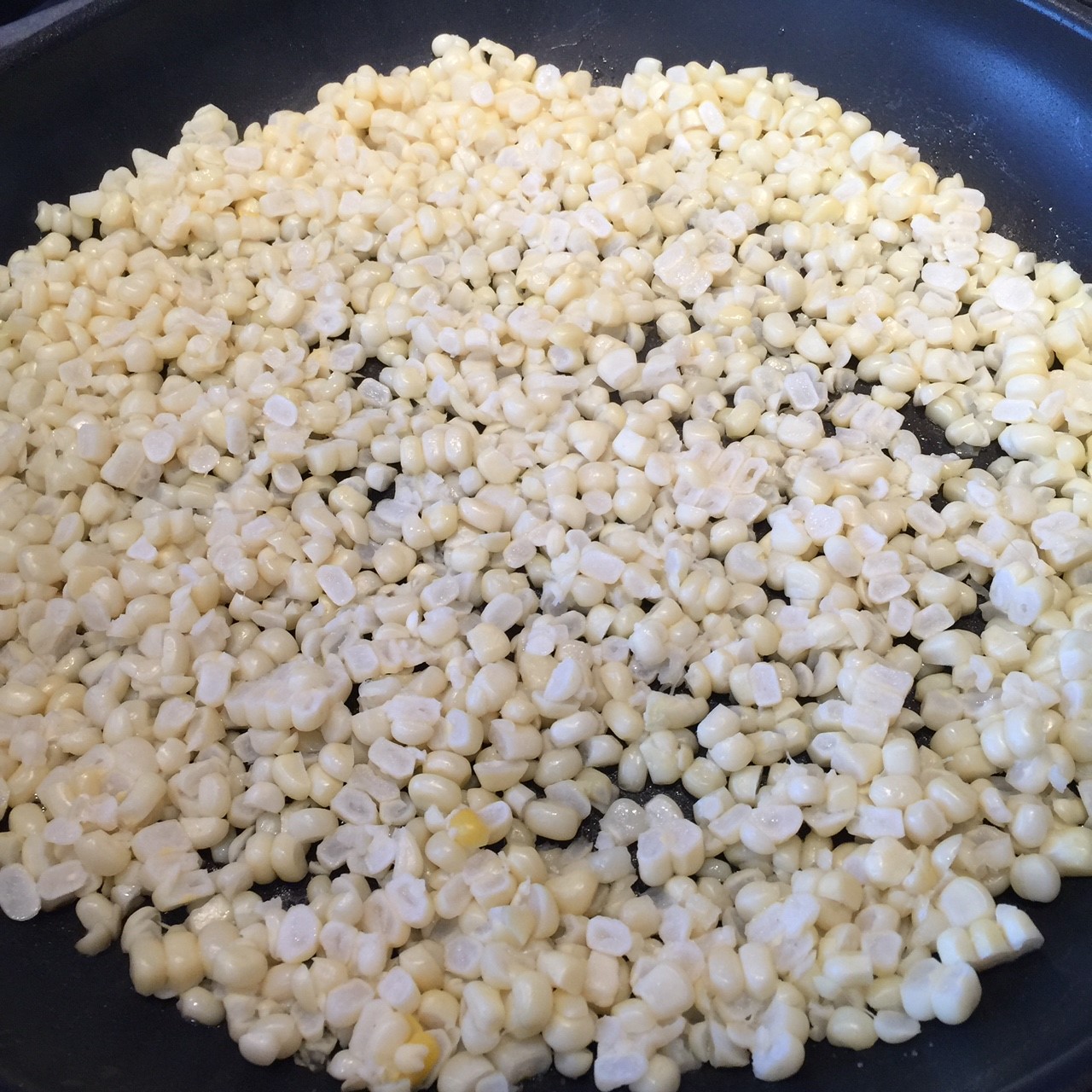 Turn heat to medium/high, cover and let cook untouched for 3 minutes – this will char the corn. Remove covered skillet from burner and let set for an additional 15 seconds to allow the corn to stop popping before removing the lid. Pour cooked corn into into the sour cream mixture. Repeat the charring process with 1 T oil, the remaining corn, and 1/4 tsp salt. Pour into bowl.
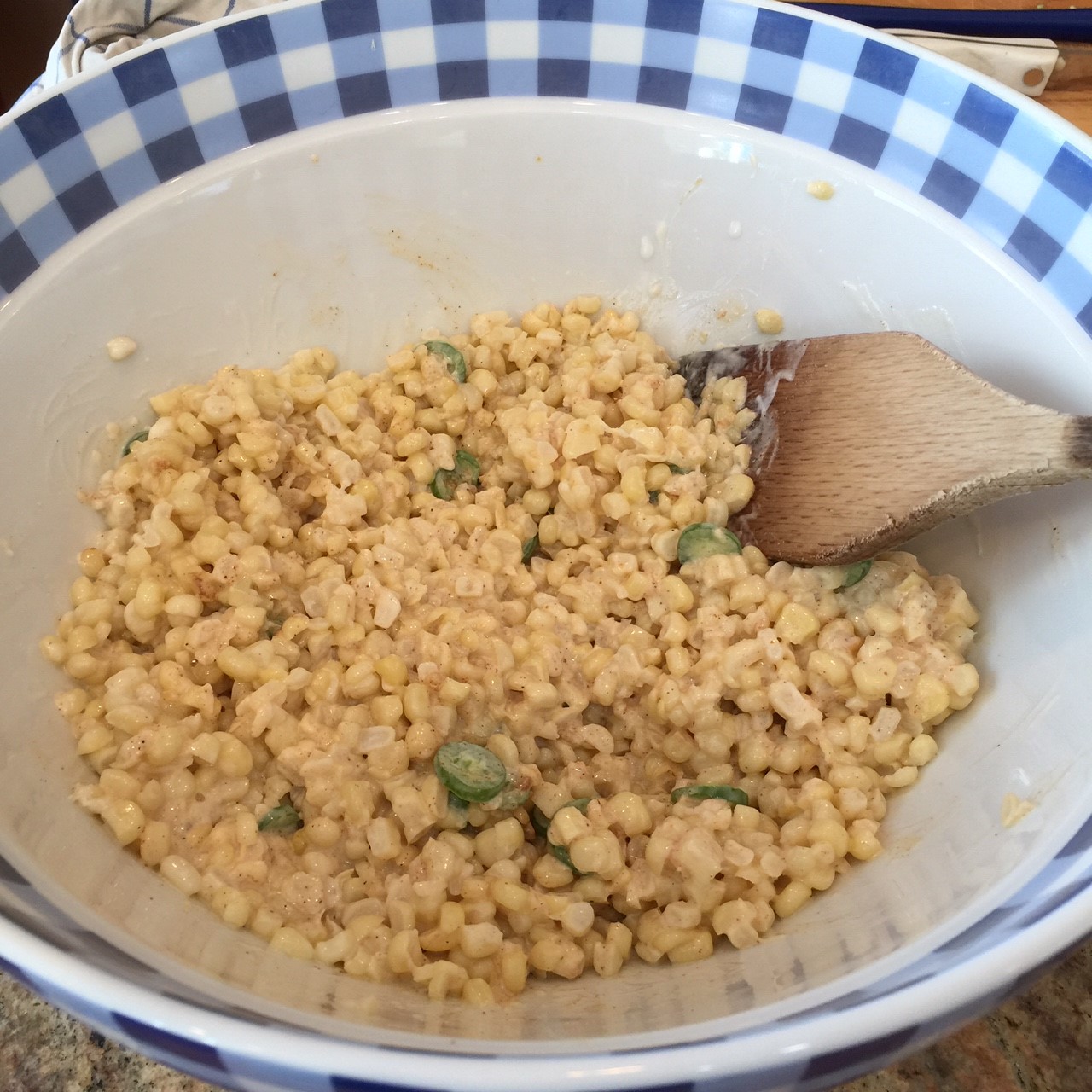 In the now empty skillet, put 1 tsp oil in the center. Top the oil with the garlic and chili powder and cook for about 30 seconds to bloom the flavors. Add to the corn mixture and stir together.
  Let cool for 15 minutes. Add in the Feta, cilantro, and scallions.
  Serve at room temperature or chilled.
 Vegetarian Cooking For Carnivores BLOG