RANCH DRESSING: An Easy Crowd Pleaser!

Ranch dressing has always been a favorite for my family. Not only is this creamy delight fabulous on salads, but as a dipping sauce for…well, practically everything. So, naturally, in my quest to make everything possible from scratch, I decided to give ranch dressing a go. I picked a recipe then did what most of us do – immediatly amended it to suit my taste. I even got a rare compliment from my picky eater!

NOTE 1: If you want it thicker, decrease the buttermilk.

NOTE 2: If you don’t have buttermilk, you can make it by combining 10g (or 2 tsp) apple cider vinegar with enough milk to make a total of 150g (1/3 cup).

NOTE 3: As self-proclaimed Queen Of Freeze I would be remiss in my duties if I failed to point out this dressing freezes well.

RANCH DRESSING – makes about 1.5 cups

  • 150g (1/3 cup) buttermilk
  • 107g (1/2 cup) mayonnaise
  • 73g (6 T) sour cream
  • 2 T shallot or red onion, chopped finely
  • 1 T cilantro, fresh, chopped finely
  • 1 T dried dill
  • 1 garlic cloves, pressed or diced finely
  • 1 tsp lemon juice
  • 1/8 tsp sugar
  • 1/2 tsp table salt
  • 1/4 tsp black ground pepper

Combine all ingredients in a medium sized bowl and blend with spoon or whisk.

Pour into a container with a top and chill. You are now done. Yes, it’s that easy!

LEMON POSSET: Easy To Make – Elegant To Serve!

Lemon Posset is a lovely, light-ish finish to a meal. It, also, happens to have been a favorite of Queen Elizabeth II. While anything favored by the queen may sound daunting, it’s, actually, extremely easy to prepare. Bonus: there are only 4 ingredients!

NOTE: It’s best to make this a day or two ahead of serving time to allow it to firm up to a creamy texture.

Ingredients

  • 714g (3 cups) heavy cream
  • 199g (1 cup) granulated sugar
  • 8g (1.5 T) PACKED lemon zest – don’t be stingy!
  • 113g (9 T) lemon juice

TIP: If you have a kitchen scale, this step will save you time. Weigh your EMPTY saucepan. To this number add 755g. Write this number down so you don’t forget it. This is the number you’re going to reduce the mixture down to.

Into a large saucepan, add the cream, sugar, and zest.

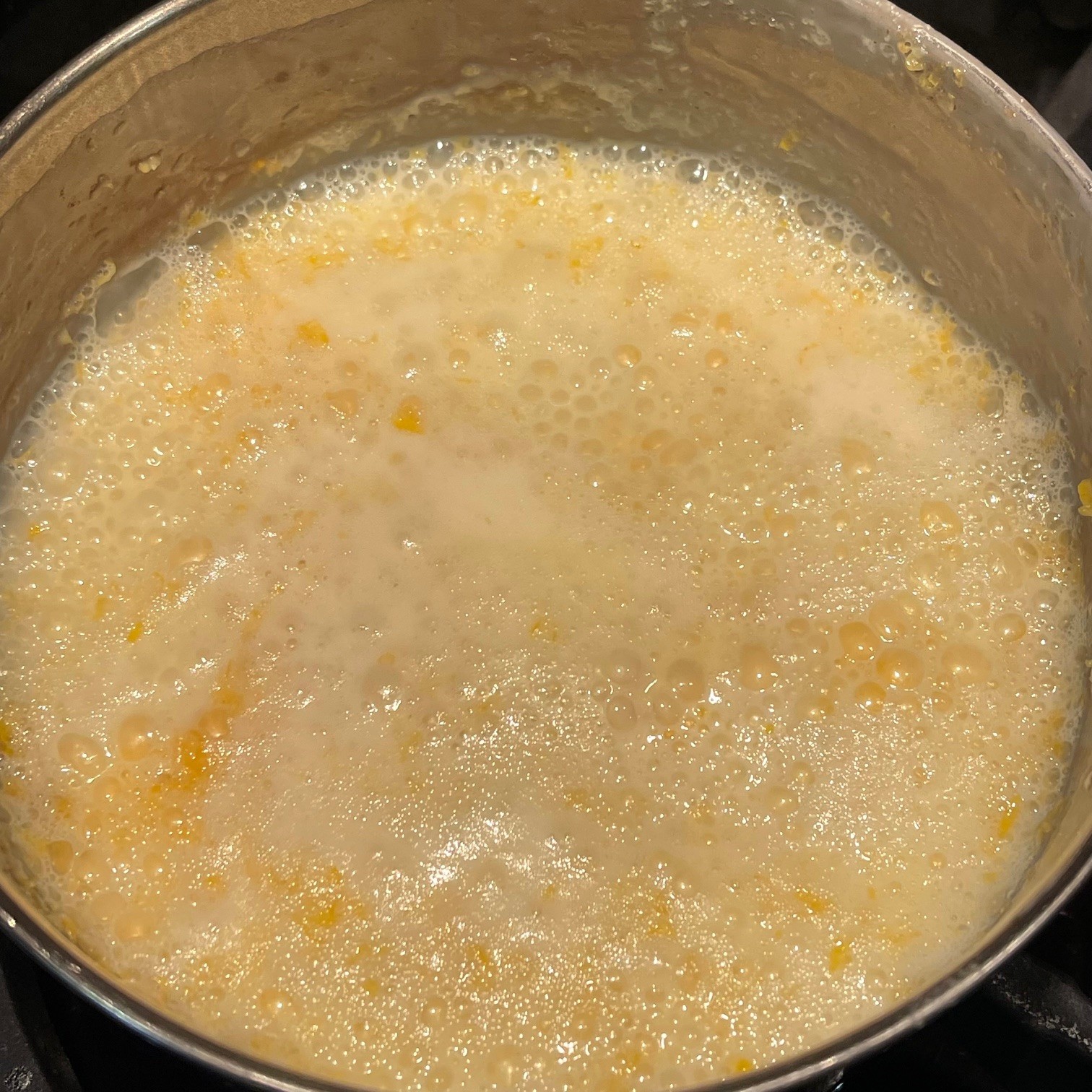
Over medium heat bring mixture to a rolling boil, stirring now and then. Keep an eye on it so the mixture doesn’t boil over. Adjust the flame as needed.

Boil down to as close to 755g (3 cups) as you can. If you’re using my above mentioned tip, after about 5 minutes weigh the mixture plus the saucepan to get a sense of how close you are to the weight of your saucepan plus 755g (you wrote down this number, I hope!) Return the pan to the burner and continue to boil the liquid, weighing every few minutes until you reach your target weight. This takes about 8-12 minutes.

If you don’t have a scale, you’ll have to keep pouring the liquid into a measuring cup until you reach 3 cups (700ml). Remove pan from heat.

Stir in the lemon juice. Let set 20 minutes.

Strain cream mixture into a container with a spout (to make pouring easier). Use a spatula or spoon to scrape the sieve’s sides and bottom. This will assist the straining process. Don’t forget to scrape the mixture off the bottom of the sieve into the bowl.

Discard the solid remains left in the strainer.

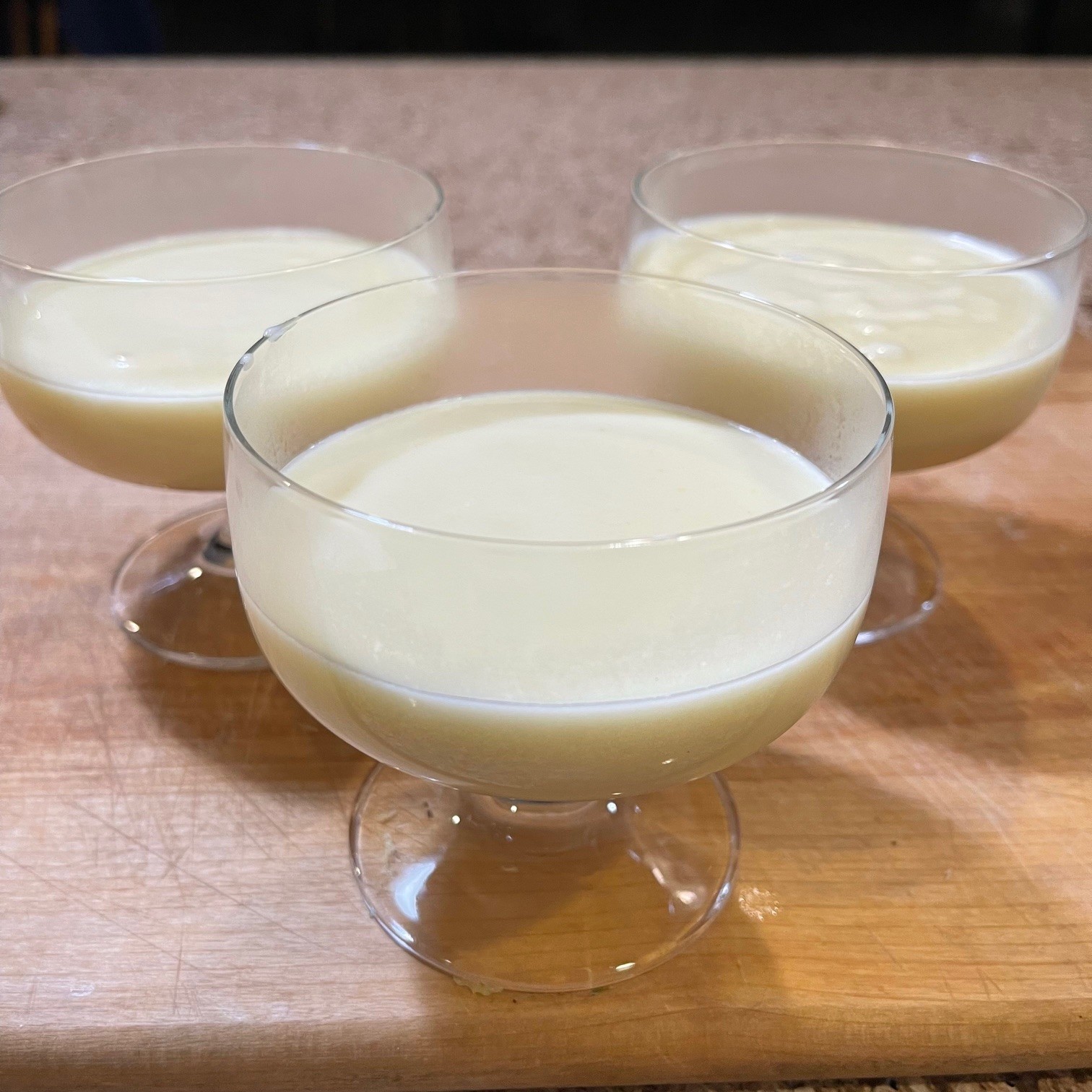
Then pour even amounts of the Lemon Posset into 4 indivual serving containers. NOTE: Don’t pour into one large bowl – it may not set properly. Cover and chill at least 5 hours. I strongly suggest making it a day or two before serving.

Look how it thickened after a long chill – yum!!!

ZUCCHINI PASTA SALAD: Fast & Easy!

I’m always looking for zucchini recipes ever since I’ve begun to grow them in my garden. Not only is this recipe delicious, it has the added bonus of being easy to prepare. It’s great to serve at holiday dinners, picnics, and pot-lucks.

ZUCCHINI PASTA SALAD – makes about 650g (5 cups)

  • 12g (2 T) diced shallots
  • 2 T extra-virgin olive oil, divided
  • 10g (1 T) red wine vinegar
  • 1/4 tsp salt 
  • 1/4 tsp black ground pepper
  • 114g (1/4 lb) small pasta
  • 2 cloves garlic, minced or pressed
  • 15g (1 T) ketchup
  • 170g (1-2) zucchini, chopped into half-moons
  • 46g (1/2 cup) red pepper, chopped
  • 27g (1/4 cup) small carrot, sliced thin
  • 130g (1 cup) Feta cheese, crumbled into chunks
  • 63g (1/2 cup) Kalamata olives, chopped

In a small bowl, blend together 1 T olive, the shallots, red wine vinegar, salt, and pepper. Set aside.

Bring about a quart of water to a full boil and add in the uncooked pasta. Cook for about 9 minutes, stirring now and then. Drain without shaking out the excess water in the sieve. Pour the cooked pasta into a large bowl.

Into the now empty pot, put the remaining 1 T olive oil, garlic, ketchup, zucchini, red pepper, and carrot. Over medium flame cook about 5 minutes, stirring often. You only want to par-cook the veggies so there’s still a slight bite to them, not make them soggy.

Pour the cooked veggies to the bowl of cooked pasta. Mix in the Feta, Kalamata olives, and vinegrette.

Serve at room temperature (or chilled, if you prefer).

ZUCCHINI-DATE-APRICOT MUFFINS: No Added Sugar!

They say necessity is the mother of invention. With my bounty of zucchini from 2 plants, I needed to come up with ideas to use these growing beauties (one can eat only so much stir-fried zucchini!). I thought it would be nice to make something that could be made in bulk and frozen for future use. (I AM the self-proclaimed Queen Of Freeze, after all!)

Putting on my thinking cap, I decided to make a zucchini muffin that was tasty but with no added sugar or egg yolks. It took MANY tries until I finally came up with my Zucchini-Date-Apricot Muffin recipe. For the record, in my early trials, I added a mixture of brans and wheat germ to the dry ingredients. While these may have made the muffins healthier, they yielded a cardboard texture. NOT an enticement for adults, let alone children. I eventually whittled these add-ins down to zero – if no one eats them, what’s the point.

NOTE: Again as self-proclaimed Queen Of Freeze, I discovered you can successfully freeze shredded zucchini for these muffins. I’ve only tried freezing the shreds AFTER lightly squeezing out some of the water. I’m not sure if it would be successful simply freezing the shreds prior to squeezing and then squeezing after thawing. Freeze in portion sizes and make sure you mark how much is in the container.

ZUCCHINI-DATE -APRICOT MUFFINS – (Makes 6-9 muffins, depending on size.)

IMPORTANT NOTE: ALL INGREDIENTS SHOULD BE AT ROOM TEMPERATURE!!!!

Wet ingredients

  • 115g (about 19) pitted dried dates
  • 32g (5 dried) apricots
  • 2 egg whites, room temperature
  • 68g (1/4 cup) honey
  • 16g (2 T) olive oil
  • 1/2 tsp vanilla extract
  • 300g (2 cups) zucchini, shredded

Dry Ingredients

  • 102g (1/2 + 1/3 cups total) all-purpose (plain) flour
  • 29g (1/4 cup) whole wheat flour
  • 1/4 tsp salt
  • 2 tsp cinnamon
  • 1/2 tsp cardamom
  • 1/4 tsp nutmeg
  • 1 tsp baking powder
  • 1/2 tsp baking soda

PREHEAT OVEN TO 375°F (190°C)

You’ll need 2 bowls: a small cereal sized for the dry ingredients, and a medium mixing bowl for the wet.

Into the medium sized bowl, put the egg whites and beat with a fork to break them up and they become foamy.

Chop the dates and apricots into small pieces. Add them to the bowl with the egg whites.

Shred, then chop the zucchini. (I chop the shreds so the muffins don’t have long zucchini strings.)

Into a clean tea towel, place tennis ball sized bundles of the shredded-chopped zucchini, one at a time. Wrap the tea towel around the bundles and twist over a container to extrude the liquid. You don’t need to squeeze out every drop of liquid – just a firm twist. NOTE: If you want to be very precise, you will probably squeeze out about a total of 40g (3+ tablespoons). Discard this liquid. Place squeezed zucchini into the bowl with the egg whites.

Add in the honey, olive oil, and vanilla.

Into the smaller bowl, stir together the all-purpose (plain) flour, whole wheat flour, salt, cinnamon, cardamom, nutmeg, baking powder, and baking soda.

Pour the dry ingredients into the wet ingredients and gently blend until the flour is just incorporated. Don’t over mix or you will produce a tougher muffin.

Into a very lightly oiled muffin tin, fill the cups. (If you have an ice cream scoop, use that – it makes the task much easier.)

The batter will make 6- 9 muffins, depending on size. I find making 9 produces shorter muffins which is more manageable for young children’s hands and mouths, or if you just want a small snack.

Bake in preheated 375°F (190°) for 18-21 minutes – until lightly browned and top springs back when pressed. Let set in tin for 15 minutes. Then run a rounded-tip knife around the sides, Go around again, gently lifting up the bottoms until muffin is freed. Remove to wire rack to completely cool.

CHEESY ROASTED POTATOES: Crispy & Addictive!

I’ve never met a potato I didn’t like. My weakness is crispy and salty – I just can’t stop! Which is why I avoid them as much as possible. Until now!

This Cheesy Roasted Potato recipe has been a game changer. There’s no deep frying and, in fact, there’s no oil except for the slight smear on the baking sheet to prevent sticking.

NOTE: Use a firm potato such as Yukon Gold or a red variety. Russets do NOT work well – they become too mushy.

CHEESY ROASTED POTATOES

  • 3 lbs (1/2 kg) Yukon Gold or other firm potato
  • 2 quarts (1 kg) water
  • 1/2 tsp baking soda
  • 2 T kosher salt (or 2 tsp table salt)
  • 4 bay leafs
  • 1 T whole black peppercorns
  • 6 cloves garlic, slightly crushed
  • 1/2 tsp dried thyme
  • 42g (3 T ) butter, melted
  • 30g (1/3 cup) (2 oz) Pecorino/Romano cheese
  • 1 T kosher salt (OR 1 tsp table salt)
  • 1/2 tsp black ground pepper

The first thing to do is prepare and assemble the ingredients:

  1. Preheat oven to 400°F (204° cm), fan off; OR 450°F (230° cm), fan on.
  2. Wash and cut potatoes into 3 cm (1.25″) wedges, leaving peel ON.
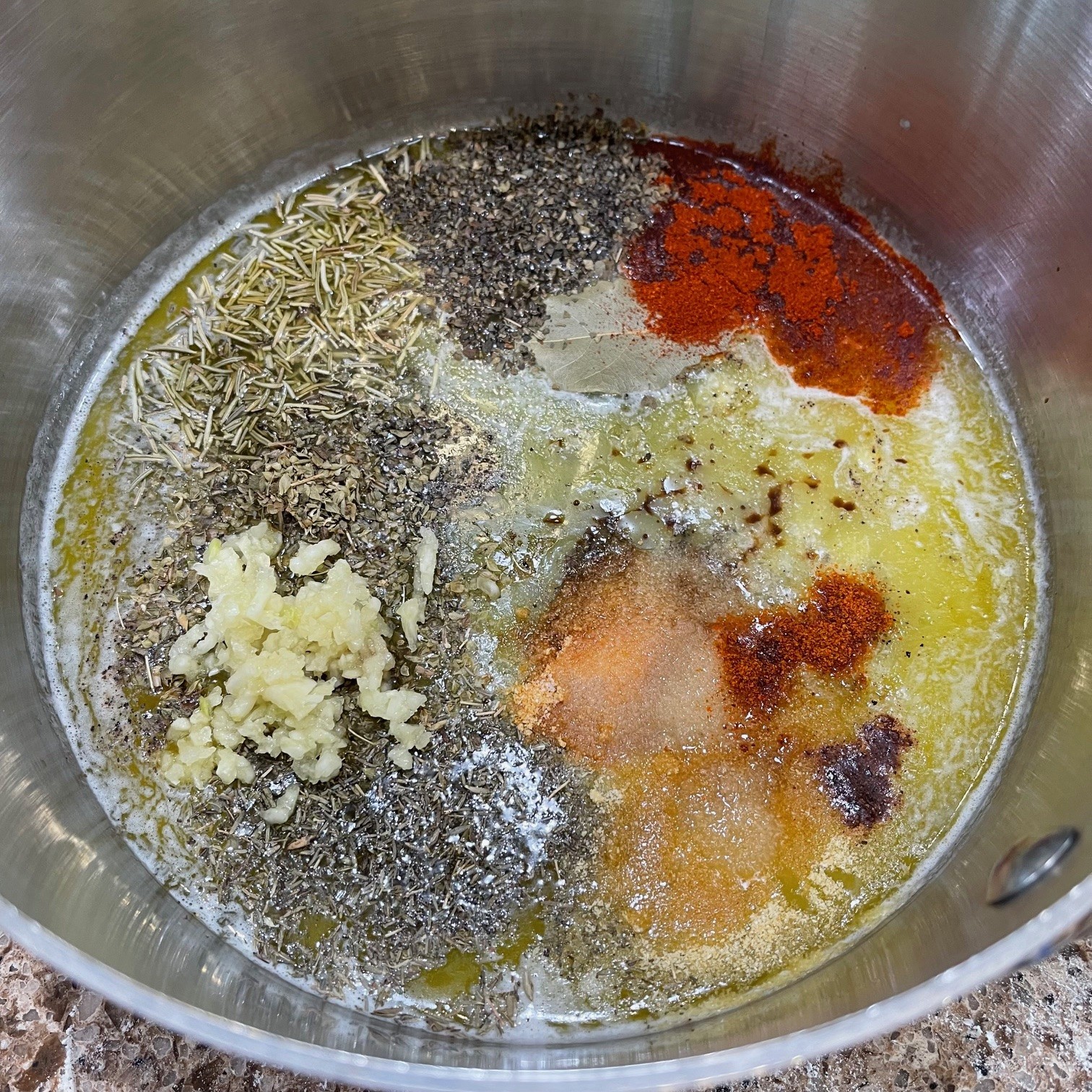
  3. Into 1 or 2 tea ball infusers (or cheesecloth) put the bay leafs, peppercorns, garlic, and thyme.
  4. Put the Pecorino in a small bowl.
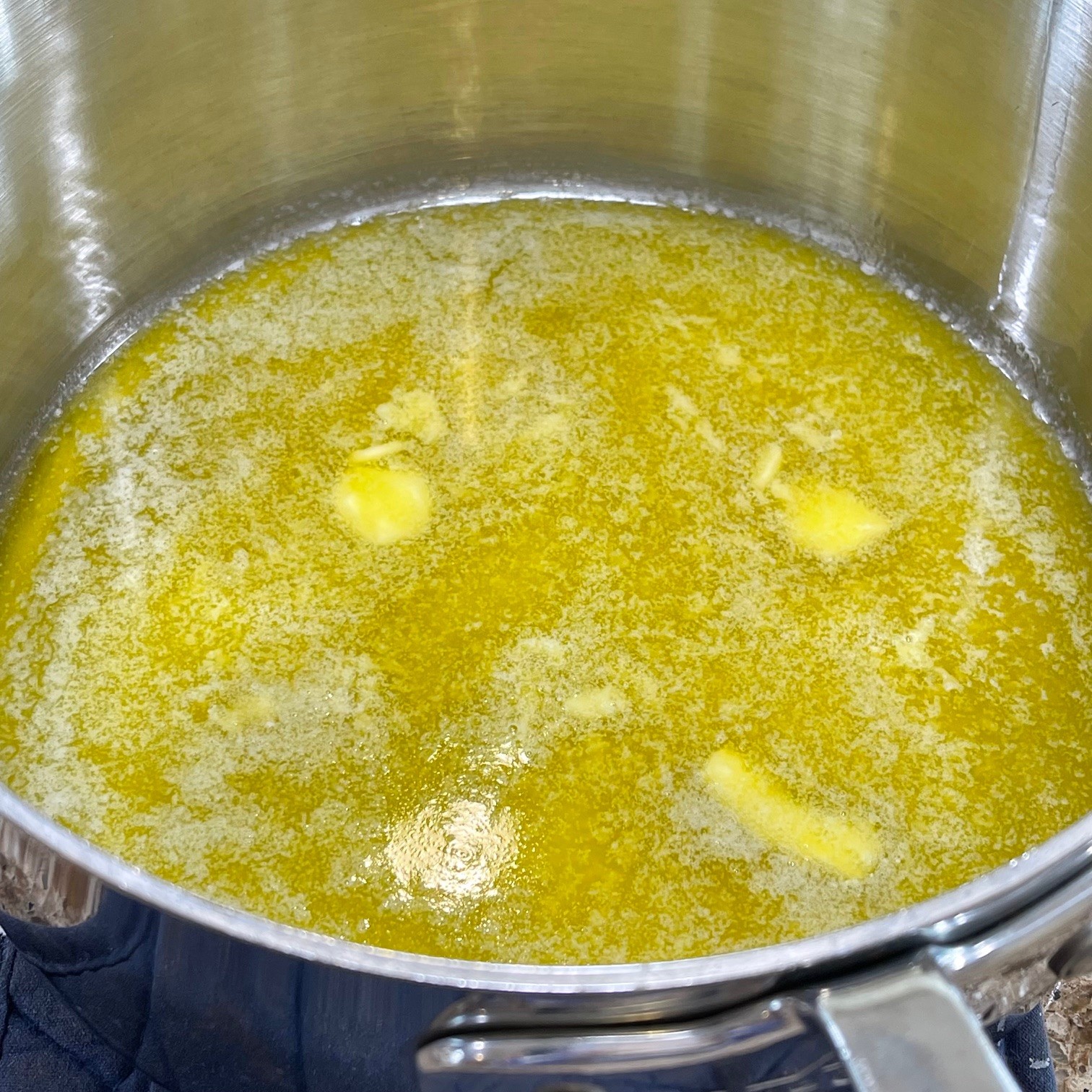
  5. Put the butter in a small saucepan, ready for melting.
  6. Prepare a large, rimmed baking sheet by VERY lightly smearing it with vegetable oil.

Into a large pot, put the 2 quarts (1 kg) water, the tea ball infusers, baking soda, and 2 T kosher salt.

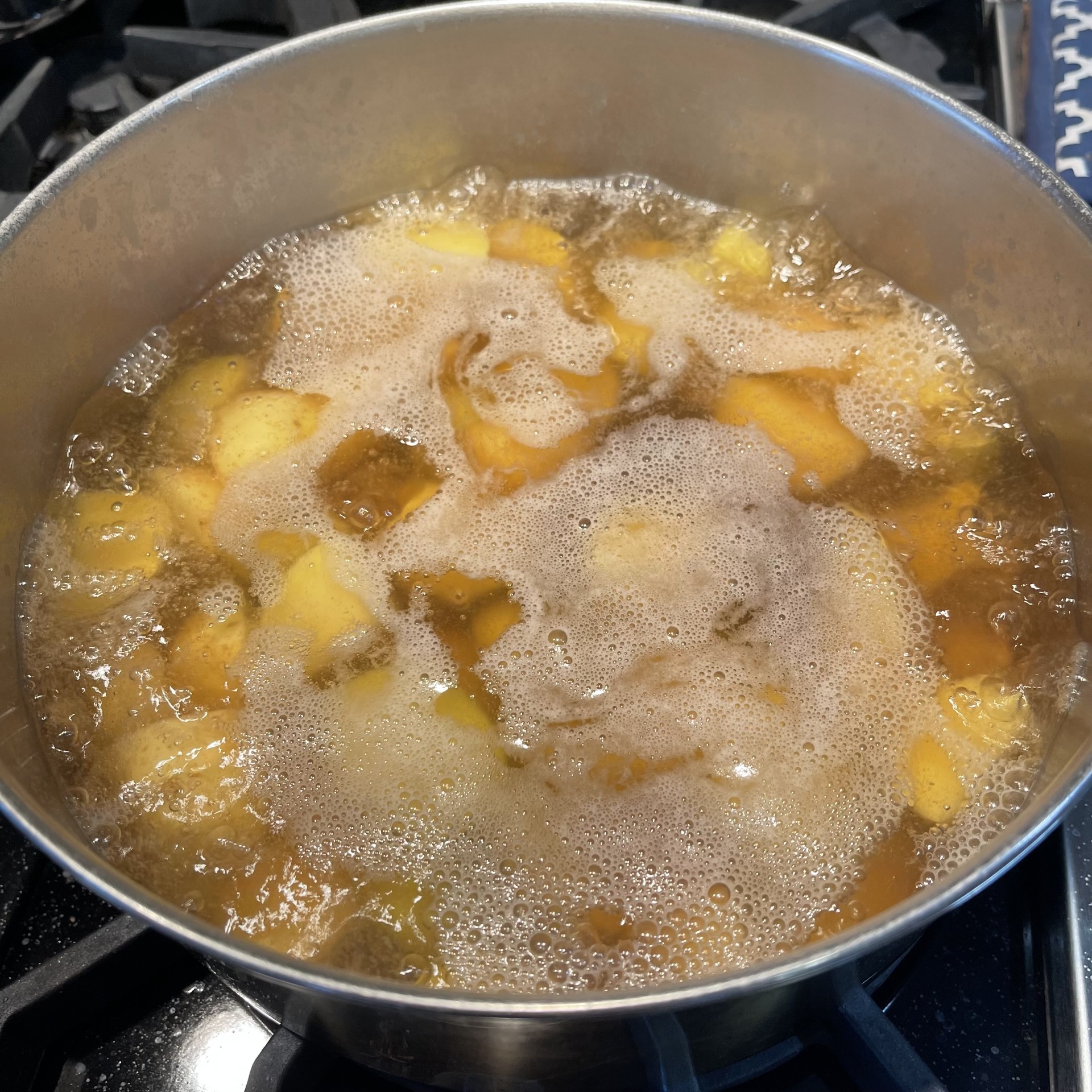
Bring water to a full boil and drop in potato wedges. Cook until potatoes can be easily pierced with a knife – about 10 minutes.

Drain potatoes in a strainer and discard the contents from the tea ball infuser.

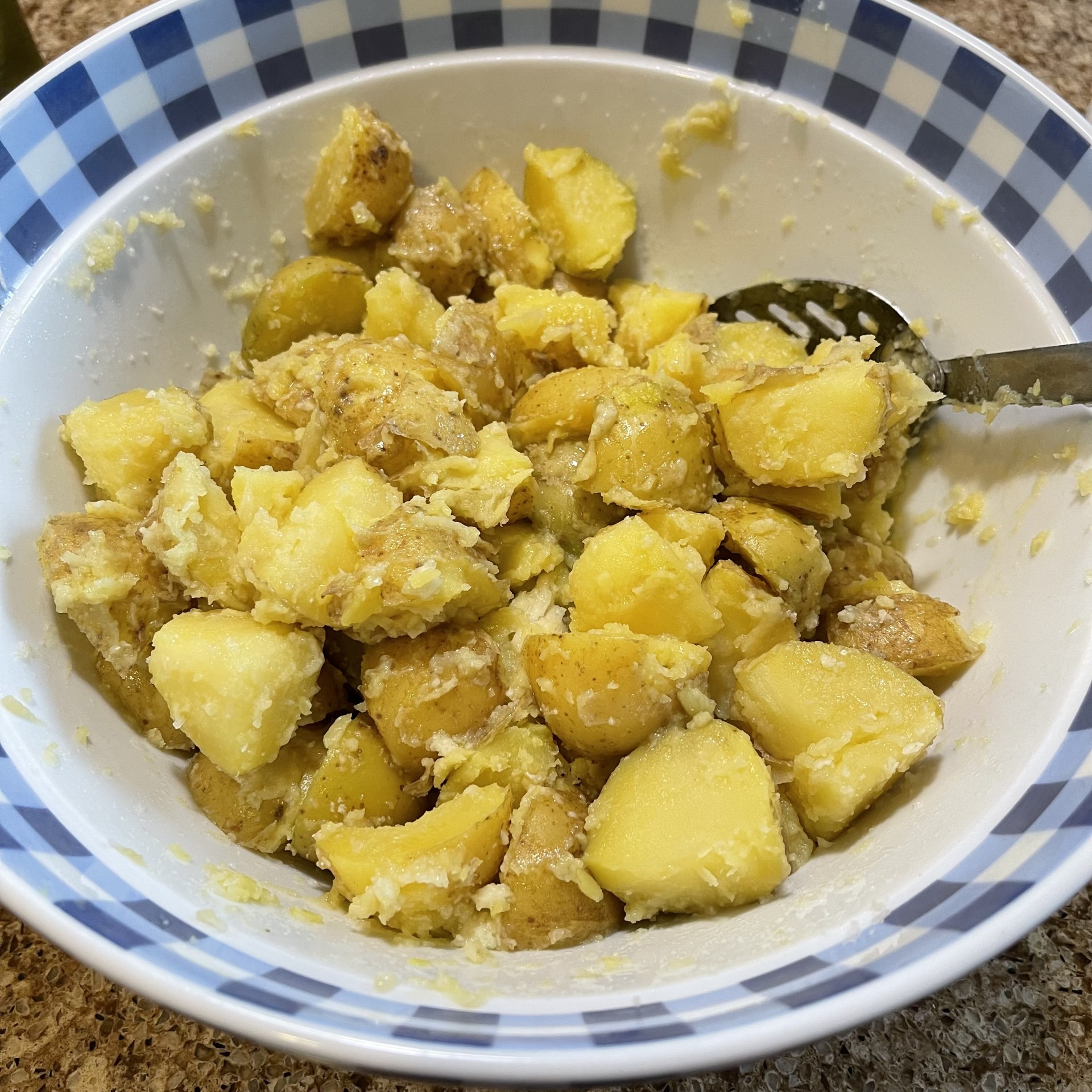
Empty potatoes into a large bowl. Melt the butter. Pour the butter, Pecorino, salt, and ground pepper into the potatoes. With a large spoon, vigorously stir all for 30 seconds. The idea is to slightly break down the potatoes but not mash them – we still want the wedges whole.

Tip potatoes onto a large, rimmed, very lightly oiled baking sheet. Spread potatoes out evenly, avoiding overlap.

Bake at 400°F with fan or 204° C without fan for 20 minutes. (I prefer using the fan.)

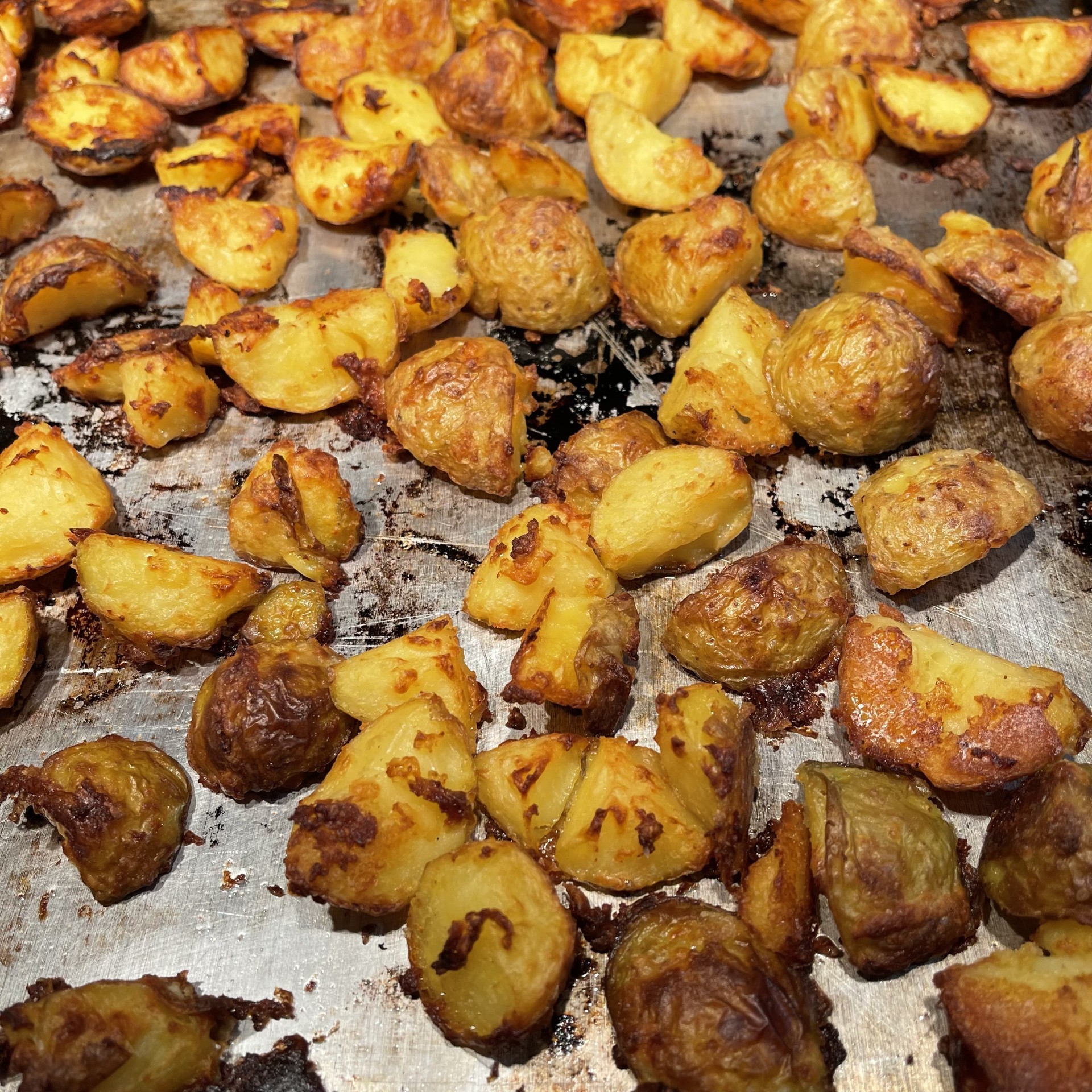
After 20 minutes, flip them to brown both sides. Cook for another 20 minutes, until golden brown. Remove from oven and let potatoes sit on baking sheet for 5 minutes before transferring to a serving bowl.

Serve immediately. Leftovers can be reheated and recrisped at 350°F (180°C) for 5-10 minutes.

MUSHROOM-ONION CROSTATA

A crostata (also known as a galette in French) is a stand-alone, open topped pie. They can be savory or sweet. There’s a rustic look to them as they are formed by rolling out a large circle of pie dough, then placing ingredients on top, leaving a wide border around the perimeter. This border is then folded in a ruffled manner, pinching the dough to keep it in place, then baked.

My Mushroom-Onion Crostata is a delicious blend of caramelized onions, sauteed mushrooms and leeks, topped with Gruyere cheese, encased in an easy-to-prepare hot water crust. The onions and mushrooms can be cooked ahead of time, making the final assembly that much faster on busy nights.

NOTE: As self-proclaimed Queen Of Freeze, I would be remiss in my duties if I didn’t mention freezing leftover eggwash in a small container for future use!

MUSHROOM-ONION CROSTATA

Preheat oven to 425°F (218°C)

Filling:

Note for filling ingredients: amounts for the filling ingredients are approximate – don’t stress

  • 2 T + 1 t olive oil, DIVIDED
  • about 454g (1 lb) baby bella mushrooms, chopped into chunks
  • 1 large leek, white & light green part, chopped
  • 1/2 tsp + 1/4 tsp table salt, DIVIDED
  • 2 garlic cloves, pressed or minced
  • 1 tsp rosemary, fresh, chopped fine
  • 1 large onion, about 270g (2 cups), chopped
  • 131g (4.5 oz) Gruyere cheese, shredded
  • 1 T chives, finely chopped

Dough:

Note regarding eggwash: Save leftover eggwash in a small container and freeze for future use.

  • 200g (1+ 2/3 cups) bread flour
  • 1/2 tsp salt
  • 77g (5.5 T) butter, cold, cut into small pieces
  • 76g (1/3 cup) hot water (NOT boiling)
  • Egg wash – 1 egg mixed with1 T water.

Clean the mushrooms and leek well. Chop into chunks. Place into a large pot with the 2 T olive oil and 1/2 tsp salt. Cook over medium/high heat for about 10 minutes, stirring often.

Add the garlic and rosemary to the mushrooms. Continue cooking over medium/high until liquid is gone. Set aside to cool. (This step can be done ahead of time.)

Into a skillet put the 1 T olive oil, onions, and 1/4 tsp salt. Cook over medium/high heat until the onions are golden brown. Add the caramelized onions to the mushrooms. Let cool. This step can be done ahead of time.

Add in the chives and stir together.

Once the mushroom mixture has cooled (so it doesn’t melt the crust), make the dough. If you have a food processor, I highly recommend using it. Otherwise, you’ll have to mix by hand.

Into the work bowl of your processor (or mixing bowl, if doing this by hand), put the flour and 1/2 tsp salt. Pulse a couple of times to blend, then drop in the chunks of the cold butter and PULSE 6 times.

Pour in the hot water and PROCESS until dough comes together and you can form a ball with it.

Pour the dough onto a very lightly floured surface and knead about 6 time to bring together. Onto a piece of baking paper place the dough and roll out to a circle about 14″ (36 cm) in diameter.

Roll the dough thinner along the 2″ (5 cm) so that when you crimp the dough later it’s not so thick.

Place half the cheese in the center of the dough, leaving about a 2″ (5 cm) border.

Top the cheese with the mushroom mixture.

Sprinkle on remaining half of cheese.

Encase the filling by placing your fingers about 2″ (5 cm) apart and overlapping the dough, pinching each ruffle together as you go. Do this around the entire perimeter.

Paint an eggwash around the border.

Bake in preheated 425°F (218°C) border turns golden brown – about 25-35 minutes. Cool about 10 minutes before serving to firm up a bit.

PESTO: Quick & Easy!

We’re big pesto fans in our house, so I make sure we always have it on hand. Our favorite uses are mixed with fettuccine and on top of pizza with Feta cheese and Kalamata olives.

TIP: As self-proclaimed Queen Of Freeze, when I make pesto, I make plenty and freeze it in 1 cup batches.

The longest step in making this recipe is cleaning the basil – I wash each leaf separately so there are no bits of debris lingering in the crevises. Other than that, it’s just throwing all the ingredients into a blender and pushing the on button.

NOTE: I’ve not tried blending the ingredients in my food processor since I like using the vortex action of a blender. But it would probably be fine to use a food processor.

PESTO – makes 2 cups

  • 170g (6 oz) (4 cups) fresh basil leafs
  • 8 cloves garlic, chopped – use less if you’re not a big garlic lover
  • 42g (3 T) lemon juice
  • 88g (1 cup) Pecorino Romano (or any hard cheese of your choice, such as Parmesan)
  • 44g (1/2 cup) pine nuts
  • 114g (2/3 cup) extra virgin olive oil
  • 1 tsp table salt

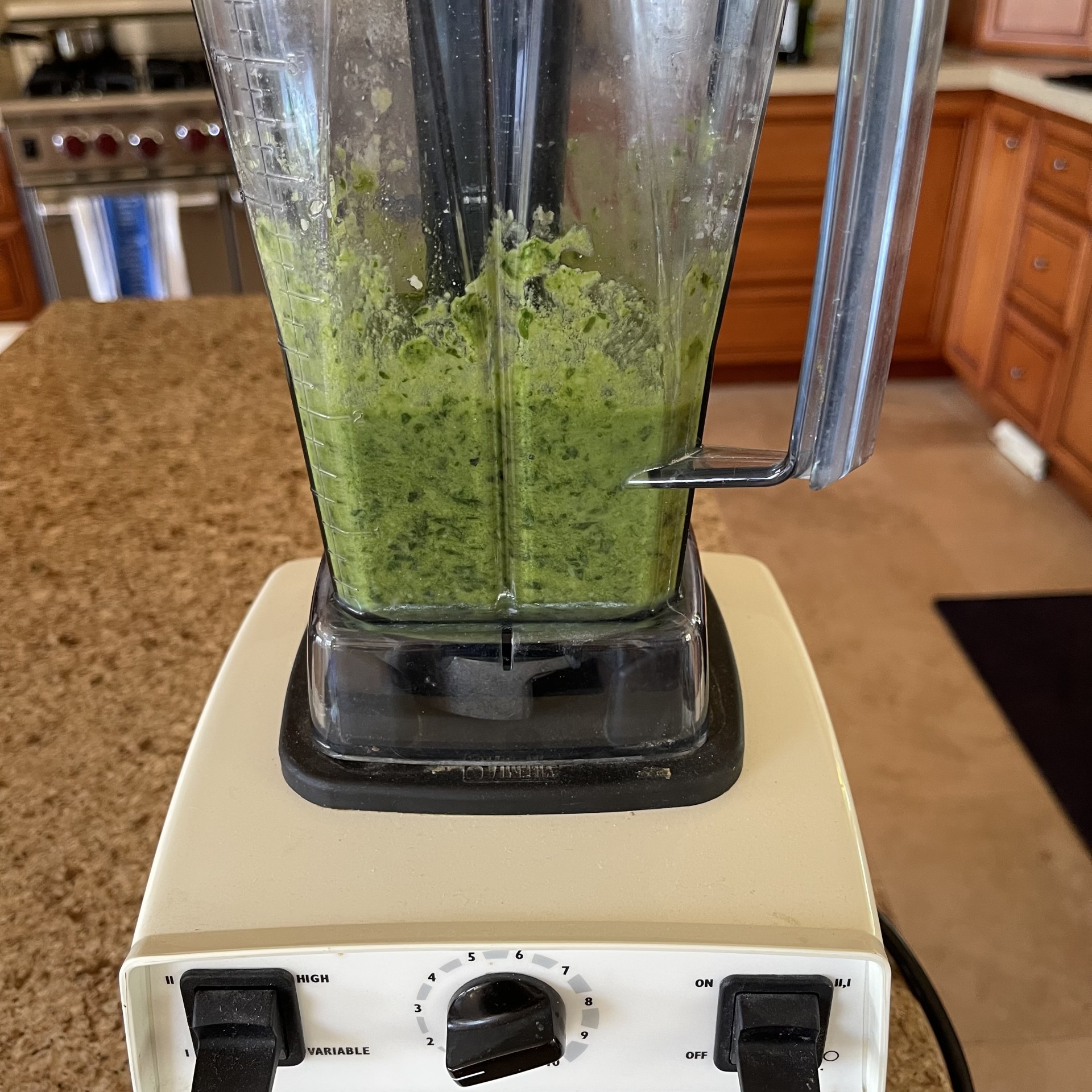
Place all ingredients in a blender.

IMPORTANT NOTE: Don’t have the blender running when you’re scraping down the ingredients.  I’ve done that with a wooden spoon.  More than once I’ve had the spoon get pushed down to the blades, yielding wood chips into my pesto which, of course, I had to throw out.  So please take my advice – just turn the machine off each time you smoosh down!  Throwing out food is heart breaking….and a waste of time and money.

Pulse several times to get desired consistency scraping down sides as needed.

If your machine doesn’t have a pulse button, turn the machine on a low speed.  Turn it off and smoosh the ingredients around.  Turn it on again for a few seconds, then stop. Smoosh it around again.  Keep doing this until it finally starts cycling on it’s own.  

BUTTERSCOTCH-GANACHE PIE: A Special Occasion MUST!

My Butterscotch-Ganache Pie has become the most requested item when friends and family come to our house for dinner. It took a few years to finally perfect it (in my opinion) so the layers were the right height, the ganache was the right consistency, the butterscotch pudding was the right texture, and the crust was not too crumbly nor too hard. The decorative top is optional.

NOTE: This pie should be made the day before it’s first served, so you need to plan ahead!

There are 4 parts to this pie: the crust, chocolate ganache, the butterscotch pudding, and the whipped cream. All of these should be made the day before serving so the pie has settled and is cold. This is a good thing – one less thing to do on company coming day!

BUTTERSCOTCH-GANACHE PIE

Butterscotch Pudding

  • 169g (12 T) butter
  • 90g (1/2 cup) granulated sugar
  • 87g (1/2 cup) dark brown sugar, packed
  • 56g (4 T) water
  • 3/4 tsp table salt
  • 1 tsp lemon juice
  • 30g (2 T) Lyle’s Golden Syrup or corn syrup
  • 118g (1/2 cup) heavy cream, DIVIDED
  • 500g (2 cups) milk – any fat level will do
  • 4 yolks
  • 36g (1/4 cup) (1.25 oz) cornstarch
  • 1 T vanilla extract

Graham Cracker Crust

  • 163g (1.5 cups) graham crackers (I use Honey Maid
  • 30g (3 T) granulated sugar
  • 77g (5.5 T) butter, melted

Ganache

  • 58g (2 oz) 60% cacao chocolate bar
  • 58g (2 oz) 72% cacao chocolate bar
  • 114g (4 oz) heavy cream

Whipped Cream

  • 205g (3/4 cup) heavy cream, cold
  • 14g (3/8 oz) confectioners (icing) sugar

It’s best to begin preparing this pie by making the butterscotch pudding since it needs to cool several hours before pouring it into the crust.

First, measure out the ingredients so everything is ready to go. Yes, I know this is a lot of bowls to wash, but having everything ready makes life easier in this recipe.

1 – Into a large saucepan (at least 3 quarts), place the butter, granulated sugar, brown sugar, water, salt, lemon juice, and Lyle’s Golden syrup (or corn syrup).

2 – Into a small saucepan, pour 59g (1/4 cup) heavy cream. (This will be simmered later.)

3 – Into a small bowl, pour 59g (1/4 cup) heavy cream.

4 – Into a small bowl, place the 4 yolks.

5 – Into a small bowl, place the 36g (1/4 cup) (1.25 oz) cornstarch.

6 – Either have ready the vanilla bottle with a tablespoon or measure out the 1 T into a tiny bowl.

NOTE: I find using a flat whisk (see photo below) helpful for stirring mixtures in saucepans since they can get into the edges of the pan. This is NOT mandatory.

Over medium-high heat, bring the butter/sugar mixture in the saucepan to 240°F (116°C), stirring often (preferably constantly). USE A THERMOMETER! You’ll need a metal or glass thermometer that can attach to the side of the pan – plastic will soften due to the hot steam.

Decrease the heat to medium and stir until the liquid reaches 300°F (150°C), stirring often (preferably constantly). Much of the liquid will have evaporated and the mixture will have become a bit thicker. Turn off the flame and stir in 59g (3 T) cream for 30 seconds.

Turn on burner to medium-high again and stir in 500g (1.5 cups) milk. When milk has been incorporated, turn off burner again.

Stir the cornstarch into the egg yolks.

Bring the other 59g (3 T) cream to a simmer.

Slowly drizzle the hot cream into the yolk/cornstarch, stirring continuously (this will temper the egg yolks so they don’t scramble).

Bring the sugar mixture in the saucepan to a boil over medium-high and pour in the yolk/cornstarch/cream all at once. Whisk until thickened – about a minute. Turn off heat and stir in vanilla.

Into a bowl, strain mixture (to remove the eggy bits and any tiny lumps) through a sieve or colander that is NOT fine mesh. Stir pudding with a rubber spatula or wooden spoon to get the mixture to go through. I’ve tried using my fine mesh strainer and the butterscotch pudding is really too thick to go through. I have an Ekco strainer from days of yore that has 2mm (1/16″) holes, which works perfectly, but these strainers are hard to find. I tried my colander, and it worked fine.

You don’t have to strain the pudding, but it really does make a difference. The photo below shows the remains from straining. YUK!

Cover butterscotch pudding and chill in fridge for, at least, 3 hours.

Chill a bowl and beaters in preparation for whipping the cream later on.

Graham Cracker Crust

  • 163g (1.5 cups) graham crackers (I use Honey Maid
  • 30g (3 T) granulated sugar
  • 77g (5.5 T) butter, melted

Preheat oven to 325°F (163°).

Crush graham crackers with a rolling pin until fine crumbs. Don’t use a food processor – the crumbs don’t get fine enough which leads to a not nicely textured crust. It’s easiest to break up the graham crackers and place them in a large plastic bag to contain them as you roll them. Pour crushed crackers into a bowl and stir in the melted butter and sugar.

Empty crumbs into a 9″ (25 cm) pie plate. Press mixture to evenly cover bottom and sides firmly. If find it best to use a 1/3 cup measuring cup, but you can use a fork or your fingers, etc.

Bake in preheated 325°F (163°C) until lightly browned – about 15 minutes. Let cool.

Ganache

  • 58g (2 oz) 60% cacao chocolate bar, broken into small pieces
  • 58g (2 oz) 72% cacao chocolate bar, broken into small pieces
  • 114g (4 oz) heavy cream

Into a small saucepan, over LOW heat, stir the cream and chocolates together until all chocolate is melted.

Pour melted chocolate onto graham cracker crust and spread evenly across bottom. Let ganache cool in the fridge at least 20 minutes.

While the ganache is cooling in the fridge, remove the butterscotch pudding from the fridge and stir. It will probably be very thick. (Sometimes there are a few thin shards of hardened butter around the edge. I toss them out – they’re not very nice to eat.)

Once the ganache has cooled and the butterscotch pudding has softened a bit (about 20-30 minutes), pour the pudding on top of the ganache and spread to an even thickness – just do your best. Don’t worry about making it pretty, the whipped cream will cover it. Set pie in the fridge while you whip the cream.

Whipped Cream

  • 205g (3/4 cup) heavy cream, cold
  • 14g (3/8 oz) confectioners (icing) sugar

Remove the bowl and beaters from the fridge and set up mixer. Then pour the cold cream into the bowl and sift in the sugar to remove any lumps. Turn mixer on high and beat until stiff peaks form. Pour whipped cream onto the pie, spreading to cover the butterscotch pudding.

Decorate pie as you wish.

CRAN-YAM CASSEROLE: Variation Of A Holiday Side Dish!

Yam-Cran Casserole is a flavorful, fast to prep side-dish that perks up any holiday meal. You can prepare it the day before, then pop it in the oven before mealtime. (The less I have to do the day-of, the better!)

BONUS TIP: Leftovers are delicious eaten cold mixed with plain yogurt!

NOTE: While this dish is fast to prepare, it takes about 1.5 hours to bake – so plan ahead!!!

CRAN-YAM CASSEROLE:

  • 171g / 6 oz uncooked, whole cranberries
  • 1 tart apple (such as fuji, gala, honeycrisp) – unpeeled, cubed into bite-sized pieces
  • 57g / 1/2 cup pecans, chopped and lightly toasted
  • 74g / 1/2 cup brown sugar (I used dark)
  • 129g / 3/4 cup orange juice
  • 36g / 3 T Cointreau (or another orange flavored liqueur, or more orange juice)
  • 3/4 tsp cinnamon
  • 1/8 tsp nutmeg
  • 636g / 1.5 lbs yams or sweet potatoes

Into a bowl, combine the cranberries, apple, pecans, brown sugar, orange juice, Cointreau, cinnamon, and nutmeg. (In other words, combine everything except the yams.)

Place the chopped yams evenly in a casserole dish.

Pour the cranberry mixture evenly on top of yams.

Cover with a lid or foil. Bake at 400°F / 200°C for 45 minutes. Remove lid, then continue to bake until most of liquid has evaporated and yams can be pierced with a knife – about 35 minutes or so.

Stir casserole so remaining liquid is mixed in. Serve immediately or cover until serving time. It can be served either hot or at room temperature.

PEANUT BUTTER-BANANA BUNS: Snack Or Lunch!

Every now and then I challenge myself to improve on a just-okay recipe. In this case, it was my grandmother’s peanut butter buns (she called them ‘josh’, which means ‘snack’ in Armenian). While they were a big hit with her five children and my husband, I felt they were a little dry.

I decided the problem was two-fold: the dry dough and the dry peanut butter filling. Creating an enriched dough seemed the obvious answer to the dough. As for the filling, I considered using a jelly. Then I spied some ripe bananas in the fruit bowl. Hmmm! (Elvis came to mind.) Recalling a contestant on the British Bake Off cooking down bananas to evaporate excess moisture, this seemed like a good idea to prevent a mushy filling while, simultaneously, adding flavor. To give a nod to the classic jelly idea, I tried crushing freeze dried strawberries. The problem was I needed to use a lot to really taste them. As they’re very expensive, I chose to go with the peanut butter and banana on its own. You can add them, if you like.

NOTE: You can substitute a different nut butter, if you prefer.

PEANUT BUTTER-BANANA BUNS – makes 6

Dough

  • 121g (1/2 cup) milk, warmed to about 40°C (104°F)
  • 1 tsp yeast
  • 229g (1.75 cups) bread flour
  • 1 tsp salt
  • 28g (2 T) butter, room temperature
  • 40g (1/4 cup) granulated sugar
  • 1 egg white

Filling

  • 3 large ripe bananas
  • 118 (1/2 cup) peanut butter (or other nut butter)
  • 1/4 tsp salt
  • Optional: 31g (1 oz) freeze dried fruit, crushed

Prepare the dough:

Proof the yeast by stirring the warmed milk and yeast together, letting it set about 5 minutes.

Into the workbowl of your food processor, put the flour, 1 tsp salt, sugar, softened butter, egg white, and proved yeast/milk. Process about 40 seconds, pausing to scrape down the sides as needed.

Empty dough onto lightly floured counter and knead about 6 times to bring dough into a ball. A bench scraper works well for this task.

Place dough ball in a lightly oiled bowl, then flip the ball so both sides are coated with oil. Cover and let rise 1.5 hours on counter.

While dough is rising, prepare the filling:

Into a saucepan, place the peeled bananas. Mash with a potato masher or fork.

Over medium/high heat, cook the bananas, stirring often, until most of the water has been cooked out – about 11 minutes. Remove from heat.

Stir in the peanut butter and 1/4 tsp salt. (If you’re using freeze dried fruit, stir it into the mixture) Chill until dough has finished rising.

Once the dough has risen, assemble the buns:

Empty the risen dough onto a lightly floured surface and divide it into 6 pieces. Roll each piece into a 9″x 4″ (23cm x 10cm) strip.

Divide the peanut butter-banana filling evenly between the strips. Spread the filling over the dough strip, leaving a 1/2″ (1cm) border along all 4 sides. The filling will be spread very thinly – this is good – it’s how you’ll get that lovely swirl.

Roll each strip from the short side up along the long side. Pinch the dough to seal the seam.

Roll the log towards you 90°, so the seam is facing you. (This is so the seam will be protected from bursting open during baking.)

Pinch both ends to seal them. Then, snail the log by rolling it sideways. (The seam formed along the length of the log will now be encased in the snail.) Pinch closed the end of the log to the body of the roll.

Place the rolled buns on a greased or parchment lined baking sheet. Lightly press down each bun so they’re about 1″ (2.5cm). Cover and let rise 1/2 hour. Preheat oven to 200°C (400°F) during the rise.

Once the buns have risen, place the baking sheet in the preheated oven. Decrease the temperature to 177°C (350°F) and bake about 20 minutes – until browned on top. (There is NO wash for these buns – I’ve tried egg, milk, and cornstarch/water – they cause the top to flake. They come out much better with a dry top.) Remove baked buns to a wire rack to cool.

NOTE: If you forgot to decrease the oven temperature, it’s not a problem. Just keep an eye on the brownness – you may have to decrease the bake time.