VALENTINE PRETZELS – Feel The Love!!!

valentine pretzels

Yikes! Valentine’s Day is fast approaching.  There are so many people to whom you’d like to give a little something, but your wallet may still be reeling from the holidays. What to do?

How about baking homemade treats that are sure to make you the most popular Valentine around? Oh, I can hear the excuses now: “I don’t know how to bake.”  “I don’t know what to make.”  “I don’t have time.”

Thank goodness you came to me.

If chocolate, caramel, and salty pretzels sound good, then I have a fool-proof recipe for you that can be put together in minutes: VALENTINE PRETZELS!

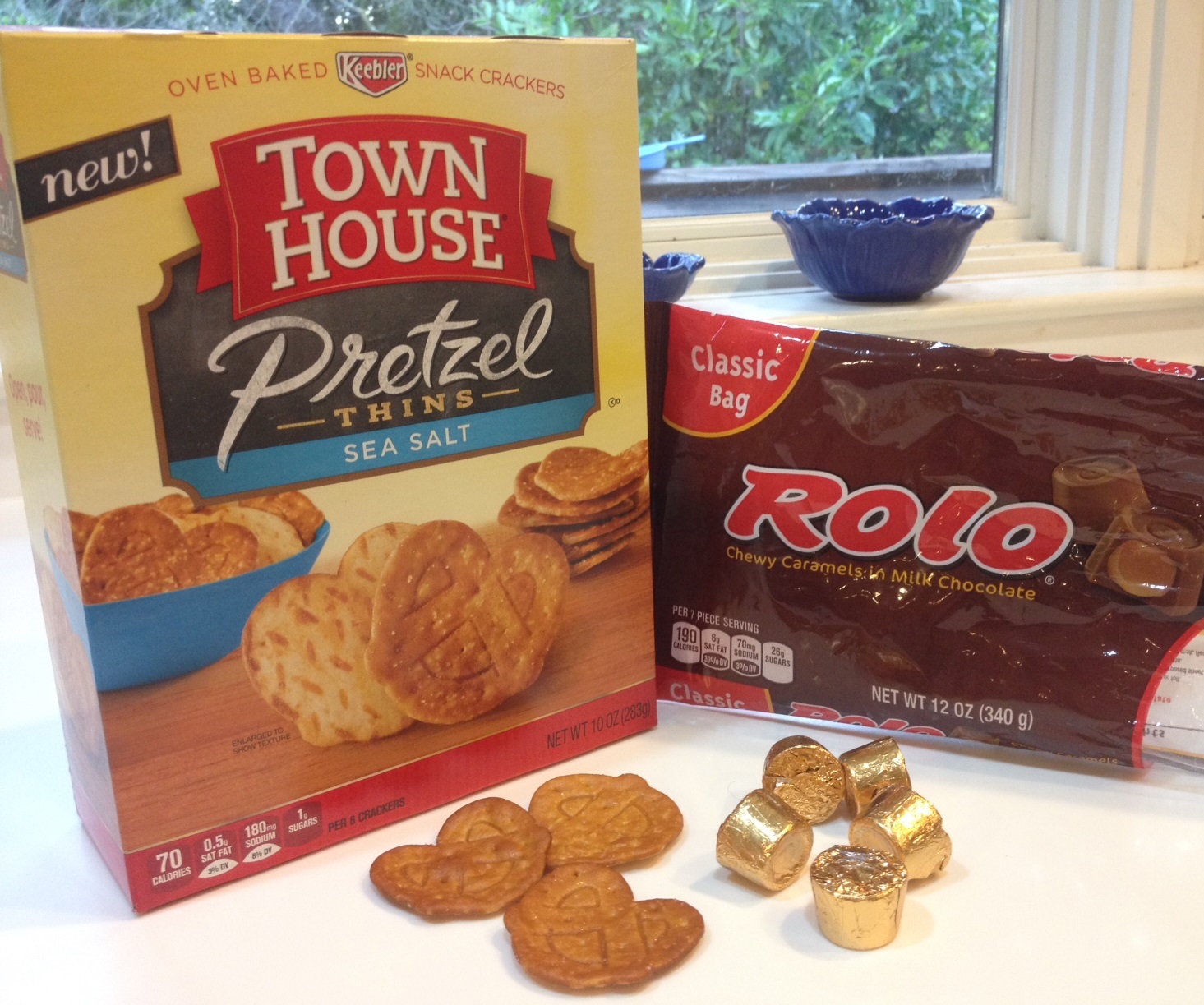
A popular version of this recipe uses small pretzel twists. The problem is the candy melts through the holes. So I looked in the cracker aisle and found the perfect solution:  a new product from Keebler (and, no, they’re not paying me) called Town House Pretzel Thins with sea salt. Not only are they the right taste and construction – THEY’RE HEART SHAPED!!! Products are pictured below to aid in your search.

IMG_1356

VALENTINE PRETZELS

  • Keebler Town House Pretzel Thins – sea salt flavor
  • Rolo candies (or other caramel filled candy)
  • pecan halves, lightly toasted

You’ll need one of each per Valentine Pretzel.

Preheat oven to 350º Fahrenheit.

Place crackers salted side down on ungreased cookie sheet, so that they’re curving downwards.  I place the crackers salted side down so that your tongue gets bathed in salt as you bite into the chocolate and caramel. Don’t worry if you forget – they’re still delicious!

Top with unwrapped candy. Bake for approximately 4 minutes, until candy is soft but still retains its shape. Remove from oven.

Press one pecan half into each softened candy, firmly enough that the pecan embeds into the candy, but not so hard that the caramel comes squirting out.

Let cool either on the counter or briefly in fridge.

HAPPY VALENTINE’S DAY!


Fast And Easy FETTUCCINE PRIMAVERA: Molto bene!!!

Fettuccine Primavera

FETTUCCINE PRIMAVERA

Think “fettuccine” and the word “fattening” probably comes to mind. Well, if you want fettuccine alfredo, then “heart attack on a plate” is an appropriate leap. But the high calories and cholesterol come from the butter and cream, not the pasta. The noodles themselves are only about 210 calories per 1½ cup of cooked fettuccine.

Fettuccine Primaverde is one of those dishes I make when I want something light and/or fast. Washing and chopping the veggies is the longest part – cooking is done in about 5 minutes. If you make the pasta noodles (which I do), then it takes a bit longer. The last time I made Fettuccine Primaverde I used leftover fettuccine pasta from the night before, so I enjoyed the benefit of homemade noodles without the effort. Dinner was ready in 20 minutes!

This recipe makes enough for 3-4 people, depending on how large the portions are. If you purchase the pasta, cook the amount you’ll need. If you’re making the pasta, use 1½ cups flour and 2 eggs.

FETTUCCINE PRIMAVERA – makes 3-4 servings

  • 3 T butter
  • 3 T olive oil (I use extra virgin)
  • 3 garlic cloves, pressed
  • ½ tsp cayenne pepper
  • 12 mushrooms (about 7 oz), coarsely chopped
  • 10 stalks asparagus, sliced into 1″ pieces
  • 1 red pepper, chopped
  • 1/3 cup kalamata olives
  • ½ cup vegetable stock (I use homemade: Homemade Vegetable Stock)
  • about ¼ cup Romano cheese, shredded
  • 1½ T pine nuts, lightly toasted
  • 3-4 servings fettuccine pasta, cooked

Melt butter and oil together in 10″ skillet. Add in garlic and cayenne pepper. Sauté for 1 minute.

Add in mushrooms, asparagus, and red pepper. Sauté about 2 more minutes.

Add in vegetable stock and olives. Bring to a low boil. Let cook another couple of minutes. Test the asparagus – when it can be pierced with a fork, but is NOT mushy, it’s finished.

To serve, pile fettuccine pasta in a bowl or on a plate and ladle veggies over it. Sprinkle on cheese and pine nuts.


When Life Sends You Lemons…Make LEMON ZINGER CUPCAKES!

Lemon Zinger Cupcake

LEMON ZINGER CUPCAKE

My friend, George, thoughtfully bestowed upon me a bagful of lemons from his garden. As most of you know, once nature’s bounty has been picked, there’s only so long before those fresh and flavorful fruits and veggies turn into mushy fodder for the compost heap. So I needed to come up with some ideas to take advantage of these luscious lemons.

There were the usual options of lemon cream pie, lemon bars, the obvious lemonade, and, of course, as self-proclaimed Queen of Freeze, I realized I could have just frozen the juice in ice cube trays and dealt with the dilemma later.

Then it came to me:  Lemon Zinger Cupcakes.

I knew exactly what I wanted:  a delicate cake crumb that packs a lemony wallop. I tried a couple of recipes that I found online, but they were rubbery, sticky, and didn’t have the lemon punch.

So I set about creating my own lemon cupcake recipe. I’ve been baking my whole life – how hard could it be? Oh – it be hard! Believe me, creating a cupcake recipe isn’t exactly….well, a piece of cake. With cooking, you can change a recipe by adding this or that in the amount you want. Baking is a whole different world! There’s a science to baking that must be respected or your recipe will be a dismal flop.

For the past week I’ve been learning about what makes a cake wet, dry, sink in the middle, rubbery, and have an even crumb rather than tunnels. The flour has to be in the right proportion to the sugar, the eggs to the fat, and the eggs and liquid to the sugar. Then there’s the baking soda versus baking powder dilemma. Finally, with a lemon cupcake, I needed to get the most flavor I could without over-wetting the cupcake. Yikes! So much to learn!!!

Since I was creating this Lemon Zinger Cupcake recipe to post on my blog, I wanted it to be user friendly. My criteria was:

  1. Use melted butter rather than softened. Who can remember hours ahead of time to remove the butter from the fridge? Most cake recipes use softened, but I tested the same recipe with melted and softened – there was no difference.
  2. Use salted butter. This is what’s in most of our refrigerators. When you buy unsalted, you have to buy at least 2 cubes – what do you do with the other if you normally don’t bake?
  3. Use all-purpose flour. Not everyone keeps cake flour around. There was no difference in my taste test.
  4. Use whole eggs rather than yolks or whites. It’s wasteful to throw out the unused part, and you can only freeze whites – unused yolks have to be used within a day or two.

I was a woman on a mission! So this past week I took one for the team (because I’m that kind of gal) by baking and sampling batch after batch of evolving LEMON ZINGER CUPCAKES recipes. But it was worth it because I finally came up with exactly the texture and flavor I wanted. I topped them with a vanilla buttercream frosting. While some people choose a lemon frosting, I think the buttercream better complements the powerful lemon zing.

Sliced Lemon Zinger Cupcakes

Sliced LEMON ZINGER CUPCAKE

It should come as no surprise that my freezer is loaded with lemon cupcake rejects to be used in some future recipe. They all tasted good, but the texture flavor wasn’t what I wanted for this recipe. Waste not, want not!

Speaking of freezing, cupcakes – frosted or not – freeze really well. Honestly! My LEMON ZINGER CUPCAKES recipe yields 9 cupcakes, which is kind of a skimpy number. If you need additional, double the recipe, then freeze the extras (if any). Don’t try to triple or more – the batter needs to be baked as soon as it’s mixed.

LEMON ZINGER CUPCAKES – makes 9-10 cupcakes

  • 1¼ cup (157g) (5.5 oz) all-purpose flour
  • ¼ tsp baking soda (NOT powder)
  • ¼ tsp salt
  • 6 T (84g) salted butter
  • ¾ cup (147g) granulated sugar
  • 2 eggs
  • 3 T lemon juice
  • 1 T lemon zest, packed in the measuring spoon (don’t be stingy)
  • ¼ cup (58 ml) milk (I used nonfat)
  • ½ tsp vanilla extract
  • optional (but not really necessary) for extra zing – ½ tsp lemon extract

NOTE:  Ingredients must be at room temperature.

Mix together the flour, baking soda, and salt in a small bowl.

Melt the butter. Remove from heat just before it’s completely melted – it will continue to melt. (You don’t want butter too hot or it will cook the eggs.) Pour into the mixing bowl of an electric mixer. Add in the sugar and beat at medium high for 4 minutes.

Add in the eggs one at a time, beating well with each.

Add and mix in the lemon juice and zest (and lemon extract, if using).

Add in about half the flour mixture and VERY GENTLY mix in. It’s okay if there’s still flour unincorporated. You don’t want to over mix cupcakes or they’ll be tough. You can use your electric mixer, but keep it at the lowest speed and beat for just a few seconds.

Add in the milk and vanilla, and VERY GENTLY mix in.

Add in the rest of the flour and (you guessed it) VERY GENTLY mix in.

Preheat oven to 375º Fahrenheit.

Fill muffin cup liners 2/3 full with batter. Put a little water into the empty cups so they don’t scorch.

Bake for 13-18 minutes. DON’T OPEN OVEN DOOR BEFORE 13 MINUTES! Test for doneness by lightly pressing center with your finger. If it springs back, it’s done. Do this fast – you don’t want the oven to cool from the open door.

When done, take pan from oven and let sit for 1 minute before carefully removing cupcakes to a wire rack to cool completely before frosting.

VANILLA BUTTERCREAM FROSTING – makes about 2 cups, enough for above recipe plus extra

  • ½ cup salted butter, softened
  • 4 cups (388g) confectioners sugar (I never sift, but you can, if you want)
  • ½ tsp salt
  • 2 tsp vanilla extract
  • 5-6 T milk (I used nonfat)

Put the butter out to soften when you start the cupcakes (or earlier, if you can remember). Cut it in small pieces to soften quicker.

Cream together the butter and sugar at medium high speed of an electric mixer. Add in the salt, vanilla,  and 2 T milk, and beat at medium high. Continue to add milk one tablespoon at a time, beating well with each addition, until you get the consistency you want. If you add too much milk, the frosting will be too thin, especially if you’re piping it. If this happens, just add more confectioners sugar. If it gets too thick, add more milk.

You can freeze leftover frosting. It’s always nice to have some extra on hand.

NOTE: I decorated the cupcakes with yellow sprinkles and a lemon coated almond.

Beurek – A “Handy” Little Treat

Cheese Boerg

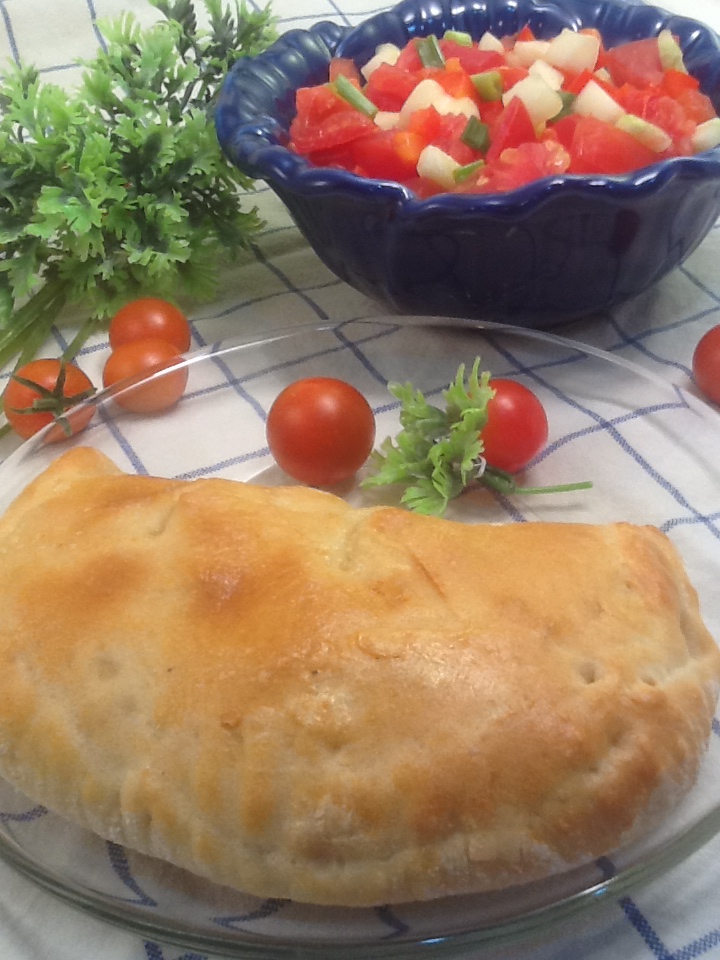
Cheese Beurek served with Armenian Salad.

Like all ethnic families, our Armenian family gatherings centered around food. Stops were pulled, and a feast was enjoyed by all – generally twice in the same day.

A favorite amongst the children was Cheese Beurek (pronounced ‘burr-egg’). They’re similar to the Cornish pasty and Italian calzone. Admittedly, these tasty delights are a bit of work – they’re not difficult, just time consuming.

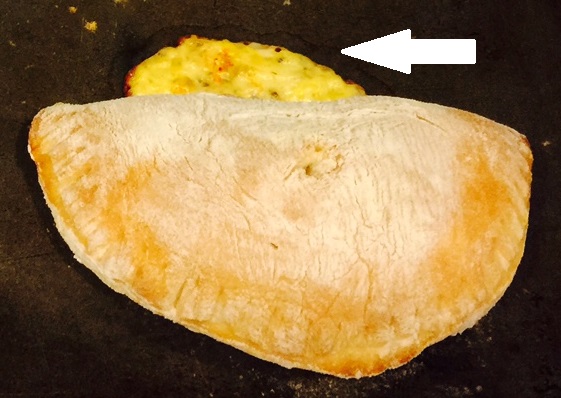
Now here is the issue of utmost importance with Cheese Beurek:  to ooze or not to ooze. Unless you’re very careful, some of the cheese filling oozes out midway through the baking process, forming a crispy cheese appendage. (See photo below.)

Oozy Beurek

Oozy Beurek

To be honest, I quite like this cheesey bonus disc, and there’s still plenty of cheese inside. But they don’t look very nice and, of course, when they’re completely enclosed, there are no greasy fingers.

I embarked on a mission to discover why the bursting forth of cheese so I would know how to counteract this situation if I wanted to serve Cheese Beurek for company. Oddly enough, the leakage comes from the folded side, not where the edges meet, like you might expect. This is probably because I crimp the heck out of the dough.

So I made countless Cheese Beurek, experimenting with different methods including slitting the top, using less filling, keeping the filling away from the center of the fold, and brushing the dough with egg before placing the filling. What finally worked was using a piece of floured waxed paper to assist in folding the dough, rather than my hands. I guess I was stretching the dough with my palm even though I tried to be careful. The paper keeps the dough stable.

So there you have it!

One thing I should mention is that sometimes beurek is made using a filo or puff pastry dough, rather than bread dough. It’s just a matter of preference.

NOTE:  This recipe involves a rising dough, so allow time for it.

CHEESE BEUREK – makes 12 beurek

  • 2 tsp dry yeast
  • 1¼ cups water, 100º – 104º Fahrenheit
  • 3 1/3 cups all purpose flour, approximately
  • 1 tsp sugar
  • 1½ tsp salt
  • ¼ cup shortening (I use Crisco)
  • ½ lb Muenster cheese, shredded
  • 1 egg, beaten and divided
  • ½ tsp black ground pepper
  • ¼ tsp garlic salt
  • ½ tsp salt

Stir yeast into the water and let proof (foam) for about 5 minutes. Put 2½ cups of flour into the work bowl of your food processor.  Add in sugar, salt, and shortening.  Turn on the machine and slowly pour in the yeast water. Turn off machine and sprinkle in a few more tablespoons of flour. Turn on machine. The goal is for the dough to form a ball. Keep adding in flour a little at a time until the ball forms – you may not need all the flour. If you don’t have a food processor, you’ll have to mix in a bowl and knead by hand. (Start saving your pennies, you really should have one!)

Pour the dough onto a floured bread board. Pick up the ball from the flour-y bottom and fold the dough onto itself, so now floured dough surrounds it and the sticky dough is encased. (I HATE touching sticky dough with my hands.) Gently toss the ball to dislodge excess flour. Plop the dough into a greased bowl, press down, then flip the dough. Now the ball is greased on both sides and your hands should still be clean. Cover with a tea towel and let rise for about an hour.

Prepare the filling while the dough is rising. Into a mixing bowl blend the cheese, half of the egg, the pepper, garlic salt, and salt. Into a smaller bowl make an egg wash by beating the other half of the egg and 1 tablespoon water.

When the dough has risen, pour it onto a well floured board and cut into 12 pieces. Form each piece into a ball, then flatten with the palm of your hand. Let the dough rest about 10 minutes so it’s easier to roll out.

One by one (unless you’re doing an assembly line with helpers) roll out a dough circle to be about 5½” in diameter. Place this on a lightly floured square of waxed paper. Spread about 2½ tablespoons of the filling on one half of the dough, leaving a 3/8″ border from the edge. Dip your finger in water and run it around the entire border to moisten dough. Put your palm under the waxed paper and fold the dough in half.  (See picture below.)

Fold dough using waxed paper.

Fold dough using waxed paper.

UPDATE: I’ve just discovered an even better method to prevent leakage:  form 12 oblong cheese balls from the filling, place on waxed paper, and freeze. Place frozen balls on dough circles, wet edges with water, and fold dough over cheese ball, being careful not to poke the frozen cheese through the dough.

Press edges together, then crimp well with a fork.boereg crimped

Place on a greased or non-stick cookie sheet – don’t crowd. One standard sheet will hold 6. With a dry pastry brush, whisk away excess flour.

Preheat oven to 450º Fahrenheit. Do this after beureks are assembled to give them a bit of a rest as the oven is heating.

When the oven is heated, brush the tops of the Cheese Beurek with egg wash. Bake for 12 minutes, until top is golden brown. Serve hot.


Brussels Sprouts Amandine – Try It, You’ll Like It!

FullSizeRender (3)

In a recent post, I made mention of Beaver Cleaver’s (from tv’s Leave It To Beaver) successful encounter with a Brussels sprout. It reminded me of a delicious Brussels sprout recipe I had tucked away. As a creature of habit where vegetables are concerned, I tend to serve the usual broccoli, mushy peas, carrots, and cauliflower. For some reason, I forget about these mini cabbage morsels.

So I rifled through my recipe box and found the Brussels Sprouts Amandine recipe card. To those of you under the age of 25, a recipe box is where index cards with recipes printed on them are stored. (Yes, I’m that old)

Every time I make this recipe, I wonder why I don’t make it more often. It’s one of those hater-converters. Never heard the term? That’s because I just made it up. A hater-converter is a recipe so yummy that it alters your negative view of a certain ingredient, such as Brussels sprouts, into something you love…or, at least, like enough to tolerate because it’s good for you.

TIP: Brussels Sprouts Amandine taste best when freshly made. So prepare the sauce ahead of time, leaving it in the saucepan for a quick reheat. Have the Brussels sprouts cleaned, halved, and sitting in the steamer basket ready to be cooked. They only take about 5 minutes. This way, you can turn on the burner as your meal preparation is winding down, quickly dress them, and they’re ready to go.

BRUSSELS SPROUTS AMANDINE – makes 2 cups

  • 2 cups Brussels sprouts
  • 2 T slivered almonds, toasted
  • ½ T butter
  • ½ T Dijon mustard
  • 1 T red cider vinegar
  • 1½ T dark brown sugar, packed

Trim the base of Brussels sprouts and remove loose leaves.  Slice them in half lengthwise and place in steamer basket.  DON’T FORGET THE WATER UNDERNEATH!  (Been there, done that.)

In a small saucepan, melt together the butter, mustard, vinegar, and sugar.  Turn off burner and set sauce aside.

When it’s about 5 minutes until meal time, steam the Brussels sprouts.  You want them cooked, but not mushy.  They’ll become vibrant green just before they’re ready – test with a fork.  Remove from heat.

Quickly reheat sauce and mix with sprouts and almonds.  Serve immediately.


Potato Cheese Soup = A United Family Meal

You know those kids who happily eat (or, at least, TRY) any food that’s put before them? Well, unfortunately, none of them lives in my house. My children have never exactly been culinarily curious.

I suppose I should have insisted like June Cleaver did on Leave It To Beaver when The Beav refused to try his Brussels sprouts. Mom & Dad made him stay at the table until he took a bite. Naturally, he grudgingly sampled one, loved it, and everyone rejoiced in the glow of Brussels sprout bliss.

Often times I’ve felt like a short order cook – making one meal for my husband and me, and one for the kids (sometimes each child even got his own selection). This may sound like a lot of work, but for me it was just simpler to crank out the food so I could enjoy dinner without the wheedling, bribing, threats, and anger.

There were, thankfully, a few meals that satisfied the entire family. It goes without saying that I prepared those frequently.

Potato Cheese Soup is high on the preferred list. Not only is it easy to prepare, but because it’s creamed in a blender (or food processor), you can add in a little spinach, etc., and the kids will never know. (We moms have to be a bit sneaky – it’s for their own good….they’ll thank us later.) Also, you can plop in broccoli or cauliflower – the soup is kind of like a cheese sauce.

As noted, this recipe requires a blender or food processor. I haven’t nagged about owning one or both of these appliances in awhile, so with the after-holiday sales, I’ll suggest these items go on your purchase list, if you don’t already own them. Both are invaluable in the kitchen. I use my food processor and blender nearly everyday.

POTATO CHEESE SOUP – makes  7 – 8 cups

  • 42g (3 T) butter
  • 264g (2 cups) onions, coarsely chopped
  • 1 tsp garlic, minced
  • 917g (2 lbs) russet potatoes, unpeeled and coarsely chopped
  • 82g (1 large) carrot, unpeeled and coarsely chopped
  • 710g (3 cups) vegetable stock, purchased or homemade (recipe:  https://vegcookingforcarnivoresblog.com/2014/04/14/back-to-basics-vegetable-stock/)
  • 1 tsp dried dill
  • 245g (1 cup) milk (I use nonfat)
  • 1 tsp salt
  • ¼ tsp pepper
  • 144g (5 oz) cheese, shredded (I use medium cheddar)

Melt butter in a stockpot. Sauté onions over a medium flame for about 7 minutes, stirring often.

Add in the garlic, potatoes and carrots, and continue to sauté another 10 minutes.

Add in the stock, dill, salt, and pepper. Bring to a boil, then turn down flame to simmer the soup. Cover and cook until the vegetables are tender – test if carrots are easily pierced with a fork.

Remove the lid and let cool about 10 minutes – you don’t want to put boiling liquid in your blender.

Add milk to the pot, then pour into a blender or food processor.  Puree until smooth. (Depending on the size of your blender, you may have to do this in batches and, because of this, a second pot will be needed into which you empty the puréed batches.)

Place shredded cheese in the empty pot.

Pour the pureed sauce on top. Heat to melt the cheese and blend into the soup.

This soup is delicious served with homemade French bread – https://vegcookingforcarnivoresblog.com/2014/05/18/ooo-la-la-les-baguettes-tres-simple/

Necessity Is The Mother Of Inventing CRAN-YAM MUFFINS!

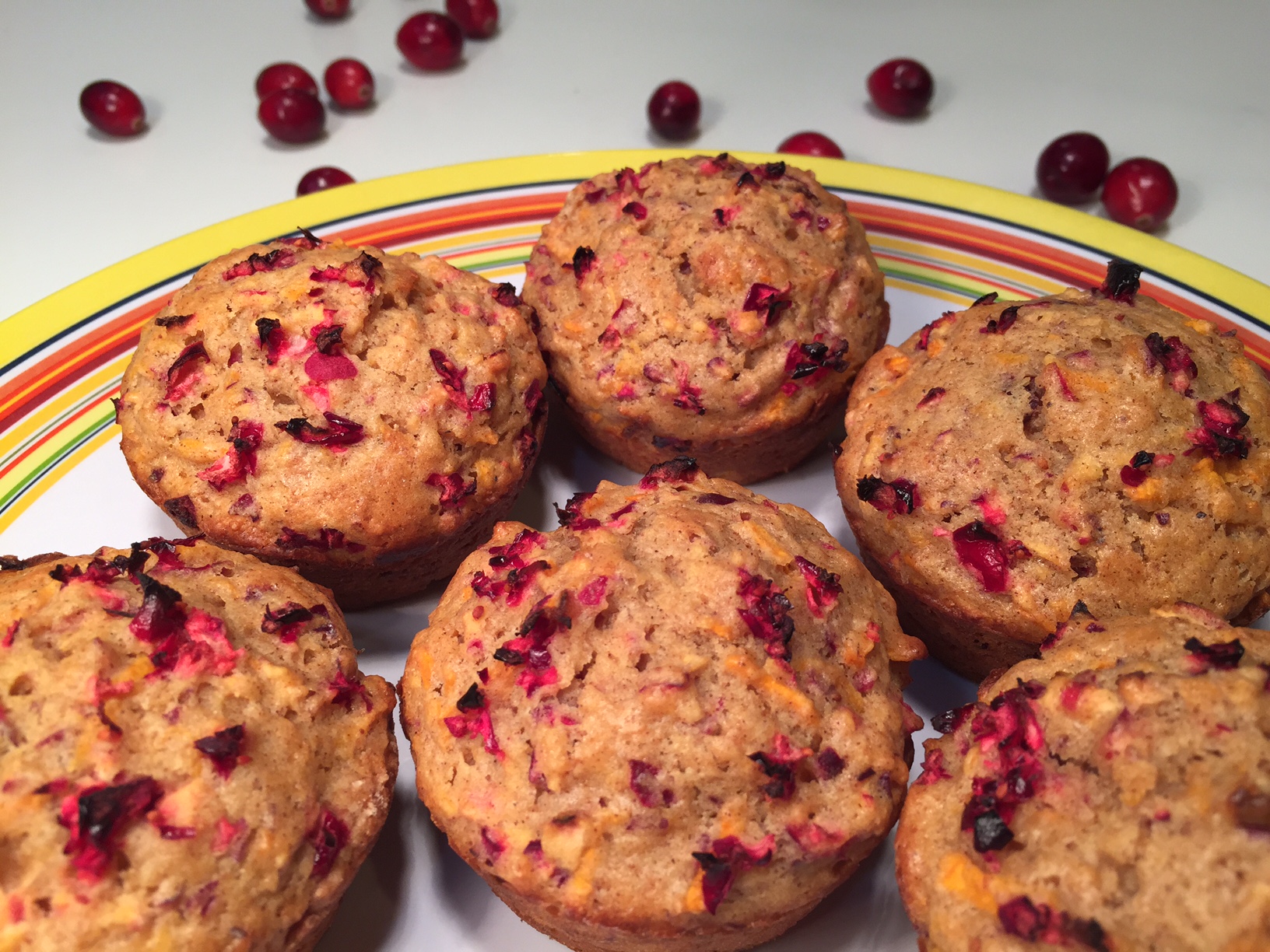
Cran-Yam Muffins

Cran-Yam Muffins

Although I’m generally not the most organized person around the house (open any closet or drawer in my home and you’ll know what I’m talking about), there is one area in which I do excel: I keep scrupulous records of holiday menus. Who attended, what was served and the quantity, if the amount was adequate, and how long things took to cook are all jotted down in my 3-ring binder.

Every year after Thanksgiving dinner I write the same note – that very little cranberry sauce and yams were eaten, and NOT to make them again. And every year I get guilted into making them because “it’s tradition”.

This year, in a vain attempt to be thrifty, I only used half the bag of cranberries to make my sauce, and didn’t use all the yams I bought. A wise move, but not wise enough. The majority of both dishes still went untouched. “I swear, I will never make cranberry sauce and yams for Thanksgiving again!” (You have to imagine me doing a Scarlett O’Hara impersonation while saying that.)

So post-Thanksgiving I had half a bag of cranberries and a yam unused. As you may know by now – I hate waste! Although I’m the self-proclaimed Queen of Freeze, I decided against freezing the cranberries – I knew they would get lost in the frigid abyss and I’d forget all about them. But what else could I do with cranberries?

Pulling out my trusty Joy Of Cooking (a must-have for any kitchen!), I looked up ‘cranberry’ in the glossary. There they were: cranberry muffins. Yes! “What if I added shredded yam and spices to the muffins?” I pondered. Perfect!!!

It took several batches to produce the look and flavor I’d envisioned. (And, yes, I actually had to buy more cranberries and yams. Oh, the irony!) But I’m now ready for future leftover cranberries and yams….even though I WON’T be making them next Thanksgiving. Really.

NOTE:  While paper liners for the muffin tin make life easier in the sense that you don’t have to grease the muffin cups (a job I kind of hate), I suggest you forego the liners for this recipe. The paper (and even foil liners) tend to stick to muffins, making it difficult to remove them without losing a good portion of the muffin. Again: hate waste! So bite the bullet and grease the cups.

CRAN-YAM MUFFINS – makes 12 muffins (standard size)

  • 1¾ cups all-purpose flour
  • 2/3 cup granulated sugar
  • 1 tsp salt
  • 2 tsp baking powder
  • 1 T cinnamon (notice the measure is tablespoon)
  • ½ tsp nutmeg
  • 1 tsp ginger
  • 2 eggs
  • ¾ cup milk (I used nonfat)
  • 4 T salted butter, melted
  • 1¾ cups chopped raw cranberries (measure AFTER chopping), divided
  • 1 cup yam, shredded (I used garnet)

In a medium sized bowl put the flour, sugar, salt, baking powder, cinnamon, nutmeg, and ginger. Mix well with a large spoon.

In another bowl (it can be a little smaller) beat the eggs well. Stir in the milk, cups of the cranberries, and the yams. Add in the melted butter and mix.

Pour the liquid ingredients into the dry. Using the large spoon mix together, working with as FEW strokes as possible. Over mixing will yield tough muffins. It’s fine if there’s some flour not incorporated. The batter will be thick.

Preheat oven to 400º Fahrenheit.

Spoon the batter into the greased muffin cups, dividing the batter equally. Sprinkle the reserved ¼ cup of chopped cranberries on top.

Bake at 400º F for about 23 minutes – the top will be starting to brown. Remove from oven and let cool in tin for 2 minutes. Run a dull knife around each muffin, lifting them up at the end of the circle to loosen. Remove to wire rack.

Let cool at least 15 minutes before eating so they’ve had time to set, but are still warm. Delicious with a cold glass of milk, hot tea, or coffee. To reheat, toast in toaster-oven for 1-2 minutes.


Mom’s Fudge! A Holiday Indulgence!

IMG_0245

Best ever Chocolate Fudge

People love tradition – especially at holidays. It’s comforting as we hearken back to days of yore. (Yes, I said, “hearken” and “yore” – don’t judge!)

When I was a child, every Christmas Eve my Aunt Judy and Uncle Don came over. My dad prepared his cheese fondue and my mother made her famous fudge. It’s widely accepted that my mother’s fudge is the best ever. In fact, about three weeks before Christmas, she and I (when I got old enough) would make mass quantities of her fudge and give platefuls away to everyone we knew. Friends, family, teachers, the postman, the paperboy – all rejoiced with this delectable gift.

Now, when I say “my mother’s fudge”, I don’t mean my mother created the recipe. She was NOT an adventurous cook. But she did have the ability to find fabulous recipes that others developed. Fudge was at the top of her list. I wish I could credit the person who actually came up with this recipe, but all I know is mom found it in the newspaper.

An interesting coincidence occurred in college. I was bragging to a friend about my mother making the best fudge. She bragged back that HER mother made the best. We compared recipes and they were identical. We discovered that our mothers clipped them out of the same newspaper!

While this fudge recipe isn’t difficult, cooking the sugar liquid can be a little tricky. If you cook it at too high a temperature, the fudge will turn out hard. Follow the directions and you shouldn’t have any problems.

BONUS: When you pour the molten fudge from the mixing bowl into the casserole dish to set, there’s always some remaining in the bowl. Those of you who follow my blog will know that I hate waste. So my family and I always have spoons ready to scoop all the dregs. (Every year I seem to leave more of the fudge behind.) Try it and you’ll completely understand!

NOTE: This is not the time to try to reduce calories. Fudge is fattening! If you mess around with the ingredients, you’ll mess around with the consistency and taste.

MOM’S FUDGE

  • 18 oz semi-sweet chocolate chips (I use Nestle’s) – this measures out to 3 rounded cups
  • 2 cubes salted butter (½ pound), cut into pieces so it melts quicker
  • 1 cup walnuts, chopped and lightly toasted
  • 16  1″ marshmallows, cut into quarters so they melt quicker
  • 1 tsp vanilla extract
  • 1 can evaporated milk, 12 oz can
  • 4½ cups granulated sugar

Put the chocolate chips, butter, walnuts, marshmallows, and vanilla into a large bowl. It needs to be ready to go when the syrup is done.

Into a Dutch oven (large saucepan) put the sugar and evaporated milk. Turn the flame to low-medium and stir – preferably with a flat-headed stirrer – until the sugar is mixed in. Then turn the flame up a bit and stir continuously until it begins to boil. Turn the flame down slightly, keeping the liquid at a slow boil for 10 minutes, continuing to constantly stir. Adjust the flame as needed.

NOTE: Rather than indicating a final temperature, the recipe directed the syrup to be cooked for 10 minutes. This isn’t a very accurate way to cook candy. So I measured the final temperature at the 10 minute mark when I made my last batch. It was 210º Fahrenheit. Use this as a guide. If your temperature is near 210º, you should be okay. If it’s a lot higher, you’ve cooked the syrup at too high a temperature. I’m not sure if cooling it before pouring it into the chocolate chips mixture will salvage it or not. A syrup too hot yields rock-hard fudge.

When the 10 minutes are up, IMMEDIATELY pour the syrup into the chocolate chips mixture and begin to stir with a large spoon. You have to work fast. The goal is for the butter, marshmallows, and chocolate to melt and blend together. If you stir too slowly, the liquid will cool before everything can melt, and it will begin to set. When the last streak of marshmallow (that’s usually the last thing to melt) disappears, IMMEDIATELY pour into a 9½” x 13″ glass casserole dish. Working quickly, spread the fudge evenly. Let cool before covering, then refrigerate overnight.

Now, grab your spoons and dig into the hot fudge that’s still clinging to the mixing bowl! Waste not, want not!


Kitchen Gifts For Giving Or Receiving

kitchen gifts2

It’s that time of year when we rack our brains trying to come up with gifts for our friends, loved ones, and conversely, for ourselves.

I’m a practical person and love gifts that serve a purpose. Maybe it’s a sign of getting older, but just how many knick-knacks does one need? So, today’s blogpost is a list of kitchen items that (in my opinion) every well-stocked kitchen should have. They range from inexpensive to pricey, and are listed in no particular order. There is a multitude of other kitchen equipment that can be bought and, naturally, I own many of them. But this is a list of my must-haves:

NOTE:  You won’t see a bread maker on my list. They’re expensive, bulky, heavy, and can only do one thing:  make bread. The most difficult thing about making bread is kneading it – you can do that in a food processor.

  • FOOD PROCESSOR – (Did you notice the nice segue way?) I love my Cuisinart, but there are many brands. It can be used to knead dough (bread, pizza, tortillas, pasta), chop vegetables (tomatoes, onions), purée (hummus, soup), shred vast quantities in seconds (carrots, cheese, cabbage), finely grind (graham crackers, nuts), and, I’m sure, other things for which I don’t need.  I use mine almost daily!
  • BLENDER – I actually own 2:  the large jet-engined VitaMix, and the smaller Oster.  I use them both. The VitaMix is great for yogurt shakes (which I make almost daily) because it can handle the ice cubes. Also, because it has such a large pitcher I can blend soups, etc. in fewer batches. On the other hand, I use my smaller Oster to make small batches of soup or pesto (even if I triple the recipe, it’s still not enough for the VitaMix.)
  • COOKIE SHEETS – You should have at least 2 flat sheets and 1 jelly-roll pan (it has 4 sides). I generally prefer to use my dark non-stick sheet – cookies cook a little faster, brown better, and I don’t have to grease the pan. But sometimes you don’t want any of that, so it’s good to have the silver kind, too. Don’t waste your money of the cushioned kind – it has a layer of air between 2 sheets. It’s not that they’re bad, it’s just that things don’t cook any better on it. Save your money.
  • PIZZA WHEEL – This is not just for cutting pizza. I use mine for quickly slicing dough, such as when I make Corn Dogs.
  • GARLIC PRESS – There are several different types. Make sure you get a sturdy one – these things have to undergo a lot of pressure. I use mine all the time.
  • POTS AND PANS – This is an obvious need for a kitchen. It’s nice to have a variety of sizes. I use the 1 quart size the most and own 4. The 1½ qt., 2 qt.,  3 qt., and Dutch ovens often come as sets and are worth the money. An ultra large stockpot is invaluable to me for making huge batches of spaghetti, chili, and vegetable stock so I can freeze it in portion sized containers for future use. I also love the tiny ½ cup and 1 cup sizes for melting butter. A 10″ skillet is a must for sautéing and making omelettes. Brands where the lids are see-through and have a steam escape hole are great. I also love handles that are metal, so they can go in the dishwasher. My black-handled Revere Ware pots are greyed and getting brittle after years of dishwasher cleaning.
  • ELECTRIC FREE-STANDING MIXER – Absolutely essential for making cakes, cookies, frosting, whipped cream, and meringues. Don’t get a hand-held. Yes, they’re much cheaper, but you’ll never use it because when mixing you need one hand to scrape and one hand to turn the bowl. There are no hands left to hold the mixer. Plus, it gets heavy even after a short while. As to brand, I cringe when I see the price of KitchenAids. Outrageous! They’re not worth it. I’m still using the Sunbeam I’ve had my whole adult life. You don’t need a motor that powerful to beat cake batter. Sure, KitchenAids come with dough blades, but use your food processor for kneading dough.
  • MIXING BOWLS – You can never have too many. A set of pretty nesting bowls are nice for presentation and usage. Add to that a variety of different sized glass bowls. It’s nice to have at least one huge bowl – it doesn’t get used that much, but comes in handy now and then.
  • MEASURING CUPS – There are different cups for dry and wet ingredients. You’ll need both. Cups for dry ingredients come in nesting sets and are flat on top so you can level off the excess.. I have 4 sets and it’s the perfect number for me. Nothing is more frustrating than needing a ½ cup for sugar after you just used it for shortening. The best sets include ¼ cup, 1/3 cup, ½ cup, 2/3 cup, ¾ cup, and 1 cup. Measuring cups for wet ingredients have a handle and spout. You’ll need at least one of a 1 cup, 2 cup, 4 cup, and 8 cup. The larger ones should be plastic because they’re lighter and easier to manage.
  • MEASURING SPOONS – You should have at least 2 sets. The best kind are metal and have the size etched into them. The paint eventually wears off the plastic ones making it hard to figure out the size. A set that includes 1/8 and 3/4 tsp, as well as the usual sizes is the best.
  • LARGE WOODEN BREAD BOARD – Not only can this be used for rolling out dough, but you can cut fruits and veggies on them. I make so much dough that I keep a floured board in a large drawer I had specially made. Before that, I put brackets under my overhead cabinets so I could slide it in and out without throwing out the flour.
  • PASTRY SHEET – These are great for rolling out pie crusts. Mine is Tupperware, but there may be other brands out there. To dispose of leftover flour, just lift up the sides and empty into the trash. The sheet folds up small and can be stored away easily.
  • MUFFIN PANS – Cupcakes are very popular nowadays. I made the switch from whole cakes to cupcakes – they’re great for portion control. One cupcake = 1 serving. Done. Two pans are nice so you don’t have to cook in batches.
  • LOAF PANS – These are great for baking bread, “meat”loaves, quick breads, and loaf cakes. They come in glass and metal. I really don’t have a preference. I own both and generally use the glass.
  • POTATO PEELER – This is just a small item, but essential for peeling potatoes, yams, apples, and carrots. You don’t need an expensive one – the cheapies work well.
  • GRATER – I use mine constantly for grating cheese, and occasionally for a small amount of shredded carrots. (I use the food processor when I need a larger amount.) Buy one that has small holes (for hard cheeses) and large holes (for soft cheeses). I don’t like the kind that have four sides and stand upright – I tend to cut myself with those.
  • DEEP FREEZER – Okay, this is a large item but if you have room, I highly recommend them. Not only can you stock up on flours, frozen foods, and leftovers, you can cook multiple batches of foods that freeze well (such as spaghetti sauce and chili), and then freeze in portion sized containers. Cook and clean once, then eat for months to come. Just because you’re tired doesn’t mean you can’t have a home-cooked meal.
  • STORAGE CONTAINERS – You can never have too many containers – everything from ¼ cup size up to giant cake holder size.
  • SIEVES – These are necessary for draining. It’s nice to have a large, medium, and tiny size.
  • WOODEN STIRRERS – Using wood prevents scratching up your pots and pans. You should have both spoons and flat stirrers, and at least two of each. The more expensive ones aren’t necessary – the cheap ones work fine.
  • ROLLING PIN – Absolutely needed for rolling pie crusts, some cookies, and tortillas. They have marble ones, but I don’t like them.  They’re heavy, expensive, and break if you drop them. The wooden ones work best.
  • TOASTER OVEN – Rather than having a pop-up toaster, the toaster oven will do the job of making toast, plus a multitude of other tasks. I’ve never had much luck with baking in them, but I toast nuts, cook fake bacon, and make toasted open faced sandwiches in it. Mine is used nearly everyday. It’s better to use the toaster oven than heat up my big oven for small things.
  • THERMOMETER – After years of using and breaking the glass candy thermometers, I finally bought a digital one. It’s fabulous. Mine adjusts for Celsius and Fahrenheit, which is nice.
  • WIRE RACKS – You need at least one large one or two smaller ones. Baked goods need to be cooled on a rack to set properly.
  • UTENSILS – You can never have too many spatulas, slotted spoons, tongs, wine bottle openers, etc.  It’s a giant category – not very exciting but extremely necessary.

And that’s my list! Repeat: MY LIST. I’m sure there are those of you out there who couldn’t live without your tortilla maker or mortar & pestle. We all have different wants and needs. But I guarantee, just about any item on this list would be welcomed by most people who actually use their kitchen for cooking. Happy shopping!


Macadamia Cheese Biscuits -Tasty Tidbits

Macadamia Cheese Biscuits

Macadamia Cheese Biscuits

Go into any furniture shop and artfully placed amongst the tables, dressers, and credenzas, you’ll find tchotchkes (pronounced: choch’-keys).  You’re probably not even consciously aware of them – they’re the bits and bobs that decorate a room, turning a house into a home.  A crystal bowl filled with colorful balls. A hand-painted glass plate. A ceramic vase.

Why am I talking furniture in a vegetarian cooking blog? Because I see this week’s topic, Macadamia Cheese Biscuits, as the tchotchkes of the food world. They’re not the main event, but they add to the overall effect of the party.

What I love about these biscuits is that you can nibble at them discreetly as you converse with friends and colleagues. They’re not messy, so you won’t be embarrassed when taking a bite and the remainder somehow ends up on the front of your outfit, or worse – the host’s freshly cleaned carpet. Rather than enjoying yourself, your evening suddenly becomes about stain removal.

While they’re not exactly low in calories (I figure each one is about 58 calories), if you nurse at a Macadamia Cheese Biscuit in one hand and a drink in the other, this can keep you occupied enough so you don’t reach for the mini-quiches and bacon wrapped hot dogs.

Preparing the biscuit dough is a snap. Then roll into a log and refrigerate until it’s time to bake. Yay! I love party foods that are done ahead of time. I don’t know about you, but I turn into crazy-woman about 2 hours before guests arrive. The dough can even be frozen, so keep one on hand for drop-in guests.

MACADAMIA CHEESE BISCUITS – makes about 36 biscuits

  • 1½ cups all-purpose flour
  • ½ tsp salt
  • ½ cup butter
  • 8 oz Swiss cheese, shredded
  • 1 egg
  • 1/3 cup macadamia nuts, chopped and lightly toasted

In a food processor pulse flour, salt, and butter several times to break up butter. Add in cheese, egg, and nuts. Whirl until the dough forms a large ball.

With your hands roll the dough ball into a long log, 1½” in diameter. Wrap in waxed paper and refrigerate.

slice dough into 1/4" discs

slice dough into 1/4″ discs

When ready to serve, preheat oven to 400º degrees Fahrenheit. Slice log into ¼” discs and place on greased or non-stick cookie sheet. They don’t spread, so you can place them fairly close together. Bake about 14 minutes – until lightly brown. Let set on cookie sheet for a minute or two, then remove to serving plate or wire rack.