CHEESE SCONES: An Afternoon Pick-Me-Up!

cheese scones textWhat could be better when that late afternoon hunger hits than a nice cup of tea and a freshly baked scone?

You might think scones are time consuming and difficult, but nothing could be further from the truth. If you have a food processor, then they’re even faster.

My favorite is a cheese scone. Traditionally, they’re circle-shaped, but you can also cut them into large wedges, if you prefer.

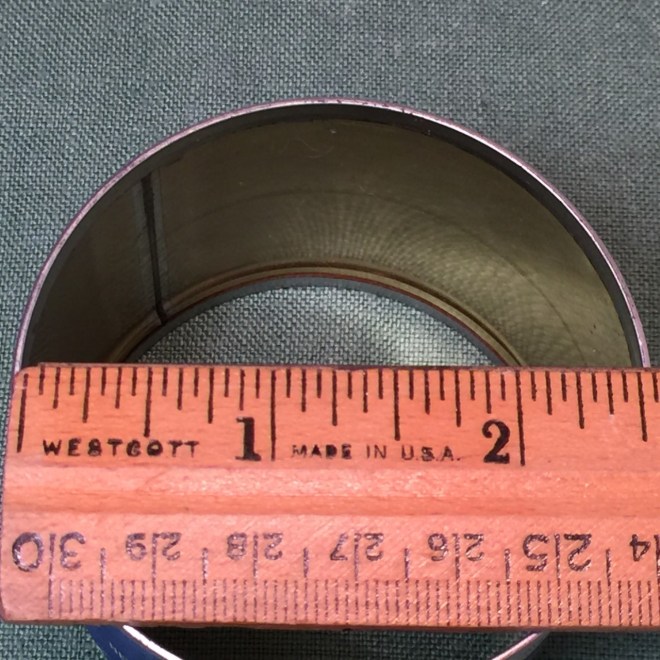
Note:  Due to my frugal nature (yes, I’m cheap), I use a 2½” diameter diced chilies can with the top and bottom removed, rather than buy a cutter.  scone6CHEESE SCONES – makes 10 circles or 6 large wedges
  • 1¾ cups (8 1/8 oz) all-purpose flour
  • 2 tsp sugar
  • 1/2 tsp salt
  • 2½ tsp baking powder
  • 4 T butter, cold
  • 1/2 cup medium cheddar cheese, shredded
  • 2 eggs
  • 1/3 cup cream or milk (the richer the milk, the richer the scone)

Preheat oven to 450º Fahrenheit, rack in center position.

Place metal blade in food processor. Add in flour sugar, salt, and baking powder. Pulse a couple of times to mix.

Cut butter (make sure it’s cold) into 1/2″ cubes (you don’t have to be exact) and add to work bowl. scone1Pulse 10 times to form a coarse texture. scone2(If you don’t have a food processor, then crosscut the butter into small bits using 2 knives.)

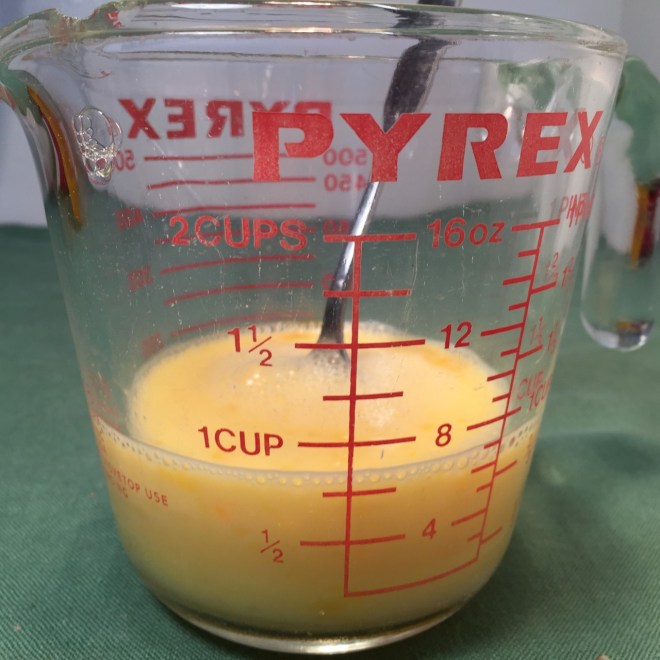
Into a measuring cup (use a 2 cup size so you don’t splatter), crack eggs. Beat with a fork to break them up. Add in cream to the 3/4 cup mark (you’ll need about 1/3 cup). Beat well with a fork to blend. scone3Empty flour mixture into a mixing bowl. Pour in all but 1 T egg mixture (you’re going to use the reserved liquid as a wash) and stir gently to blend. (You don’t want to overmix or the scone will be tough.) scone5Lightly flour a flat surface and dump dough onto it. With floured hands, pat the dough into an 8″x5″ rectangle if cutting circles, or a 6″ diameter circle if cutting wedges. scone7If you’re making circles, dip circle-mold in flour then press straight down into dough. Don’t twist. Dip into flour each time before cutting a circle. If making wedges, slice 3 lines, intersecting in middle to form 6 equal wedges.
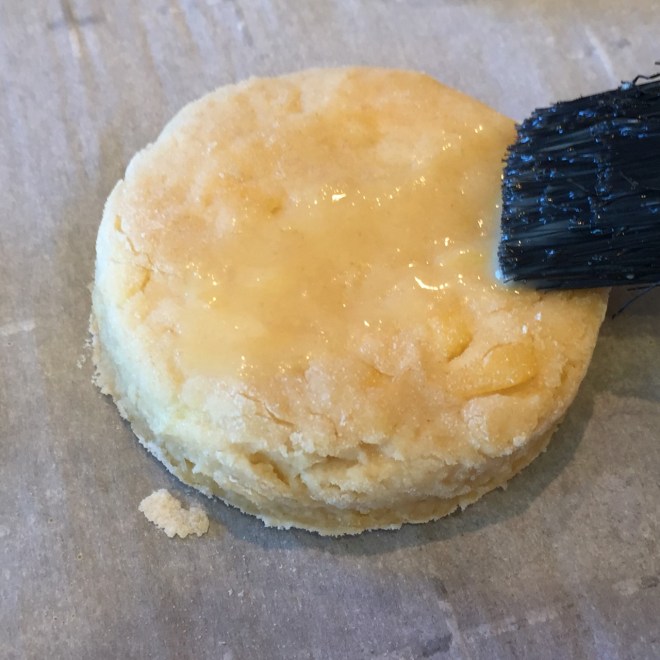
Grease a cookie sheet or line it with parchment paper. Place cut-outs, spacing them apart as much as possible. Brush on reserved egg wash. (If you forgot to save some of the egg mixture, then just use a little milk.) scone8Sprinkle on a few strands of cheese, if you like. scone9Place in preheated oven and bake until golden brown – about 12 minutes for circles, 13-15 minutes for wedges. Remove to a wire rack to cool a bit, then serve.
KING CAKE: Pistachio Sweet Bread Works For This Mardi Gras Favorite!

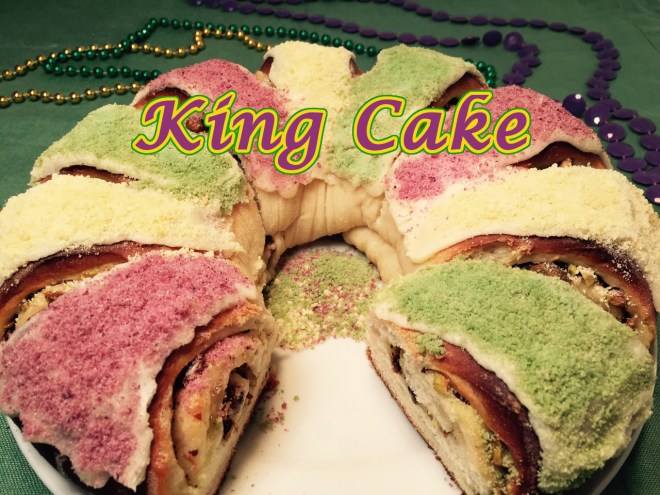
king-cake1-textMardi Gras is filled with a number of traditions. A yummy one is King Cake – a rolled cake decorated with purple, gold, and green. Often a plastic Baby Jesus or treat is hidden in the cake for some lucky person to be served.
This particular cake (actually, it’s technically a bread), Pistachio Sweet Bread, is a favorite of our family throughout the year. My husband loves it with a cup of coffee.

NOTE: Because I was decorating the cake for Mardi Gras, I used colored sugar. And because I’m a wee bit obsessive, I made my own homemade colored sugar with natural ingredients. Of course, this takes longer. I’ve put directions at the end of the post for those of you who choose to be chemical-free.

PISTACHIO SWEET BREAD

  • 2¼ tsp active dry yeast (1 packet)
  • 1 cup milk (I use nonfat)
  • 1/4 cup water
  • 1/4 cup butter, softened
  • 2 tsp salt
  • 1 T  +1/2 cup  + 1/3 cup sugar
  • 3½ – 4 cups all-purpose flour
  • 1/4 cup butter, melted
  • 1 cup salted pistachio nuts, chopped & toasted
  • egg wash: 1 T egg + 1 T water, beaten together

At least an hour before starting the bread, cut up 1/4 cup butter and leave out to soften. (You’ll be using another 1/4 cup butter later.)

In a small saucepan over low flame, heat the milk, 1 T sugar, and water to 100º – 104º Fahrenheit. Remove from heat and stir in yeast. Let proof for about 5 minutes.

Into the work bowl of your food processor, put 3½ cups flour, salt, 1/2 cup sugar, and the softened 1/4 cup butter. Turn on machine then slowly pour in the proofed milk mixture. Let run about 30 seconds before deciding if more flour is needed – the dough should begin to pull away from the sides but not form a clump. (I usually need to add about 2 T-ish.) Empty dough into a greased bowl, flip dough so both sides are greased, cover, and let rise 1½ hours.

Turn dough out onto a lightly floured board. Pat into a rectangle, then let rest about 5 minutes before rolling dough to finished size. (Letting the dough briefly rest decreases its elasticity.) Roll dough to 18″ x 12″. Brush on the 1/4 cup melted butter all the way to edge. Sprinkle on 1/3 cup sugar and pistachio nuts, patting them gently into dough. Roll up dough from long side, leaving seam on bottom of log. (Try not to let the ends taper, so the ring is uniform in size.) Bring ends together to form a ring. Using a little water on your fingers, pinch dough together.

Carefully transfer dough to a greased cookie sheet. (Don’t use a dark sheet – it browns the loaf too much.) Cover and let rise 45 minutes.

Preheat oven to 375º F. When oven is hot and dough has risen, slice about halfway through dough in 1½” increments (I use kitchen shears). Brush with egg wash and bake 30 minutes, rotating cookie sheet after 15 minutes for even browning. Top should be lightly browned. Remove to wire rack to cool.

Let cool completely if you plan on frosting. If not, let cool about 20 minutes and serve warm.

WHITE FROSTING – makes 1 cup

  • 1/4 cup butter, softened
  • 1/4 tsp salt
  • 1 tsp vanilla
  • 2 cups powdered sugar
  • 2-4 T milk

Beat together the butter, salt, vanilla, and powdered sugar. Add in milk one tablespoon at a time until desired consistency is reached. If frosting becomes too loose, add more powdered sugar.

COLORED SUGAR

Orange

  • 1/2 cup mango cubes
  • about 2 inches of carrot sliced very thinly

Boil carrots in water, covered, about 15 minutes. Let cool. Purée mango and drained carrots in blender.

Purple

  • 1/2 cup blackberries or blueberries

Purée berries with a little water, until paste-like.

Green

  • 1/2 cup spinach (don’t worry – you won’t taste spinach in the frosting)

Boil spinach with a little water for 15 minutes. Drain and purée.

To Make The Colored Sugar:

Place about 1/4 cup sugar in 3 bowls. Add about 1 tsp (depending on preference) of colored pastes to each bowl. Mix with backside of spoon until color is well distributed. It will be very thick. To dry, spread each color on a plate and let air dry. After a couple of hours or so, mix to break up clumps. Keep doing this until it’s pretty dry. Then smash out crystals with a flat bottomed glass or measuring cup. Spread out on plate and let dry some more. Repeat until you get dried colored sugar. Drying time will be dependent on weather and how much coloring you use. But, it will eventually dry.

KALAMATA OLIVE BREAD – Pretty As A Picture!

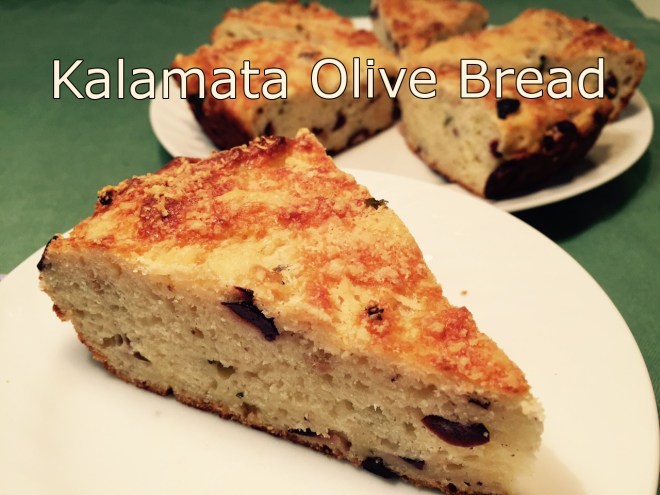
olive-bread1-textCompany was coming and I needed a bread – fast! I flipped through my America’s Test Kitchen cookbook and found this Kalamata Olive Bread recipe made in a cast iron skillet. (To those under 35, cookbooks are how people used to get recipes!)

I’m always looking for ways to use my cast iron skillet, so I tried it. The results? It was fast, it was beautiful, and, best of all, it was delicious.

NOTE: A cast iron skillet is imperative to producing the crisp top, side, and bottom.

IDEA FOR NEXT TIME:  Include crumbled Feta cheese in the dough.

KALAMATA OLIVE BREAD

  • 5 T extra virgin olive oil
  • 3 cloves garlic, sliced in half lengthwise
  • 12.5 oz (2½ cups) (355g) all-purpose flour
  • 4 T fresh basil, chopped
  • 1 T baking powder
  • 1/2 tsp salt
  • 4.5 oz (1½ cup) (130g), divided, Parmesan cheese, grated
  • 1 cup (250 ml) milk (I used whole milk)
  • 1/2 cup sour cream (or yogurt – I’ve used both)
  • 1 egg
  • 1 cup (115g) Kalamata olives, coarsely chopped

Preheat oven to 450º Fahrenheit.

In a 10″ cast iron skillet, heat olive oil over medium/high. Add in the garlic and sauté for about 30 seconds, just until fragrant. You want to flavor the oil but not burn the garlic. Remove pan from heat and let cool down while preparing the rest of the recipe.

In medium bowl, mix together the flour, basil, baking powder, salt, and 3.5 oz (1 cup) Parmesan.

In a large mixing bowl, beat the egg to break it up. Whisk in the milk and sour cream.

Remove garlic from skillet and mince (I use a garlic press). Add the garlic to the egg mixture. Stir in all but 1 T olive oil. Pour in the dry ingredients and blend until nearly all the flour is incorporated. Add in the Kalamata olives and gently finish blending. DON’T OVERMIX OR THE BREAD WILL BE TOUGH.

Heat remaining 1 T oil in skillet. Turn off heat but leave pan on burner. Pour in batter (it will be thick), smoothing top. Sprinkle on remaining 1 oz (1/2 cup) Parmesan.

Bake at 450º F for 20 minutes, until top is golden brown. Remove from oven and let cool 5 minutes in skillet. Remove to wire rack. I like to serve it as soon as it’s cool enough to eat.

CORNBREAD -What A Difference Cast Iron Makes!!!

corn-bread-textSeveral months ago I jumped onboard the cast iron craze and bought a 10″ skillet that I found at a thrift store. I absolutely love it, and my fear of keeping it seasoned was for nothing. It’s quite easy, really. After washing, all one has to do is rub a bit of vegetable oil over the surface, then place on the stove using a medium/high flame, letting it dry for 1 minute.

So now that I have this fabulous skillet, I was looking forward to making cornbread in it. As expected, the cast iron produced a perfect cornbread with a nice crisp bottom, side, and top, with a delicate center.

Of course, a good recipe is essential. Not all cornbread recipes are created equal – I’ve found the results often disappointing – dry and gritty. As a fan of America’s Test Kitchen, I eagerly attempted (and tweaked) their recipe. YUMMY!

CORNBREAD

  • 2 T white vinegar
  • 3/4 + 2 T milk (I use nonfat)
  • OR 1 cup buttermilk
  • 1  1/3 cups medium grind cornmeal
  • 3 ears corn (about 1¾ cups nibblets)
  • 6 T butter, divided
  • 2 eggs
  • 1 yolk
  • 1 cup all-purpose flour
  • 2 T sugar
  • 1½ tsp baking powder
  • 1/4 tsp baking soda
  • 1¼ tsp salt

Make buttermilk (unless you’re using store bought buttermilk) by combining vinegar and milk. Stir in the cornmeal to soften it. Let stand while preparing the cornbread.

Remove corn from cobs by running a knife downwards and away from you along the cob. NOTE: You can use frozen or canned, if you’d rather.

Purée corn in a food processor for about 1 minute, stopping now and then to scrape down the sides. Pour into a saucepan and, stirring often, cook over medium heat until reduced to about 3/4 cup – about 8-10 minutes. It will become quite thick. Remove from heat and stir in 5 T butter.

Preheat oven to 400º Fahrenheit.

In a small bowl, beat together the eggs and yolk. Stir the eggs and buttermilk/cornmeal into the thickened corn.

In a medium bowl, mix together the flour, sugar, baking powder, baking soda, and salt. Add in the corn mixture, blending gently until dry ingredients are just incorporated into the wet. (Over mixing can lead to a tough bread.)

Heat remaining 1 T butter in a 10″ cast iron skillet. When skillet is hot, turn off stove and pour in cornmeal dough, smoothing top. Bake in preheated oven at 400º F for 25 minutes, until top begins to brown. Remove from oven and let set for 5 minutes before removing to a wire rack. Let cool 20 minutes on rack before slicing. (If you slice it too soon, it will fall apart.)


PISTACHIO-FETA BISCUITS – Saving Money Never Tasted So Good!

pistachio-feta-biscuit-textAs a woman who hates waste (yeah – I’m cheap!), I was trying to come up with something to do with leftover feta cheese. True, it can always be a crumbled topping for salad, but I wanted something new. As I was looking for a bread recipe to post, I decided to merge the two. Biscuits! There were also a handful of pistachios lurking about, so I threw them in for crunch.

Once again, my frugality prevailed – PISTACHIO-FETA BISCUITS were a success! For those of you who have never made biscuits, it’s easy as pie (I felt obliged to use a food simile).

Note: I toyed with the idea of adding in leftover dried cranberries. Next time, I think I will.

PISTACHIO-FETA BISCUITS

  • 390g (3 cups) all-purpose flour
  • 11g (2 T) baking powder
  • 60g (1/3) cup sugar
  • 1/2 tsp salt
  • 112g (8 T) butter, room temperature
  • 83g (2/3 cup) pistachio nuts
  • 70g (2/3 cup) feta cheese, crumbled 
  • 2 eggs
  • 243g (1 cup) milk or cream (sometimes I use nonfat, sometime I use cream)

Preheat oven to 500º Fahrenheit. (You will lower the temperature when you bake the biscuits.)

Into the work bowl of your food processor, put the flour, baking powder, sugar, and salt. Pulse a couple of times to mix. Cut butter into about 8 pieces and add to flour. Pulse 20 times to incorporate butter. Mixture should be crumbly.

Note:  If you don’t have a food processor, then do this by hand: using 2 knives, cross-cut the butter into the flour mixture.

In a large mixing bowl, beat eggs with a fork just to break them up. Pour in milk, as you continue to beat eggs.

Set aside 2 tablespoons of this mixture to glaze the biscuits.

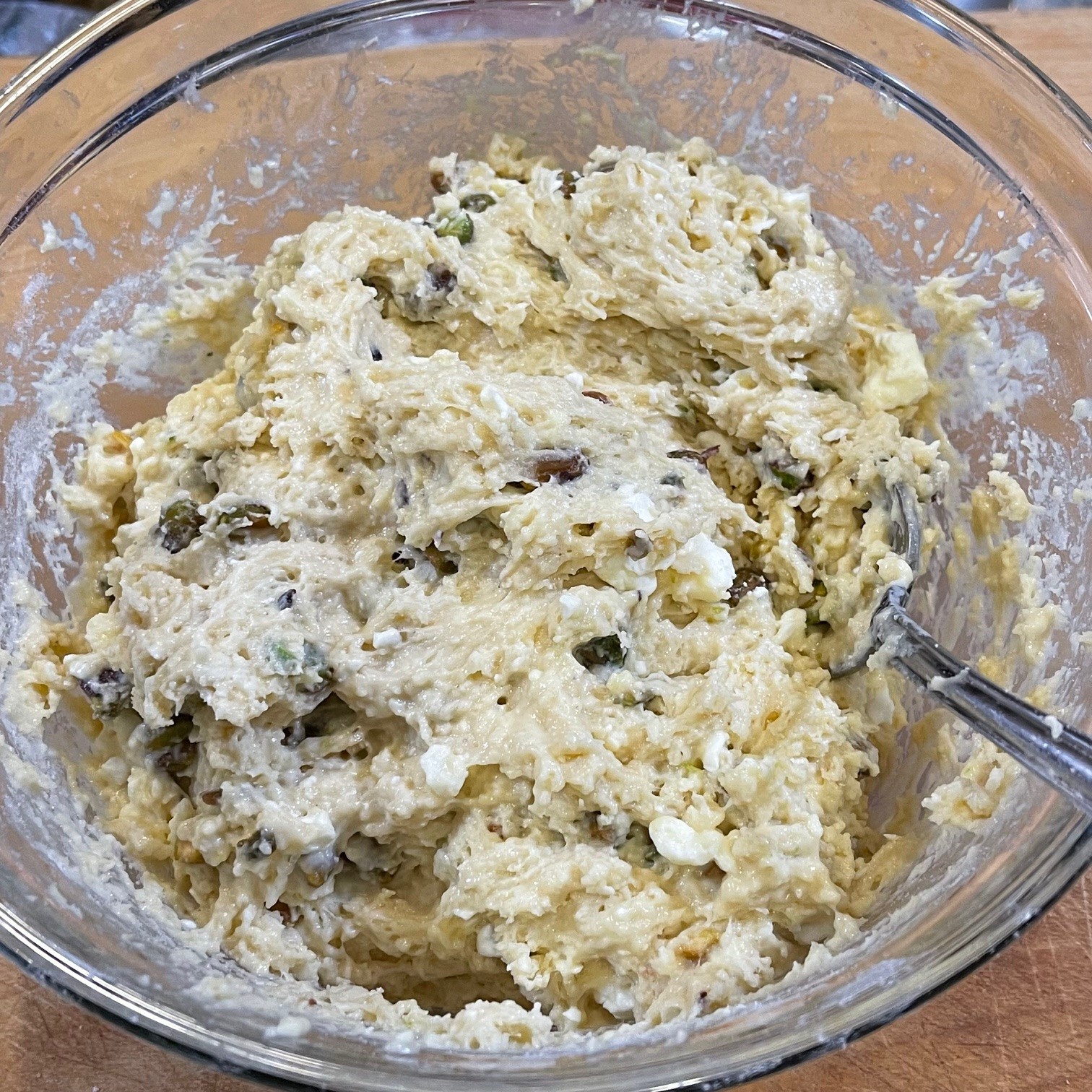
Stir the feta and pistachios into the egg mixture. Pour the flour mixture into the eggs, blending with a spoon until most of the flour is incorporated.

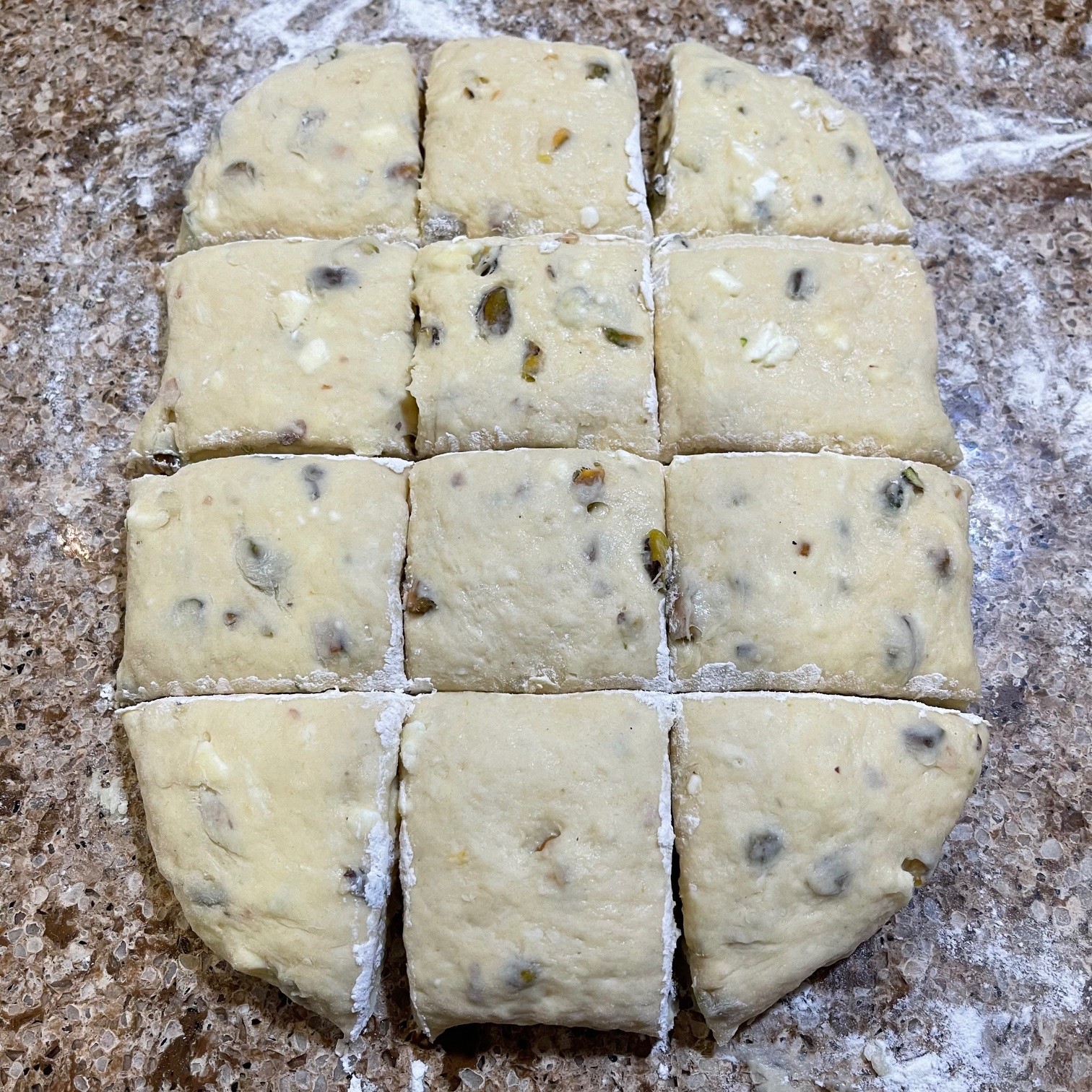
Empty the bowl onto a floured large breadboard or counter. Knead the dough about 20 times to unite all the flour into the batter. With your hands, shape the dough into a 1″ thick rectangle. Cut the dough into 12 squares.

Note: I prefer to cut squares – it’s faster and there’s no waste. You can cut circles, if you want, then gather the uncut dough and reform it so you can cut more circles. BUT – overworking dough can cause it to become tougher – not a good thing. So, after re-gathering one time, just bake the odd bits as is – they’ll still taste wonderful.

Place cut pieces on baking sheet lined with parchment paper or greased. Brush with the egg/milk you set aside (you probably won’t use it all).

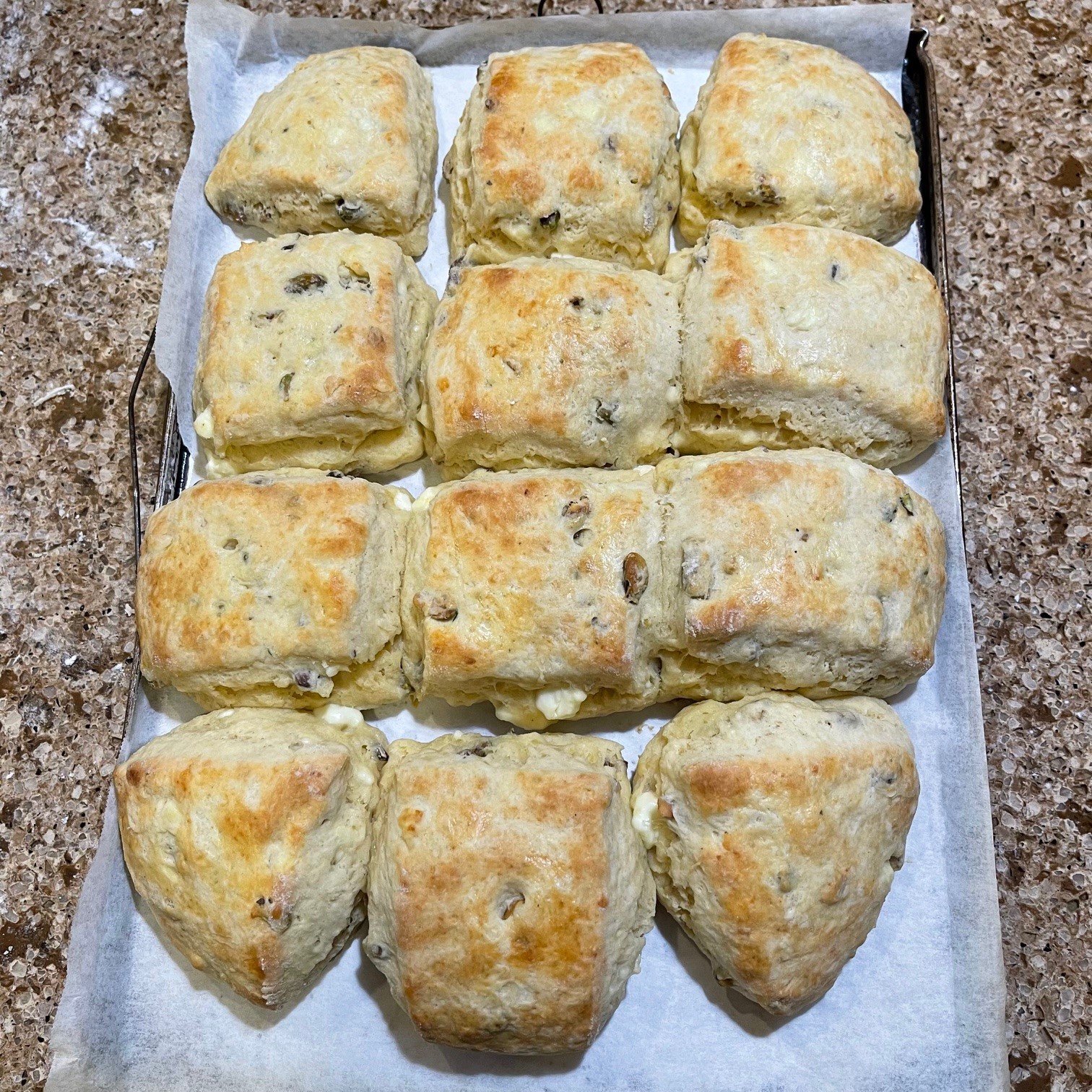
Put sheet in preheated oven. IMMEDIATELY LOWER OVEN TEMPERATURE TO 425º. (I can’t stress this enough!) Bake 10-12 minutes, until golden brown on top. Serve immediately for best quality.

Note:  Leftovers can be reheated in oven at 375º Fahrenheit for about 5 minutes – until hot to the touch (they’ll brown a wee bit more).

CHEESE BREAD – A Slice Of Goodness!

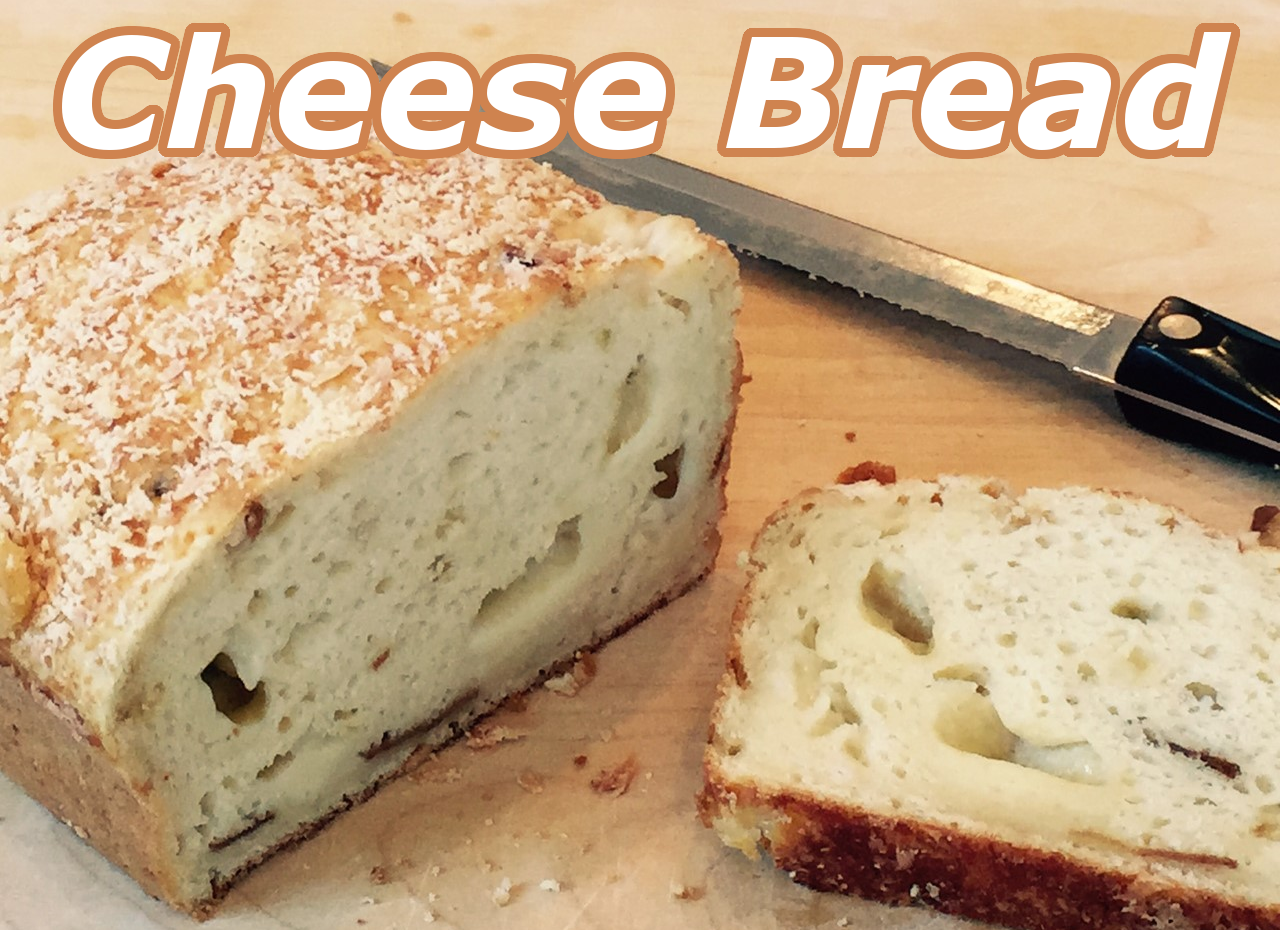
cheese-bread-textIt’s hard to beat bread and cheese. Add onion and bacon (fake, of course!) and – wow!
Cheese Bread is a quick bread, meaning there’s no yeast, kneading, or rising to deal with. However, there is a little bit of cooking (the onions and fake bacon), 45 minutes of baking, and 40 minutes of setting before slicing. So, while “quick” is a technically correct term, it does take some time.

However, don’t let that stop you – Cheese Bread is very easy to make and definitely worth the wait.

CHEESE BREAD – 1 loaf

  • 2 slices fake bacon (I use Morningstar)
  • 1/2 cup onions, chopped
  • 3 T oil (I use vegetable oil)
  • 1/2 cup Parmesan cheese, grated
  • 3 cups all-purpose flour
  • 1/8 tsp cayenne pepper
  • 1/2 tsp salt
  • 1/8 tsp pepper
  • 1 T baking powder
  • 1 egg
  • 1¼ cup milk (I use nonfat)
  • 1/2 cup sour cream
  • 4 oz Gruyère cheese, cubed in 1/2″ pieces

Note: You can make your own sour cream by whisking together 1/2 cup heavy cream and 1/2 T fresh lemon juice until thickened, then adding 1/8 tsp salt.

Slice the bacon in half lengthwise, then crosswise into 1/4″ pieces. Heat oil in skillet and fry the bacon until browned. Keep your eye on it – it burns quickly! With slotted spoon, remove bacon to plate, leaving oil.

Fry onions in same skillet as above, until golden.

Grease a loaf pan (I prefer a dark metal one to ensure a crispy crust) and sprinkle half of the Parmesan evenly on bottom.

In large mixing bowl, combine flour, cayenne, salt, pepper, and baking powder. Stir in the bacon, onions (with the oil), and Gruyere.

In a medium bowl, beat the egg. Whisk in the milk and sour cream. Add this to flour mixture and gently combine.

Pour batter into prepared loaf pan, spreading so it’s of uniform thickness. Sprinkle on remaining Parmesan cheese.

Bake in preheated 350º fahrenheit oven for 45-50 minutes, until golden brown.

Remove from oven and let set in pan for 5 minutes. Run a dull knife along the sides and invert onto a wire rack. Then right the loaf and let cool 40 minutes before slicing – otherwise, it falls apart. The bread looks and tastes so good that waiting is very difficult – but try to restrain yourself.


CHILI SPOONBREAD – Creamy Goodness!

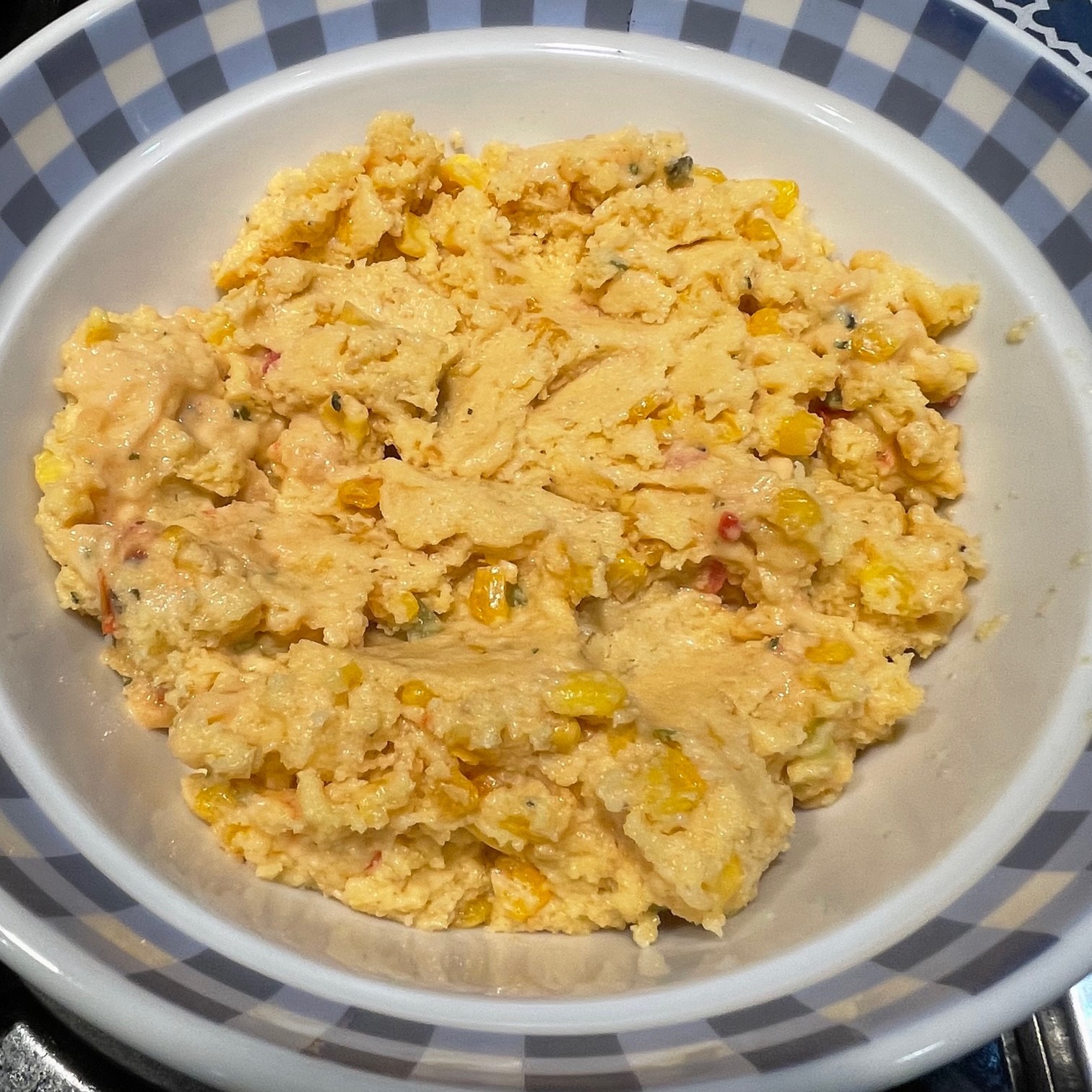
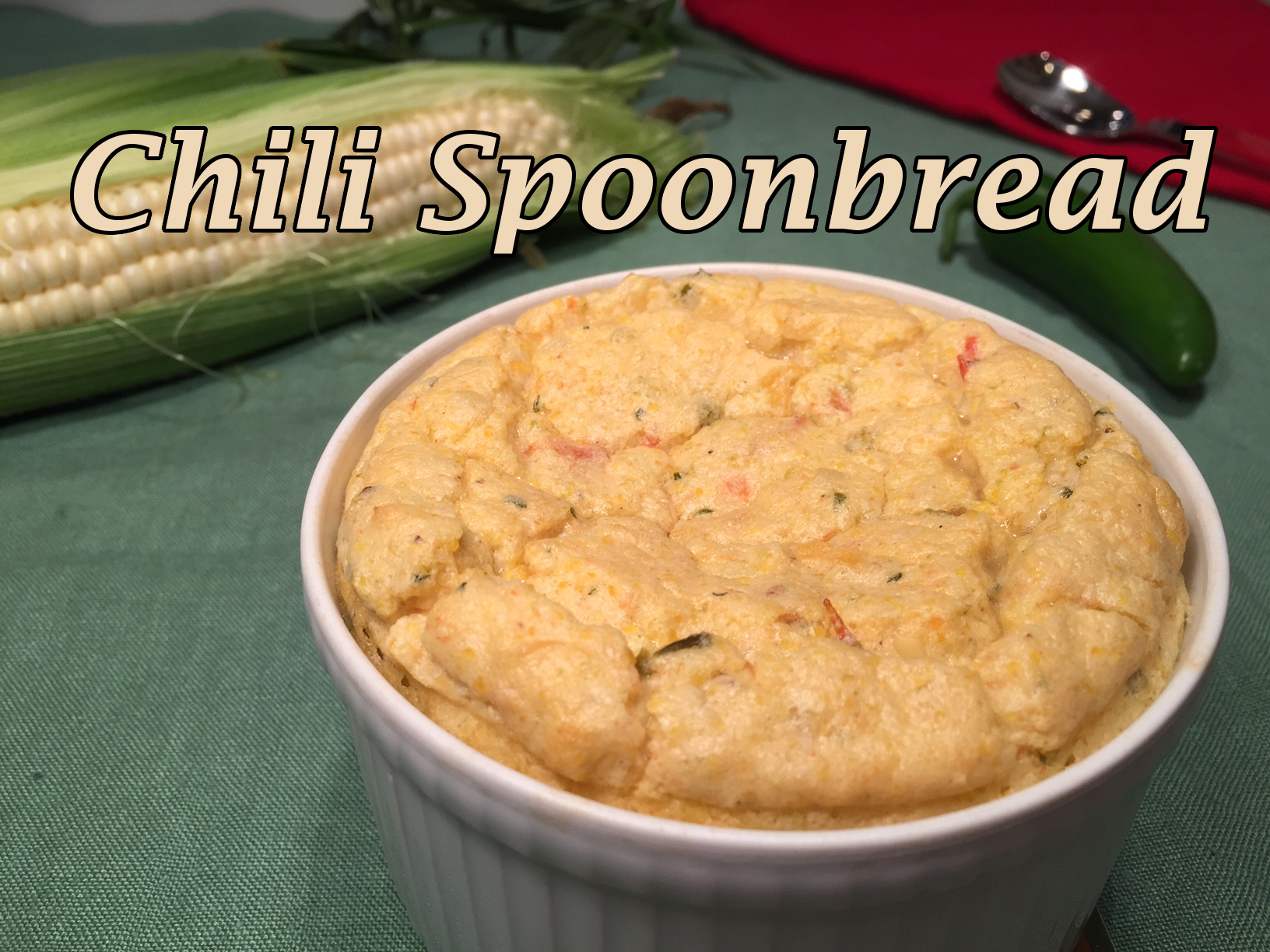
chili spoonbread1 textNever heard of spoonbread? Neither had I, but I saw it on America’s Test Kitchen and it looked delicious. A popular dish in the southern United States, it’s kind of a cross between cornbread and a soufflé.

As is my usual practice, I followed the recipe the first time I made it. It was good, but I doubted I’d ever make it again (even though it was pretty simple). Then I spied the leftover CHILI CON QUESO from a previous blogpost. Hmmm! I wondered if it could be incorporated into the spoonbread to kick it up a notch.

Oh, yeah! Worked like a charm. Turned out to be a wonderful twofer bonus: improved the spoonbread, AND made use of the Chili Con Queso before I could grab the Doritos and scarf down the lot….uh, just so it wouldn’t go to waste.

NOTE: This recipe calls for 3 whole eggs and 1 egg white. As self-proclaimed Queen Of Freeze, I feel it my duty to suggest you beat the unused yolk with a tablespoon of water and freeze this for future use as an egg wash or to use in a recipe that calls for egg yolks only.

CHILI-CHEESE SPOONBREAD – makes 4 individual servings

  • 157g (1 cup) fine-grind cornmeal (Bob’s Red Mill makes this)
  • 561g (2¼ cups) milk (any kind – I use nonfat)
  • 2 raw cobs of fresh corn (white or yellow) OR 170g (1.5 cups) frozen or canned corn
  • 56g (4 T) butter
  • 1 tsp salt
  • 1 tsp sugar
  • 1 cup chili con queso  OR 63g (1/3 cup) red salsa
  •                                               57g (2 oz) Jack cheese, shredded
  •                                               57g (2 oz) med. cheddar cheese, shredded
  • 3 eggs, separated
  • 1 egg white
  • 1/3 tsp cream of tartar

In a bowl, combine the cornmeal and milk. This will soften the cornmeal so it’s not so gritty. Set aside while you prepare the rest of the recipe.

Butter 4  1¼ cup soufflé dishes.

If you don’t happen to have chili con queso, make it by combining the salsa and cheeses in a saucepan over a low flame, until the cheese is melted. Cool. (You can do this ahead of time.)

Remove the husk and silk from the corn cobs, then wash and dry them. Next (this may sound daunting, but I promise you it’s not) holding each cob at an angle, remove the kernels by running a sharp knife down the sides. It’s easiest to begin a couple of inches from the top and work downwards, away from you. Then flip the cob, and remove the bit that was at the top in the same manner. You’ll get about 3/4 cup of corn from each cob – I found that amazing.

In a saucepan, melt the butter and cook corn over medium flame, until it begins to brown – about 15 minutes. Stir often.

Then add in salt, sugar, and cornmeal/milk mixture. Cover and let steep 10 minutes.

Bring corn mixture to a simmer and stir until it thickens – about 5 minutes. Shut off flame and stir in the chili con queso.

Pour mixture into a large bowl and let cool 20 minutes.

Preheat oven to 200°C {400ºF) in middle position.

Stir the yolks together in a small bowl, then mix into the batter once it’s cooled for 20 minutes (you don’t want to cook the egg yolks).

Using an electric mixer on high, beat the egg whites and cream of tartar together until stiff peaks form.

Spoon about 1/3 of beaten whites into the batter and whisk in – you don’t have to be excessively gentle with this just yet.

Once those whites are incorporated, pour the rest of whites into the batter and very gently whisk them in by dipping the whisk into the batter then lifting it out. OR, you can use a rubber spatula and fold the whites in. These whites are going to cause the batter to rise, so you don’t want to deflate them by stirring too vigorously.

Divide batter amongst the 4 soufflé dishes and put in preheated 200°C (400°F) oven. (It’s easier to manage if you place the dishes on a cookie sheet.)

IMMEDIATELY TURN OVEN DOWN TO 180C° / 350º

Bake for 20-22 minutes, if you like a creamy center (I do!). If you jiggle the soufflé dish, the center should wobble. But, if you want the center cooked like the sides (more bread-like), then bake another 2 minutes – the center won’t jiggle.

If there are leftovers, store Chili Spoonbread in the soufflé bowls. Then microwave about 1 minute 15 seconds when ready to eat.

AREPAS – A Central American Favorite

arepas textI’ve been on a mission to try making foods from scratch that you would normally never think of, such as tortillas (flour and corn), Italian rustic bread, yogurt, cream cheese, and pasta. I think you get the idea.
But all the aforementioned foods have been homemade for centuries, and without the aid of modern kitchen conveniences.  How hard could it be? So far – not very. Yes, it takes more time than buying ready-made, but at what price? When I cook, I know what’s in my food. Plus, the price mark-up is incredible. Did I mention that I’m cheap?

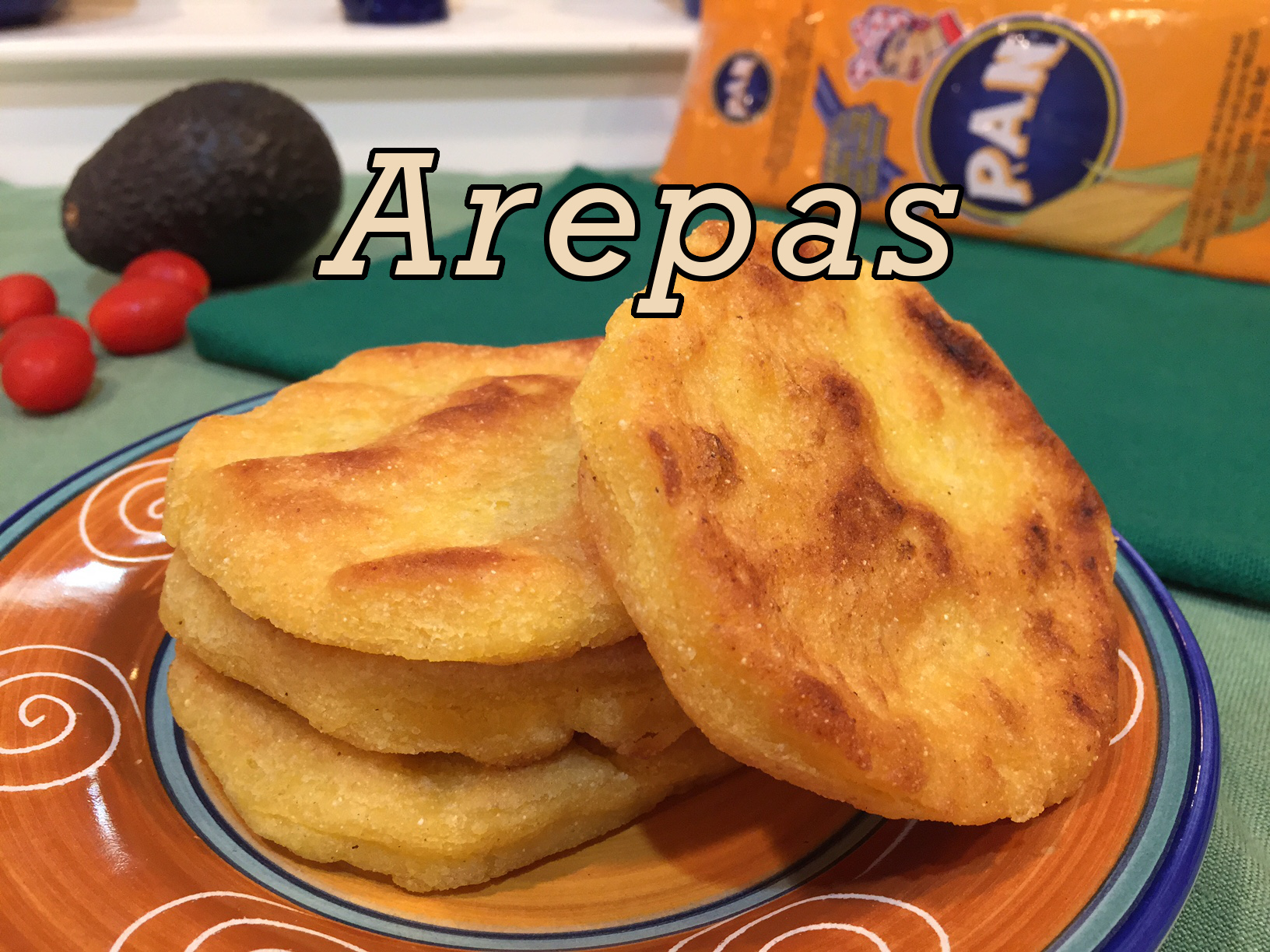
Arepas are cornmeal flat, round bread patties (like an English muffin) that are slit open and stuffed with whatever you like. I’ve included a recipe for my favorite filling. You can even spread them with jam or honey. Use your imagination. They are amazingly easy it make – even kids (with very clean hands) can prepare the dough.

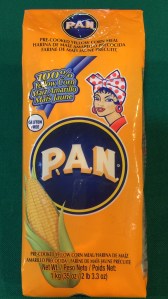
NOTE: The most common masarepas is PAN Harina. Below is a photo of what I bought. PAN is a brand, but others make it, too. You may need to go to a specialty store for hispanic foods (I had to). PAN Harina is NOT the same as masa harina, which is used for corn tortillas.

FullSizeRender (18)

TIP:  Store masarepas, and all extra flours & grains, in the freezer until use to prevent bugs and keep them fresh. Bring to room temperature before using.

AREPAS – makes 6

  • 2 cups (310g / 10 6/8 oz) masarepas
  • 1 tsp salt
  • 1 tsp baking powder
  • about 2½ cups  (650 ml) water
  • about 1/4 cup (60 ml) vegetable oil

Put the masarepas, salt, and baking powder is a bowl. Use your dominant hand to mix it. (Yes, you’re going to mix the dough with your hand – it’s the easiest way.) With your non-dominant hand, pour in about 1 cup of the water. Slowly squish the mixture until water is absorbed. Add another cup of water and slowly squish. (If you squish quickly, the water squirts and makes a mess.) The end result should be a soft dough (softer than Playdoh), but not so soft that it sticks to your hand and won’t stay formed. Add more water, if needed…or more masarepas, if you’ve added too much.

Divide dough into 6 equal pieces. Shape each into a patty 4″ in diameter and about 1/2″ thick.

Preheat oven to 400º Fahrenheit.

Have ready a wire rack sitting on a cookie sheet.

Over medium flame, heat 2 T oil in a 10″ skillet, or 4 T oil in a bigger skillet. When oil is hot, place in as many discs that will fit. When bottom is browned (about 3 minutes), flip cooking again until browned. Place on wire rack. Add more oil to skillet with each batch.

When all arepas are fried, place cookie sheet into oven for 10 minutes. Remove and cool until you can slice them in half without burning yourself.

BLACK BEAN & RICE FILLING – makes about 2 cups

  • 1 cup cooked black beans, mashed
  • 1/2 cup cooked rice (I use Brown Rice Medley from Trader Joe’s)
  • 1/2 cup SALSA VERDE
  • 1/2 cup tomatoes, chopped
  • 1/2 cup avocado, mashed
  • 1/2 cup jalapeño jack cheese, shredded
  • 1/4 tsp salt
  • 1  2.25 oz can jalapeño sliced black olives

Blend all ingredients together.

MINI YORKIES: Fun Sized Yorkshire Puddings

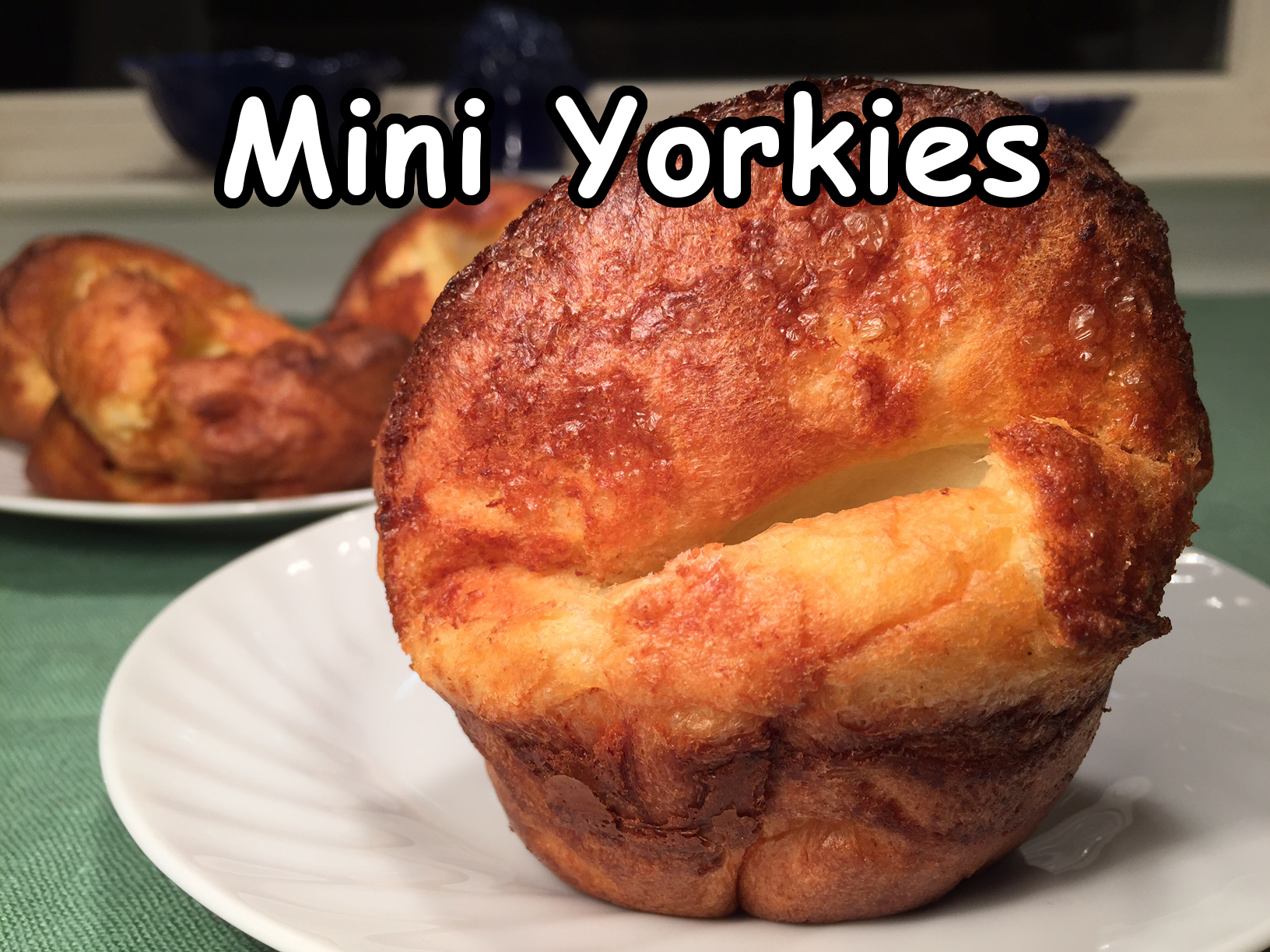
mini yorkies text

As promised in last week’s TOFU ST. JACQUES A LA BONNIE post, this week I’m writing about Mini Yorkshire Puddings, which were the container for this scrumptious dish. (Often, puff pastry shells are used, but who needs the fat and calories!)

Yorkshire Pudding is traditionally made in a large pan, using drippings from whatever roast you’re cooking. But the sides would became tall and crispy, while the large center sunk and was kind of flabby and tasteless. Since the best part of the pud is the crispy edge, baking Yorkshire Pudding in muffin tins has gained in popularity.

I tried different ratios of eggs to milk to flour, achieving the best texture for my palate.

I also experimented with shortening versus butter versus oil to grease the cups. Shortening won that contest – it yielded a crispier pudding.

The final variable was whether to flour the sides. It didn’t seem to matter that much – both versions were crispy, however, the floured ones were very slightly taller. Since flouring muffin tins is kind of a messy task, it wasn’t worth the effort to me.

NOTE: The batter needs to rest for at least 30 minutes before baking, so plan accordingly. They need to be served immediately.

MINI YORKSHIRE PUDDINGS – makes 12

  • 4 eggs
  • 123g (1½ cup) milk (I used nonfat)
  • 3/4 tsp salt
  • 186g (1½ cup) all purpose flour
  • 1 T vegetable oil

Into a bowl beat the eggs and milk. Whisk in the salt and flour until fairly smooth (some small flour lumps are acceptable). Place a plate over bowl and let rest for, at least, 30 minutes.

With rack in middle position, turn oven to 450º F.

While oven is heating, grease cups (sides and bottoms) of a 12-cup muffin tin with shortening.

In a small saucepan pour 1 T vegetable oil. As the oven gets close to 450º F, heat up the oil and drizzle it into the batter, whisking continuously. Pour batter into a container with a spout (such as a pitcher or measuring cup) to make it easier to fill the muffin cups. Fill each cup halfway to start, then go back and evenly divide the remaining batter amongst the cups.

When oven is at 450º F (don’t jump the gun!), put muffin tin in oven and set timer for 20 minutes. Do not open door!!! (The cool air will prompt the puds to deflate a bit.)

After 20 minutes, reduce temperature to 350º F and set timer for 7 minutes. Again – do not open door!!! Turn on oven light and peer through door to see if they’re well browned. If they look satisfactory, open door, pull out rack, and pierce tops with a skewer to allow steam to escape. Remove tin from oven and empty Yorkies into a bread basket.

Eat immediately – they’re at their best when fresh and hot. However, if you have leftovers, you can reheat them for a couple of minutes in a toaster oven (or standard oven, if you don’t have one).

PITA BREAD – Pocket Your Sandwich!

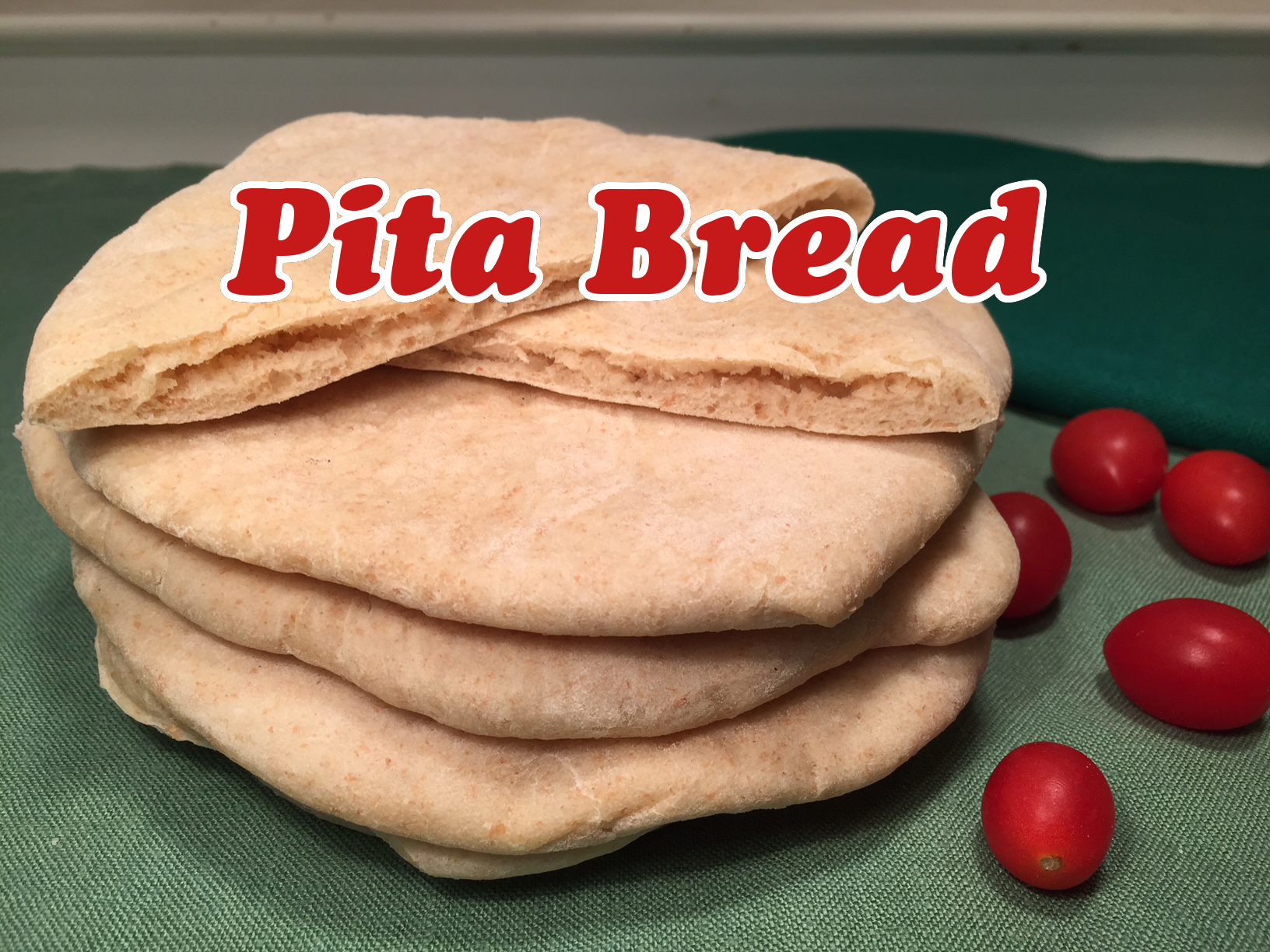
pita bread textPeople are often astounded that I bake my own pita bread. I’m not sure if it’s because they don’t understand why I bother, or because they believe it’s difficult to make.

Well, I bother because I like to know what’s in my food, AND because I love to save money. Breads are so cheap to make!

As to the difficulty – it’s not! If you think about it, pita bread has been around for thousands of years. People managed to bake it without the use of machinery or sous chefs. How hard could it be?

The key elements to getting the dough to puff is a HOT oven – 500° F, and rolling them thin (but not too thin). They’ll be the correct thickness if you divide the dough into 6 pieces and roll each 6½ in diameter.

NOTE:  Even if they don’t inflate, they still may have formed a pocket.

If, for some reason, the pita doesn’t inflate or, at least, separate inside so you can stuff them, never fear. They’re still usable! Simply pile the filling on top and fold the bread over like a taco. Some people prefer it that way.

PITA BREAD: makes 6

  • 3/4 cup water
  • 1½ tsp yeast
  • 6 T whole wheat flour
  • about 1¾ cup bread flour
  • 3/4 tsp salt
  • 2 T olive oil

Heat water to 100°-104°. Stir in yeast and let proof for 5 minutes.

Into the work bowl of your food processor put all the wheat flour, 1½ cups of the bread flour, the salt, and oil. Turn on the machine and slowly pour in the yeast water through the pour spout. Let run 30 seconds. Check dough to see if it needs more flour. It should be slightly tacky if you tap it quickly, but not so tacky that it sticks to your finger. Add more flour if it is. Run machine again. Let run another 30 seconds, even if you didn’t need to add more flour.

NOTE: If you don’t have a food processor, you’ll have to mix and knead the dough by hand. During the 10 minutes of kneading, try and figure out how you can afford a food processor!

Pour dough into an oiled bowl, flip dough so it’s oiled on both sides, cover, and let rise for 1 hour.

Punch down dough and divide into 6 equal pieces. Roll each piece into a ball, cover, and let rest 10 minutes to decrease its elasticity.

On a floured surface, roll each ball with a rolling pin into a circle 6½” in diameter. Keep dough covered when not working with it.

Place oven rack on bottom slot, set bread stone or a cookie sheet on top of rack, and preheat oven to 500° F. The time it takes to heat oven allows the dough one final rise.

When oven is ready (make sure it reaches 500° F – don’t get impatient!) gently place as many dough circles as will fit. Cover those that don’t fit and cook them when these are done. Set timer for 4 minutes. DON’T OPEN OVEN DOOR UNTIL TIMER GOES OFF! If you want to watch, turn on the light and peer through the door. For the pitas to puff properly the temperature needs remain really hot.

Stack baked pitas and wrap completely in a tea towel. This allows steam to finish the cooking, plus it keeps them pliable.