

Holidays in my house were always spent with my Armenian father’s side of the family. As it so often is with immigrant gatherings, food played a major role. The main meal was served in the early afternoon. Then came the clean-up, followed by a second round of the main meal. Armenians love to eat!
Dolma (stuffed grape leaves) was a favorite and always plentiful. My grandmother’s recipe was the absolute best! (My Lebanese friend, Deborah, claims her grandmother’s is the best…but we’ll have to agree to disagree.)
Of course, once I became a vegetarian, my grandmother’s beef and lamb filled dolmas became a happy memory, testing my willpower at holiday dinners. Oh, yes, I made many attempts at a vegetarian version, but they never came close.
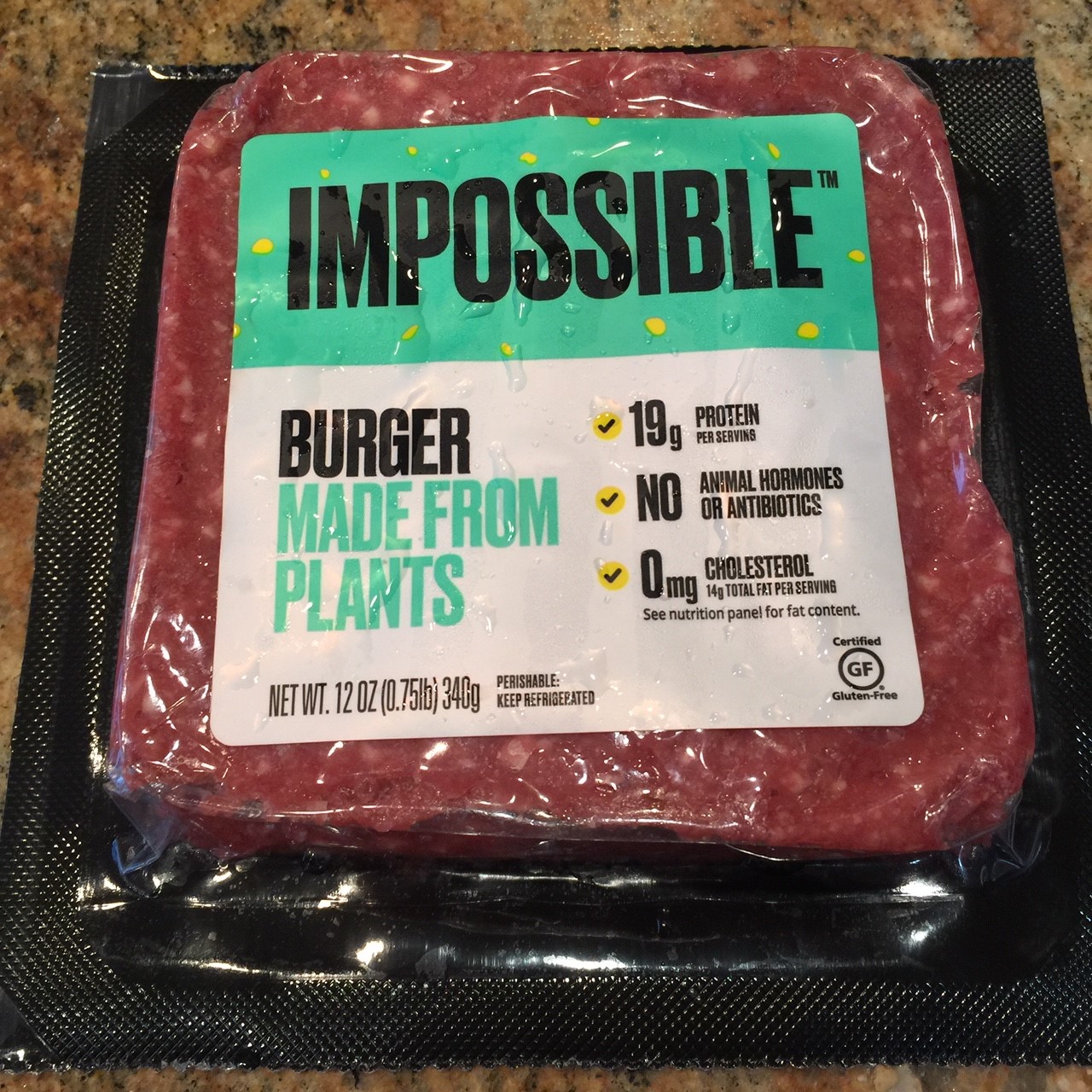
Finally, food technology caught up. Imitation meats were getting better and better. When Impossible Burger became available at my local market, I decided to substitute it in for the beef and lamb (there doesn’t seem to be any imitation lamb yet). I added in a few shiitake mushrooms and Worcestershire sauce for the umani flavor, plus some flour to bind the filling logs so they don’t fall apart. After much tweaking of my recipe, I’m now prepared to serve them to my dolma-loving brother.
Note: I’m recommending Impossible Burger brand for this recipe. (No, they’re not paying me!) This product forms a firmer log so it mimics the filling made with beef and lamb.
Note: While you can grow and brine your own grape leaves, it’s much easier to buy them. Most supermarkets carry them, but you have to search. They’re usually in with the olives, and packaged in glass jars. You may not have much choice in brands. Be aware that they can be very difficult to remove from the jar – quite often I end up tearing a third of them, which makes them unusable. A brand with a wide mouth is best. To remove the leaves, you have to grasp a roll, then gently pull up while twisting. It’s very maddening.
Queen of Freeze note: Unused leaves can be stacked, rolled, and frozen for future use.
VEGETARIAN DOLMA – makes about 26-31, depending on leaf size
- 340g / 12 oz / 3/4 lb Impossible Burger
- 3 T parsley, chopped
- 62 g / 2 oz shiitake mushrooms, coarsely chopped
- 50 g / 1/3 cup / 1.75 oz uncooked Chinese-style rice (or any white rice)
- 100 g / 3.5 oz onions, chopped
- 286 g / 10 oz canned tomatoes plus their juice
- 1/4 tsp ground black pepper
- 2 tsp salt
- 1 T vegetarian Worcestershire sauce
- 30 g / 4 T all-purpose flour
- at least 40 grape leaves (you won’t use them all, but it’s good to have extra)
To get 286 g (10 oz) of the canned tomatoes plus juice, you’re going to have to buy a larger can and weigh out the amount. (Using the entire 15 oz can is too much for this recipe.) Pour the juice into a 4qt (4 litre) or larger cooking pot. Remove and discard the stem area of the tomatoes, and any skin or defects. Chop into small pieces.
Thoroughly wash mushrooms, discarding the stem (it’s too woody). Chop cap into 1cm (3/8″) sized pieces.

Into a large bowl, put the tomatoes, Impossible Burger, parsley, mushrooms, rice, onions, pepper, salt, and Worcestershire sauce. (You’ll add the flour later.)
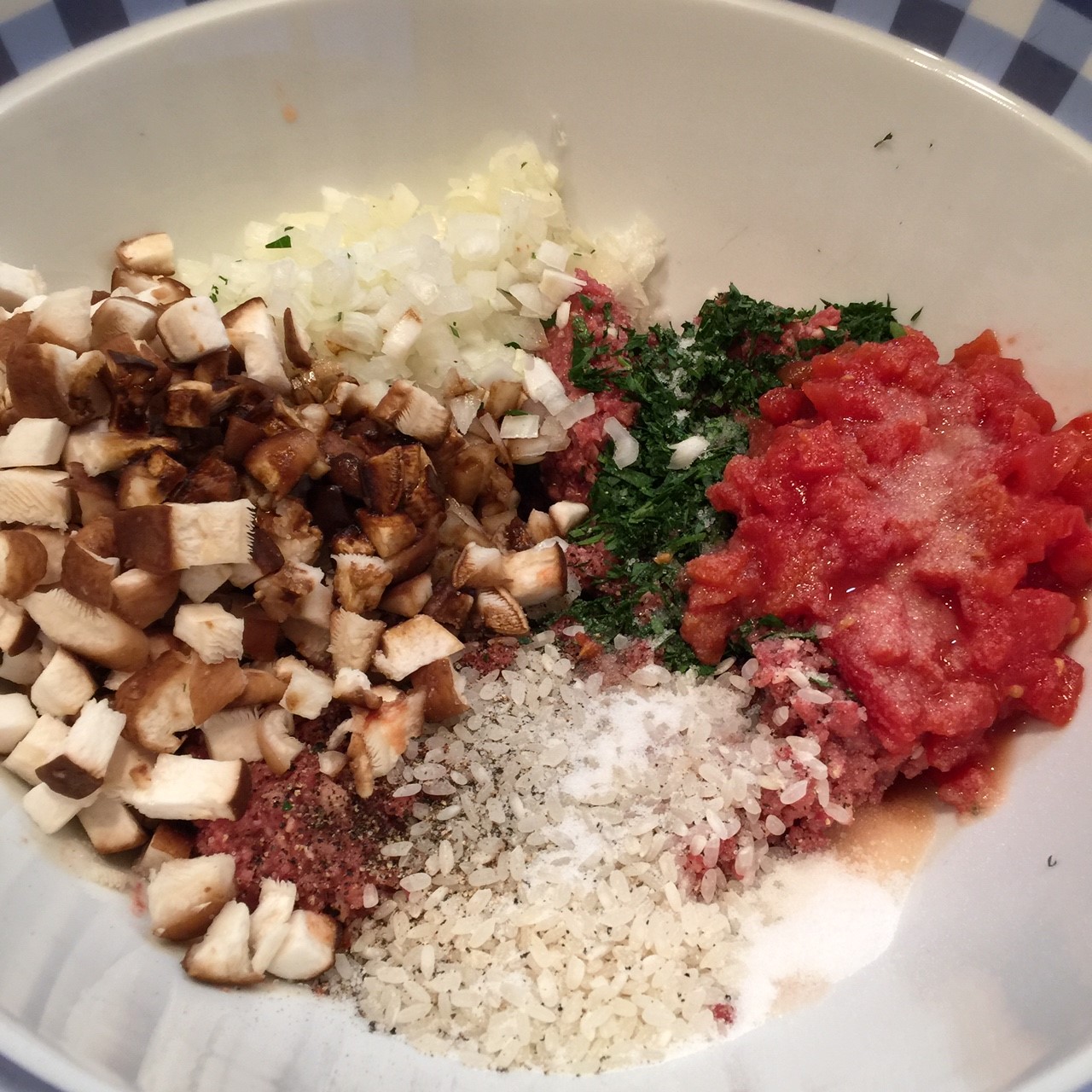
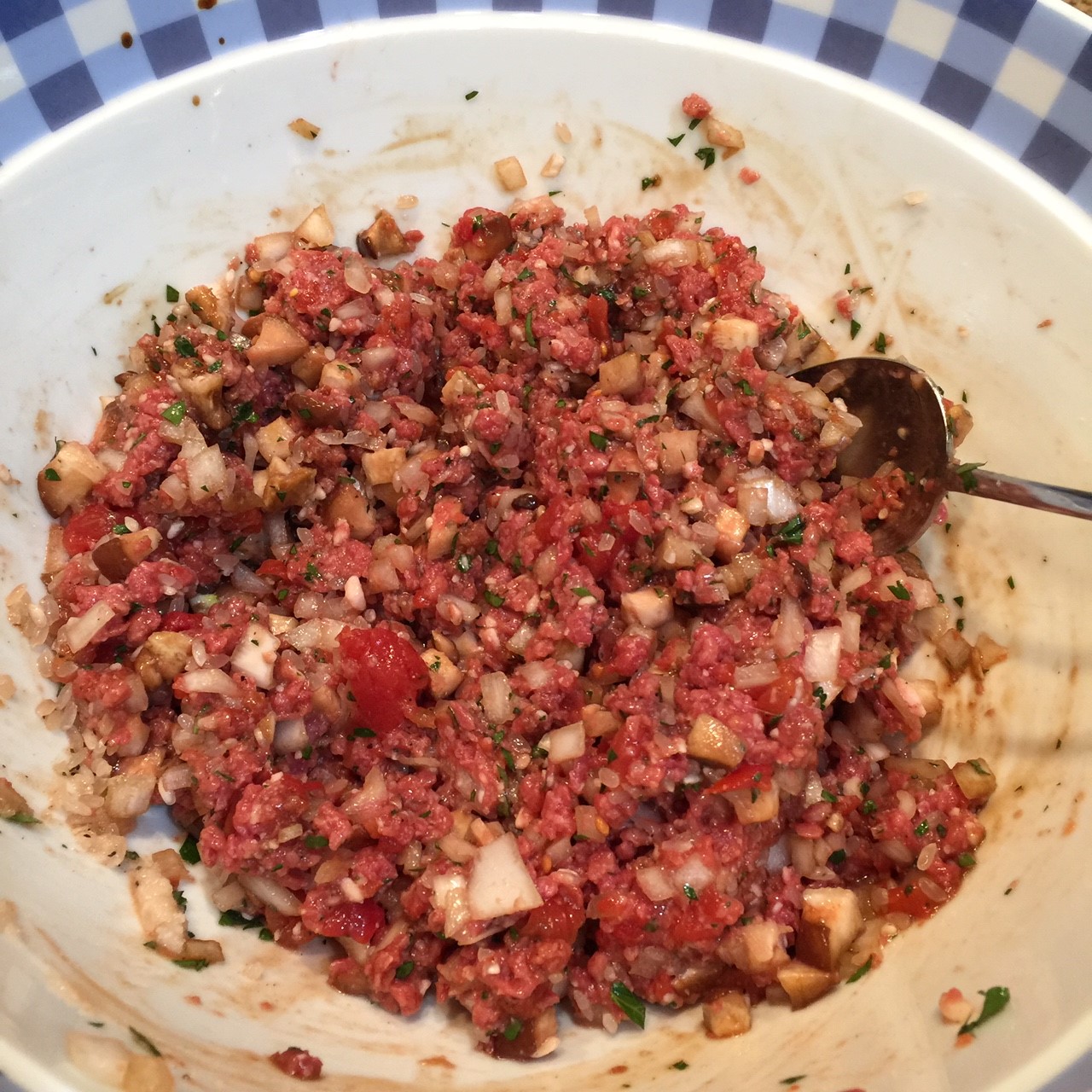
Stir mixture to blend.
Before adding in the flour, prepare the grape leaves. Depending on the brand, it can be very tricky to remove them from the jar without tearing many. Torn leaves are pretty useless. So, do your best. You’ll need between 20-40 intact leaves. (The number is dependent on the size of the leaves and how generous you are with the filling.)
After removing the grape leaves from the jar, unroll them and cut off the stems to the nub. Some people rinse off the brine, but I don’t – I like the salty flavor.

Depending on how much room you have, lay out several leaves, vein-side up, to work in an assembly-line manner.
Add the flour to the filling and mix in. (I like to wait until the last minute to add in the flour.) Spoon out some filling and form a tight log. The amount will depend on the size of the leaf. If you over-stuff, the roll will come apart in the cooking – you need plenty of leaf to fold and roll as you can see from the photo below.
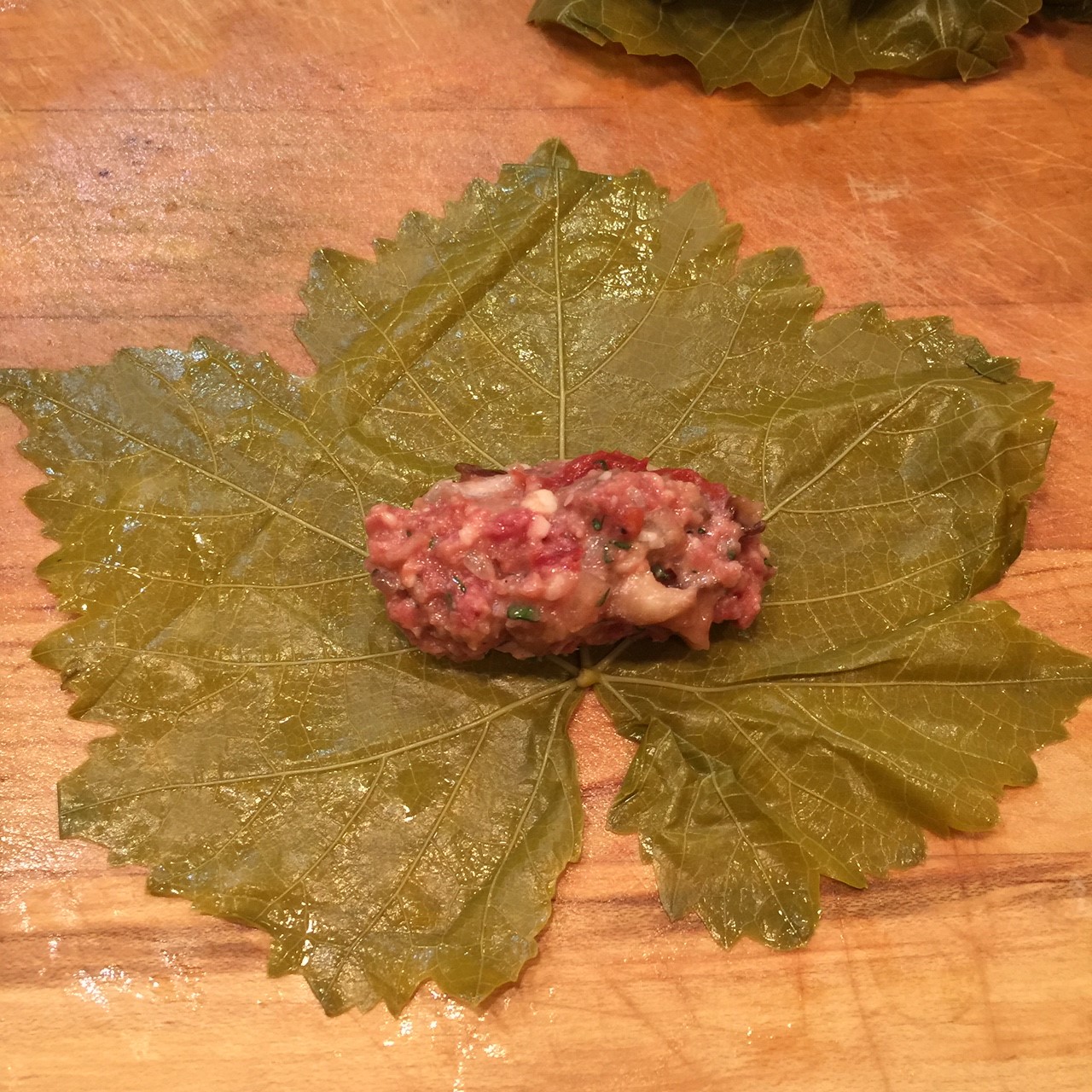
Wrap one of the lower flaps around the filling, tucking in the flap. (Don’t wrap too tightly – the rice will expand with cooking and you don’t want them to burst.)
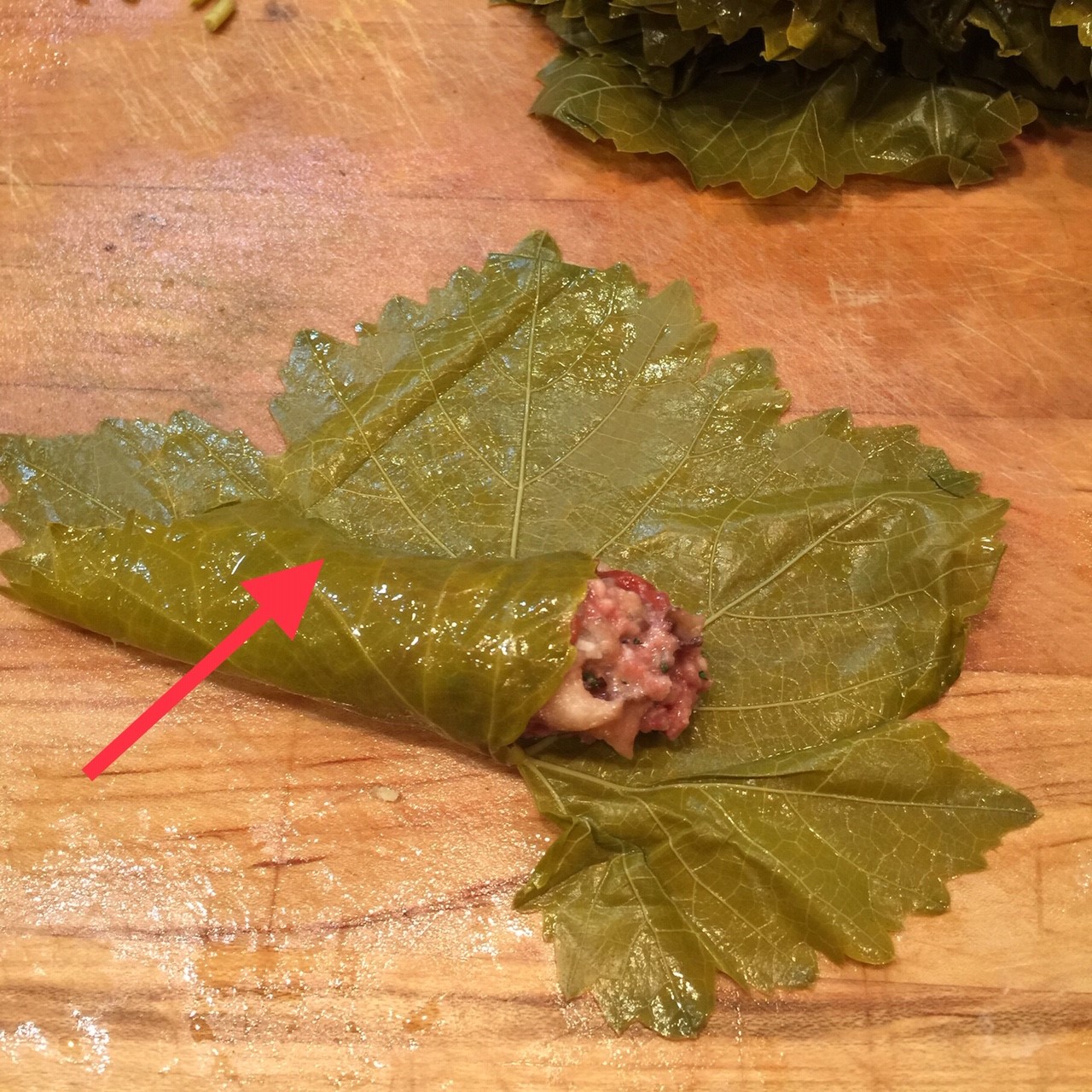
Wrap the other lower flap around filling as before.

Wrap one of the side flaps toward the center (this seals in the side of the filling).

Fold in the other side flap.
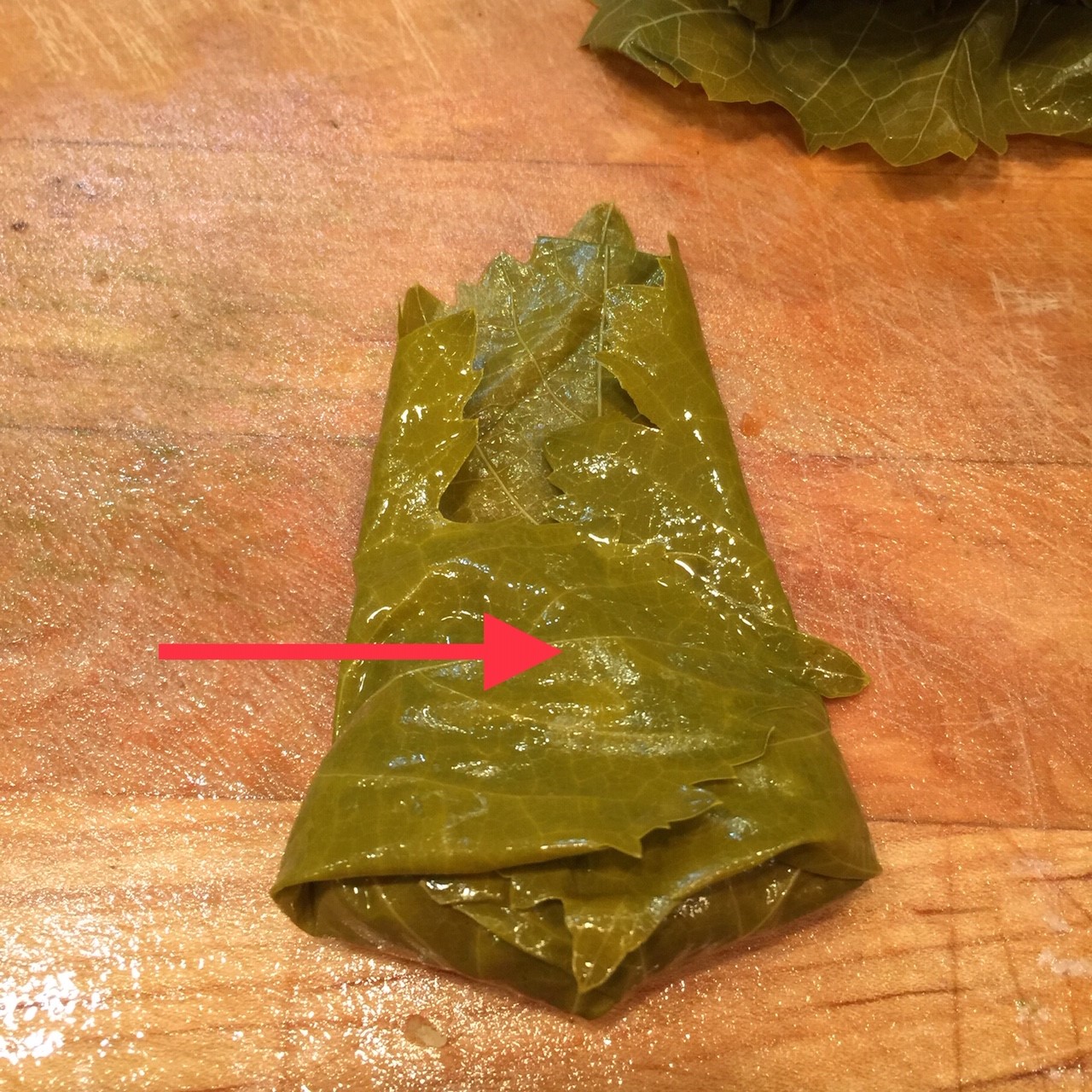
Finally, roll up the dolma starting at the filling end. (Again, don’t roll too tightly.)

Place rolled dolmas in the pot with the tomato juice.

Line them up as you go, creating a second layer, as needed.

Once all the dolmas are wrapped and placed in the pot, cover with water. Place an upturned plate on top to weigh down the dolmas – otherwise, they’ll float.
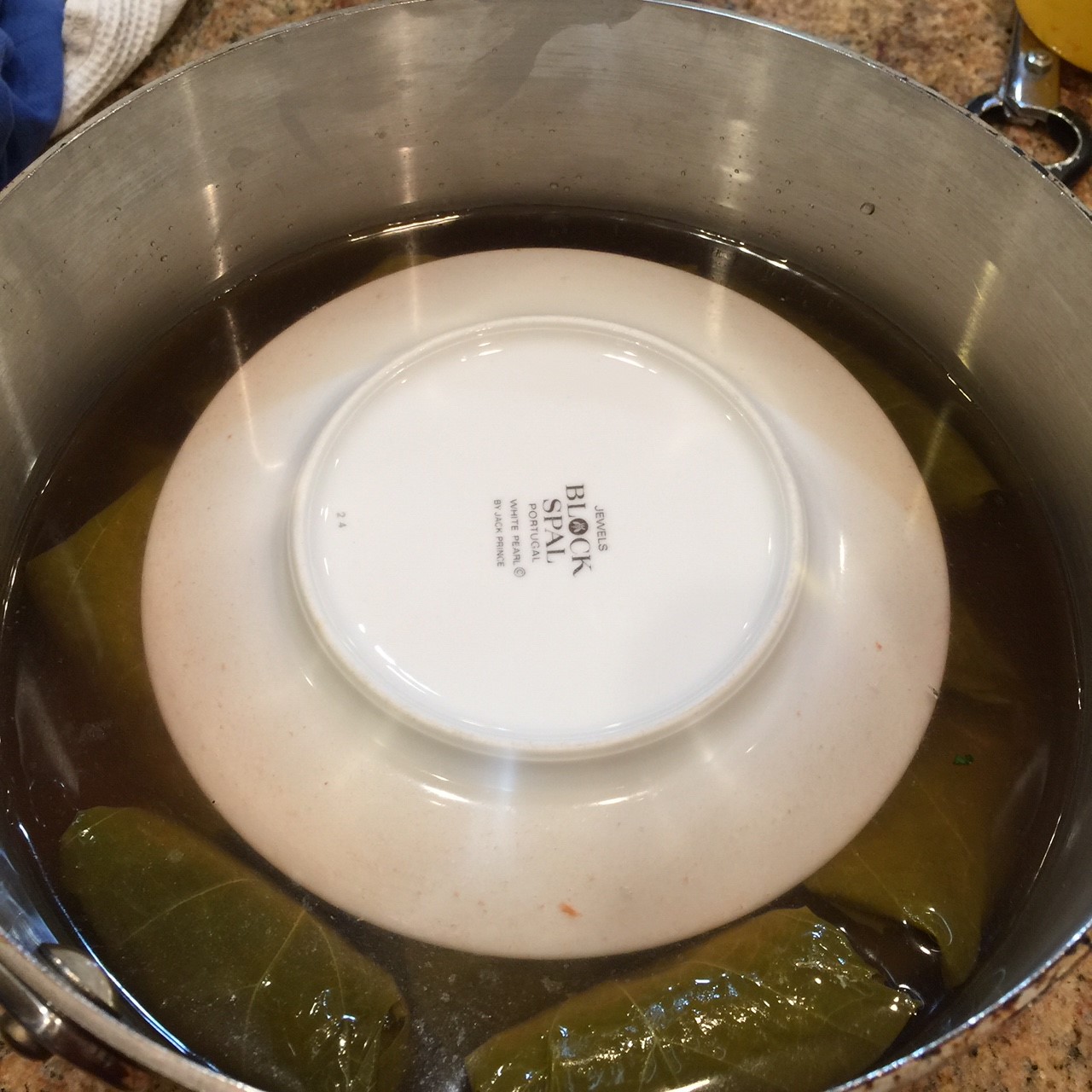
Bring to a boil, cover pot, and reduce heat to just maintain a simmer. Cook 1 hour. Remove plate and let dolma cool about 15 minutes or more before serving. In my family we eat them plain. You might prefer a dipping sauce, such as tzatziki.













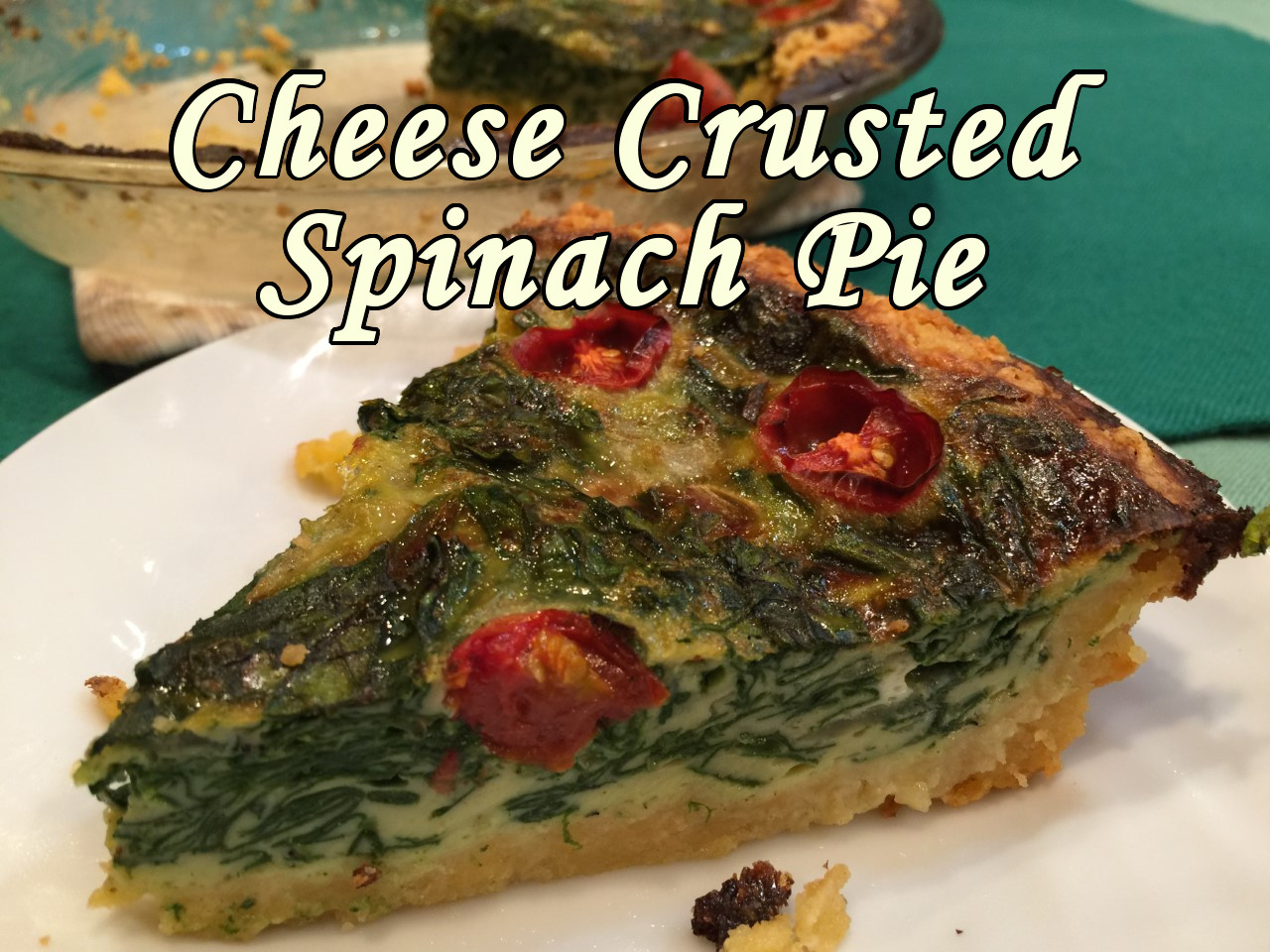




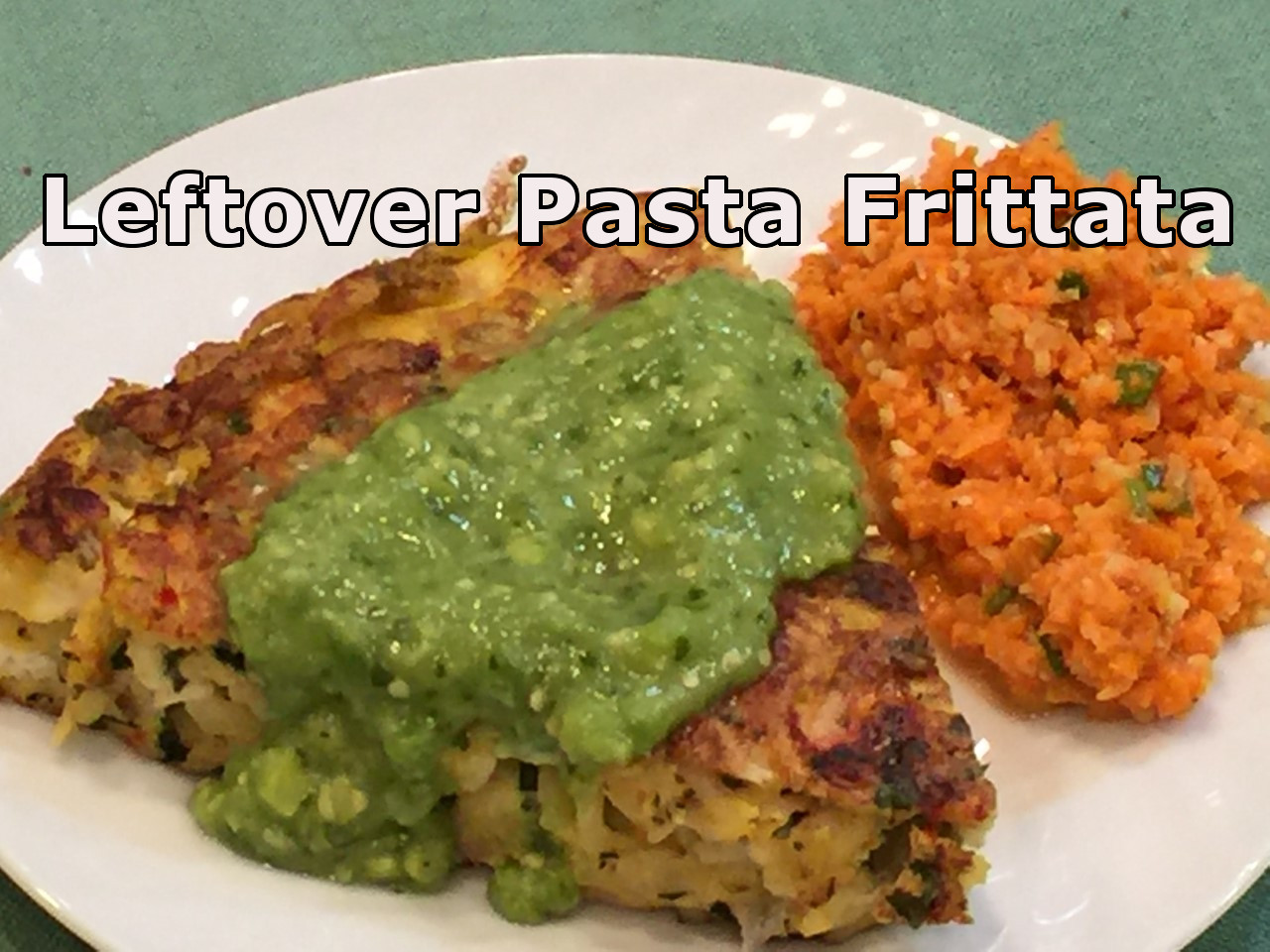 I hate waste – particularly of food. Unless it’s gone bad, I find a way to use it or save it (thus my self-proclaimed moniker of Queen of Freeze!) So I often find myself with bits and bobs which need to be eaten.
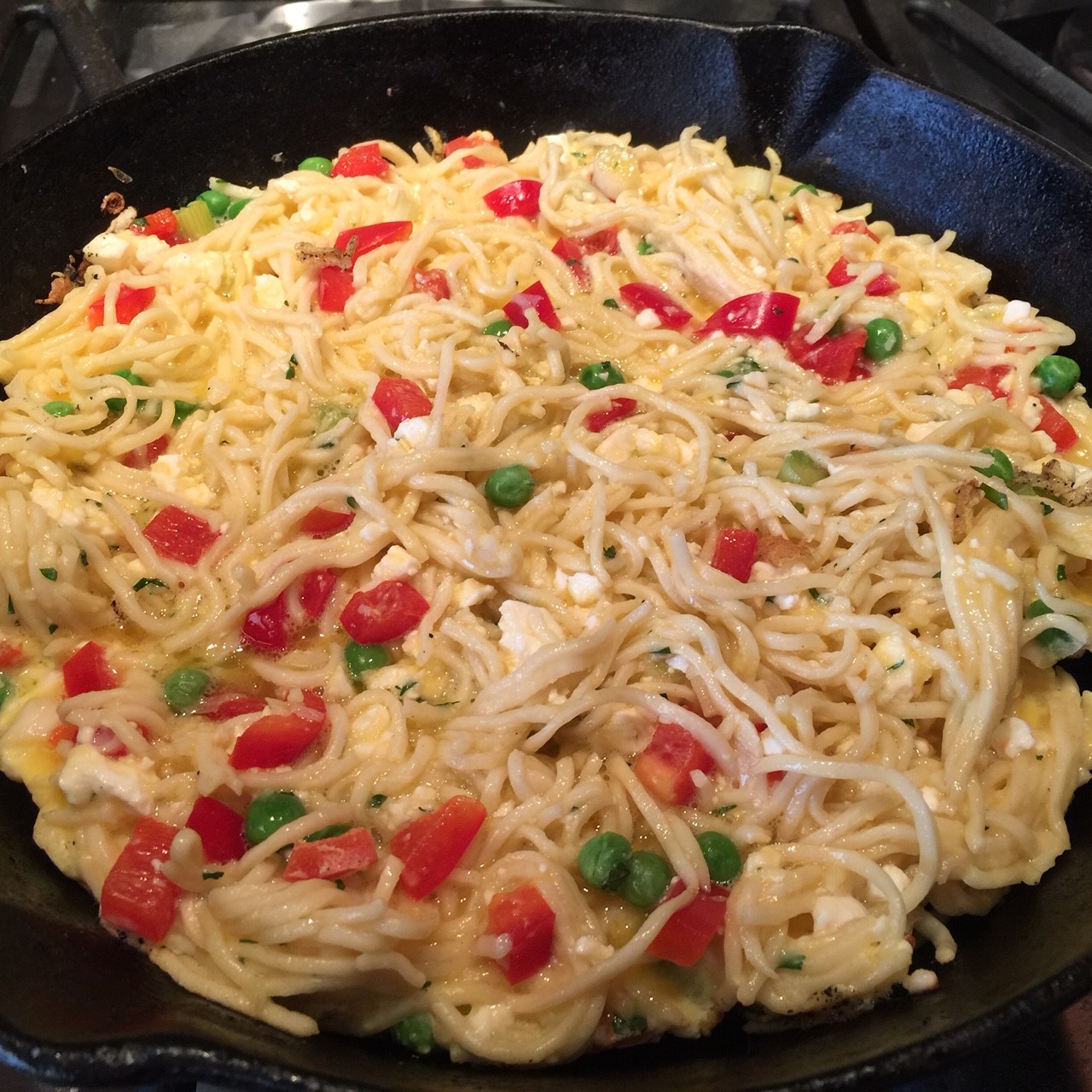 Here comes the tricky part – you’re going to need to flip the frittata to brown the other side. Loosen the bottom using a metal spatula. Once the bottom is no longer stuck, carefully slide the frittata onto a large plate.
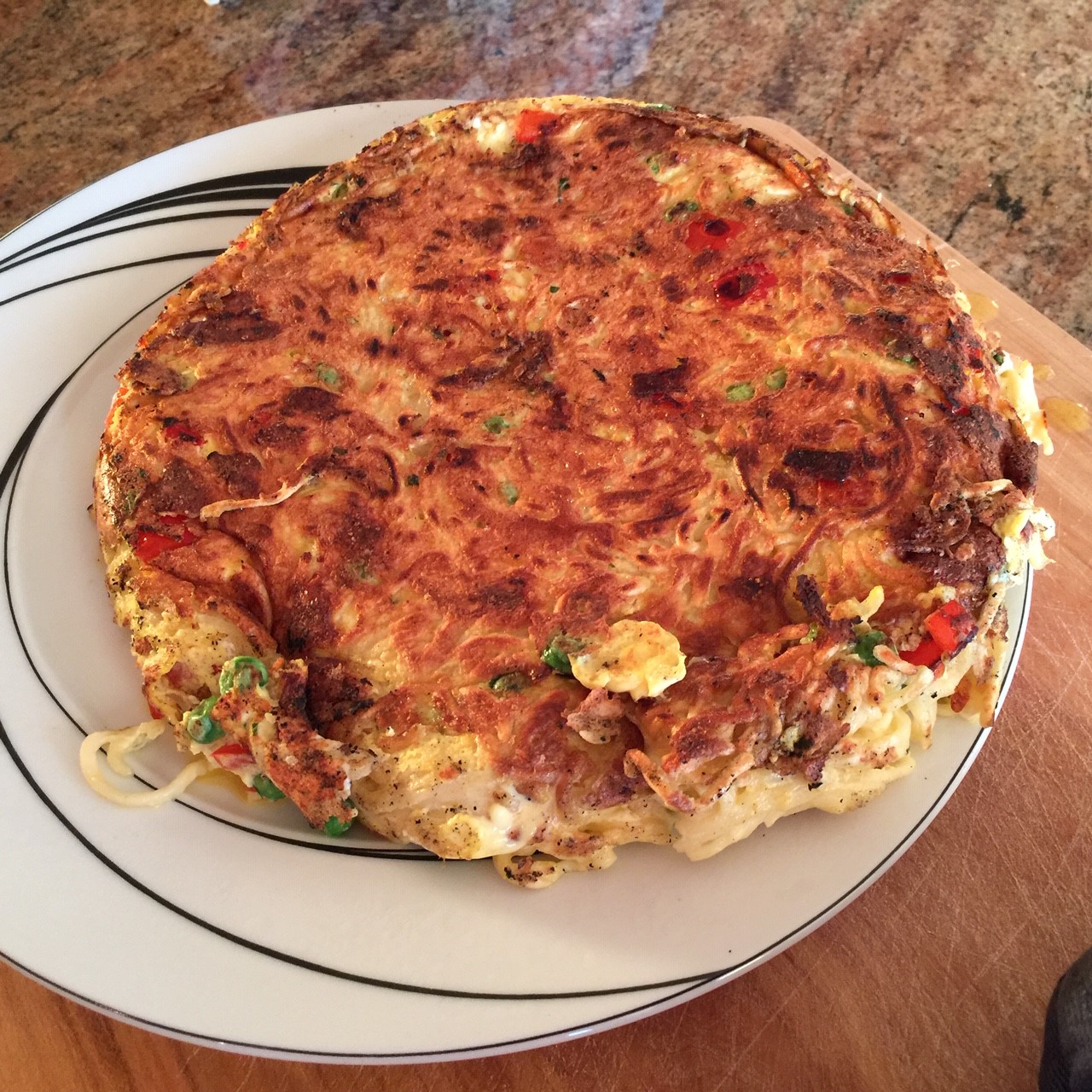 (Or, you can place a plate on top of the skillet and, using oven mitts, flip the skillet letting the frittata drop onto the plate.) Cover with another plate and flip.
  Then, slip the flipped frittata back into the skillet and cook until the bottom is well browned.
  Let set about 5 minutes before slicing.
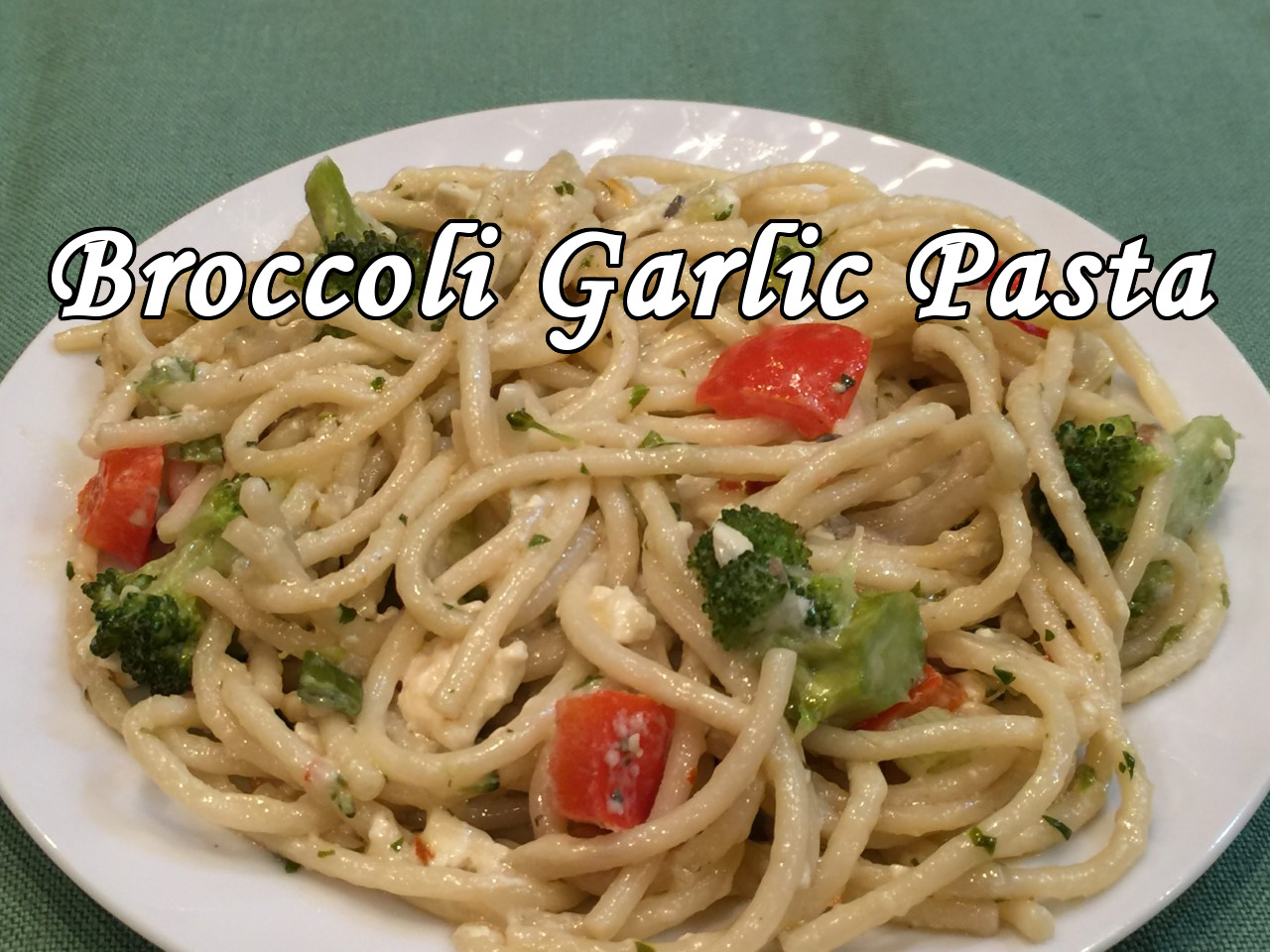 Broccoli Garlic Pasta is a new addition to my list of favorite dinners. It’s one of those recipes that I create in order to use up an ingredient that would soon be going bad – in this case, it was mushrooms. I threw in other items I had on hand – the pièce de résistance being the Feta cheese, which made all the difference.
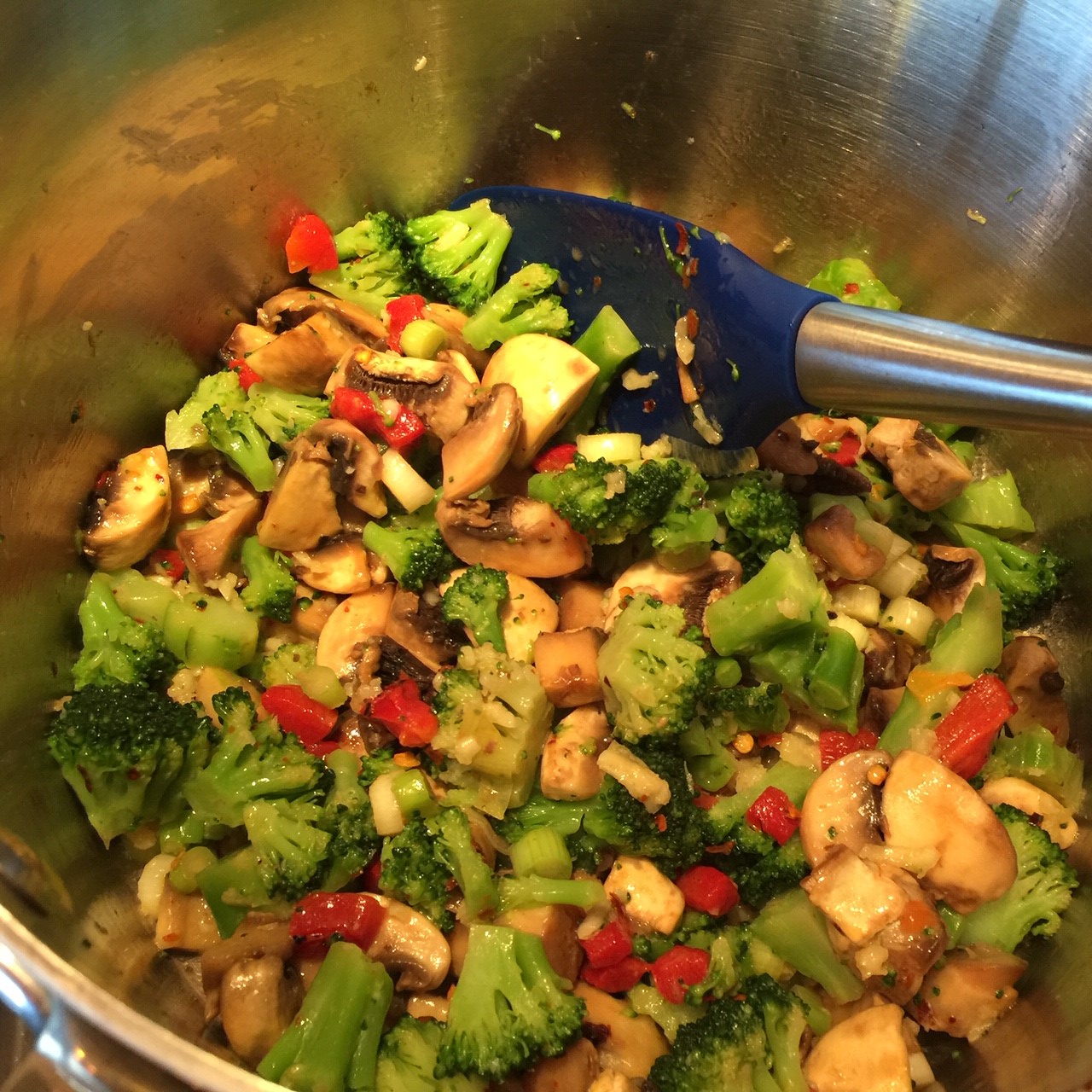 Kill heat and sprinkle on flour. Over low flame, stir 1-2 minutes to slightly thicken the liquid and cook-off the flour taste.
  Add in the wine and cream. Cook over medium heat about 1 minute.
  Stir in the Feta, Pecorino, and parsley. Stir in the pasta and heat through. Pour into serving bowl (or let remain in pot), cover, and let set for about 5 minutes to allow pasta to absorb the liquid and thicken up.

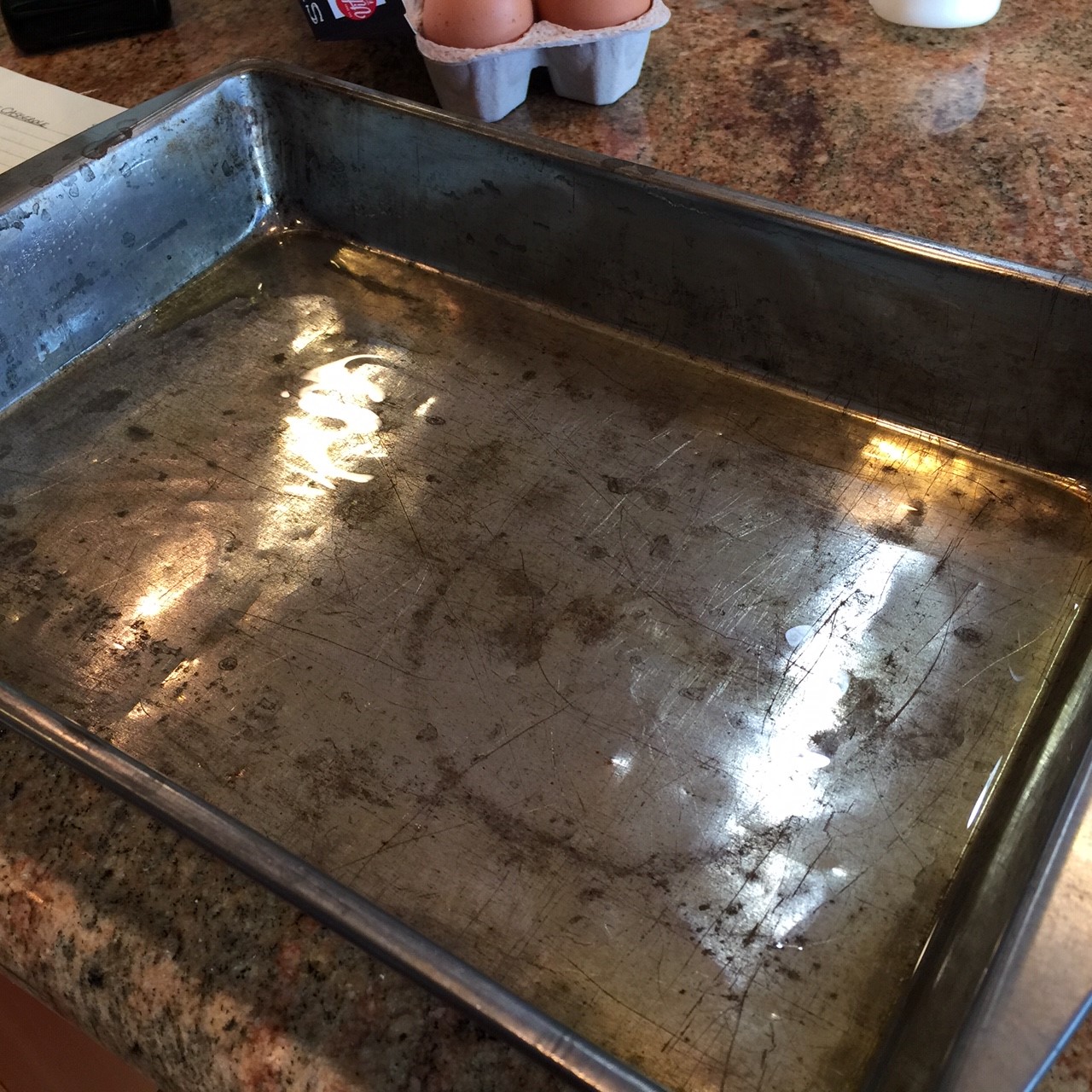
 Pour 2 T olive oil into a rectangular or square container with sides at least 3″ high, covering the bottom and sides. (The square corners train the dough somewhat and help it fill the corners of the baking pan. If you don’t have a container like this, just use an oiled deep bowl.) The dough is going to rise very high, then collapse somewhat. Cover container and let rise 5½ – 6 hours. Note the low height of the dough when I pour it in.
 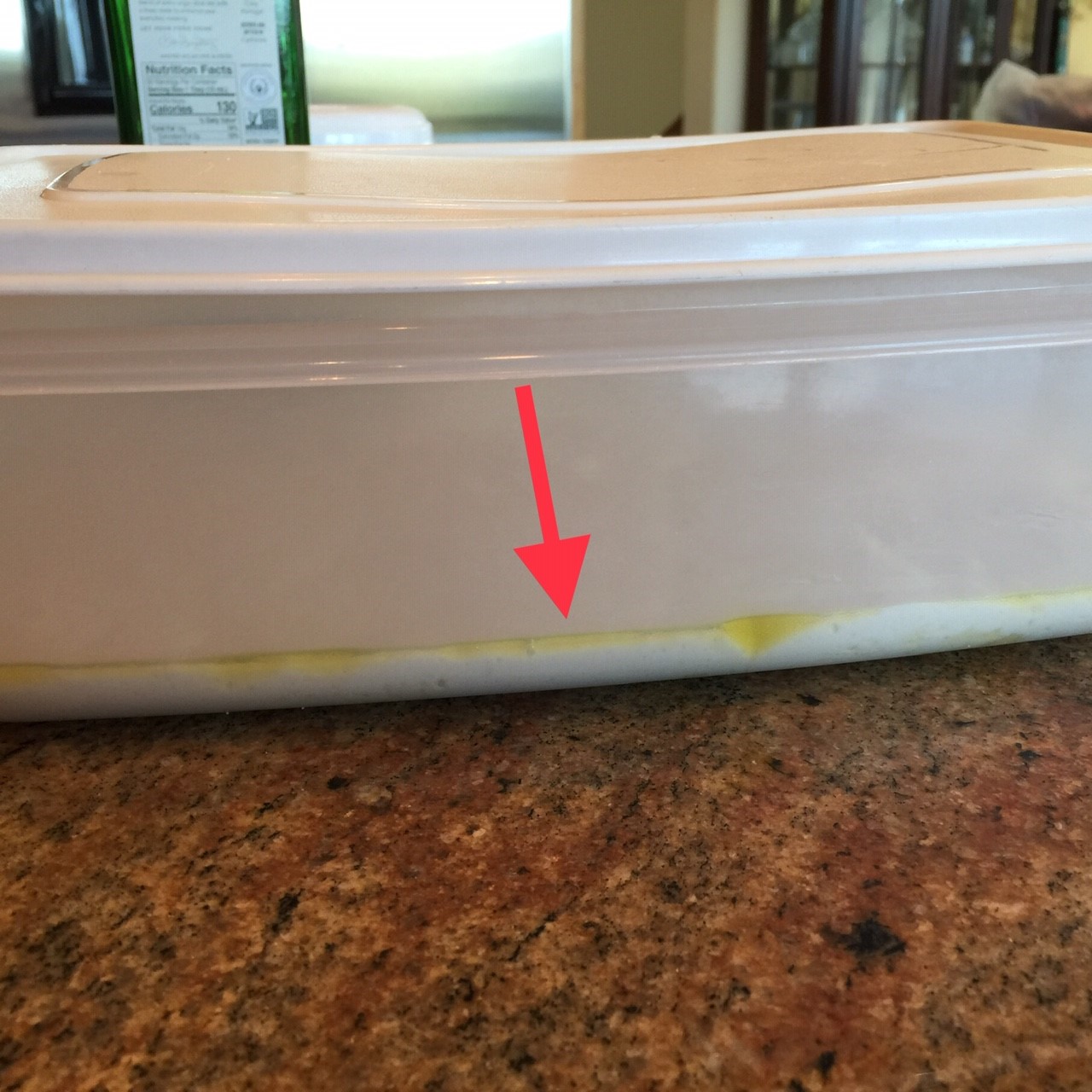 Here’s after 2½ hours:
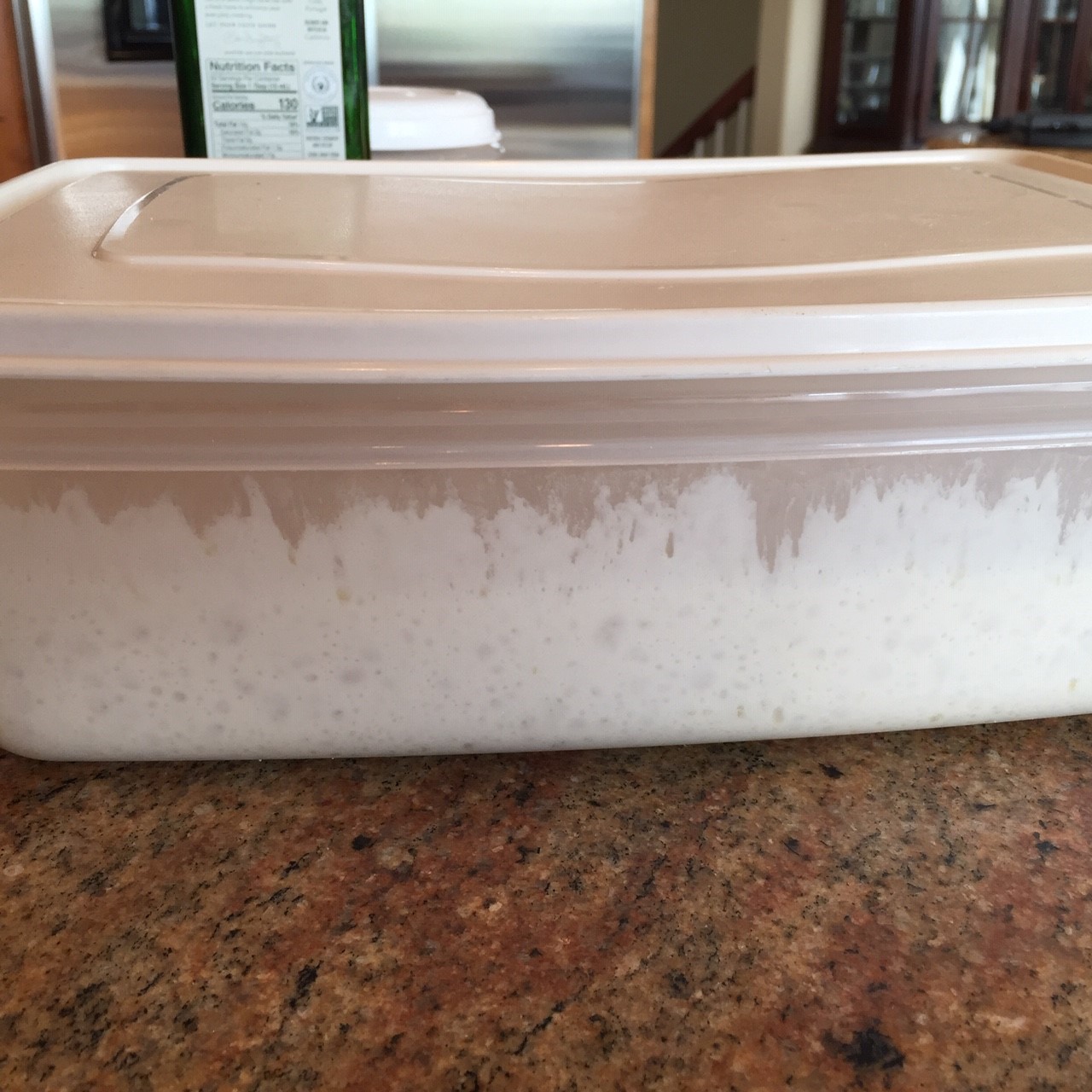
 After about 4 hours it starts to collapse a bit – this is normal.
  After dough has been rising for 5 hours, preheat oven to 500º Fahrenheit, rack in the middle position. If you have a baking stone or steel (I use a steel), place it on rack as the oven preheats.
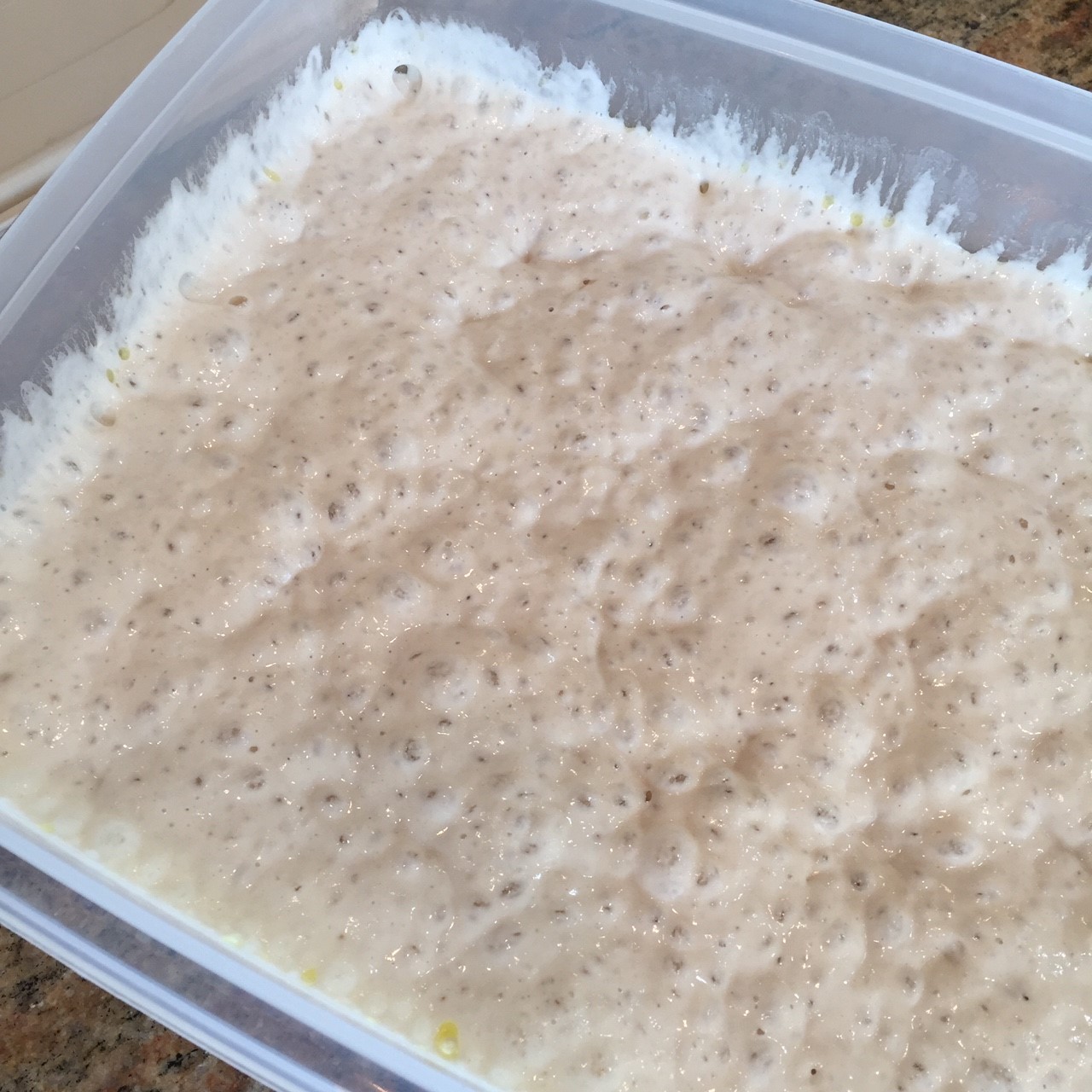
 Note how bubbly the dough is:
  Gently pour the dough into the prepared pan, nudging the dough into the corners – try not to deflate the dough.
 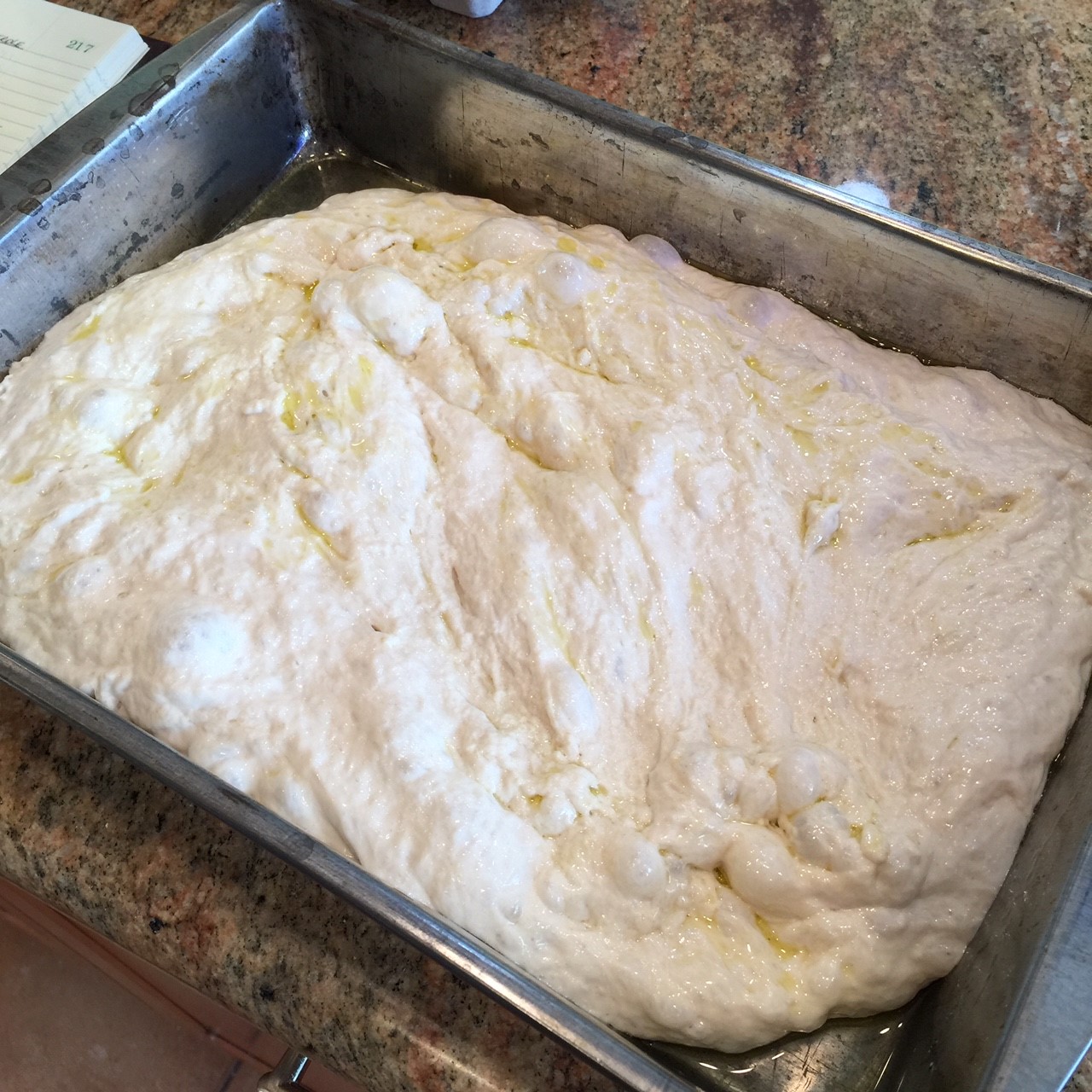 If you’re using toppings such as olives or slices shallots, sprinkle them on, lightly pressing them into the dough. Let dough set uncovered for 20 minutes.
  Brush 2 T olive oil over dough, then sprinkle on 1 tsp oregano, pepper, and salt.
  Place in 500º F preheated oven and bake for 20-25 minutes, until well browned on top and sides have pulled away from the edges a bit. Remove from oven and let rest in pan for about 10 minutes before removing to a wire rack.
 Decrease oven temperature to 350º F, leaving oven door open to expedite the oven temperature drop.
 While omelette is baking, remove focaccia to a cutting board. Using a long bread knife, very carefully slice bread in half horizontally. (Take your time – the edges are crispy, making it difficult. I’ve found it best to cut into the bread only – not in and out, which tends to tear the bread.)
 Once the bread is completely sliced through, leave it together to retain its heat.
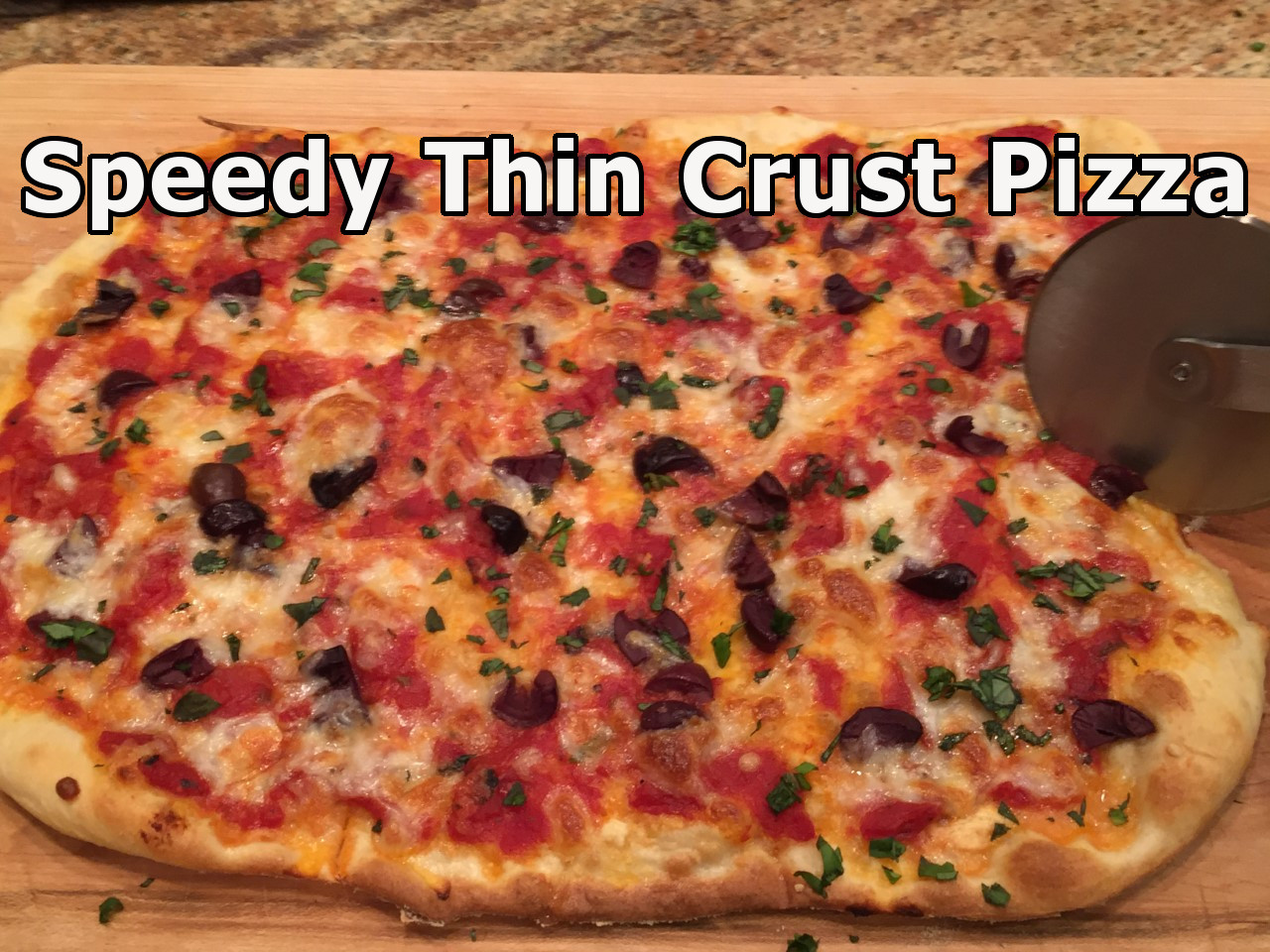 Speedy Thin Crust Pizza has become my go-to pizza recipe not only because I can have it on the table in a little over an hour, but because it’s REALLY good. It’s a very thin pizza with a nice chew.
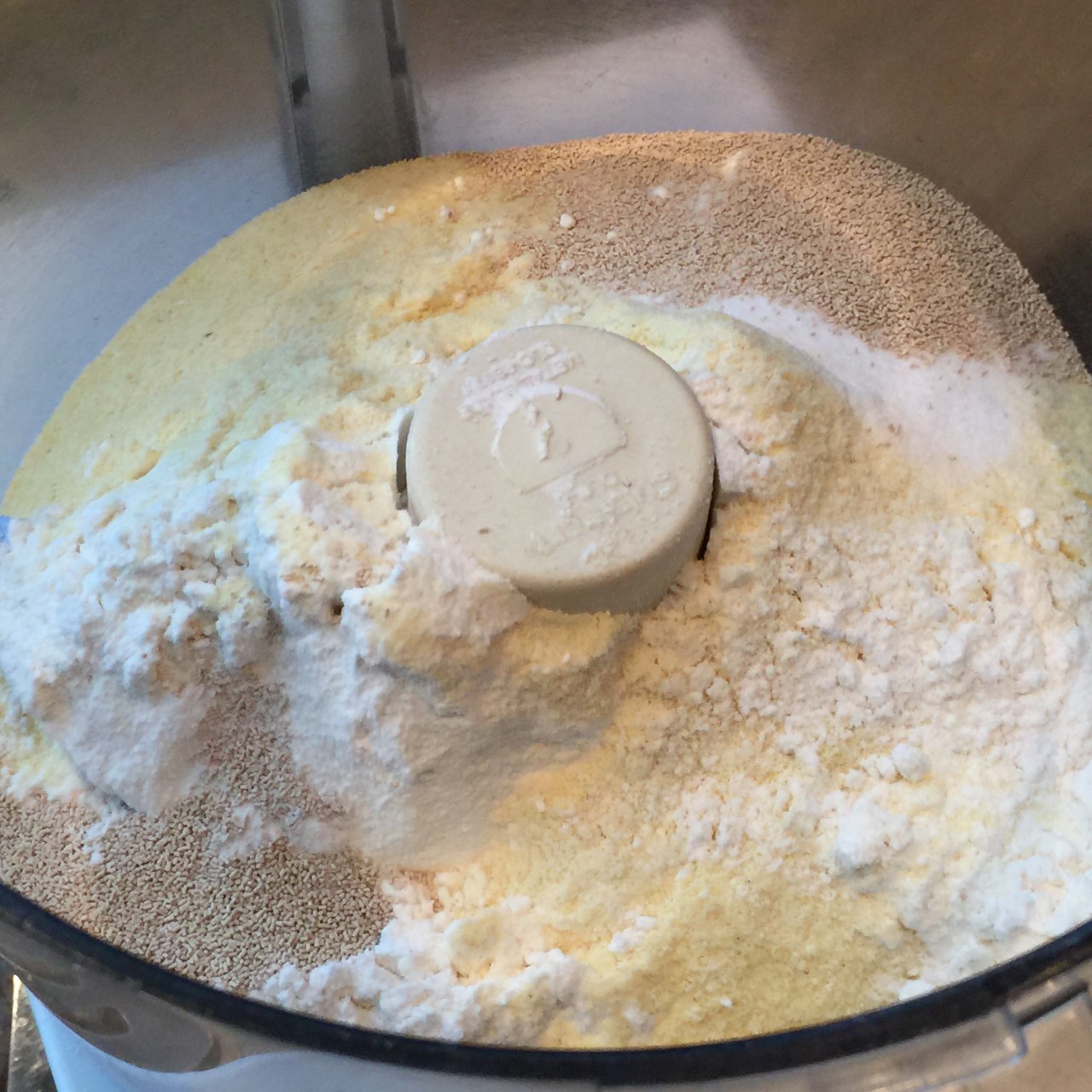 Set the workbowl on the processor base and run the machine for 10 seconds.
 Let mixture set in place for 10 minutes. Add in the salt and process for 30 seconds.
 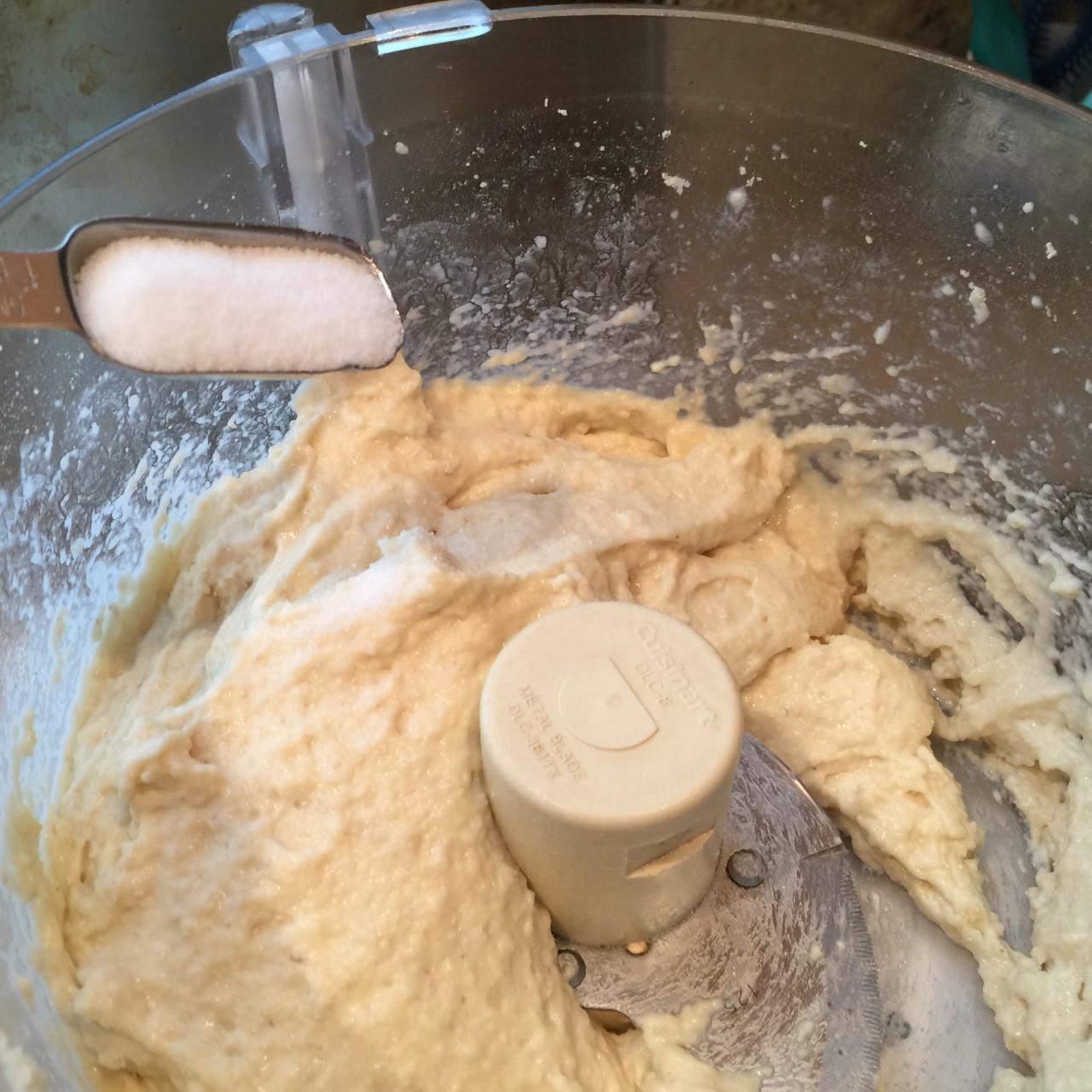 Empty dough onto a floured counter and fold the dough onto itself a few times to bring the dough together.
  Divide the ball in half and place each one on a piece of oiled (I use olive oil) parchment paper approximately 12″ wide. DO NOT USE WAXED PAPER – IT’S TOO THIN!!!
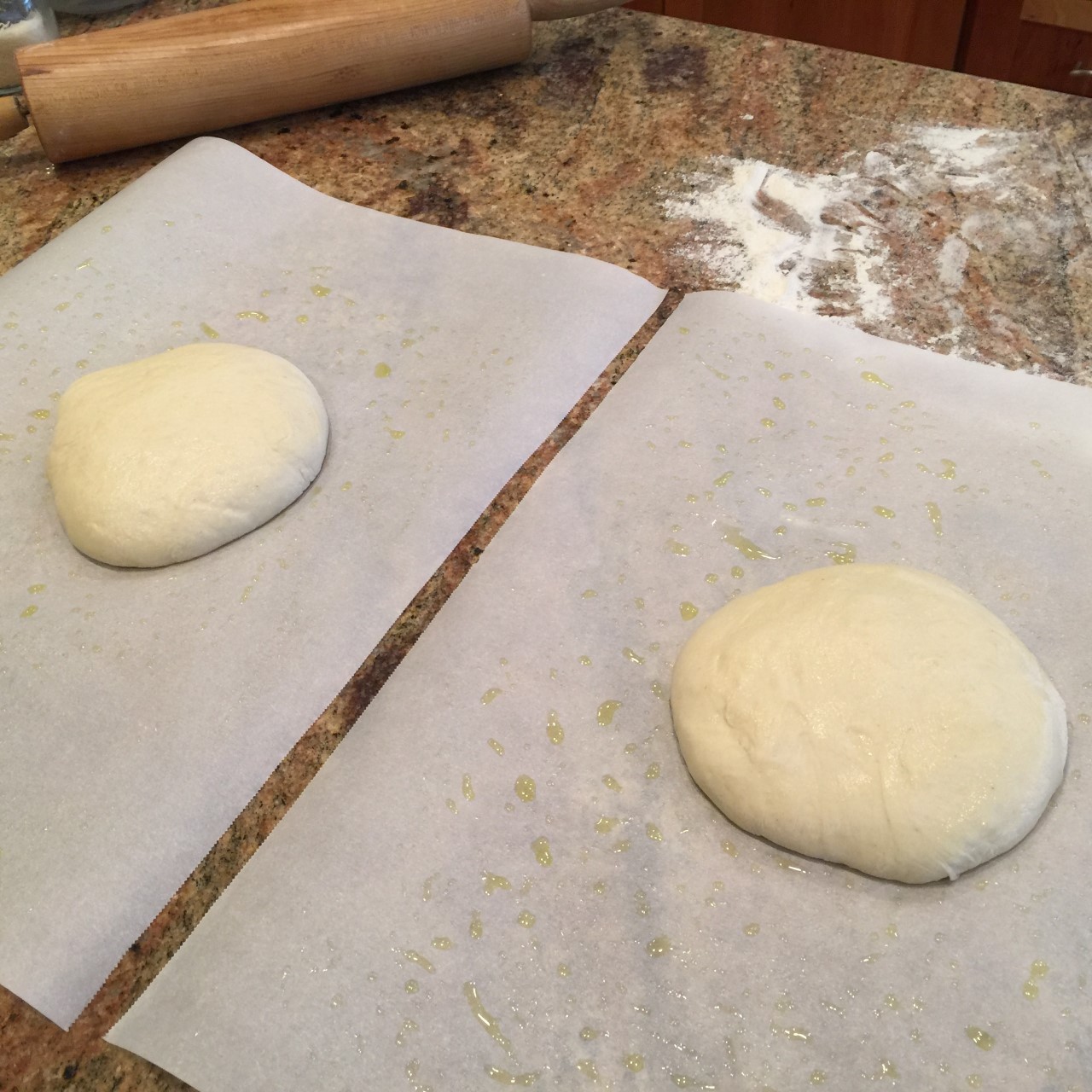 Rub the tops of the dough with a little more oil then top each with another piece of same-sized parchment. Press down with your hands to smoosh the dough into a square to get it started. With a rolling pin roll both dough balls to about 13″ x 10″ using short strokes, working from the center outward. (I find it easier to keep the parchment from sliding on my counter if I place it on a dry tea towel.) Let set 30 minutes.
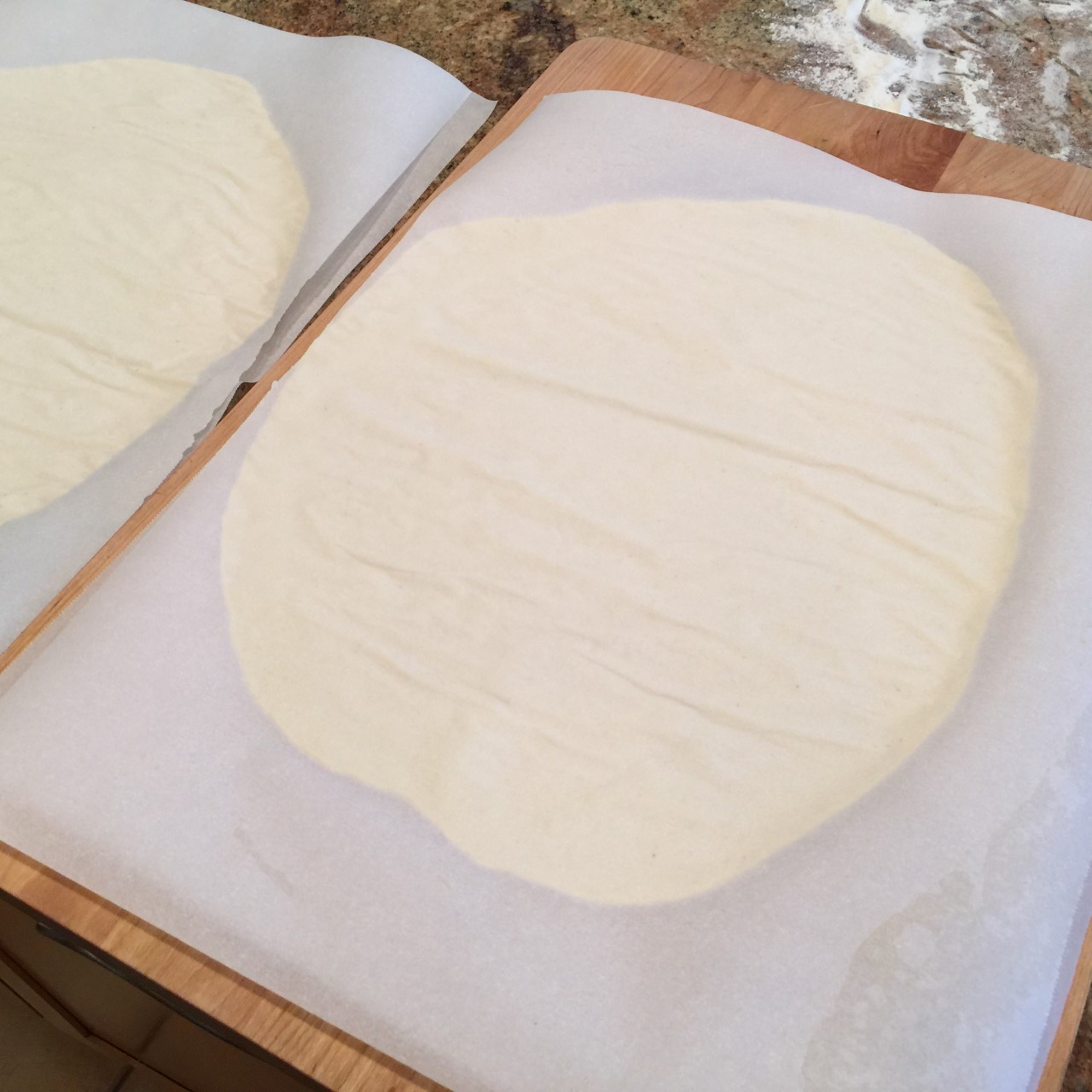 Use this time to get your toppings ready.
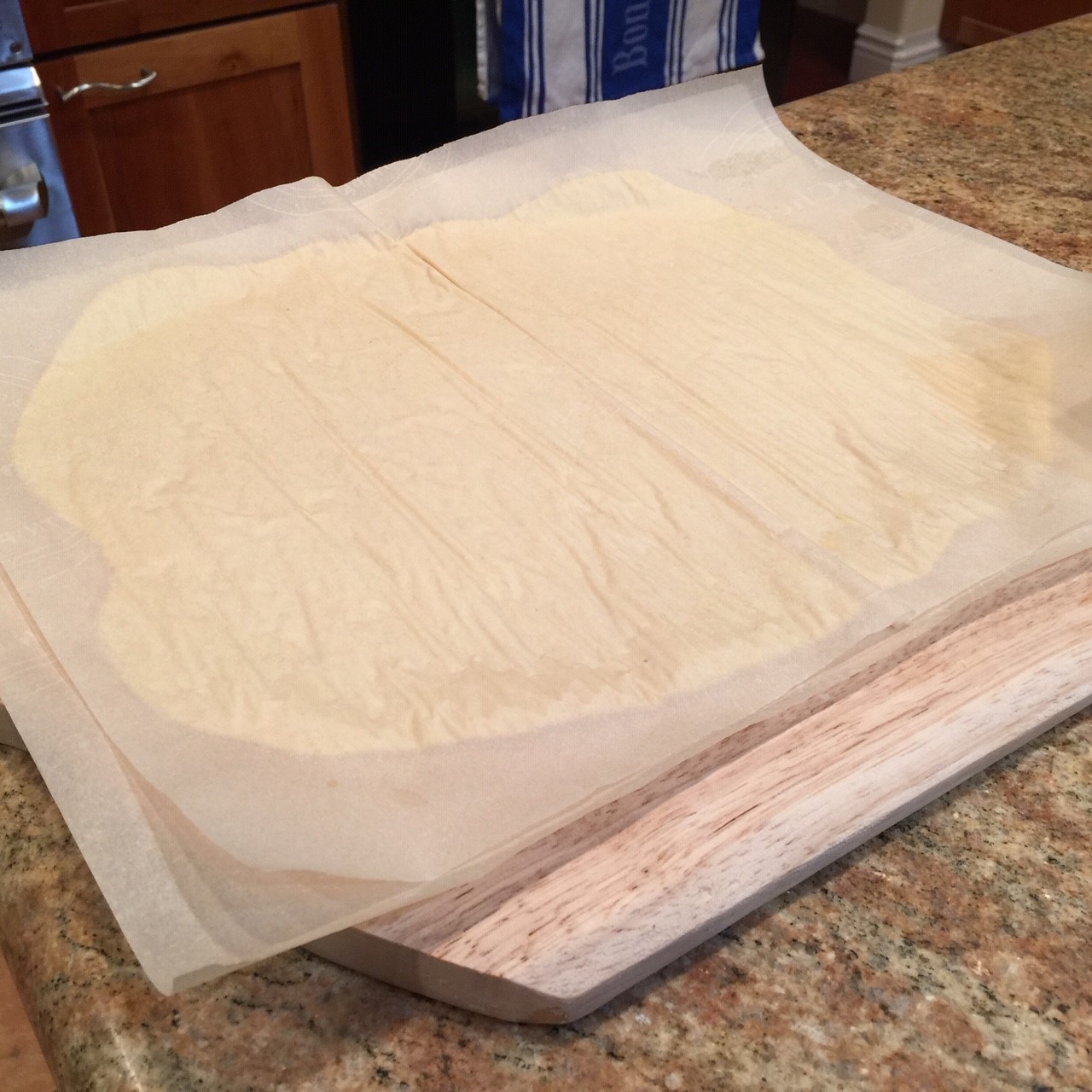 Carefully peel away and discard the top parchment (which used to be the bottom parchment).
 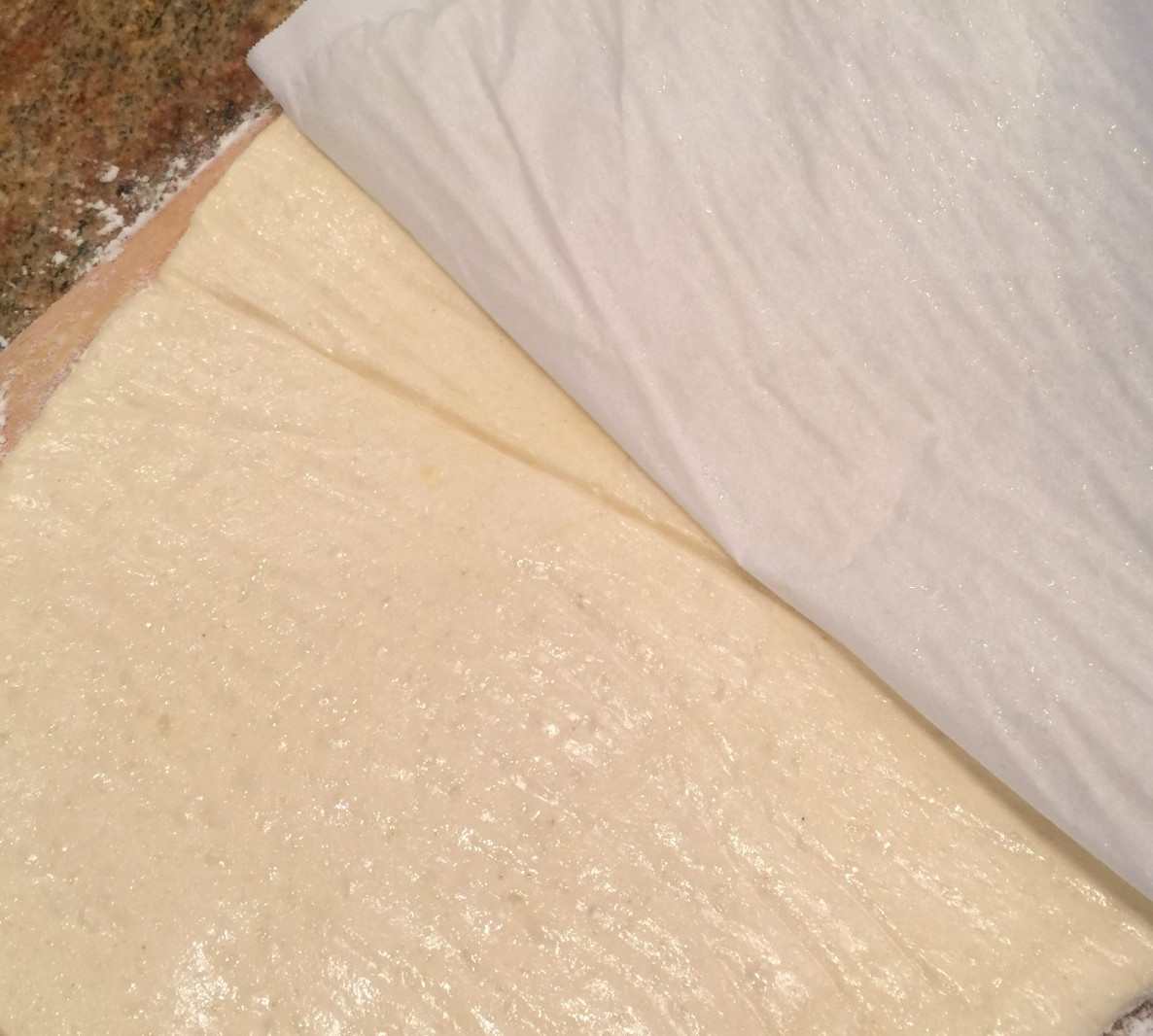 Top pizzas with your choice of sauce and toppings.
 Slide the pizza with bottom parchment onto the preheated stone or steel.
  Bake for 4 minutes. Rotate the pizza 180º, then remove and discard the parchment by securing it in place with a spatula with one hand and pulling out the parchment with the other. (The parchment won’t burn your fingers, so you don’t need to use an oven mitt as long as you don’t touch anything else.)
  Let bake another couple of minutes, until it’s browned to your liking. Remove from oven, let set a minute or two, then slice it up and serve. (This is not the same pizza I placed in the oven in the above pictures.)
 Green Chili Stew is an incredibly tasty blend of flavors that’s quick to put together. The little pop of lime is my favorite part!
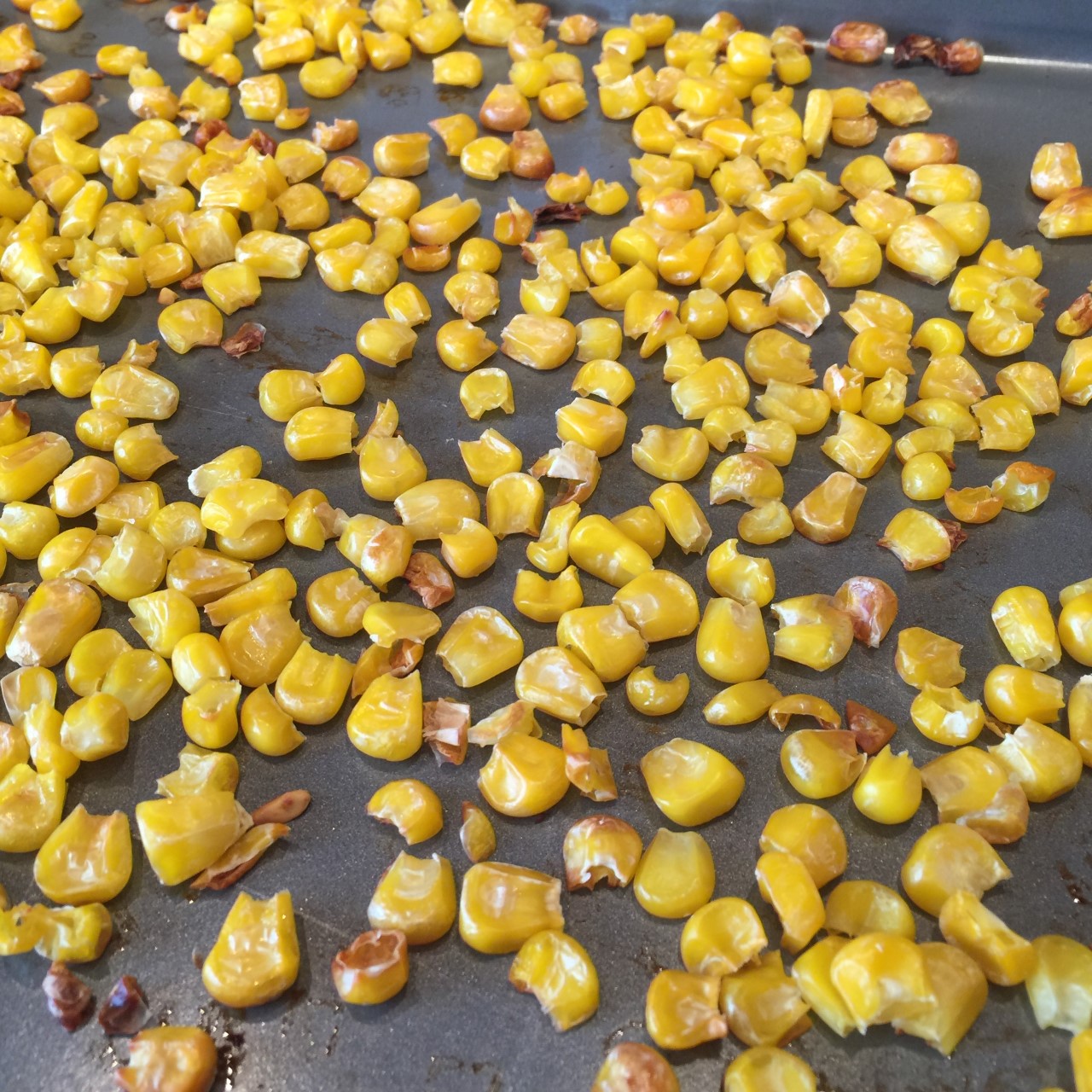 If you’re using fresh chilis, turn oven to broil. Wash and cut pepper and chilis top to bottom. Discard seeds and ribs. Lay cut side down on cookie sheet.
 Broil until skin starts to blacken. (It only takes a few minutes, so keep an eye on it!!!). Remove and discard blackened skin.
 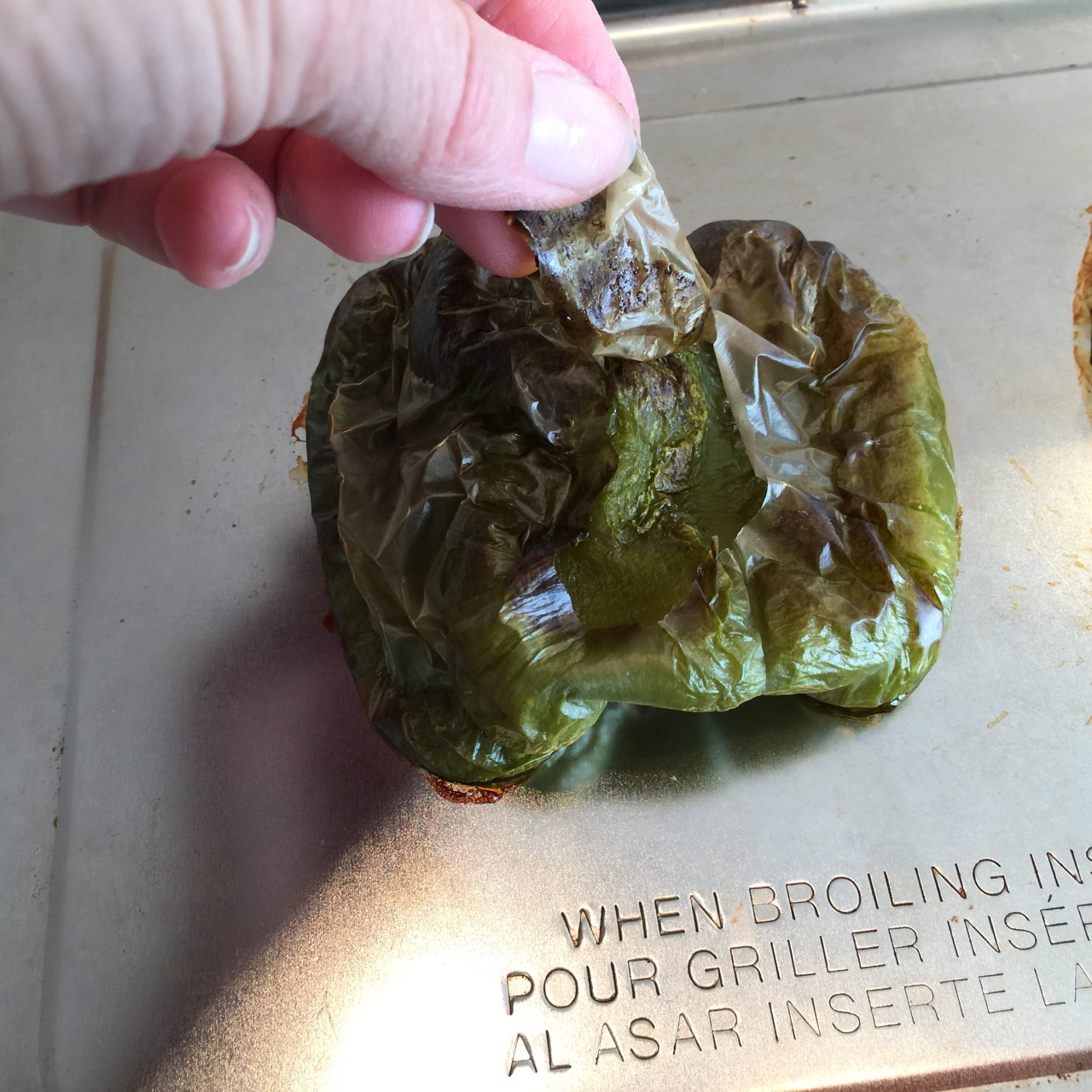 Chop skinless pepper and chilis into bite-sized pieces.
 Wash tomatillos well (they feel kind of waxy) and chop into bite-sized pieces.
  In a Dutch oven, place the oil, onions, garlic, cumin, coriander, and 1 tsp salt. Sauté over medium/high heat 4 minutes, stirring often.
  Add in corn, chilis, and pepper – cook 3 minutes, stirring often.
 Add in hominy, beans, tomatillos, vegetable stock, and fake chicken or tofu. Turn burner to medium/high heat, bring to a boil, cover, and reduce heat to keep a simmer. Cook for 20 minutes. Stir in cilantro, lime juice, and additional salt, if needed (I usually add in 1 tsp salt).

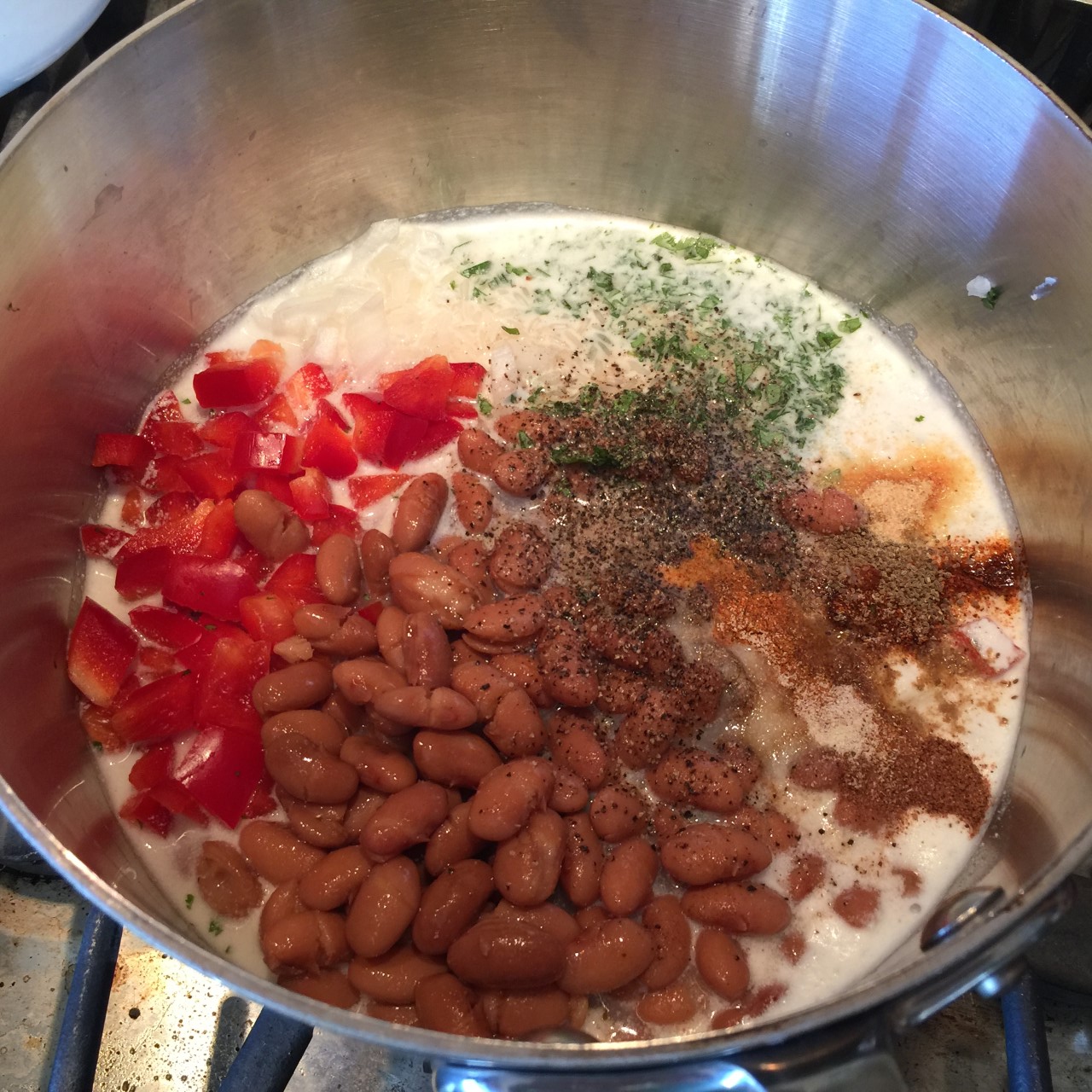 Bring to boil, then reduce heat to simmer. Cover and cook over low heat for a total of 30 minutes. At first, stir now and then – until it’s been cooking for about 20 minutes. At this point most of the liquid will have been absorbed into the rice. Stir more often now to prevent burning. If all the liquid has been incorporated before the 30 minutes is up, turn off the heat and let the covered pot sit on the hot burner. This is to make sure the rice is completely cooked.
  Eat as is, or do something crazy (like I do) and serve as an open faced sandwich on a homemade
  Vegetarian Cooking For Carnivores BLOG