
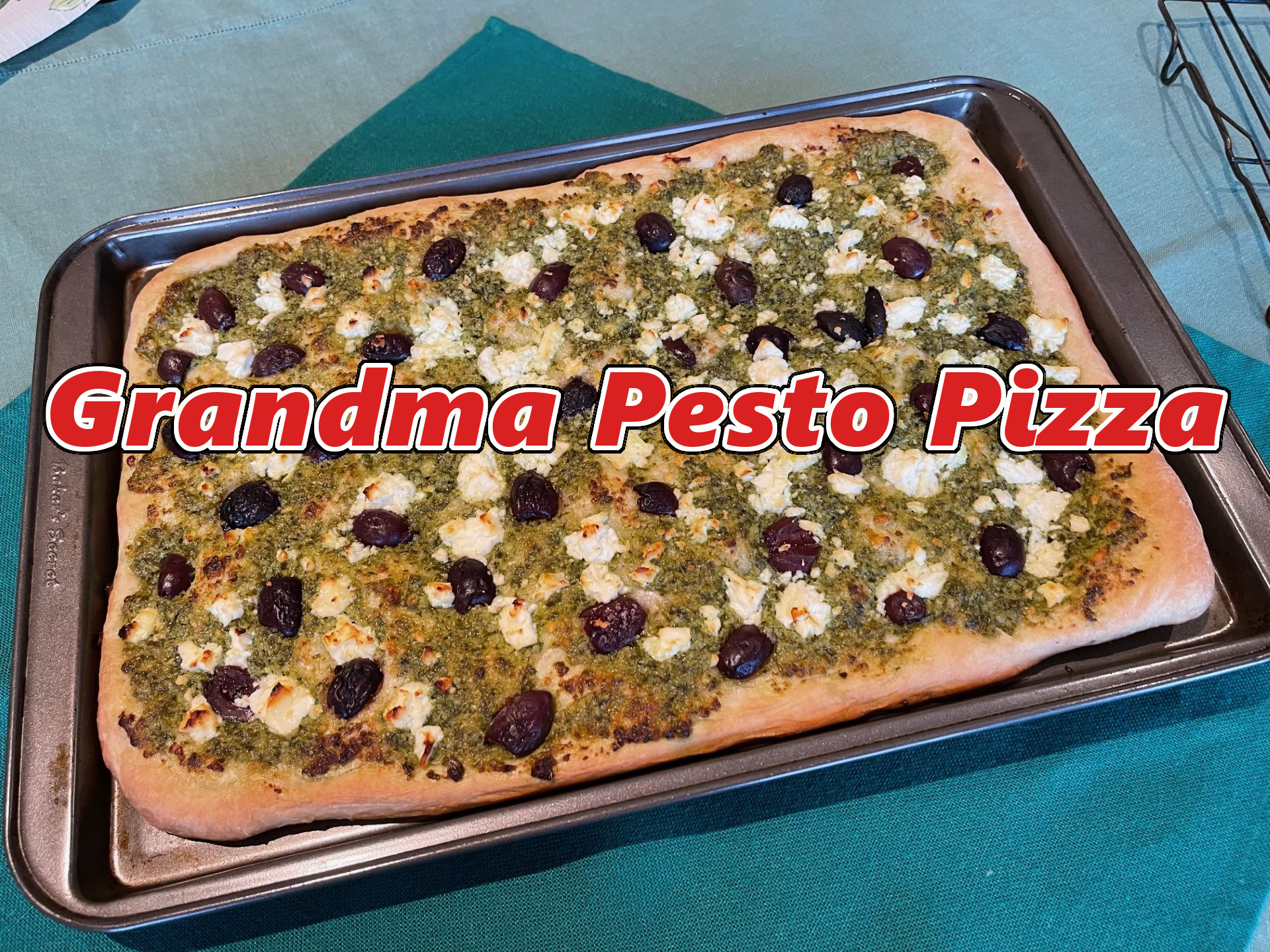
Grandma Pizza is a thin, crispy, rectangular pizza that, traditionally, is topped with Mozzarella, followed by marinara and basil.
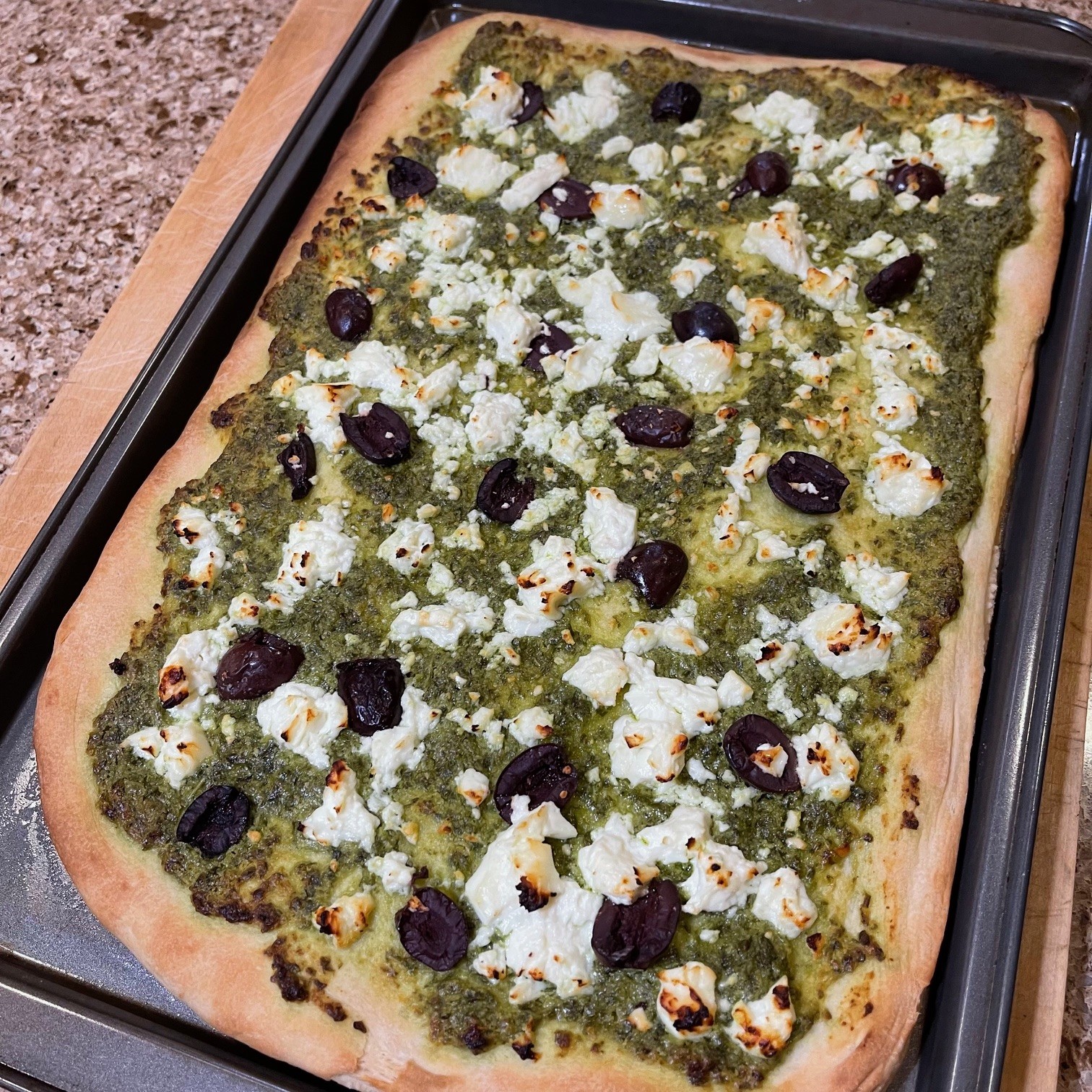
But, just to shake things up (because that’s how I roll!), I decided to change the toppings to pesto, Feta, and Kalamata olives. This has become our family’s current pizza of choice. The garlicky pesto topped with salty, creamy Feta and olives is addictive, which is why I now make 2 pizzas at a time.
NOTE 1: I highly recommend using a food processor to make the dough. Grandma Pizza is a very wet dough and clings to your palms and fingers if you knead by hand.
NOTE 2: A rimmed baking sheet is preferred to define the rectangular shape but, if you don’t have one, just use a large baking sheet and shape the dough as best you can. As you can see from the photo above, dough seems to have a mind of its own, and occasionally refuses to fill in the corners anyway.
GRANDMA PESTO PIZZA – makes 2 pizzas
Dough:
- 332g (1.5 cups) water, about 104°F (40°C)
- 4 tsp (12g) yeast
- 20g (2 T) olive oil
- 385g (3 cups) strong (bread) flour
- 8g (2 tsp) sugar
- 1.5 tsp salt
Topping:
- 130g (4 cups) (9 oz) fresh basil leaves
- 8 cloves garlic
- 22g (1 T) lemon juice
- 88g (1 cup) Pecorino/Romano or Parmesan Cheese, grated
- 44g (1/2 cup) pine nuts, lightly toasted
- 1 tsp salt
- 114g (2/3 cup) olive oil
- Feta cheese
- Kalamata olives
About 3 hours before serving time, make the dough:
Combine the warm water and yeast in a cup. Let prove for 5 minutes.
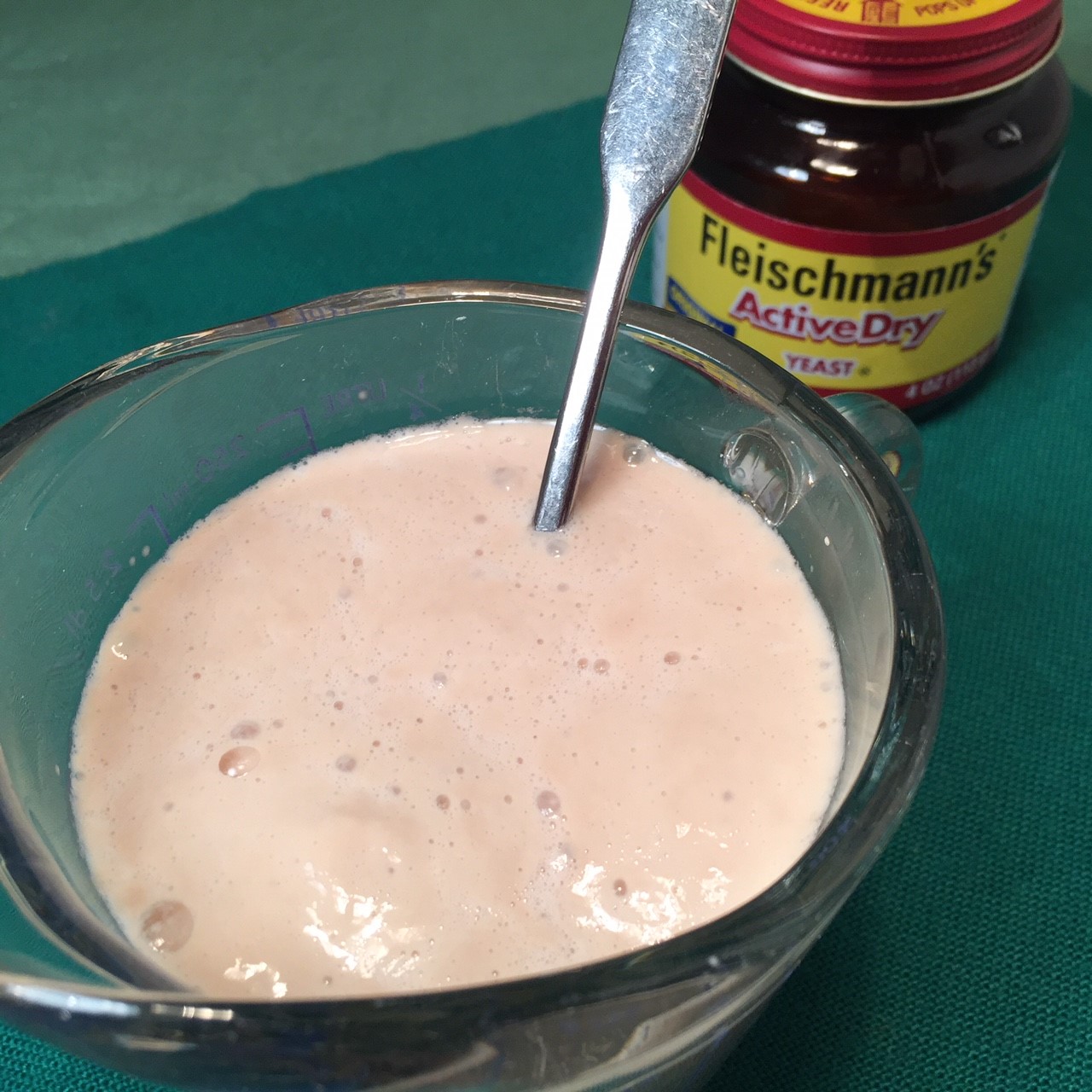
Into the work bowl of the food processor, add olive oil, flour, sugar, and salt. Pulse a couple of times to blend. When yeast has proved for 5 minutes, run the processor and slowly pour in the yeast water. Run the machine about 40 seconds total, stopping to scrape down the sides once.

Now comes the icky part. Remove the blade and scrape off the dough. You’ll notice how stretchy and sticky the dough is.
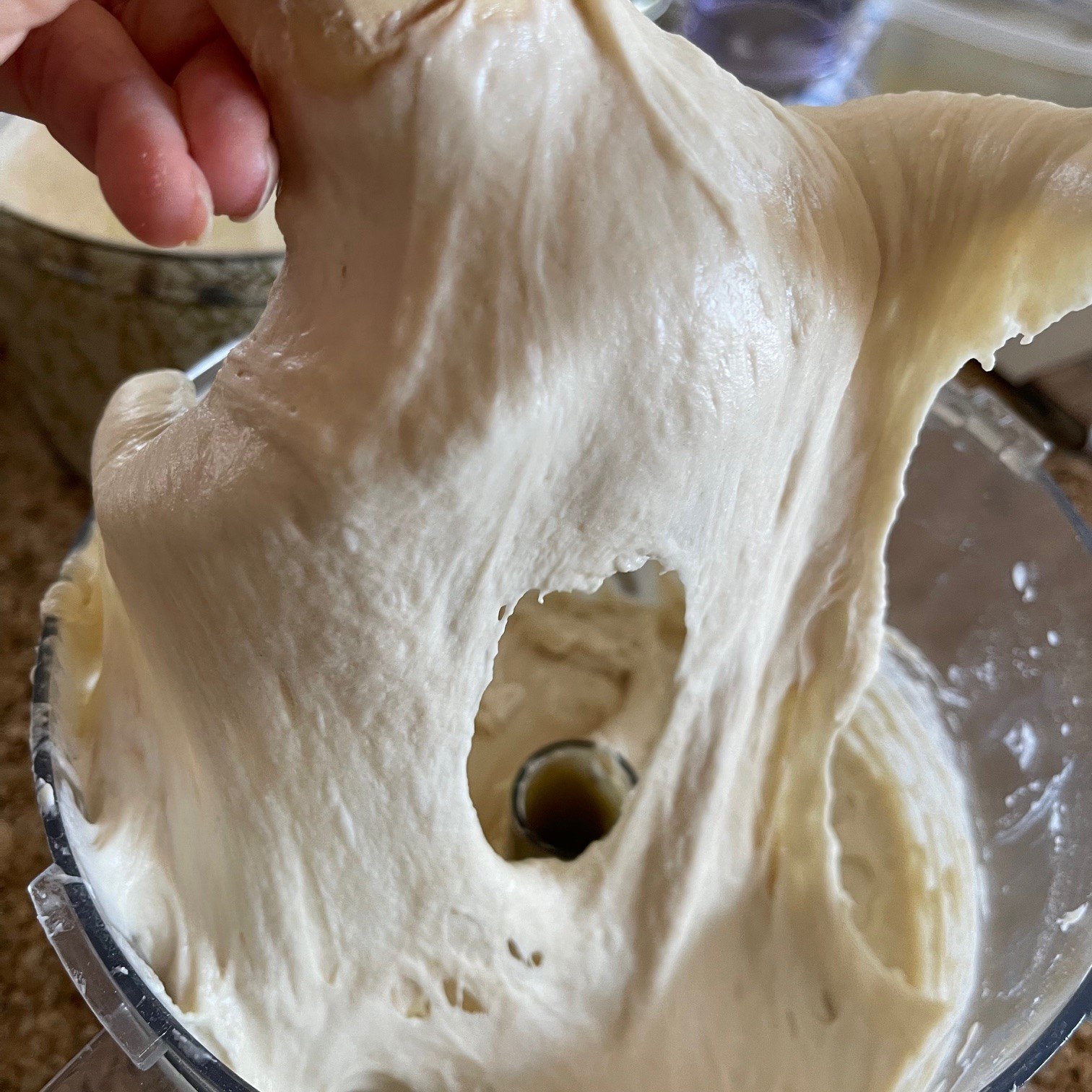
Empty the dough onto a well floured surface. Using a bench scraper underneath the dough, begin kneading 6 or 7 times to bring the dough together, sprinkling with flour as needed. Cut the dough in half.

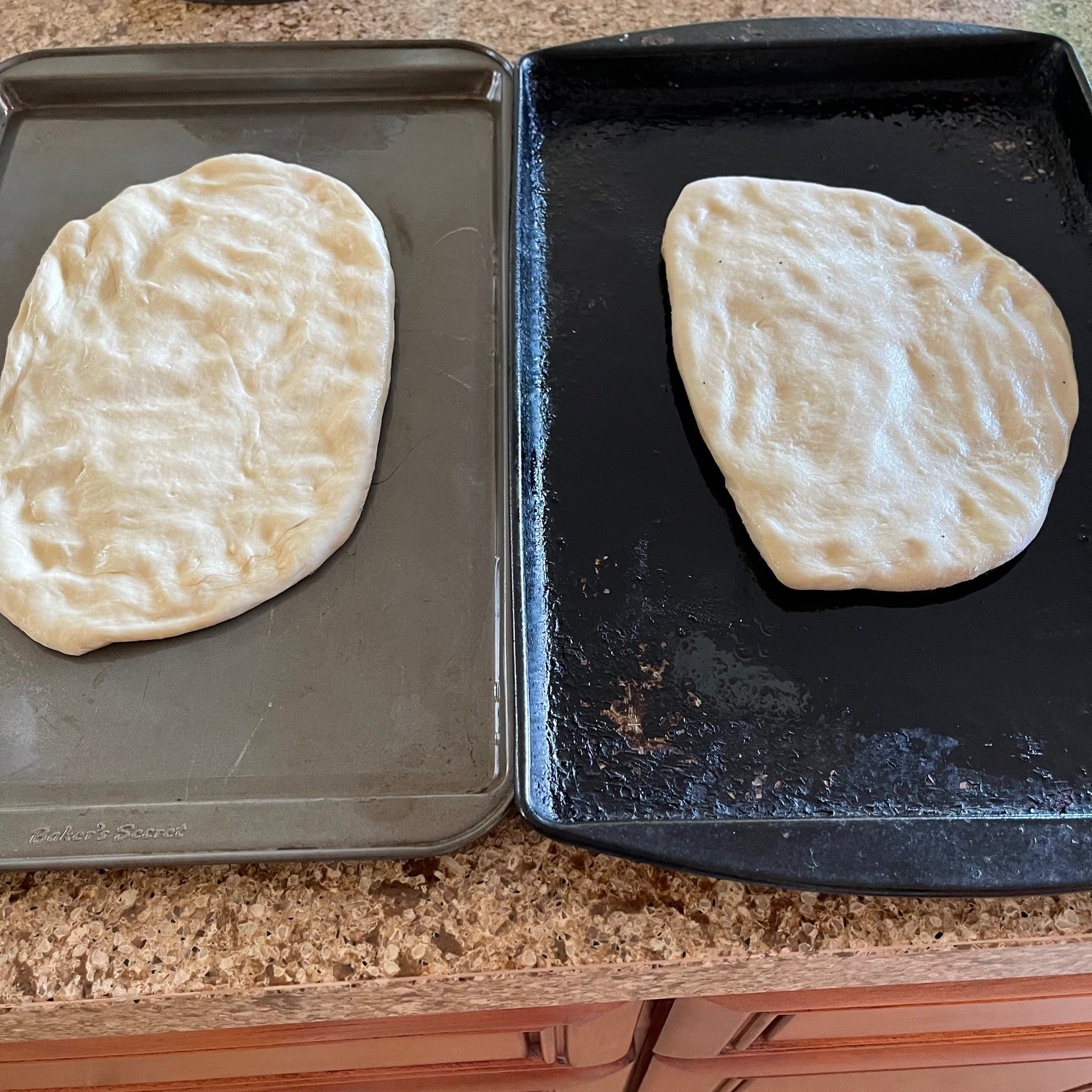
Put 2 tablespoons olive oil in each of the two pans. (Don’t be tempted to use more olive oil – it will be difficult to stretch the dough on a slippery surface.) With your fingertips, spread the oil around the pan. Plop one dough half in each pan, flipping them over to cover both sides with a bit of oil. With your slightly oiled fingertips, work the dough to stretch it out to about 20cm x 13cm (8″ x 5″). Don’t worry about it being exact. Cover pans and let rise about 1.5 hours.
While dough is rising (or, ahead of time), prepare the pesto:
Into a blender put all the ingredients (basil, garlic, lemon juice, Pecorino/Romano, pine nuts, salt, and olive oil).
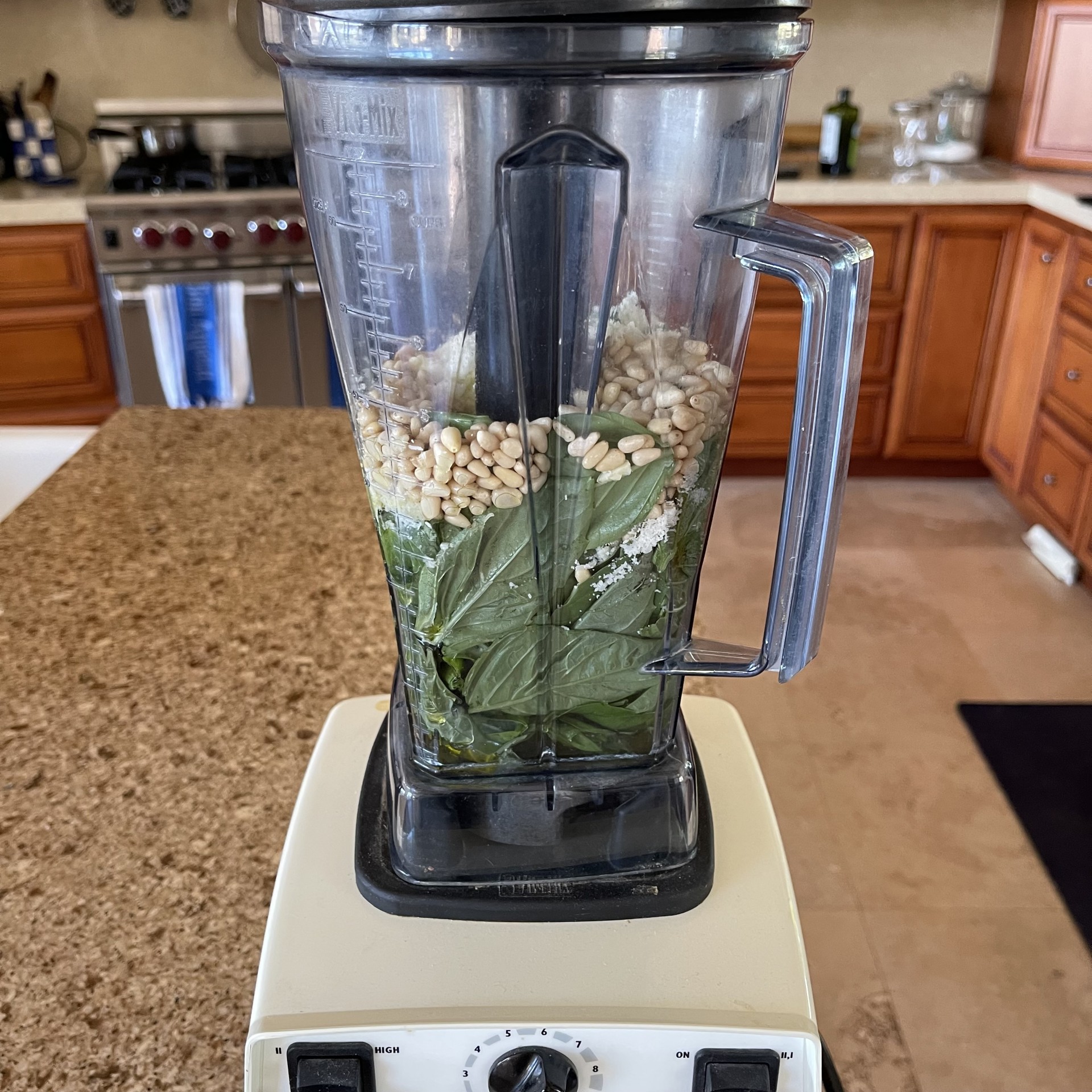
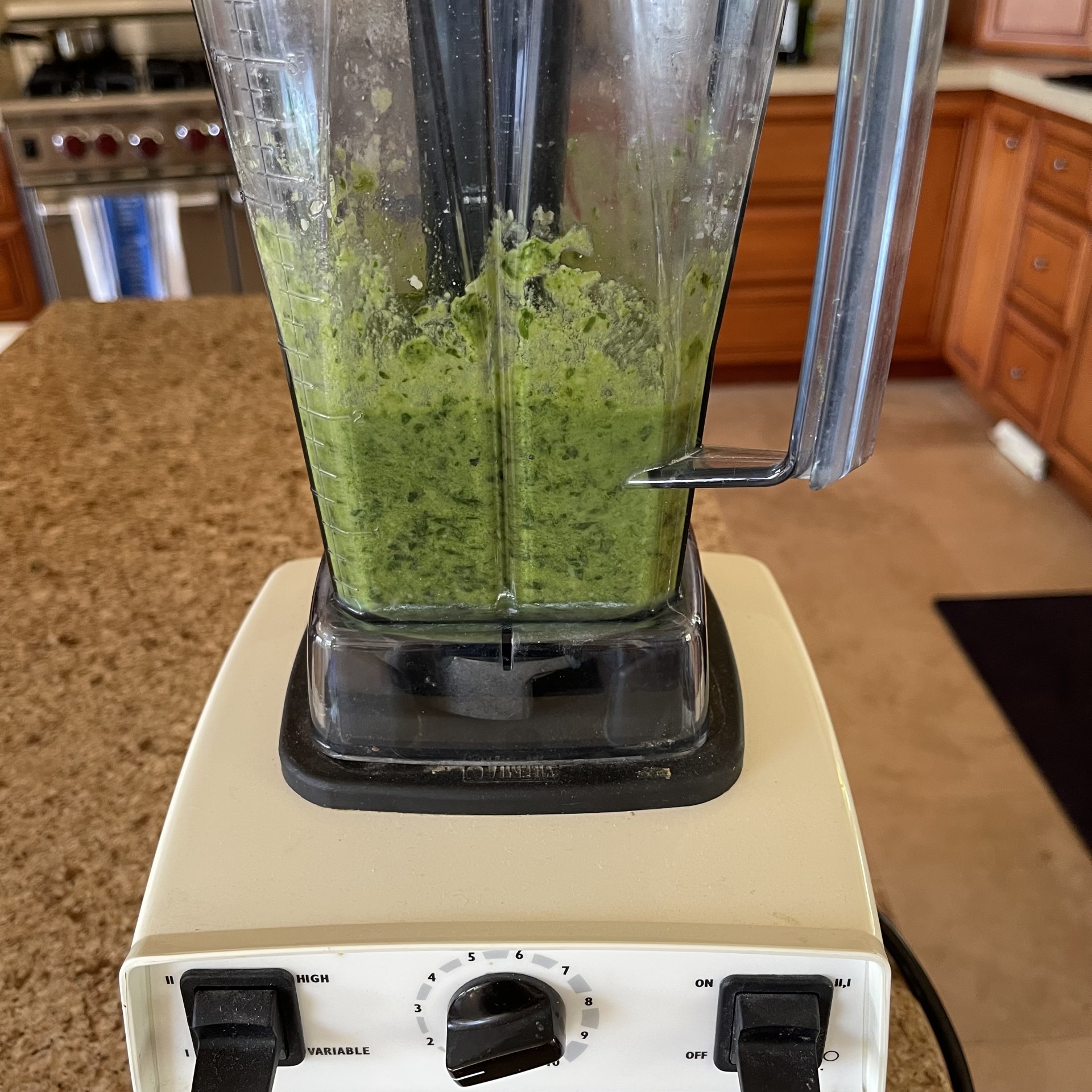
Due to the basil leaves, you’re going to have to blend in spurts, scraping down sides in between. DO NOT PRESS DOWN INGREDIENTS WHILE BLENDER IS RUNNING UNLESS YOU HAVE A BLENDER (SUCH AS A VITAMIX) THAT HAS A TAMPER SPECIFIC FOR YOUR BLENDER! I speak from experience – more than once I’ve thought I could control a wooden spoon to press the basil down without hitting the blades. I was wrong and had to thrown the whole batch out.
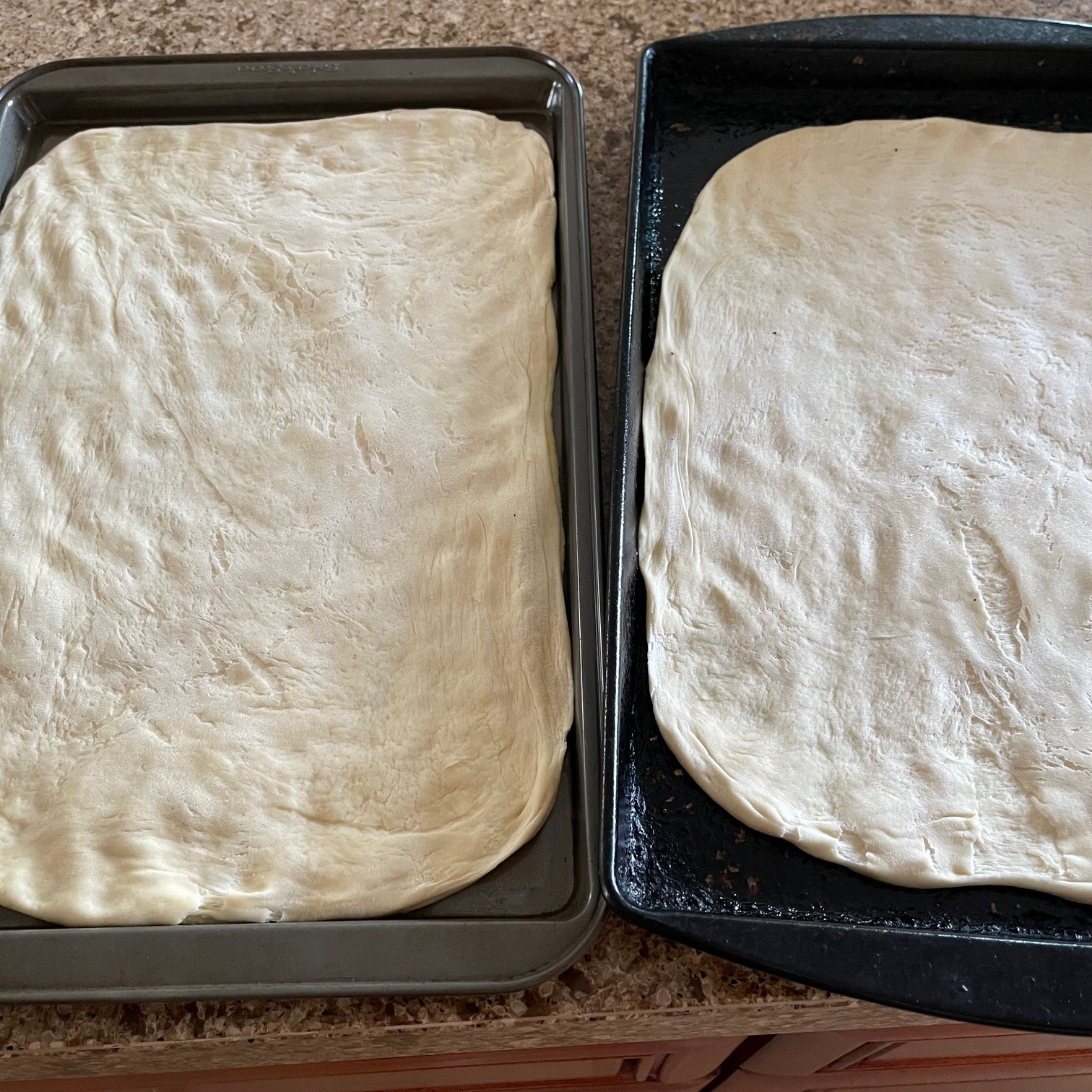
After dough has risen, use your fingertips to stretch the dough to cover the pan. You can pull gently on the corners to help it along. Cover and let rise 45 minutes. PREHEAT OVEN TO 260°C (500°F).

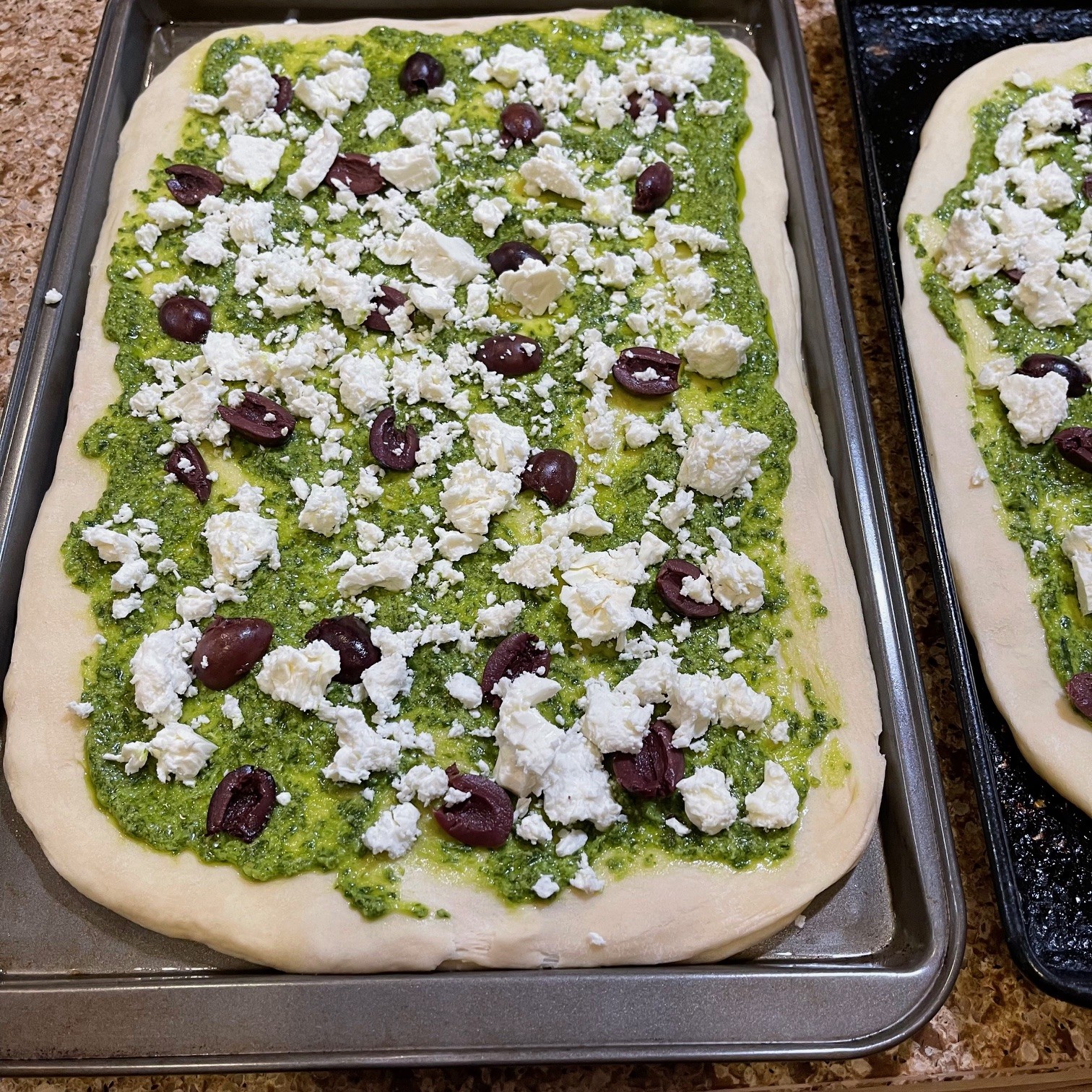
Top risen pizzas with your preferred amount of pesto, crumbled Feta, and Kalamata olives.
Bake in bottom third of preheated 260°C (500°F) oven until crust is browned – about 13-15 minutes.
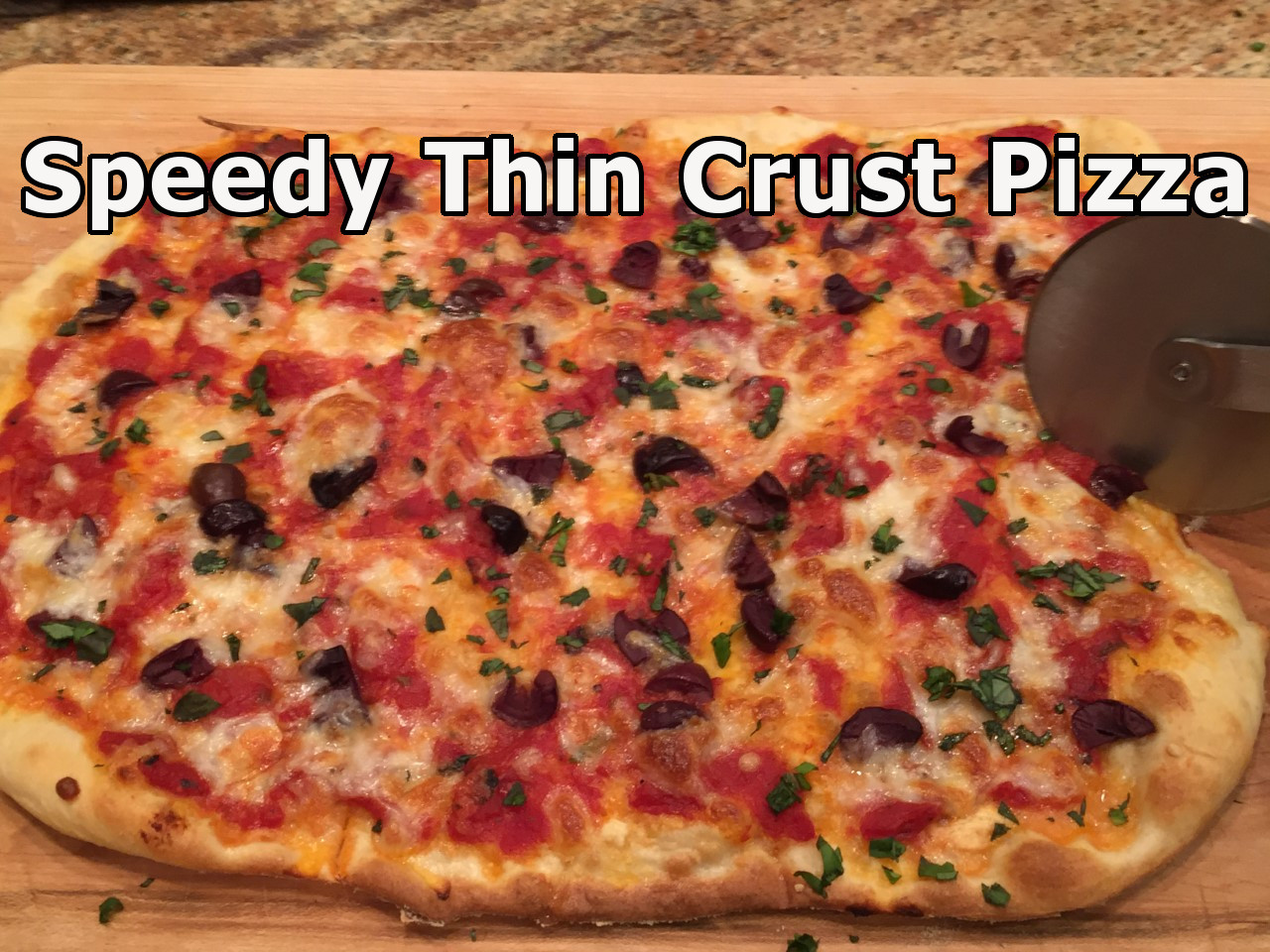 Speedy Thin Crust Pizza has become my go-to pizza recipe not only because I can have it on the table in a little over an hour, but because it’s REALLY good. It’s a very thin pizza with a nice chew.
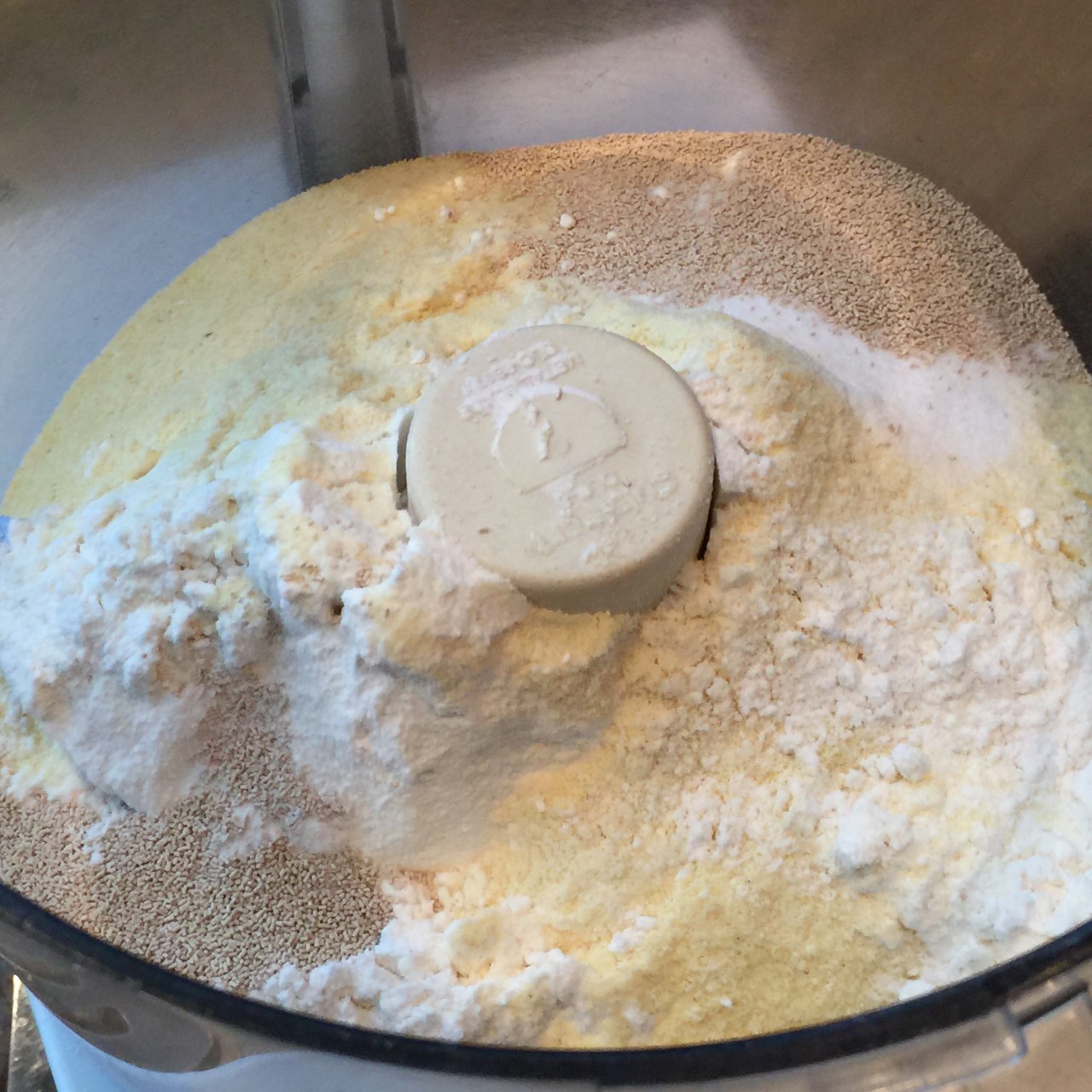 Set the workbowl on the processor base and run the machine for 10 seconds.
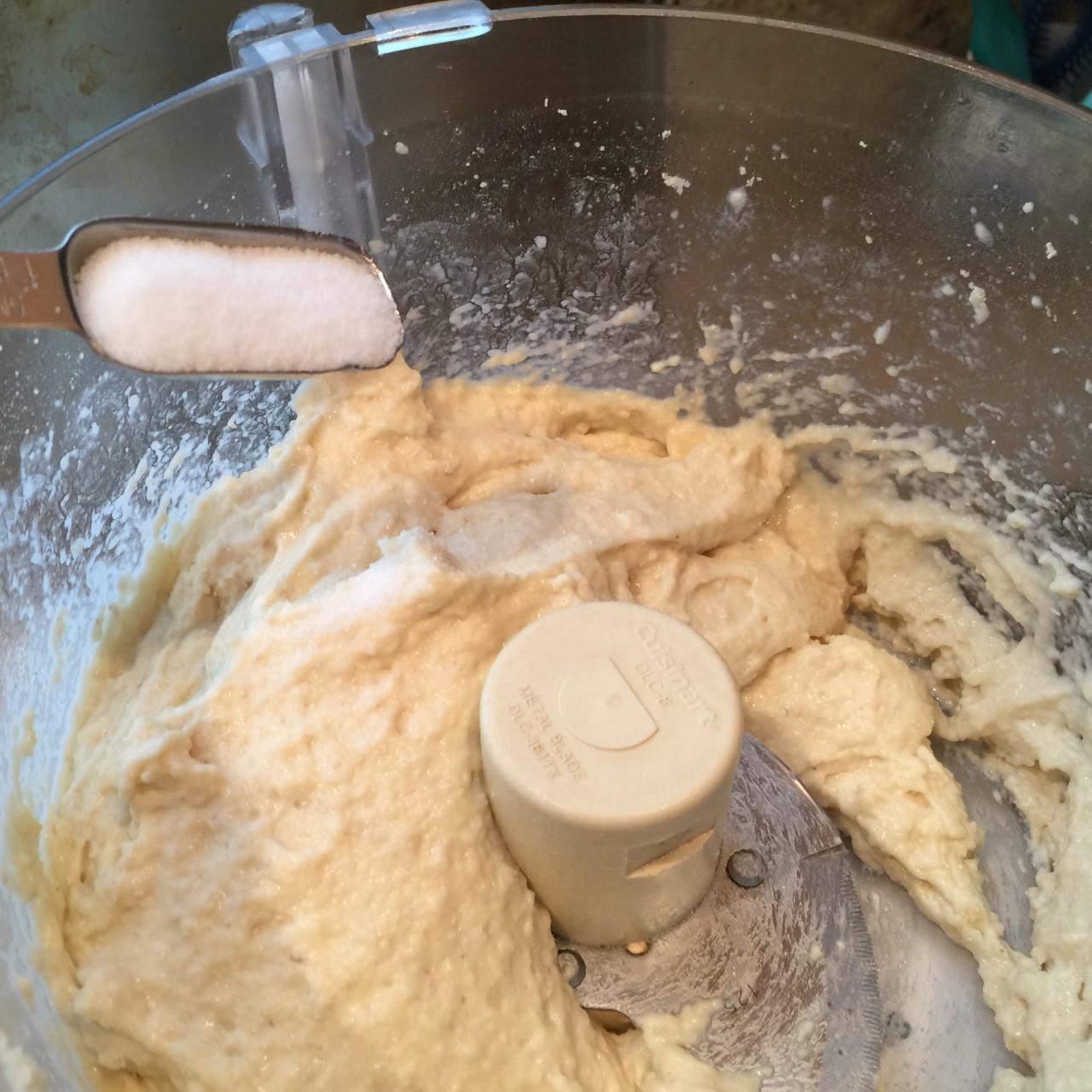
 Let mixture set in place for 10 minutes. Add in the salt and process for 30 seconds.
  Empty dough onto a floured counter and fold the dough onto itself a few times to bring the dough together.
  Divide the ball in half and place each one on a piece of oiled (I use olive oil) parchment paper approximately 12″ wide. DO NOT USE WAXED PAPER – IT’S TOO THIN!!!
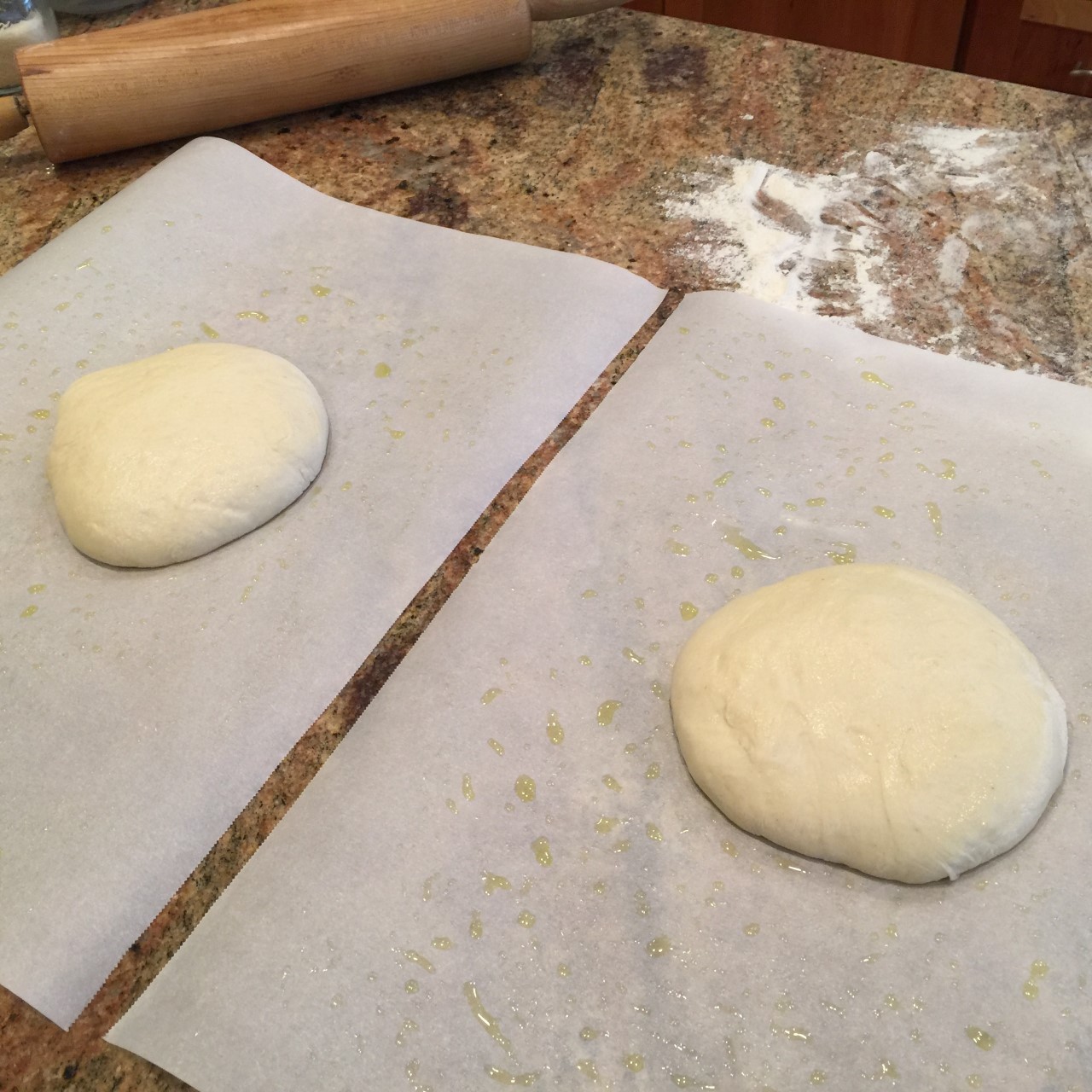 Rub the tops of the dough with a little more oil then top each with another piece of same-sized parchment. Press down with your hands to smoosh the dough into a square to get it started. With a rolling pin roll both dough balls to about 13″ x 10″ using short strokes, working from the center outward. (I find it easier to keep the parchment from sliding on my counter if I place it on a dry tea towel.) Let set 30 minutes.
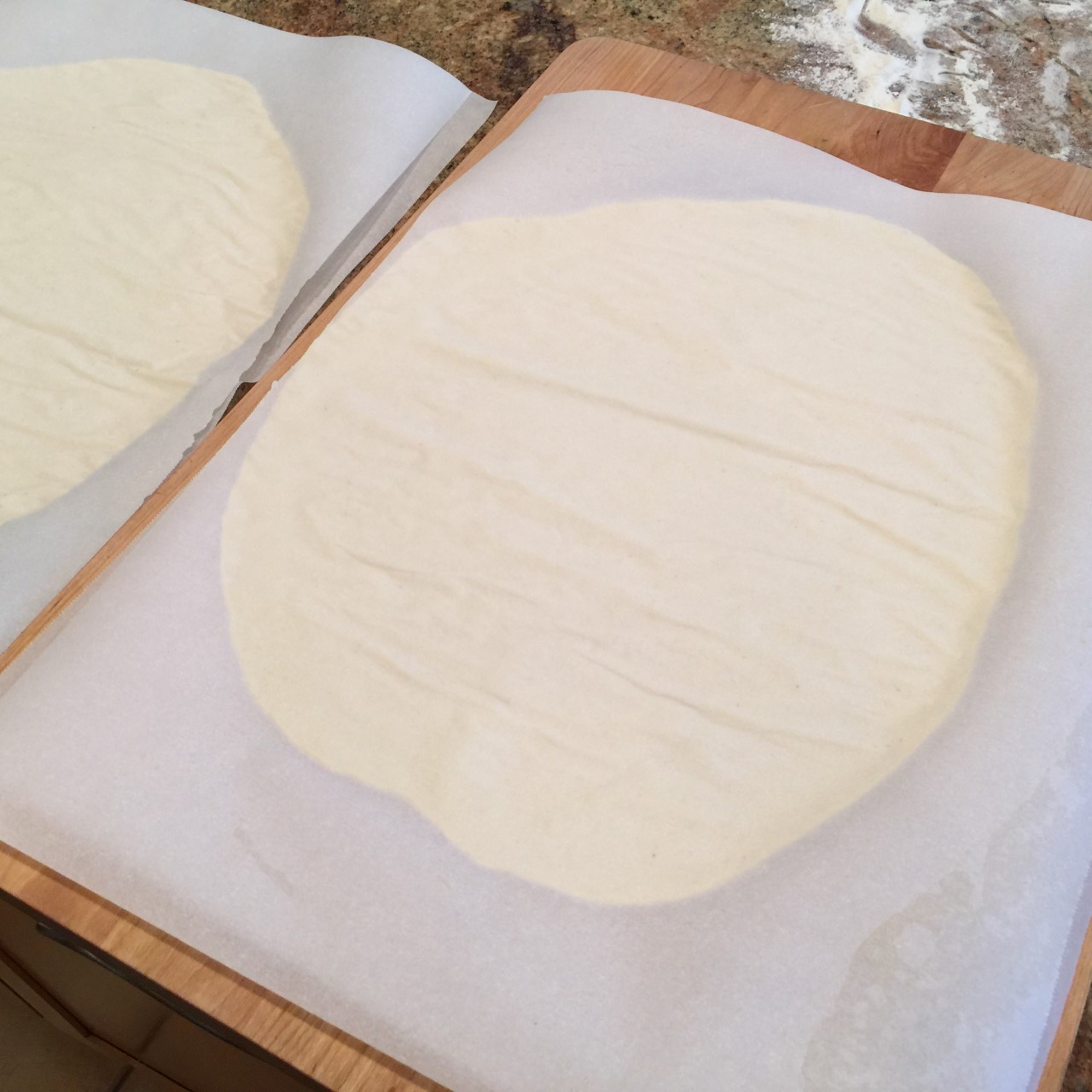 Use this time to get your toppings ready.
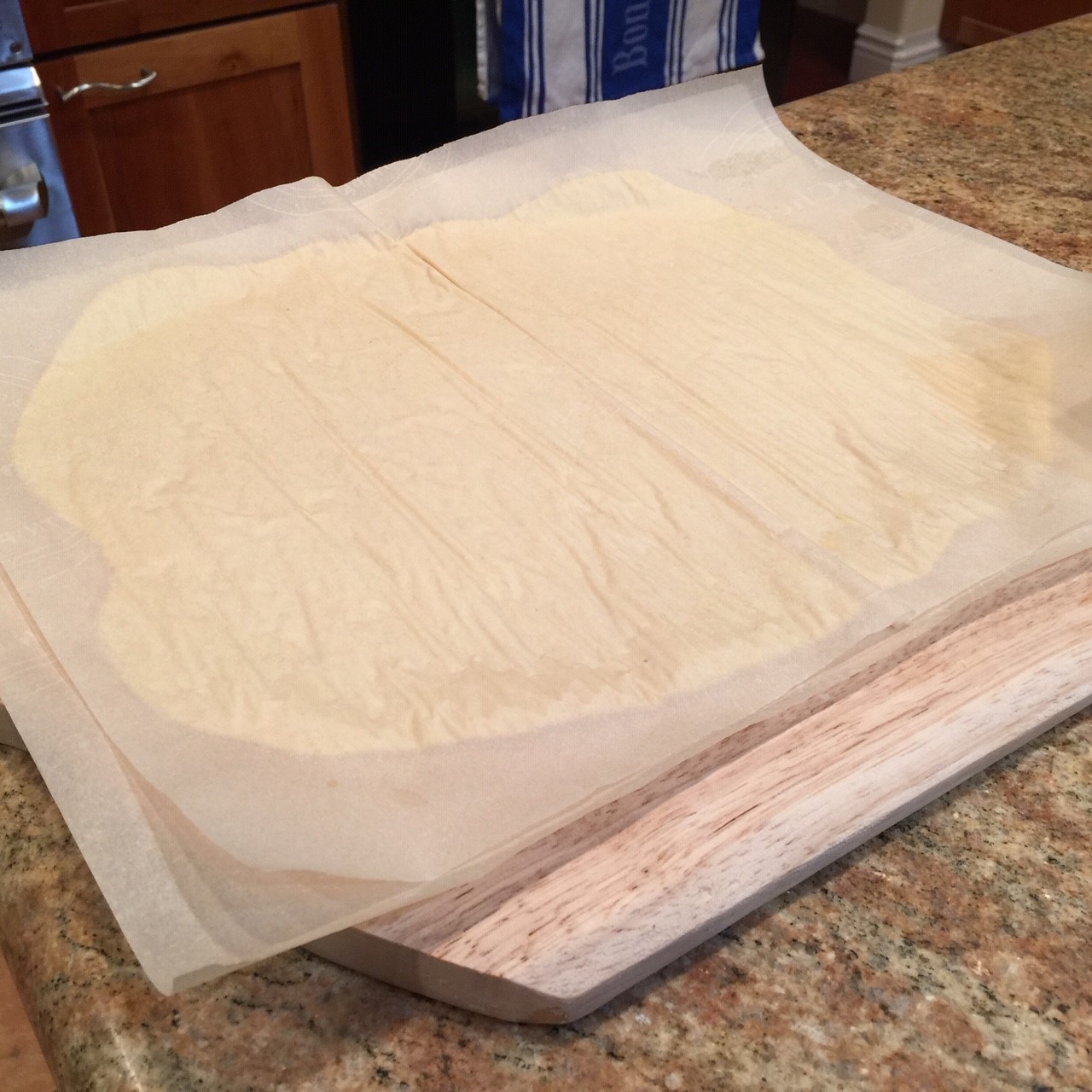 Carefully peel away and discard the top parchment (which used to be the bottom parchment).
 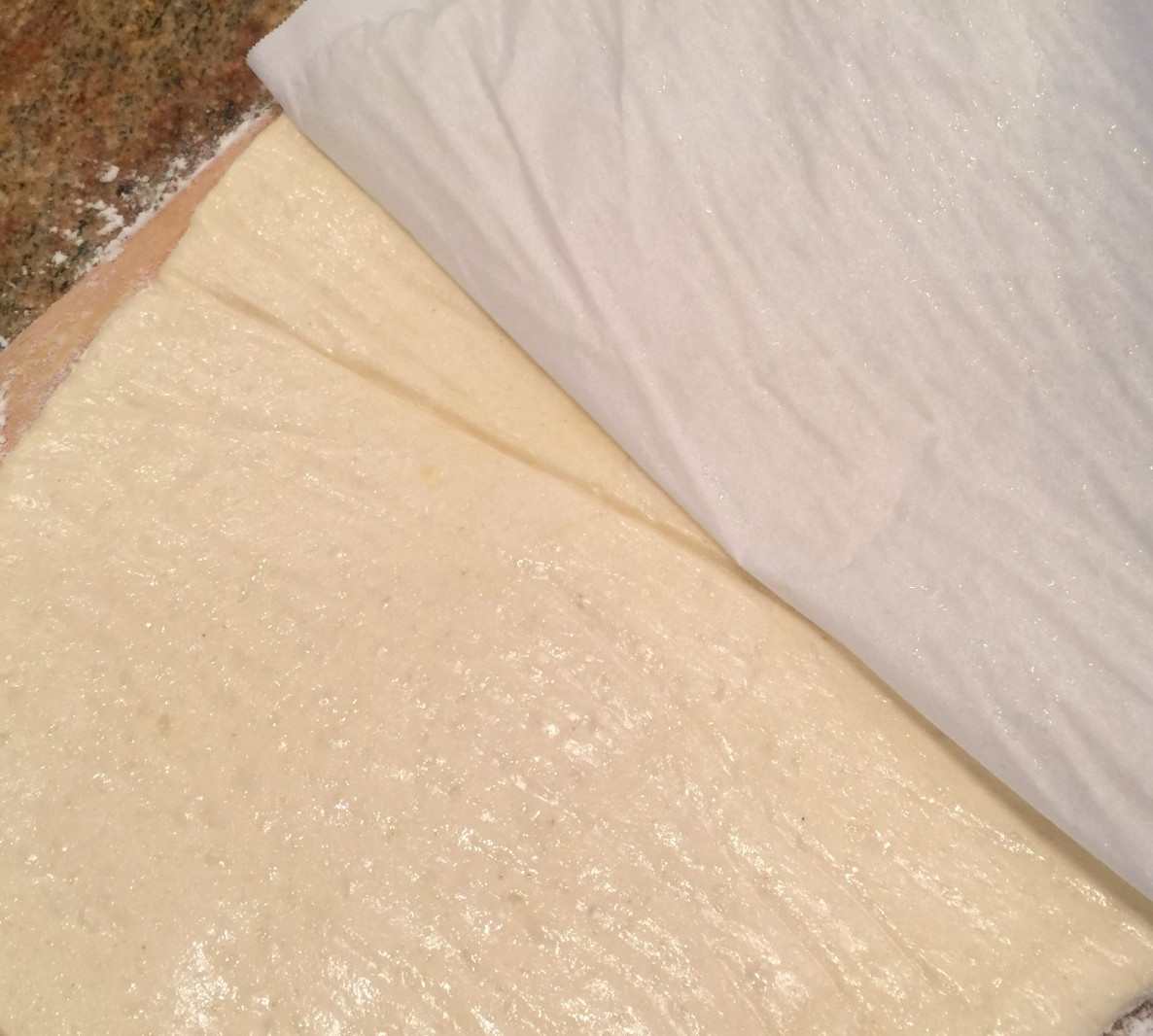 Top pizzas with your choice of sauce and toppings.
 Slide the pizza with bottom parchment onto the preheated stone or steel.
  Bake for 4 minutes. Rotate the pizza 180º, then remove and discard the parchment by securing it in place with a spatula with one hand and pulling out the parchment with the other. (The parchment won’t burn your fingers, so you don’t need to use an oven mitt as long as you don’t touch anything else.)
  Let bake another couple of minutes, until it’s browned to your liking. Remove from oven, let set a minute or two, then slice it up and serve. (This is not the same pizza I placed in the oven in the above pictures.)
 Vegetarian Cooking For Carnivores BLOG